




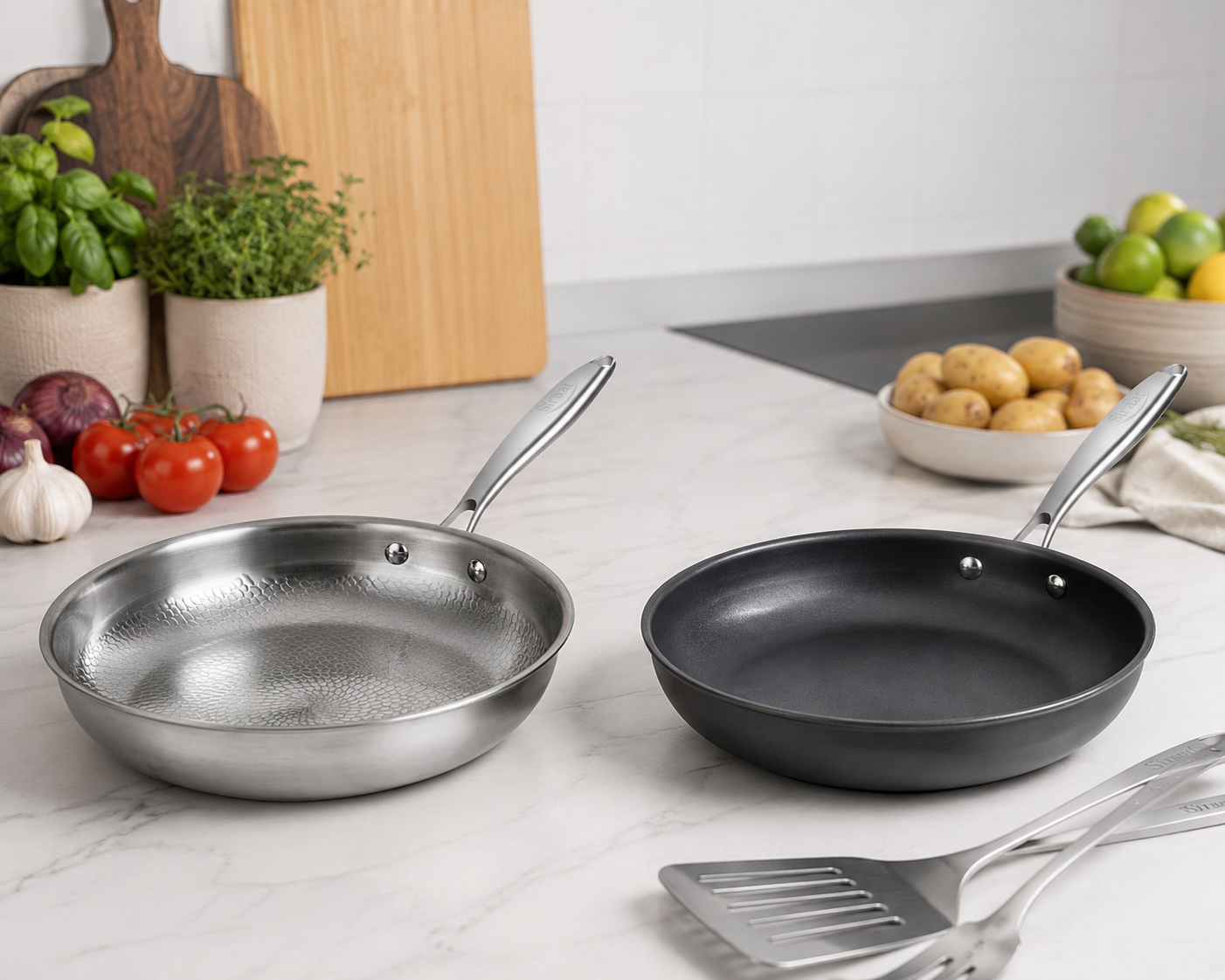
Titan-Kochgeschirr ist in der Regel die bessere Wahl, wenn Sie langfristige Haltbarkeit, eine Kochfläche ohne synthetische Beschichtungen sowie Kratz- und Korrosionsbeständigkeit priorisieren. Harteloxiertes Kochgeschirr kann für diejenigen besser geeignet sein, die geringere Anschaffungskosten und den Komfort des traditionellen Antihaftkochens suchen.
Obwohl beide Materialien für den täglichen Gebrauch geeignet sind, unterscheiden sie sich in Konstruktion, Wartung, Kochleistung und Lebensdauer. Es ist auch wichtig zu verstehen, dass harteloxiert eine Behandlung beschreibt, die auf Aluminium angewendet wird – keine Antihaftbeschichtung, obwohl viele harteloxierte Töpfe und Pfannen mit einer solchen versehen sind. In diesem Leitfaden vergleichen wir Titan-Kochgeschirr mit harteloxiertem Kochgeschirr, um Ihnen bei der Auswahl der richtigen Option für Ihren Kochstil zu helfen.
| Merkmal | Titan-Kochgeschirr | Harteloxiertes Kochgeschirr |
|---|---|---|
| Kochfläche | Reines Titan | Harteloxiertes Aluminium (oft mit Antihaftbeschichtung) |
| Durchschnittliche Lebensdauer | Jahrzehnte bei richtiger Pflege | Kürzer für beschichtetes Kochgeschirr; länger für unbeschichtete Modelle |
| Sicherheit | Nicht-reaktive, ungiftige, PFAS/PTFE-freie Kochfläche | Harteloxiertes Aluminium ist nicht-reaktiv; beschichtete Modelle hängen von der Beschichtung ab |
| Wärmeverteilung | Gleichmäßige Erwärmung bei vollflächiger Konstruktion | Schnelle, gleichmäßige Erwärmung |
| Wartung | Gering | Gering bis mäßig |
Titan- vs. harteloxiertes Kochgeschirr: Hauptunterschiede
Sicherheit & Gesundheit
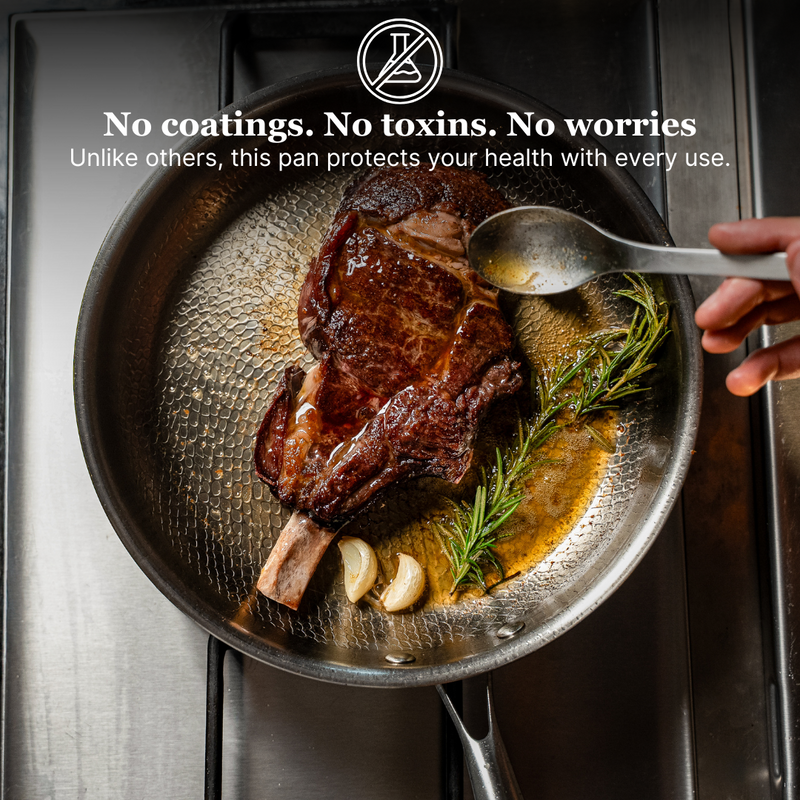
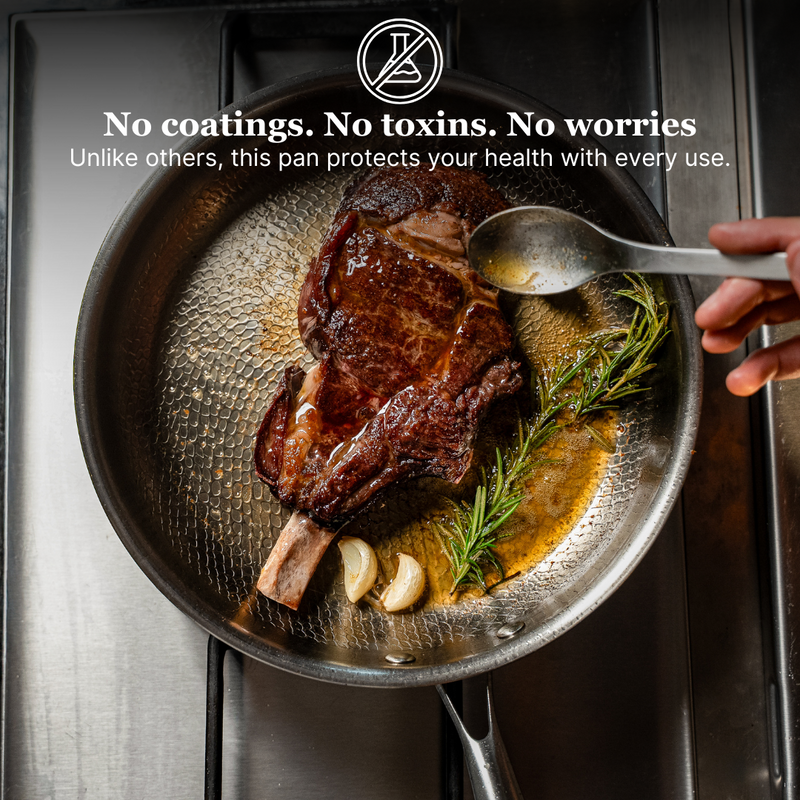
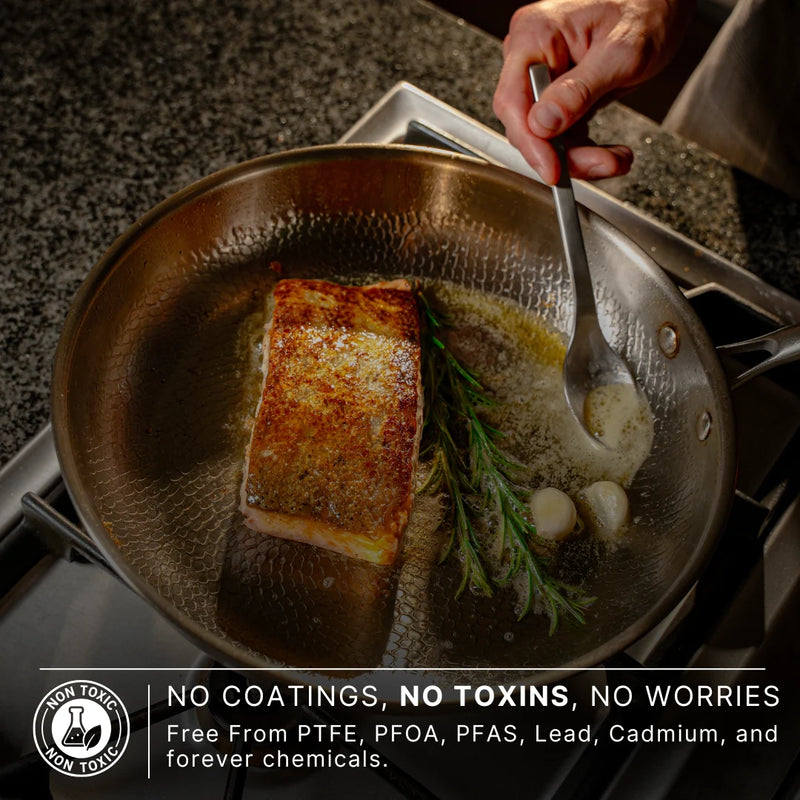
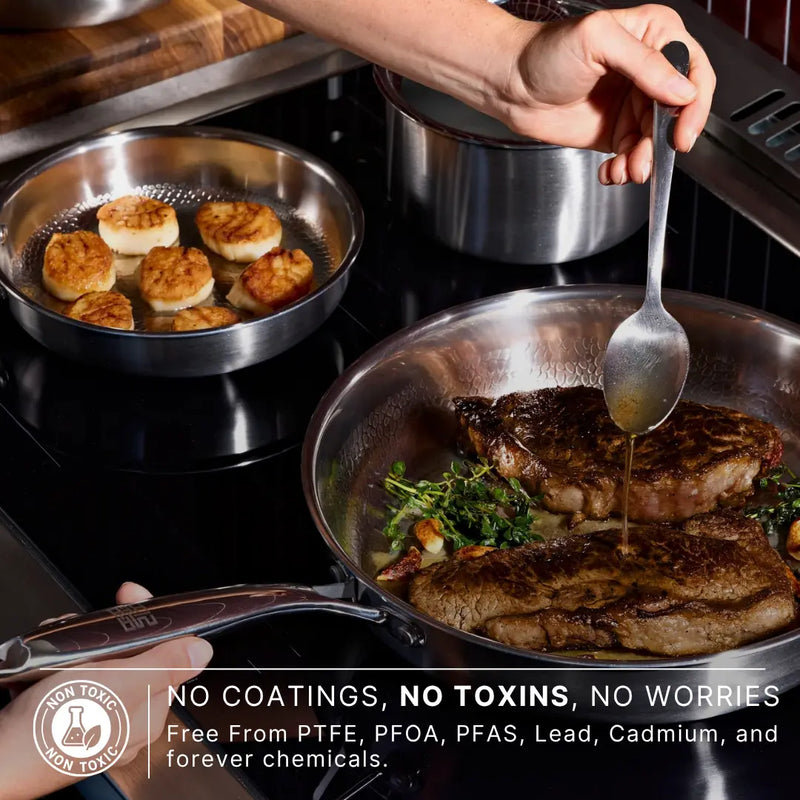
Titan gilt weithin als eines der sichersten verfügbaren Kochgeschirrmaterialien. Reines Titan ist von Natur aus nicht-reaktiv, was bedeutet, dass es nicht mit sauren oder alkalischen Lebensmitteln interagiert oder deren Geschmack beeinträchtigt. Es verwendet auch keine synthetischen Antihaftbeschichtungen und ist daher eine beliebte Wahl für diejenigen, die PFAS, PTFE, PFOA und andere Chemikalien vermeiden möchten, die üblicherweise mit beschichtetem Kochgeschirr in Verbindung gebracht werden.
Harteloxiertes Kochgeschirr gilt ebenfalls als sicher für den täglichen Gebrauch. Der Eloxierungsprozess erzeugt eine gehärtete, stabile Schicht auf der Aluminiumoberfläche, die sie vor Korrosion schützt und die Reaktivität reduziert. Harteloxiertes Kochgeschirr ist jedoch oft mit einer PTFE-basierten Antihaftbeschichtung versehen. Obwohl diese Beschichtungen im Allgemeinen als sicher gelten, wenn sie gemäß den Anweisungen des Herstellers verwendet werden, haben sie unterschiedliche Pflegeanforderungen und können sich mit der Zeit abnutzen. Wenn Sie harteloxiertes Kochgeschirr vergleichen, lohnt es sich zu prüfen, ob die Kochfläche beschichtet oder unbeschichtet ist, da dies sowohl die Wartung als auch die Langzeitleistung beeinflussen kann.
Haltbarkeit & Langlebigkeit
Titan-Kochgeschirr ist für den Langzeitgebrauch konzipiert. Reines Titan ist sehr widerstandsfähig gegen Korrosion, Kratzer, Verformungen und alltäglichen Verschleiß. Seine Kochfläche splittert, blättert oder schält sich nicht ab, da es keine synthetische Beschichtung verwendet. Vollummanteltes Titan-Kochgeschirr kombiniert eine langlebige Titan-Kochfläche mit einem Aluminiumkern für Stärke und gleichmäßige Kochleistung. Bei richtiger Pflege kann hochwertiges Titan-Kochgeschirr sein Aussehen und seine Leistung jahrzehntelang beibehalten.
Harteloxiertes Kochgeschirr ist dank des Eloxierungsprozesses, der die Oberfläche härtet und die Kratz- und Korrosionsbeständigkeit verbessert, ebenfalls haltbarer als Standardaluminium. Die Gesamtlebensdauer hängt jedoch oft davon ab, ob das Kochgeschirr eine Antihaftbeschichtung hat. Während der harteloxierte Körper selbst viele Jahre halten kann, nutzen sich beschichtete Kochflächen in der Regel schneller ab und müssen möglicherweise irgendwann ersetzt werden. Unbeschichtetes harteloxiertes Kochgeschirr bietet im Allgemeinen eine längere Lebensdauer, erfordert aber andere Kochtechniken als beschichtete Alternativen.
Kochleistung
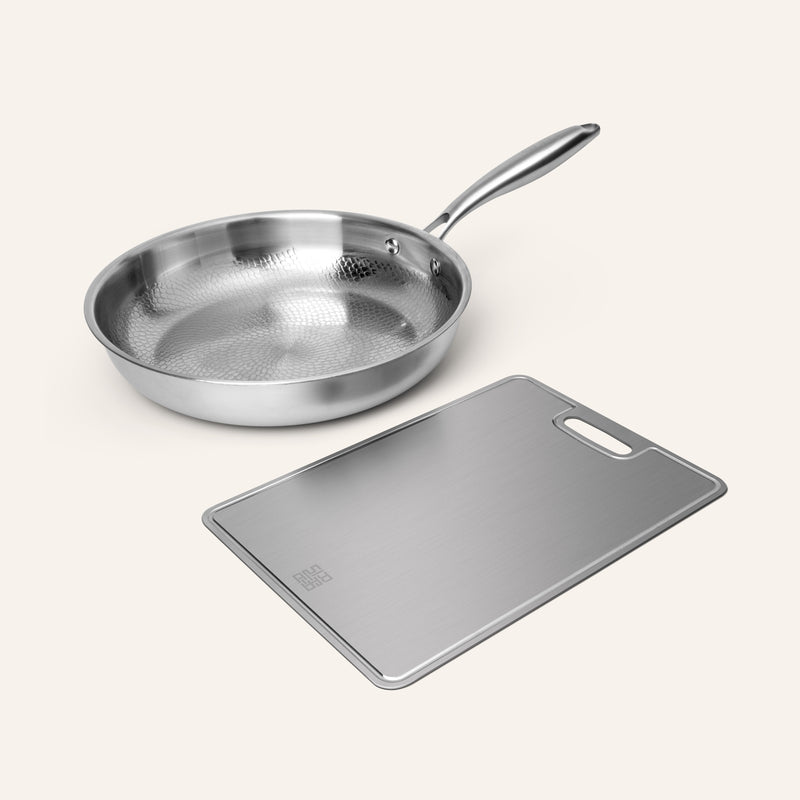
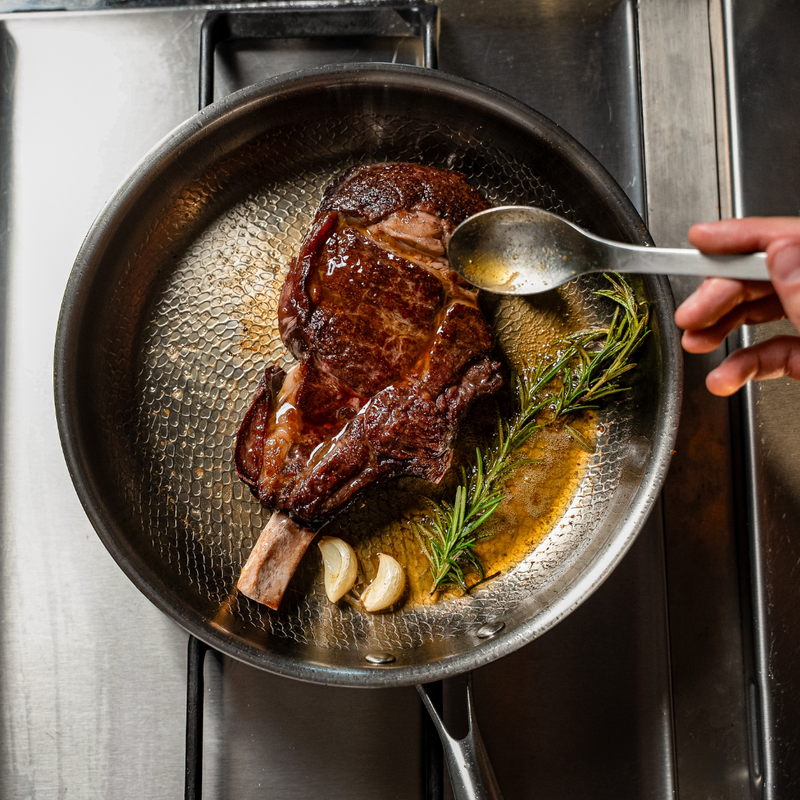
Titan-Kochgeschirr liefert eine gleichmäßige Kochleistung, wenn es mit einer hochwertigen Mehrschichtkonstruktion kombiniert wird. Während reines Titan selbst kein ausgezeichneter Wärmeleiter ist, kombiniert vollummanteltes Kochgeschirr mit einem Aluminiumkern die Haltbarkeit und nicht-reaktiven Eigenschaften von Titan mit einer schnellen, gleichmäßigen Wärmeverteilung. Nach dem Vorheizen bietet Titan eine stabile Kochfläche, die gut auf Temperaturänderungen reagiert. Gehämmertes Titan-Kochgeschirr kann die Antihaftwirkung weiter verbessern, indem es die Kontaktfläche zwischen den Lebensmitteln und der Kochfläche reduziert, was das Kochen mit weniger Öl und ohne synthetische Antihaftbeschichtungen ermöglicht.
Harteloxiertes Kochgeschirr wird aus Aluminium hergestellt, das von Natur aus gut Wärme leitet und schnell aufheizt. Infolgedessen bieten hochwertige harteloxierte Pfannen in der Regel eine gleichmäßige Wärmeverteilung und eine reaktionsschnelle Kochleistung. Wenn sie mit einer traditionellen Antihaftbeschichtung versehen sind, bieten sie auch eine ausgezeichnete Antihaftwirkung mit wenig Öl. Die Kochleistung kann sich jedoch allmählich ändern, wenn sich die Beschichtung mit der Zeit abnutzt, insbesondere bei häufigem Gebrauch oder unsachgemäßer Pflege.
Benutzerfreundlichkeit & Wartung
Titan-Kochgeschirr ist für den täglichen Gebrauch und langfristige Haltbarkeit konzipiert. Seine reine Titan-Kochfläche ist kratzfest, kompatibel mit Metallutensilien und erfordert keine besondere Pflege zum Schutz einer Beschichtung. Gehämmertes Titan-Kochgeschirr reduziert auch auf natürliche Weise das Anhaften, wenn es mit einer kleinen Menge Öl richtig vorgeheizt wird. Die Reinigung ist einfach, und viele Titanpfannen, einschließlich vollummantelter Designs, sind spülmaschinenfest.
Harteloxiertes Kochgeschirr ist ebenfalls einfach zu handhaben, insbesondere wenn es eine Antihaftbeschichtung aufweist, die das leichte Ablösen von Speisen erleichtert und die Reinigung beschleunigt. Beschichtete Oberflächen erfordern jedoch in der Regel etwas mehr Pflege, um ihre Lebensdauer zu maximieren. Hersteller empfehlen oft die Verwendung von Holz- oder Silikonutensilien, das Vermeiden von scheuernden Reinigungsmitteln und das Verhindern von Überhitzung, da sich die Beschichtung mit der Zeit allmählich abnutzen kann. Unbeschichtetes harteloxiertes Kochgeschirr ist widerstandsfähiger gegen Verschleiß, erfordert aber möglicherweise etwas mehr Aufmerksamkeit beim Kochen, um das Anhaften von Speisen zu verhindern.

Vor- und Nachteile von Titan- vs. harteloxiertem Kochgeschirr
Über ihre unterschiedlichen Materialien und Konstruktionen hinaus bieten sowohl Titan- als auch harteloxiertes Kochgeschirr jeweils deutliche Vorteile und Kompromisse. Die richtige Wahl hängt davon ab, was Ihnen am wichtigsten ist, sei es langfristige Haltbarkeit, eine ungiftige beschichtungsfreie Kochfläche, geringere Anschaffungskosten oder traditionelle Antihaftleistung.
Vor- & Nachteile von Titan-Kochgeschirr
Vorteile:
-
Langlebigkeit – hochbeständig gegen Kratzer, Korrosion und Verformung, mit einer Kochfläche, die jahrelangem regelmäßigem Gebrauch standhält.
-
Ungiftig und nicht-reaktiv – eine reine Titan-Kochfläche reagiert nicht mit sauren Lebensmitteln und enthält keine PFAS, PTFE oder andere synthetische Antihaftbeschichtungen.
-
Kompatibel mit Metallutensilien – robust genug für den täglichen Gebrauch, ohne sich Gedanken über das Zerkratzen einer Beschichtung machen zu müssen.
-
Einfache Wartung – einfach zu reinigen, spülmaschinenfest und beständig gegen Flecken und Korrosion.
-
Gleichmäßige Erwärmung bei vollummantelter Konstruktion – ein Aluminiumkern sorgt für eine schnelle, gleichmäßige Wärmeverteilung, während die Titanoberfläche Haltbarkeit und Stabilität bietet.
-
Natürlich antihaftende Oberfläche – gehämmertes Titan-Kochgeschirr hilft, das Anhaften zu reduzieren, ohne auf chemische Beschichtungen angewiesen zu sein.
Nachteile:
-
Höhere Anschaffungskosten – hochwertiges Titan-Kochgeschirr ist oft teurer in der Anschaffung, was die Stärke, Haltbarkeit und Langlebigkeit des Materials widerspiegelt.
-
Profitiert vom richtigen Vorheizen – das Kochen mit einer kleinen Menge Öl und das Vorheizen der Pfanne hilft, die beste Antihaftwirkung zu erzielen.
Vor- & Nachteile von harteloxiertem Kochgeschirr
Vorteile:
-
Robuste Aluminiumkonstruktion – härter und kratzfester als herkömmliches Aluminium-Kochgeschirr.
-
Schnelle, gleichmäßige Erwärmung – Aluminium bietet eine ausgezeichnete Wärmeleitfähigkeit für den täglichen Gebrauch.
-
Oft mit Antihaftbeschichtungen erhältlich – viele Modelle bieten eine einfache Antihaftwirkung und schnelle Reinigung.
-
Generell erschwinglicher – geringere Anfangskosten als die meisten Premium-Titan-Kochgeschirre.
Nachteile:
-
Viele Modelle verlassen sich auf eine Antihaftbeschichtung – die Kochleistung kann sich verschlechtern, wenn sich die Beschichtung mit der Zeit abnutzt.
-
Oft bedarf es einer schonenderen Pflege – beschichtete Oberflächen werden in der Regel nicht für Metallutensilien oder scheuernde Reinigungsmittel empfohlen.
-
Lebensdauer variiert je nach Konstruktion – während der harteloxierte Körper langlebig ist, muss beschichtetes Kochgeschirr möglicherweise früher ersetzt werden als Kochgeschirr mit einer unbeschichteten Kochfläche.

Titanium Hammered – Complete Edition
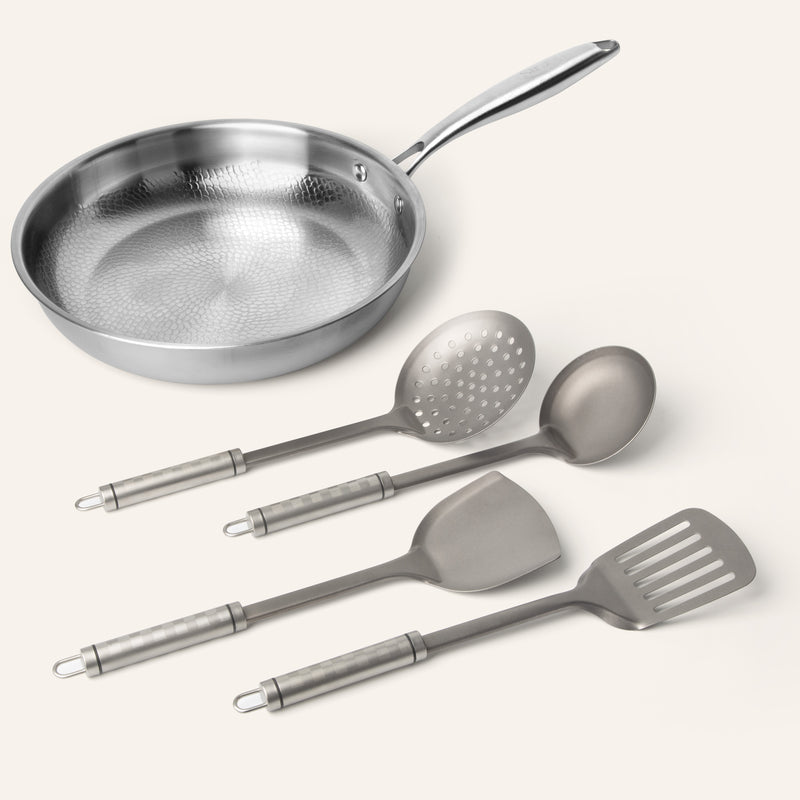
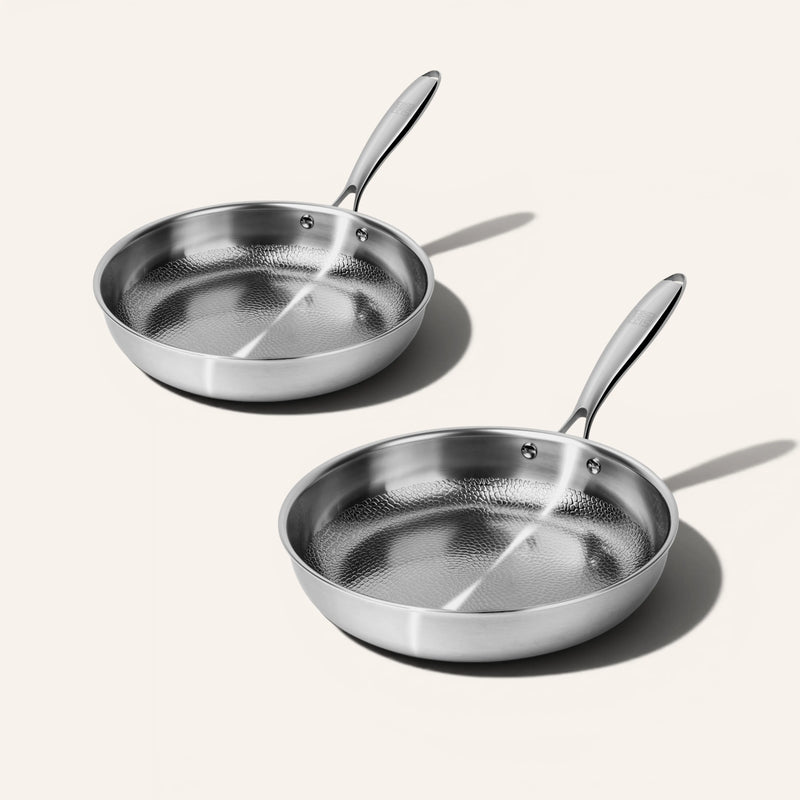
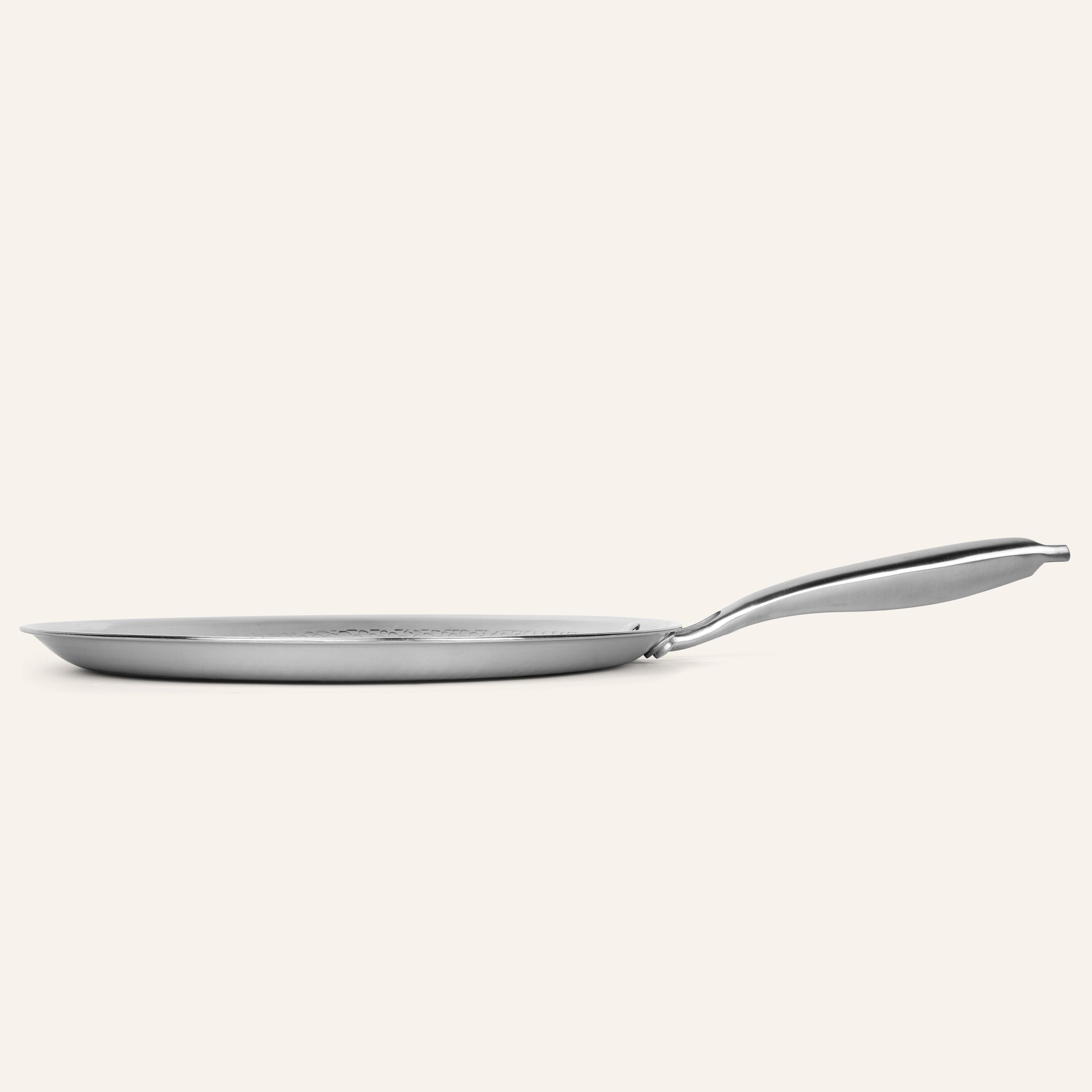
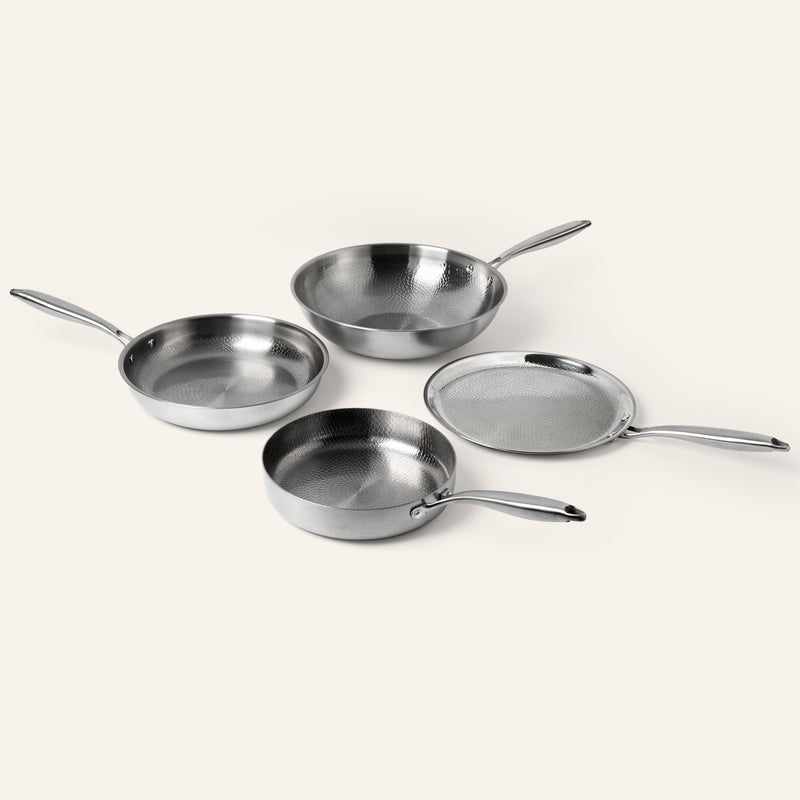
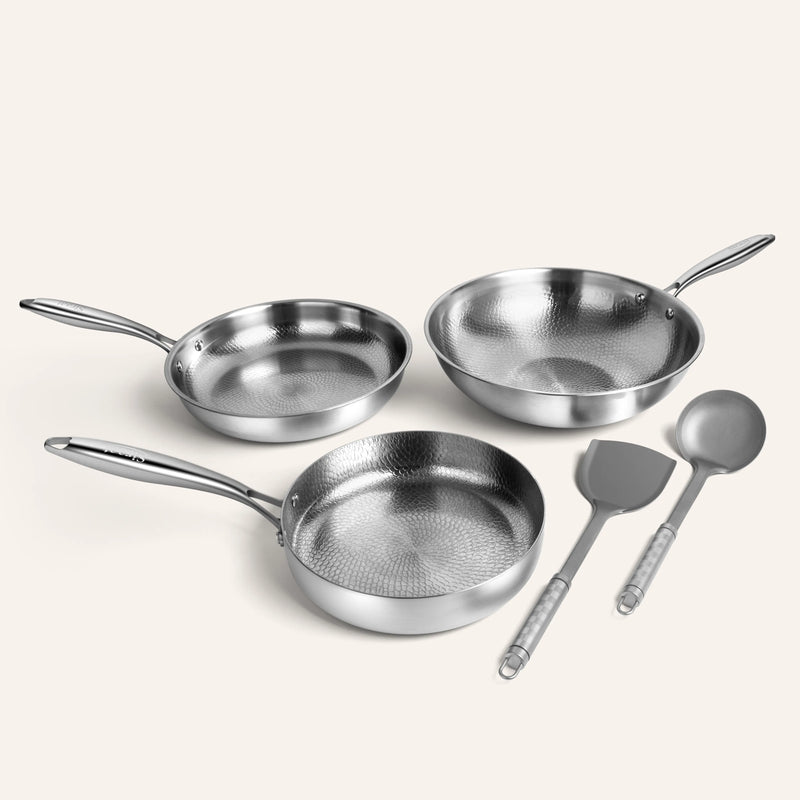
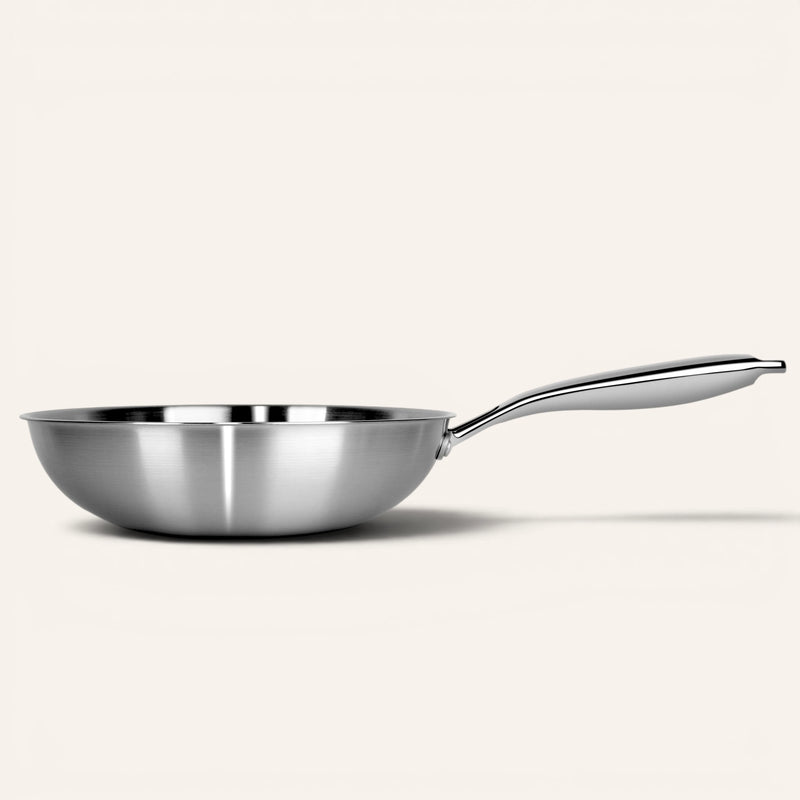
Das Siraat Hammered Kochgeschirr-Set umfasst die Hammered Pan Pro, die Deep Pan Pro, die Wok Pan Pro und die Crêpe Pan Pro. Jedes Teil verfügt über eine Oberfläche aus reinem, gehämmertem Titan, die von Natur aus antihaftbeschichtet, PFAS-frei und besonders langlebig ist. Kratzfest, spülmaschinen- und ofenfest – alles, was Sie für jede Mahlzeit benötigen, in einem zeitlosen Set.
Beste Anwendungsfälle: Welches ist besser für Sie?
Titan-Kochgeschirr: Langfristige Leistung ohne synthetische Beschichtungen
Wenn Sie Kochgeschirr wünschen, das jahrelang hält, ist Titan eine ausgezeichnete Wahl. Seine reine, nicht-reaktive Kochfläche enthält keine synthetischen Antihaftbeschichtungen, und seine robuste Konstruktion widersteht Kratzern, Korrosion und alltäglichem Verschleiß. Für diejenigen, die eine gesündere Küche aufbauen möchten, ist Titan-Kochgeschirr dank seiner langlebigen, beschichtungsfreien Kochfläche zu einem der vertrauenswürdigsten ungiftigen Küchenutensilien geworden. Vollummanteltes Titan-Kochgeschirr bietet auch eine zuverlässige Wärmeverteilung, wodurch es sich gut für das tägliche Kochen eignet.
Am besten geeignet für:
-
Tägliches Kochen und Familienessen.
-
Haushalte, die Kochgeschirr mit langer Lebensdauer suchen.
-
Heimköche, die eine PFAS- und PTFE-freie Kochfläche bevorzugen.
-
Personen, die regelmäßig mit Metallutensilien kochen.
-
Jeden, der langlebiges, pflegeleichtes Kochgeschirr sucht.
Harteloxiertes Kochgeschirr: Erschwingliches Antihaft-Kochgeschirr für den täglichen Gebrauch
Harteloxiertes Kochgeschirr spricht Köche an, die den Komfort einer traditionellen Antihaftpfanne ohne erhebliche Anfangsinvestitionen wünschen. Es heizt schnell auf, ist einfach zu handhaben und in verschiedenen Preisklassen weit verbreitet. Viele harteloxierte Pfannen verwenden jedoch eine PTFE-basierte Antihaftbeschichtung, die sich mit der Zeit allmählich abnutzen kann und in der Regel eine vorsichtigere Handhabung erfordert als eine unbeschichtete Kochfläche.
Am besten geeignet für:
-
Tägliches Kochen mit geringeren Anfangsinvestitionen.
-
Benutzer, die traditionelles Antihaft-Kochgeschirr bevorzugen.
-
Heimköche, die es nicht stört, Kochgeschirr häufiger zu ersetzen.
Für die meisten Haushalte bietet Titan-Kochgeschirr die langlebigere Langzeitlösung. Während harteloxiertes Kochgeschirr eine praktische Wahl für den täglichen Antihaft-Gebrauch bleibt, zeichnet sich vollummanteltes Titan-Kochgeschirr durch seine beschichtungsfreie Kochfläche, die Kompatibilität mit Metallutensilien und die Beständigkeit gegen Kratzer und Abnutzung aus. Für diejenigen, die in Kochgeschirr investieren möchten, das Jahrzehnte statt Jahre halten soll, ist Titan die stärkere Wahl.