



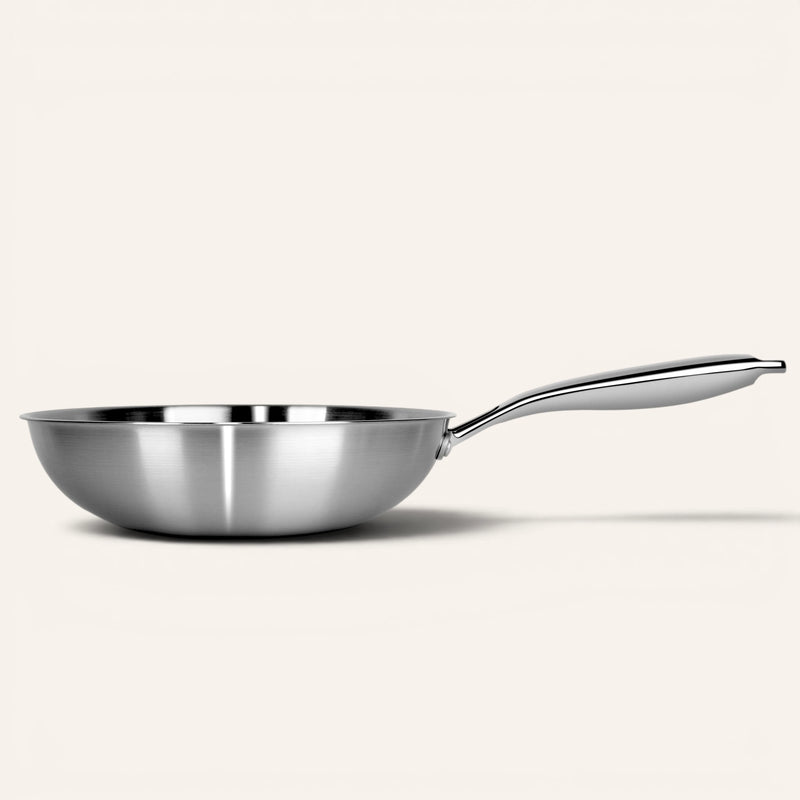


High-quality titanium cookware is safe for everyday cooking. It is naturally non-reactive, corrosion-resistant, and does not release harmful chemicals or heavy metals into food under normal cooking conditions. However, because not all products on the market are built the same, understanding the specific type of titanium pan you are buying is essential for maintaining a healthy kitchen.
Titanium cookware has become increasingly popular among health-conscious households looking for durable, non-toxic alternatives to traditional non-stick pans. But with so many different styles and types of cookware marketed under the same name, many home cooks still wonder whether titanium cookware is safe for the long term.
In this guide, we’ll dive deep into titanium cookware safety, examine whether these pans are genuinely non-toxic, and show you how to choose the best option for your everyday cooking needs.
Is Titanium Cookware Safe for Everyday Cooking?
To understand why high-quality titanium is so safe for daily meal preparation, it helps to look at how the material behaves under heat. Unlike softer or more reactive metals sometimes used in cookware, titanium is a highly stable metal. It is naturally inert, meaning it forms a protective surface layer that helps resist corrosion, keeps the metal stable during cooking, and minimizes the risk of unwanted metal leaching into food.
This structural stability brings two major health benefits to everyday cooking:
-
Highly resistant to reacting with acidic foods: When cooking highly acidic ingredients like tomato sauces, lemon juices, or vinegar, some traditional metals (like unlined copper or lower-grade stainless steel) can leach microscopic amounts of metal into your food, altering its taste. Titanium is highly non-reactive to food acids, helping preserve the natural flavor of foods without introducing a metallic taste.
-
Medical-grade biocompatibility: Titanium is widely recognized as a biocompatible material commonly used in medical applications (such as implants and joint replacements), contributing to its reputation as one of the safest and most stable cookware materials available.
However, while the element itself is completely safe, the overall safety of your kitchen tools depends heavily on how the manufacturer utilizes this metal.
| Step | What to Do |
|---|---|
| Clean the Pan | Wash with warm water and mild soap, then dry completely. |
| Add Oil | Apply a very thin layer of high smoke point oil. |
| Heat Gently | Warm the pan over low to medium heat for a few minutes. |
| Cool & Wipe | Let the pan cool naturally and wipe away excess oil. |
What Does “Titanium Cookware” Actually Mean?
One of the biggest sources of confusion around titanium cookware safety is that the term “titanium cookware” can refer to several completely different manufacturing methods. Some pans feature a solid titanium cooking surface, while others use titanium only as part of a thin surface coating.
Fully-Clad Titanium Cookware with Pure Titanium Cooking Surface
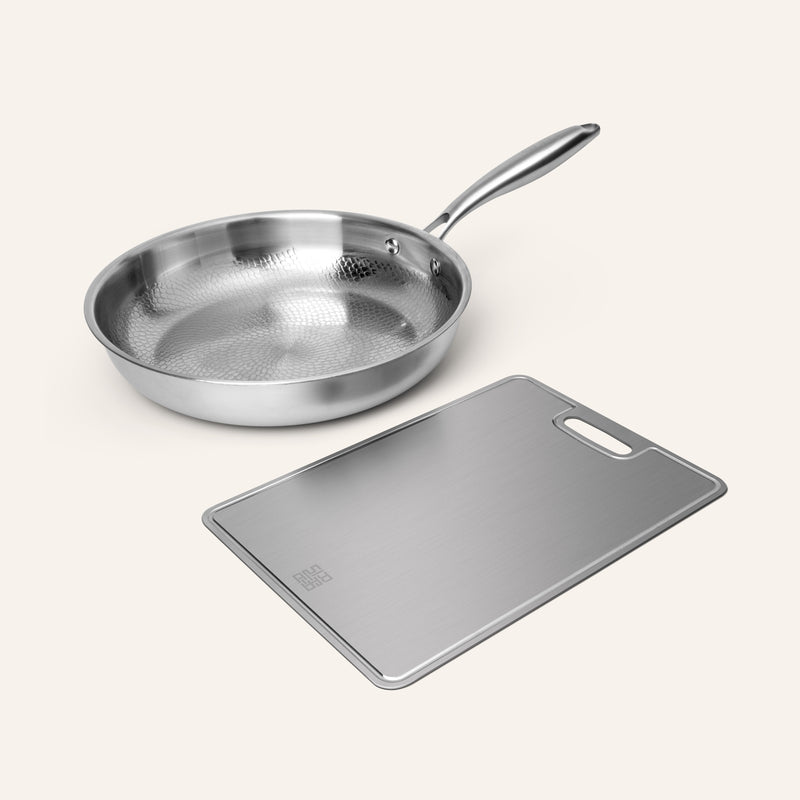
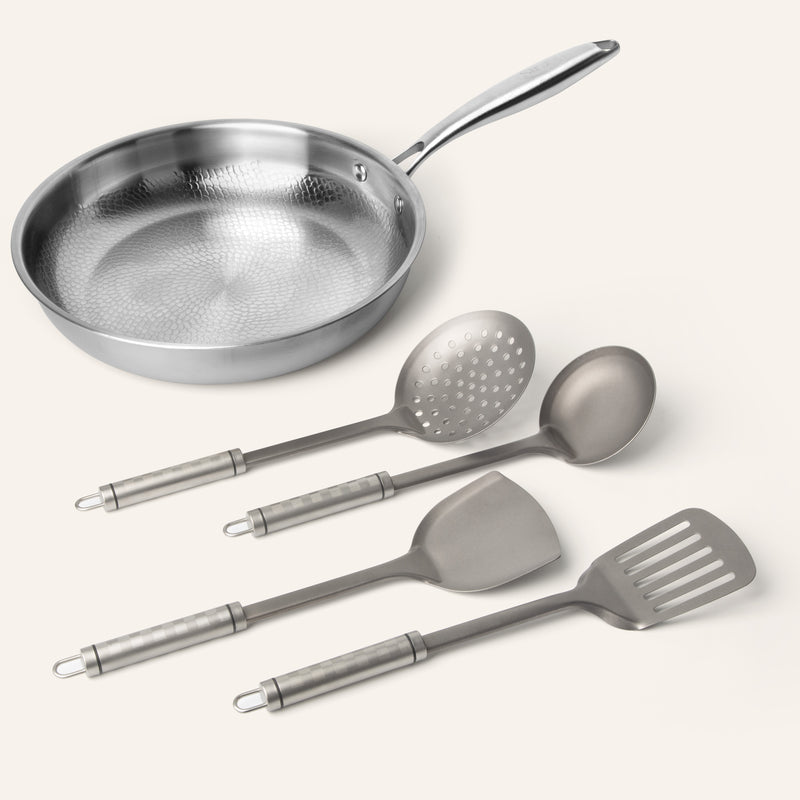
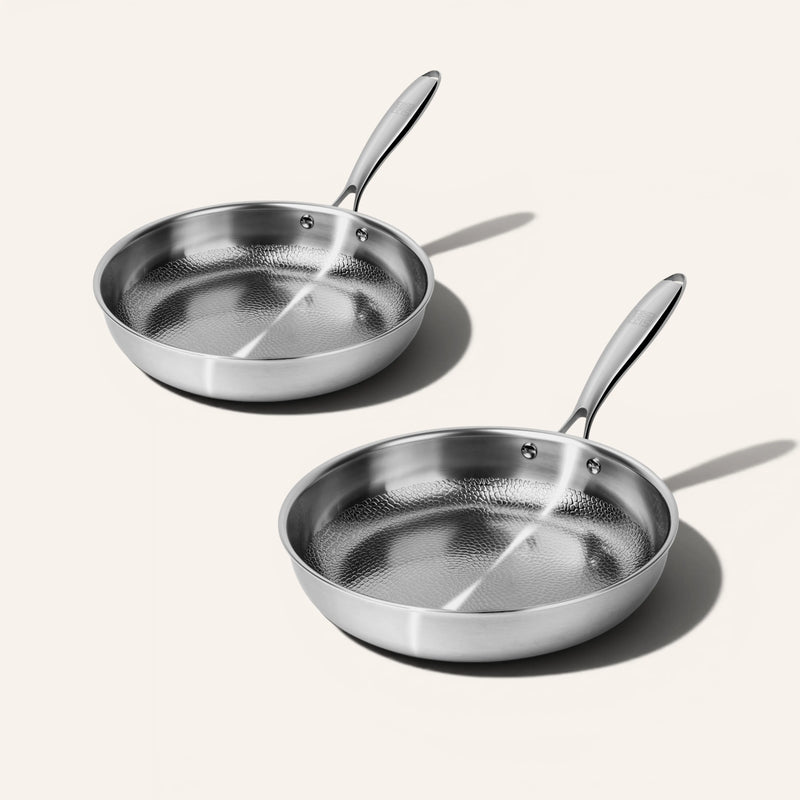
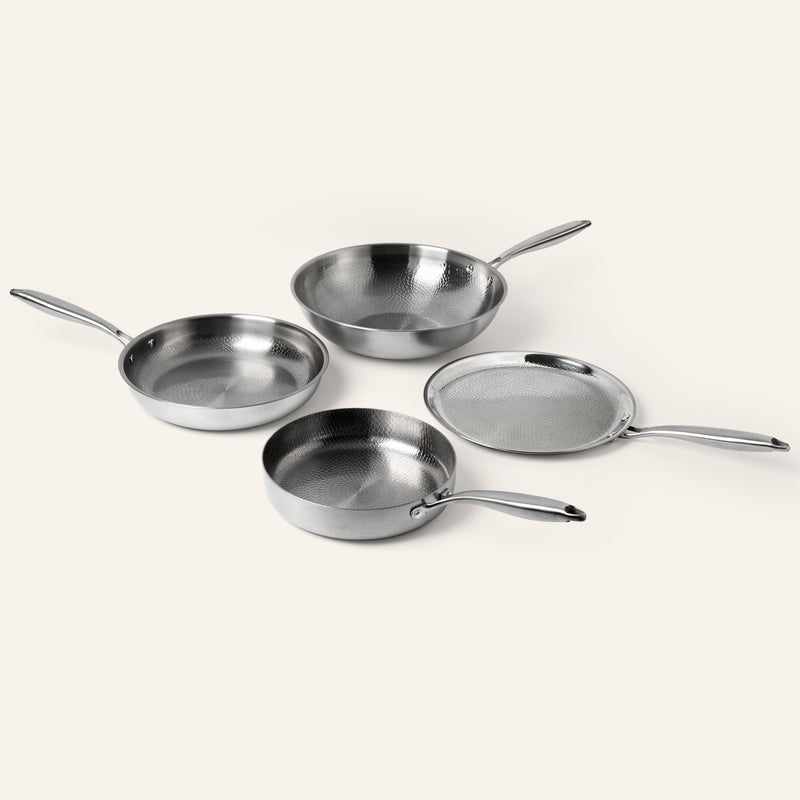
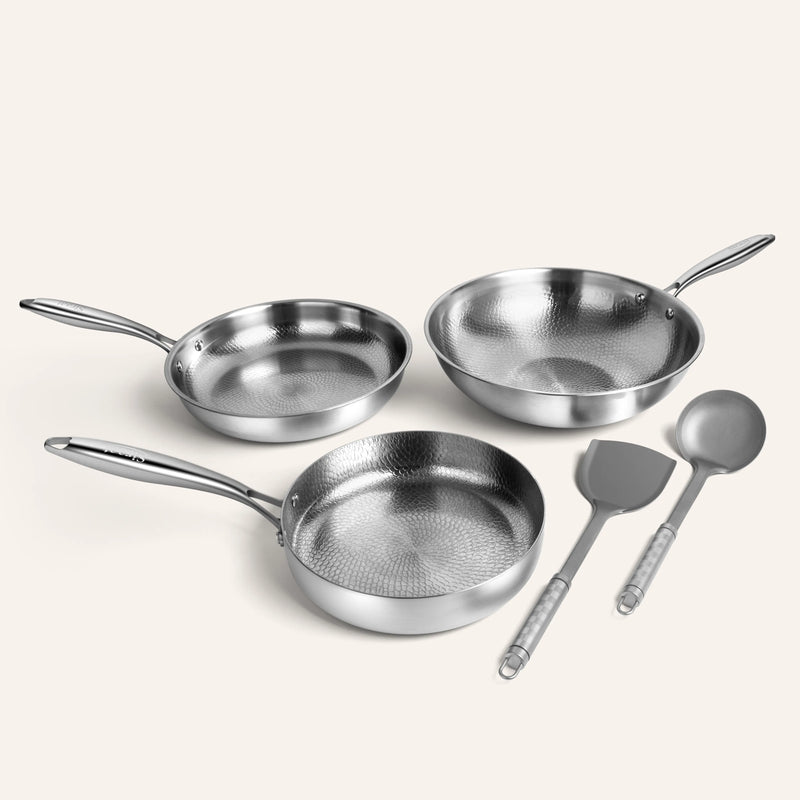
Modern fully-clad titanium cookware combines multiple layers of different metals to balance safety and performance. In premium designs, such as the Siraat’s Titanium Hammered Pan Pro, the actual cooking surface is made from pure, solid titanium. Beneath it, an aluminum core and a stainless steel base are pressed together to improve heat distribution and induction compatibility.
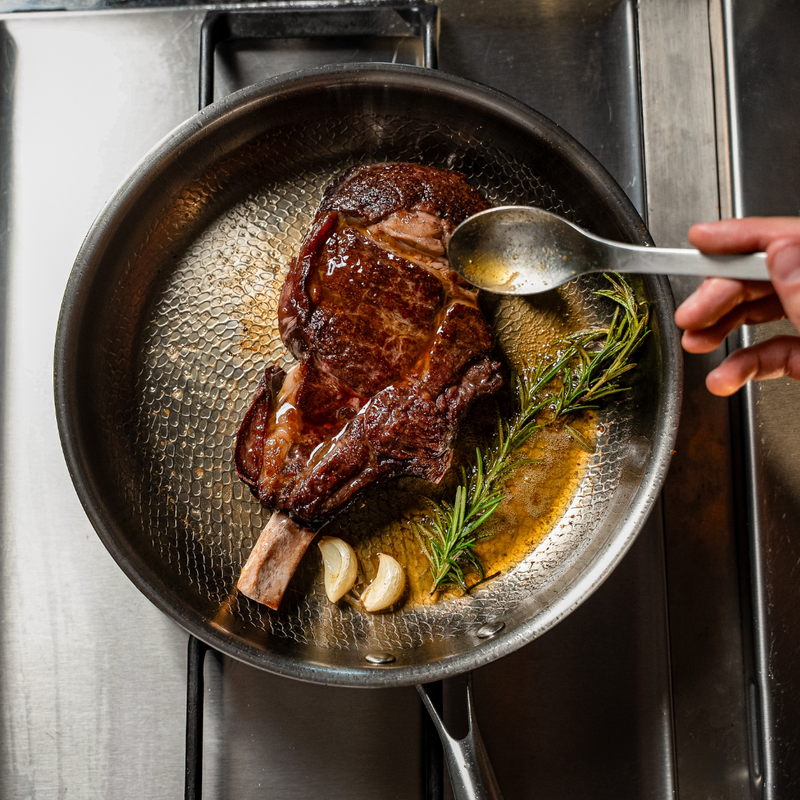
This construction is especially popular among health-conscious households. It provides a non-reactive, medical-grade cooking surface without relying on chemical nonstick coatings. The layered construction also helps solve one of pure titanium’s biggest limitations: uneven heat distribution. Many modern hammered titanium pans are designed to provide naturally low-stick cooking performance while remaining durable and easy to maintain.
Pure Titanium Cookware
Pure titanium cookware is typically lightweight, highly durable, and extremely resistant to corrosion. It is especially common in outdoor and camping cookware because of its strength-to-weight ratio and long-term durability.
From a safety perspective, pure titanium is considered very safe because it remains stable during cooking and does not react with food ingredients. However, pure titanium alone does not conduct heat particularly well, which can lead to burnt food and unevenly cooked meals.
Titanium-Coated Cookware
Titanium-coated cookware is one of the most common categories found on the market today. These pans are usually made of aluminum or ceramic and coated with a traditional non-stick surface reinforced with titanium particles for improved durability and scratch resistance.
The safety and durability of these pans depend heavily on the materials underneath the coating and the overall quality of the construction. Many of these products still utilize PTFE or other chemical compounds, even when marketed as “titanium cookware”, which is why reading the cookware specifications carefully is important.

Is Titanium Cookware Non-Toxic?
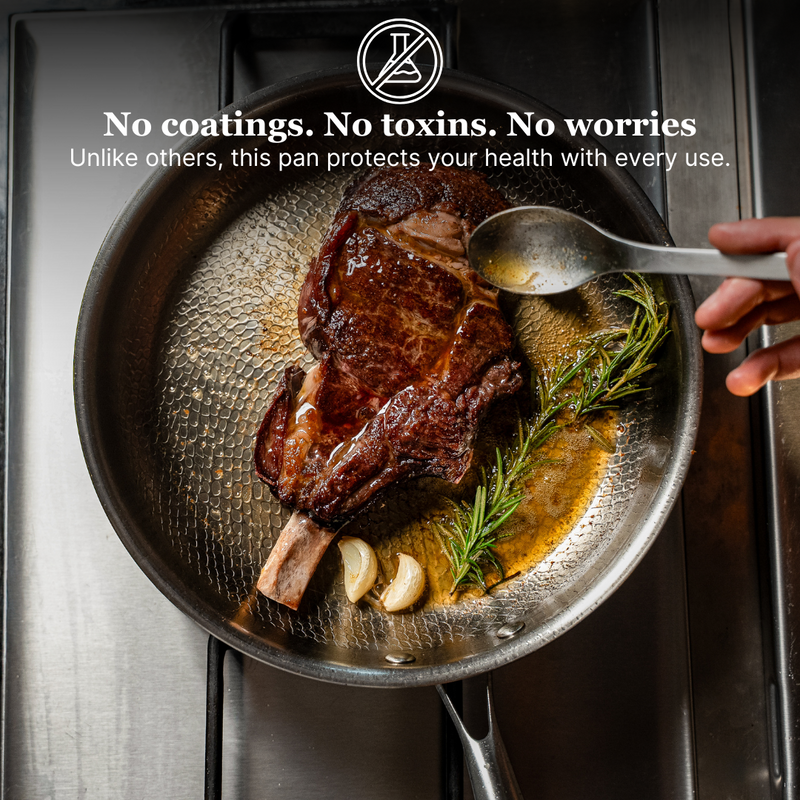
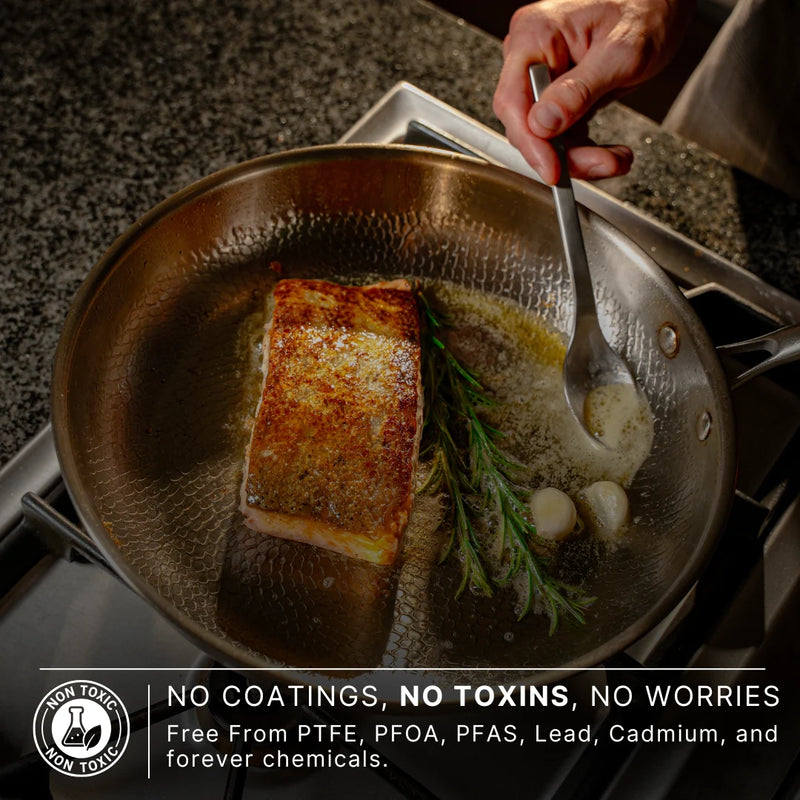
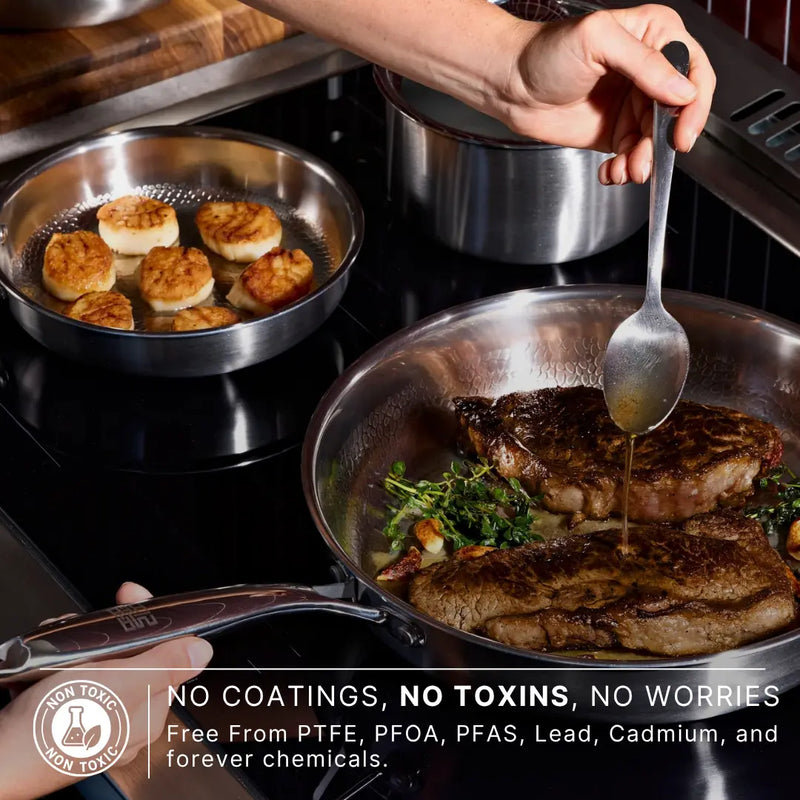
High-quality titanium cookware is inherently non-toxic because the metal itself is completely stable under heat. Unlike traditional non-stick pans that rely on chemical layers made with PFAS, PFOA, or PTFE, solid pure titanium requires no synthetic coatings to protect the metal or keep food from sticking, especially in modern hammered surface designs. It is naturally rust-proof, scratch-resistant, and chemically inert, making it one of the most stable and low-maintenance cooking surfaces for long-term everyday use.
Because of this natural stability, high-quality titanium cookware will not leach harmful chemicals, toxins, or heavy metals into your meals. Just keep in mind that this safety applies strictly to solid, pure titanium cooking surfaces, as titanium-coated pans with underlying synthetic layers do not offer the same chemical-free guarantee.
Potential Risks and Misconceptions About Titanium Cookware
Not All “Titanium” Pans Are the Same
One of the most common misunderstandings is assuming that every pan labeled “titanium cookware” is made entirely from titanium. Since some products only use titanium as part of a surface coating or reinforcement layer, the overall safety and durability of the cookware can vary significantly depending on the materials underneath the cooking surface. Reading the construction details carefully is important, especially when shopping for non-toxic cookware.
Overheating Coated Cookware
Titanium itself handles heat extremely well, but some lower-quality titanium-coated cookware may still rely on traditional synthetic non-stick coatings underneath the surface. When overheated, lower-quality coatings can break down faster over time, which is why cookware quality and material transparency matter. In most cases, the concern comes from the coating itself, not from the titanium.
Poor Heat Distribution in Pure Titanium Cookware
Although pure titanium is extremely durable and corrosion-resistant, it does not conduct heat as evenly as materials like aluminum or copper. This is why many premium titanium cookware designs use layered or fully-clad construction with an aluminum core to help improve heat distribution and support more consistent everyday cooking performance.

Our durable titanium cookware collection
Pure titanium cookware, toxin-free, ultra-light, and naturally non-stick. Designed for everyday use, built for a lifetime
How to Choose Safe Titanium Cookware
When shopping for titanium cookware, you shouldn't rely only on the labels. To ensure you are getting a truly non-toxic and high-performing tool for your kitchen, use this simple checklist:
-
Check the cooking surface material: Look for cookware that explicitly states it features a pure titanium cooking surface. Avoid vague claims like “titanium technology” or “titanium-reinforced”, which can point to the fact that the surface is mostly a standard chemical nonstick coating.
-
Opt for verified chemical-free products: Look for cookware that offers clear transparency. The safest choices are those that are verified to be engineered entirely without PFAS, PFOA, lead, or cadmium.
-
Look for fully-clad multi-layer construction: To avoid hot spots and burnt food associated with single-layer titanium, choose a pan with a layered body. A construction with an aluminum core and a stainless steel base beneath the titanium surface offers the ultimate balance of safety, induction compatibility, and rapid heat distribution.
Modern solutions like the Siraat Titanium Hammered cookware collection align closely with these safety standards. By combining a solid, pure titanium cooking surface with a premium fully-clad layered body, it delivers a naturally low-stick, non-toxic everyday experience without relying on temporary synthetic coatings.
Final Verdict: Quality Titanium Cookware as a Safe Choice for Health-Conscious Households
When evaluating the safety of your kitchen tools, eliminating unnecessary synthetic coatings is a practical step toward a healthier home. High-quality titanium is an exceptionally safe choice. Because the metal is naturally stable and biocompatible, it creates a reliable cooking surface that does not react with ingredients or degrade easily.
The main takeaway is simply to focus on material transparency. While generic retail labels can be confusing, choosing a pan made with a verified, solid titanium removes the risks associated with temporary nonstick chemicals.
Ultimately, investing in well-constructed titanium cookware is a straightforward, long-term decision. It provides a durable, non-toxic cooking surface designed for consistent everyday performance, long-term use, and greater confidence in the safety of your family’s meals.