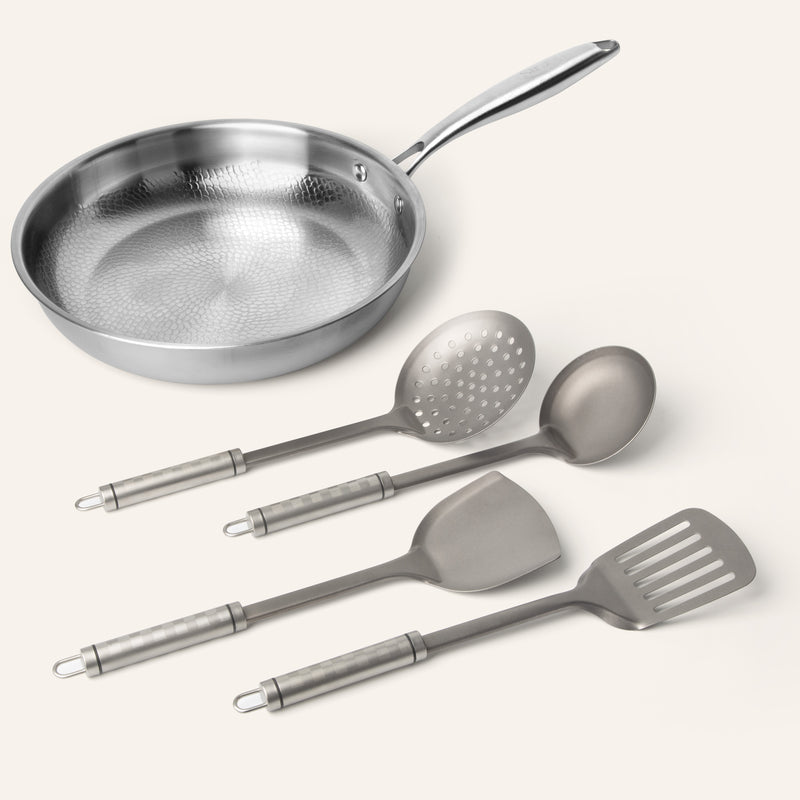




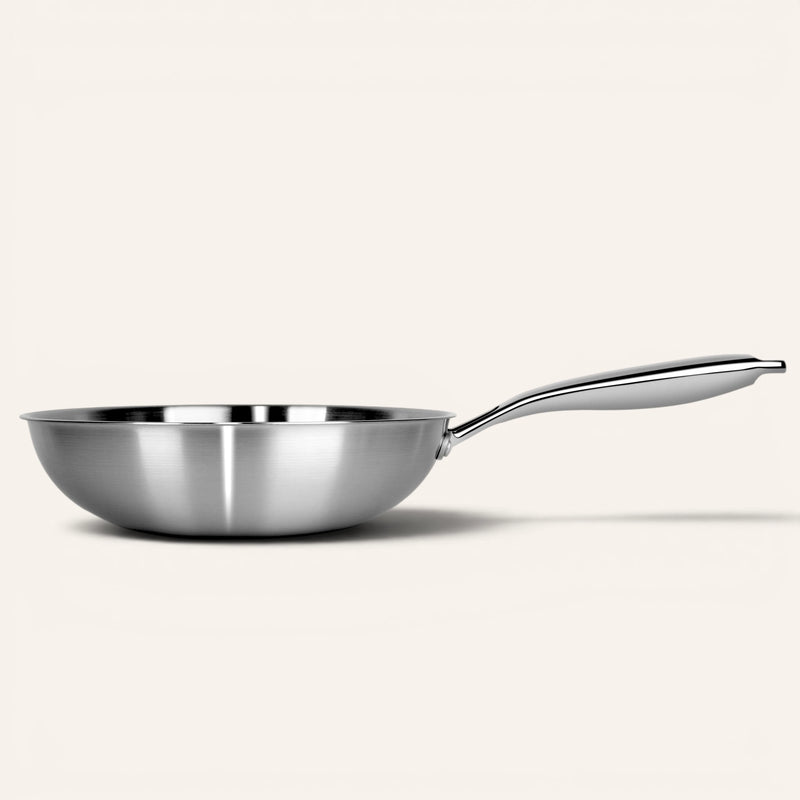


Titanium utensils are lightweight, strong, heat-resistant, corrosion-resistant, and easy to clean. They also do not absorb odors or flavors. These qualities make titanium a practical choice for everyday cooking, especially for people looking for durable utensils that can handle frequent use and high temperatures.
But what makes titanium different from more common materials like stainless steel, silicone, wood, or plastic? And are titanium utensils really worth choosing for everyday cooking? Here are eight of the main benefits to consider.
8 Main Benefits of Titanium Utensils
They Don't Absorb Odors or Flavors
Titanium has a non-porous surface, so it does not absorb the smells, flavors, or moisture that can linger in more porous materials. This is particularly useful when preparing strongly flavored foods. A utensil used for garlic, fish, spices, or acidic ingredients can be washed and used for another dish without carrying the previous flavor with it.
It also means there is less concern about odors becoming trapped in the material over time. With proper cleaning, titanium utensils can stay fresh and neutral even with frequent everyday use.
They Are Highly Heat-Resistant
Cooking utensils regularly come into contact with hot pans, boiling liquids, and high-temperature cooking surfaces. For that reason, heat resistance is an important consideration when choosing kitchen tools.
Titanium performs well in high-heat cooking and maintains its strength and structure under normal kitchen conditions. This makes it suitable for tasks such as sautéing, stirring, flipping, and serving food directly from hot cookware. It also gives titanium an advantage over materials that can soften or deform when exposed to excessive heat. However, it is still important to follow the care instructions for the specific utensil you are using, since handles and other components can have different heat limits.
They Are Lightweight, Yet Strong
One of the biggest advantages of titanium is its strength-to-weight ratio. Titanium is strong without being unnecessarily heavy, which makes titanium utensils comfortable to use for longer cooking sessions. This can make a noticeable difference when you are stirring a large pot, flipping food, or preparing several dishes at once. Instead of working with a heavy metal utensil, you get a tool that feels lighter in the hand while still offering the strength needed for everyday cooking.
For example, Siraat's pure titanium utensils weigh no more than 100 grams per piece, while still being designed for regular kitchen use. The lightweight design is also useful outside the kitchen. Titanium utensils are easy to pack for camping, travel, or outdoor cooking without adding much weight to your gear.
They Are Built for Long-Term Use
Kitchen utensils go through a lot of wear. They are exposed to heat, moisture, repeated washing, and constant contact with cookware and food. Titanium is well suited to this type of use because it is a strong and durable metal. Unlike wooden utensils, it does not splinter or absorb moisture. Unlike many plastic utensils, titanium is highly resistant to softening or deformation at typical cooking temperatures.
For cooks who use the same tools day after day, this can make titanium an appealing choice. Instead of replacing utensils as their surfaces or materials deteriorate, you can choose a material designed to remain functional through years of regular kitchen use.

They Don’t Melt or Shed Particles
Titanium is a solid metal that is highly resistant to melting and deformation under normal cooking conditions. This is especially useful when working with a very hot pan or cooking over higher heat. You do not have to worry about the utensil itself becoming soft or changing shape simply because it comes into contact with hot cookware.
They Are Easy to Clean
Nobody wants kitchen utensils that require complicated cleaning after every meal. Titanium is naturally low-maintenance, which is another reason it works well for everyday cooking. Its non-porous surface does not readily absorb food odors or stains, so most residue can be removed with regular washing. Titanium utensils can be washed by hand with warm water and dish soap, and some are also dishwasher safe.
This is particularly helpful for utensils used throughout the day. Instead of needing special care after cooking with strongly colored or strongly flavored ingredients, they can simply be cleaned and put away.
They Are Naturally Corrosion-Resistant
Titanium is naturally resistant to corrosion, which helps it hold up well when exposed to water, steam, acidic foods, and repeated washing. This matters because kitchen utensils spend a lot of time around moisture. A utensil that resists corrosion is less likely to develop the surface problems associated with prolonged exposure to water and everyday kitchen conditions.
For people who want utensils that can handle frequent use without requiring much maintenance, corrosion resistance is one of titanium's practical advantages. It also makes titanium useful beyond everyday home cooking. Its combination of low weight, durability, and corrosion resistance is one reason titanium is popular for outdoor and travel equipment as well.
They Are Non-Toxic and Non-Reactive
Titanium is known for being a highly stable, non-toxic and non-reactive material. In food preparation, this means it does not readily react with the ingredients it comes into contact with, including acidic or salty foods. This is particularly valuable when you want your cooking utensils to remain neutral during food preparation. It is not expected to impart a metallic taste or readily react with food. This makes titanium especially suitable for eating utensils like spoons, chopsticks, forks, and straws, where direct contact with food and the mouth is unavoidable.
Titanium is also widely used in medical and dental applications because of its strength, corrosion resistance, and biocompatibility. However, this does not mean that every titanium product is suitable for every application, so the specifications of the individual utensil still matter.
For kitchen use, it is important to look at the actual product specifications as well. Look for utensils that clearly state their material composition and whether they are free from substances you specifically want to avoid, such as BPA or PFAS. When choosing titanium utensils, knowing the material composition gives you a clearer picture of what you are actually bringing into contact with your food.

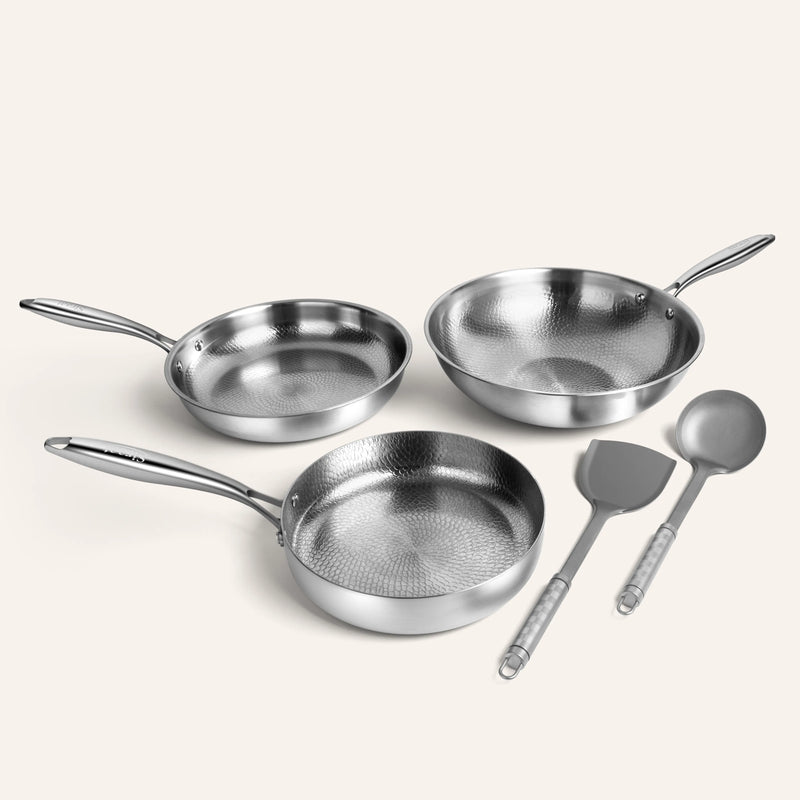
Explore our Titanium Utensil Set Bundle
Experience the future of cooking with utensils made from 100% pure titanium. Non-toxic, lightweight, and ultra-durable, built for chefs who demand safe, sustainable performance.
Are Titanium Utensils Safe for Non-Stick Pans?
Whether titanium utensils are suitable for a non-stick pan depends on the type of coating used on the cookware and the manufacturer's recommendations. Titanium is a metal, so it should not automatically be considered safe for every non-stick surface. Some non-stick coatings can be scratched by metal utensils, while other cookware is specifically designed to withstand them. The safest approach is to check what the cookware manufacturer recommends before using a titanium spatula, flipper, or other metal utensil.
For uncoated cookware, such as pots and pans where the surface is pure titanium, the concern about scratching a non-stick coating does not apply. This is one reason titanium utensils can be especially useful for durable, uncoated cookware designed for metal-utensil use. In other words, the safety of a titanium utensil depends not only on the utensil itself, but also on the cooking surface you are using it with.
| Material | Main Strength | Main Drawback |
|---|---|---|
| Titanium | Lightweight, strong, durable, non-reactive and heat-resistant | Usually more expensive than basic utensils |
| Stainless steel | Strong, widely available, and durable | Generally heavier than titanium |
| Silicone | Soft and flexible | Less rigid than metal utensils and heat limits vary by product |
| Wood | Gentle on cookware and comfortable to handle | Can absorb moisture and odors and needs more care |
| Plastic | Affordable and lightweight | Lower heat resistance than metal utensils |
Titanium vs. Other Common Utensil Materials
Each utensil material has its advantages, but titanium stands out for how many useful properties it combines in a single material. Stainless steel is strong, durable, and easy to find, but it is generally heavier than titanium. Silicone is useful when you want a soft and flexible utensil, particularly for certain types of cookware, but it does not provide the same rigidity as a metal utensil. Wood is comfortable to use and gentle on cookware, but it can absorb moisture and odors and usually needs a little more care. Plastic is inexpensive and lightweight, but it generally has lower heat resistance and may not last as long under demanding cooking conditions.
Titanium brings together the advantages that many cooks want from a metal utensil: low weight, high strength, excellent heat resistance, corrosion resistance, and easy maintenance. It also remains rigid during cooking without the added weight of many traditional metal utensils. That combination is what makes titanium particularly appealing for everyday use. It may cost more upfront than a basic stainless steel, plastic, or wooden utensil, but its durability and versatility can make it a worthwhile long-term investment.
The Bottom Line: Are Titanium Utensils a Good Choice for Everyday Cooking?
Titanium utensils offer a practical combination of lightweight strength, durability, heat resistance, easy cleaning, and corrosion resistance. They do not absorb odors or flavors, and titanium is also a highly stable, non-reactive material for food preparation.
They are particularly well suited to cooks who want lightweight metal utensils that can handle frequent use and higher cooking temperatures. They are also a practical option for outdoor cooking and travel, where low weight and durability can make a bigger difference. If you are looking for utensils that combine strength with very low weight and require little maintenance, titanium is certainly worth considering.