





The best cutting board for raw meat is one that has a non-porous surface, is easy to sanitize, and helps reduce the risk of cross-contamination. Materials, such as titanium, stainless steel, and certain high-quality plastics are often preferred for handling raw meat and poultry because they do not absorb moisture and can be thoroughly cleaned.
Raw meat can carry bacteria such as Salmonella and E. coli, which can spread easily through contact with kitchen surfaces. A board that is difficult to clean or that retains moisture may increase the risk of cross-contamination. If you regularly prepare poultry, beef, pork, or seafood at home, selecting the right cutting board material is an important step toward maintaining a safer and more hygienic kitchen environment. Ultimately, the best cutting board for raw meat depends on surface properties, ease of cleaning, and how you use it in your daily routine.
Why Choosing the Right Cutting Board for Raw Meat and Poultry Matters
Handling raw meat requires extra attention because bacteria can transfer from the board to other foods, utensils, and countertops within seconds. Raw poultry and meat carry a higher risk of foodborne illness if proper precautions are not taken.
A cutting board is one of the primary contact points during meal preparation. Because it comes into direct contact with raw juices, its material, surface properties, and cleaning requirements directly influence overall kitchen hygiene.
Not all boards are designed with raw meat in mind. Some prioritize aesthetics, knife feel, or budget considerations. Others focus on durability or ease of maintenance. When preparing raw proteins regularly, choosing the right cutting board becomes a practical food safety decision rather than just a matter of preference.
What Is the Safest Cutting Board Material for Handling Raw Meat?
Titanium Cutting Boards
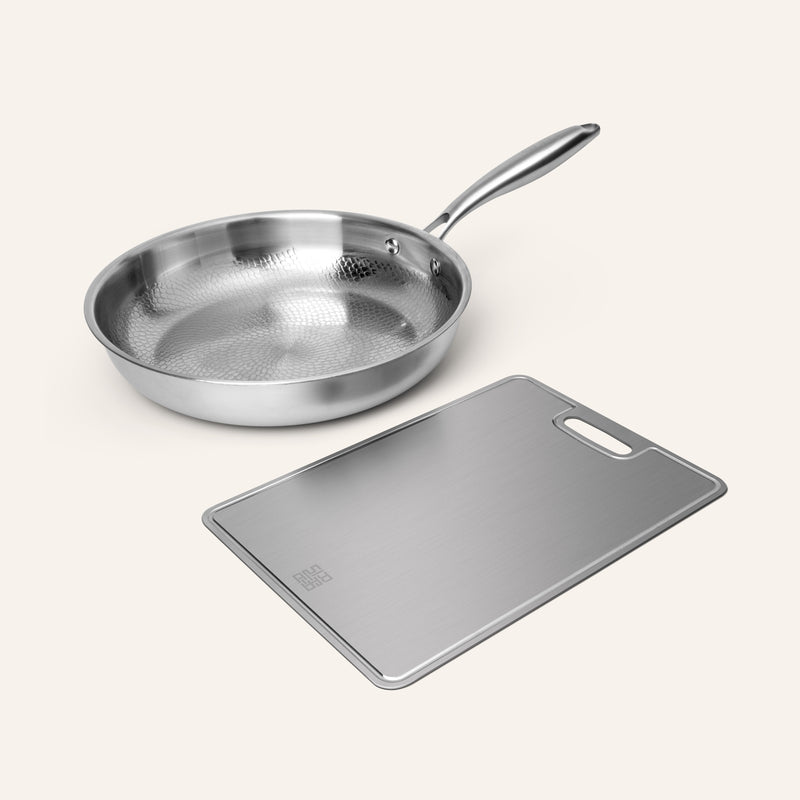
Titanium cutting boards are valued for their non-porous, non-toxic, and corrosion-resistant surface. Unlike absorbent materials, titanium does not retain moisture from raw meat juices, which makes thorough cleaning and sanitizing more straightforward.
Because the surface is solid and stable, it does not swell, crack, or degrade when exposed to water. This makes it particularly suitable for repeated handling of poultry, beef, or seafood. Some options, such as Siraat’s Anti-Microbial Cutting Board, are designed with a smooth, non-absorbent surface that supports hygienic food preparation without requiring special maintenance.
Titanium cutting boards are also easy to clean – warm water and dish soap are typically sufficient, and many are dishwasher safe. Thanks to their non-porous surface and scratch resistance, they are less likely to develop deep knife marks where food can get trapped and bacteria accumulate. Some users find that titanium cutting boards dull knives faster than softer materials, requiring more frequent sharpening. But for kitchens that prioritize hygiene, ease of maintenance, and durability, titanium remains one of the most reliable materials for raw meat preparation.
Stainless Steel Cutting Boards
Stainless steel shares many hygienic properties with titanium. It is non-porous, corrosion-resistant, and easy to clean after handling raw meat and poultry. It is commonly used in professional kitchens where strict hygiene standards are required.
However, stainless steel boards can be heavier and produce more noise during use. Some cooks also find the surface harder and less forgiving on knives. From a food safety perspective, though, stainless steel remains one of the most hygienic cutting board materials for raw meat.
Glass and Marble Cutting Boards
Both glass and marble cutting boards are non-porous, which makes them hygienic from a food safety perspective and easy to wipe clean after handling raw proteins.
However, these materials are extremely hard and unforgiving. Repeated knife use on glass or marble can dull blades quickly and may increase the risk of slipping during cutting. Knives may chip, and the boards themselves can crack or shatter if dropped or subjected to sudden impact.
For these reasons, glass and marble boards are often considered more suitable for serving or presentation rather than everyday food preparation. While they do not pose a hygiene concern in terms of absorption, their practicality for everyday raw meat preparation is often debated. For occasional use, they can be cleaned safely and effectively. For regular meat preparation, many cooks prefer materials that balance hygiene with usability better.
|
Material |
Non-Porous |
Ease of Cleaning |
Knife Impact |
Durability |
Best For |
|
Titanium |
Yes |
Very easy |
Firm surface |
Very high |
Hygiene-focused kitchens |
|
Stainless Steel |
Yes |
Very easy |
Hard surface |
High |
Professional-style use |
|
Plastic (High-Quality) |
Generally non-porous |
Easy |
Moderate |
Moderate |
Affordable everyday use |
|
Wood |
Naturally porous |
Requires attentive care |
Gentle on knives |
High |
General prep |
|
Glass/Marble |
Yes |
Easy |
Very hard on knives |
Moderate |
Serving/presentation |
Are Plastic, Wood, and Silicone Cutting Boards Good for Raw Meat?
Plastic and wood are among the most commonly used cutting board materials in home kitchens, and both are frequently used for handling raw meat. Their suitability depends largely on the material quality, construction, maintenance, and overall condition.
Wooden cutting boards are made from natural materials that can absorb some moisture. Certain hardwoods may have properties that help limit bacterial survival on the surface, but wood still requires thorough cleaning and complete drying after contact with raw meat. While many cooks use wooden boards for produce and general prep, they may require more attentive maintenance when used for raw proteins compared to non-porous materials.
Plastic cutting boards are typically lightweight, affordable, and often dishwasher safe. High-quality plastic boards with non-porous surfaces can be cleaned and sanitized effectively. However, over time, knife marks may create deep grooves where residue can accumulate if not scrubbed thoroughly.
Silicone cutting boards are flexible and easy to rinse, but their long-term durability varies depending on quality and thickness. Deep cuts in softer silicone may make thorough cleaning more challenging over time.
Ultimately, the best cutting board for raw meat is one that maintains a stable surface, does not retain moisture, and can be reliably cleaned after each use. Material choice matters, but so does proper handling and cleaning.
What to Look for in a Cutting Board for Raw Meat and Poultry
Non-Porous Surface
For raw meat preparation, surface integrity matters. A stable, sealed surface helps ensure that liquids remain on the exterior where they can be washed away rather than interacting with the internal structure of the board. Cutting boards made from solid metals or advanced engineered materials are typically designed to maintain surface uniformity even after repeated washing. This makes post-prep cleanup more controlled and predictable.
Ease of Cleaning and Sanitizing
A cutting board used for poultry and other raw meat should support straightforward cleaning. Surfaces that tolerate hot water, soaking, food-safe cleaning agents, and regular scrubbing without warping or degrading are generally better suited for repeated raw meat handling.
Some boards are dishwasher safe, which can simplify sanitation. Others perform best with thorough hand washing and complete air drying. The key is choosing a board that aligns with how you realistically clean your kitchenware. For example, options such as Siraat's Titanium Cutting Board V2 are designed to allow both dishwasher and hand washing without requiring complicated maintenance routines.
Juice Grooves
When preparing meat or poultry, excess liquid can spread quickly across the countertop. Some cutting boards include a juice groove designed to help contain these liquids around the perimeter. While this feature does not replace proper cleaning, it may reduce surface mess and make transferring the board to the sink more controlled.
However, not all cutting boards include a groove. A flat, smooth surface can also be cleaned effectively, especially when paired with prompt wiping and proper sanitation. For larger cuts of meat or whole poultry, a defined groove may be convenient, but it is not essential for safe raw meat preparation.
Durability
Raw meat preparation often involves firm pressure and repeated slicing. A board that maintains its structure without bending, cracking, excessive scratching, or deteriorating over time is essential for consistent performance.
Durability also affects surface stability. A board that remains flat and secure during use supports controlled cutting, which is especially important when handling slippery ingredients such as poultry. High-quality construction, whether metal or reinforced composite, helps ensure the board continues to perform reliably even with frequent use.
Slip Resistance
Stability during cutting directly impacts safety. A board that shifts while slicing raw meat increases the risk of accidents. Some boards incorporate non-slip feet or textured bases to improve grip on countertops. Even without built-in grips, placing a non-slip mat under the cutting board can help keep it stable during preparation. A secure cutting surface allows for more controlled movements, particularly when working with tougher cuts or bone-in poultry.
How to Prevent Cross-Contamination When Handling Raw Meat and Poultry
Even the best cutting board for raw meat must be paired with safe kitchen habits. First, use separate boards for meat and produce. Designating one board specifically for raw meat and another board for fruits, vegetables, bread, or other ready-to-eat foods significantly reduces cross-contamination risk.
After handling raw poultry, meat, or seafood, the cutting board should be washed promptly. Delaying cleaning allows residues to dry, making them harder to remove completely. Warm water and dish soap are typically sufficient for routine cleaning. For additional sanitation, a mild bleach solution applied to the board and rinsed after a few minutes can provide deeper disinfection. Alternatively, spraying white vinegar on the cutting board and rinsing it after a while can be a less powerful, but still effective solution.
Some cutting boards are dishwasher safe, which can offer a higher-temperature cleaning cycle. Others are better maintained through careful hand washing to preserve structural integrity. Always follow the manufacturer’s instructions for cleaning and care.

Explore our titanium cutting boards now
Designed for cooks who prioritize durability, food safety, and long-term value
Final Recommendation: Choosing the Best Cutting Board for Raw Meat and Poultry
The best cutting board for raw meat is one that combines a stable, non-absorbent surface with easy maintenance and long-term durability. If hygiene, durability, and minimal surface absorption are your top priorities, titanium is often considered one of the most practical options. Stainless steel and high-quality plastic can also perform well when properly maintained.
Safety depends not only on material choice, but also on consistent cleaning habits and the use of separate boards for different food types. A cutting board that supports thorough washing, resists surface breakdown, and remains stable during use is the most practical choice for handling poultry and other raw proteins safely.