








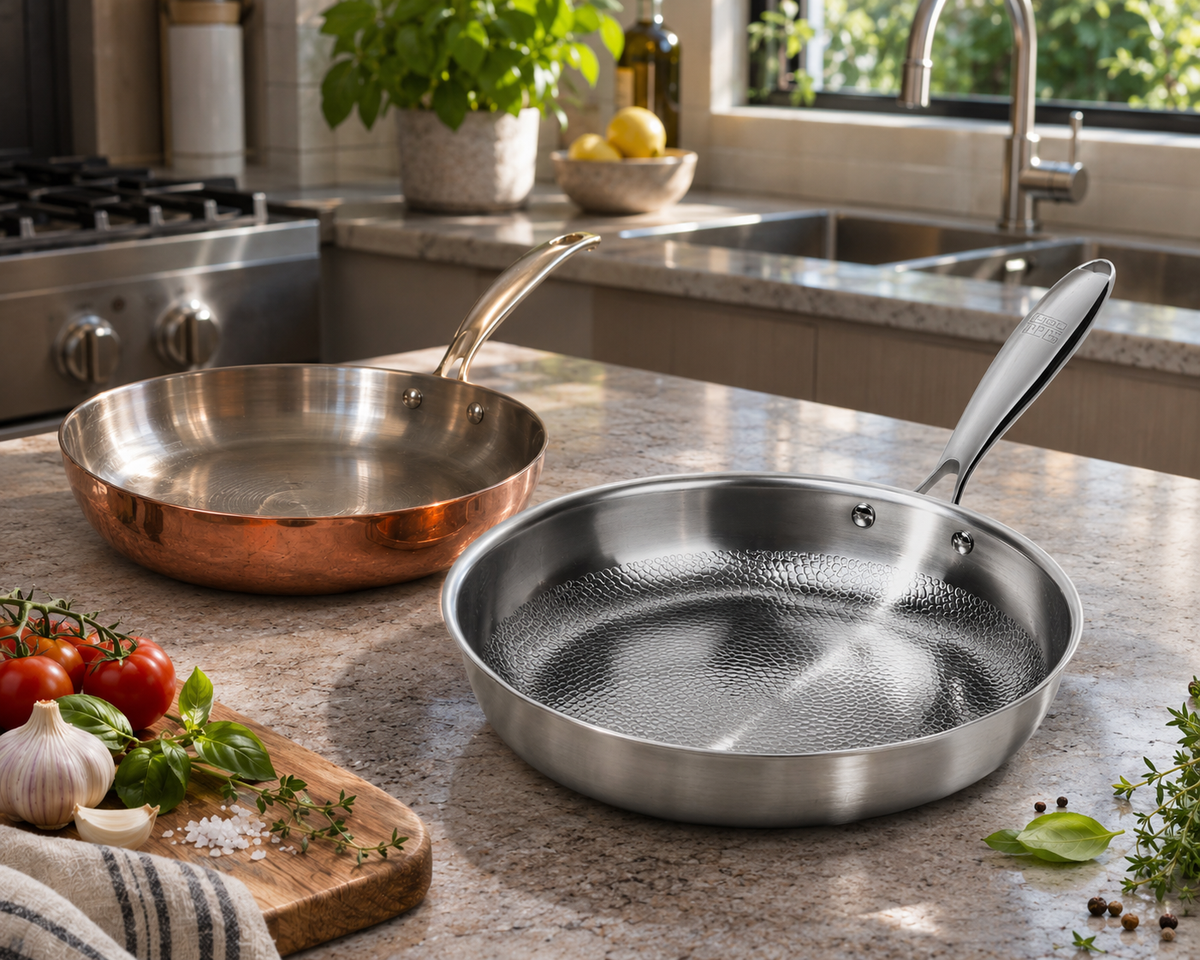
Titanium and copper cookware are at opposite ends of the kitchen spectrum. Copper is known for its fast, precise heat control and classic look, while titanium is valued for its non-toxic, non-reactive coating-free surface, durability and low maintenance. Choosing between them goes beyond appearance: it affects what touches your food, how much care the pan needs and how long it will last.
For most households, titanium is the more practical option, although copper still has a place for cooks who want maximum responsiveness and don't mind the upkeep. One thing worth knowing upfront is that copper cookware is almost always lined with another metal, usually stainless steel or tin, so in practice the comparison is between a lined copper pan and a titanium pan. This guide compares both materials on safety, durability, cooking performance and maintenance, so you can see which one fits the way you cook.
| Feature | Titanium Cookware | Copper Cookware |
|---|---|---|
| Cooking Surface | Pure titanium, no coating | Lined with stainless steel, tin or nickel |
| Average Lifespan & Cost | Built to last for decades; often higher upfront cost | Can last long with care; usually among the most expensive options |
| Safety | Non-reactive, suitable for acidic foods, non-toxic | Safe when lined and intact; unlined copper reacts with acidic food |
| Maintenance | Easy; often dishwasher safe | Polishing and hand washing |
Titanium vs. Copper Cookware: Key Differences
Safety & Health
Copper is a reactive metal. It can release copper into acidic foods, and the FDA Food Code states that copper may not be used in contact with food that has a pH below 6.0, such as vinegar, fruit juice or wine. For this reason, cookware is lined with a non-reactive metal, usually stainless steel, or tin in older pieces. A pan with an intact lining is considered safe for cooking. However, a worn lining, or an unlined pan used for acidic dishes, can lead to excess copper in food and symptoms such as nausea, so the lining should be checked regularly, particularly on older or tin-lined pieces.
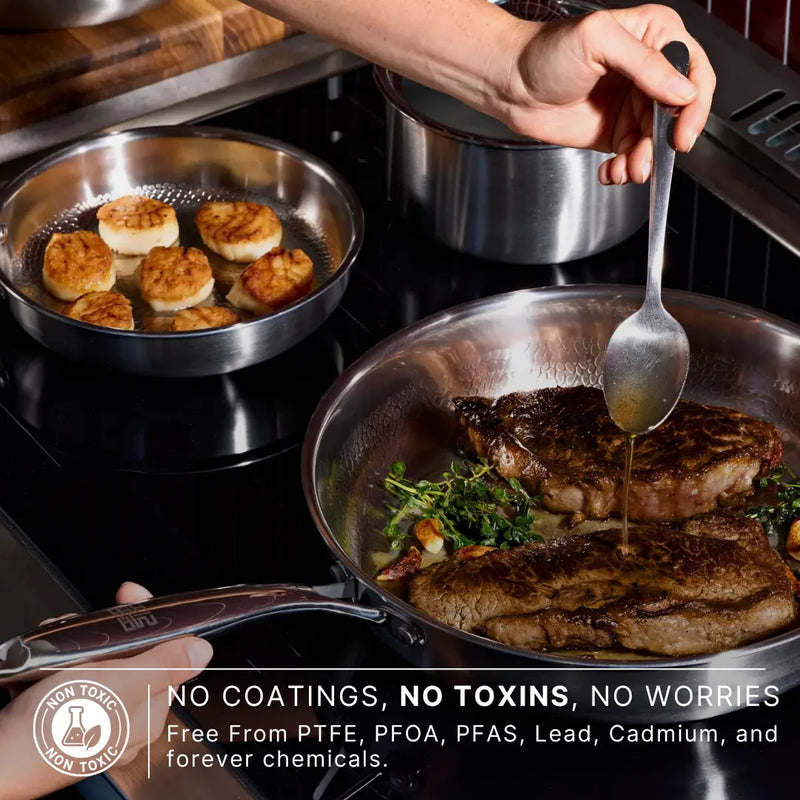
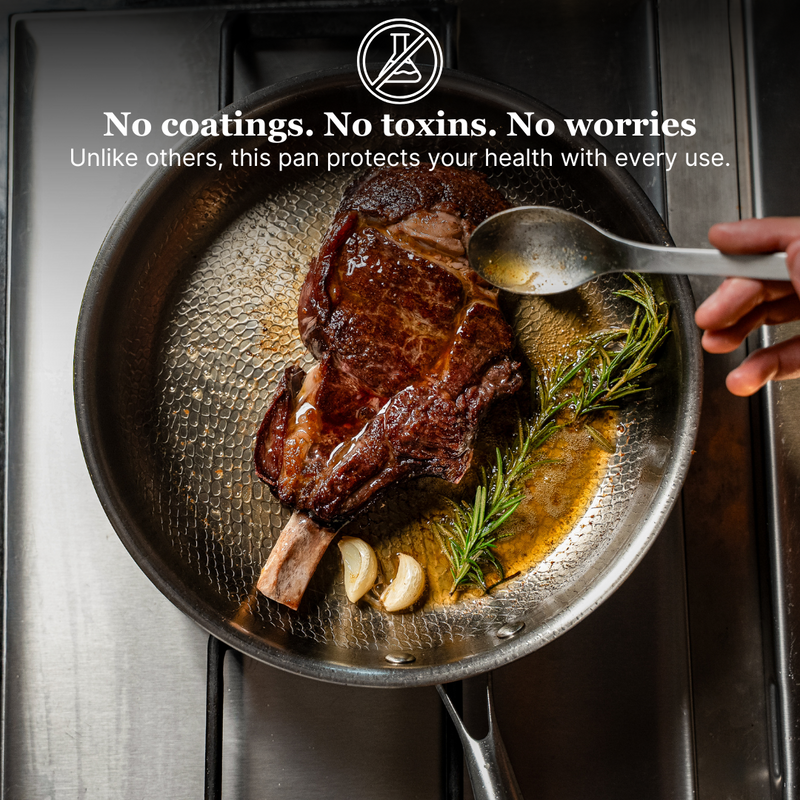
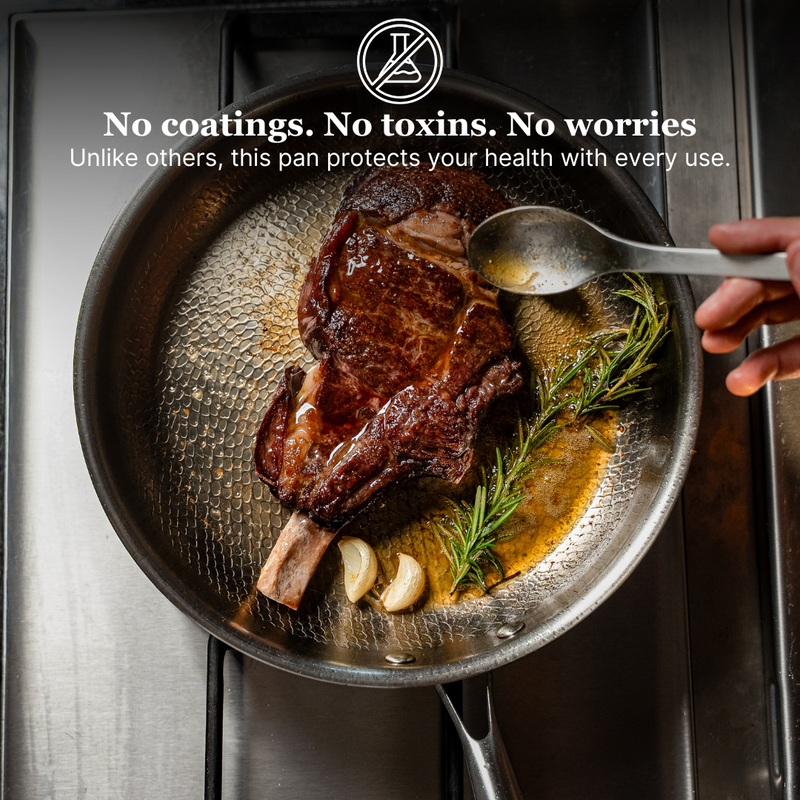
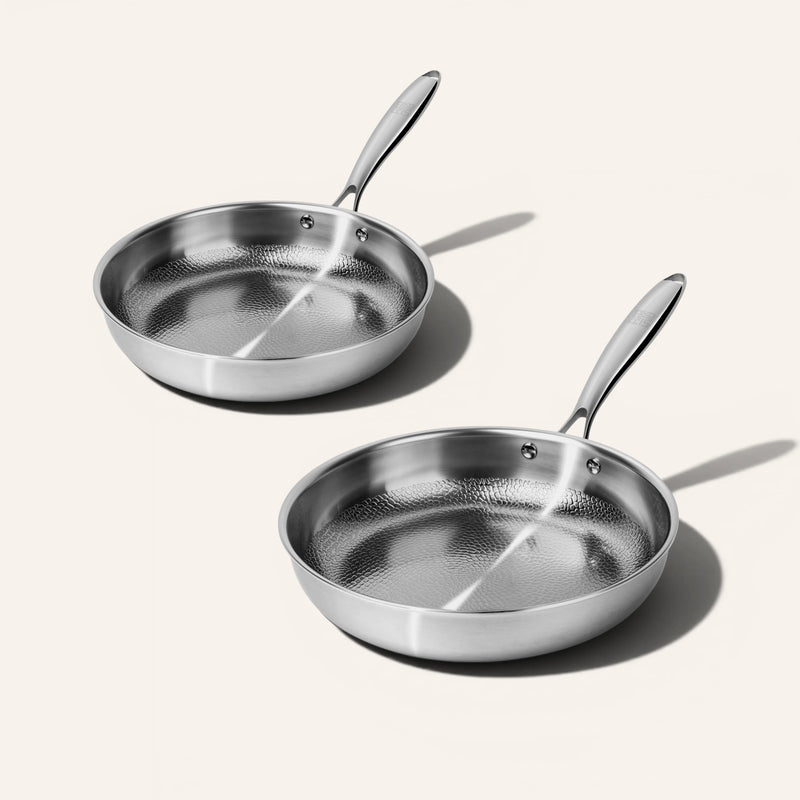
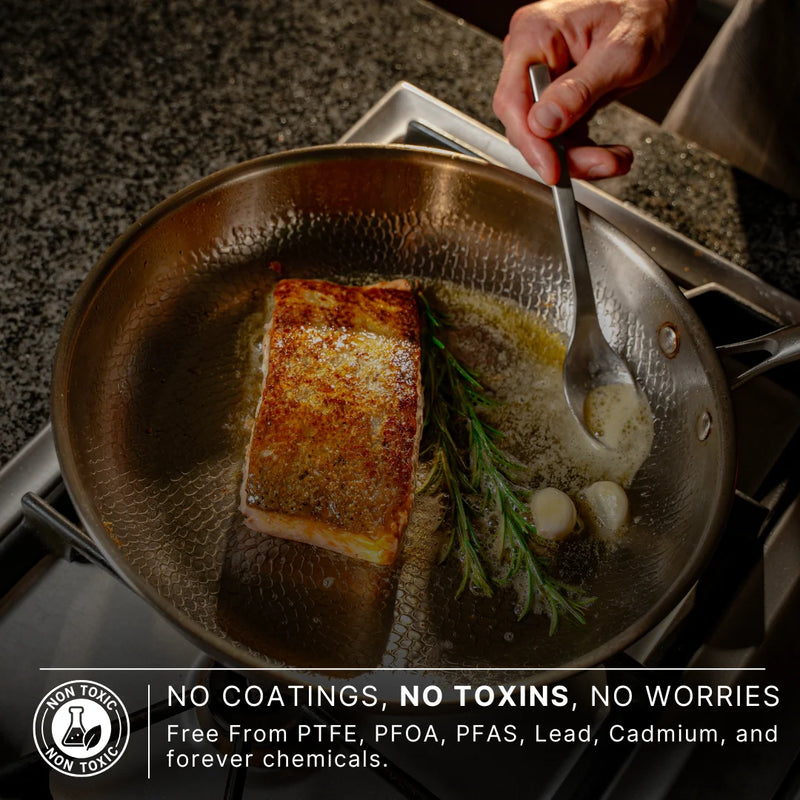
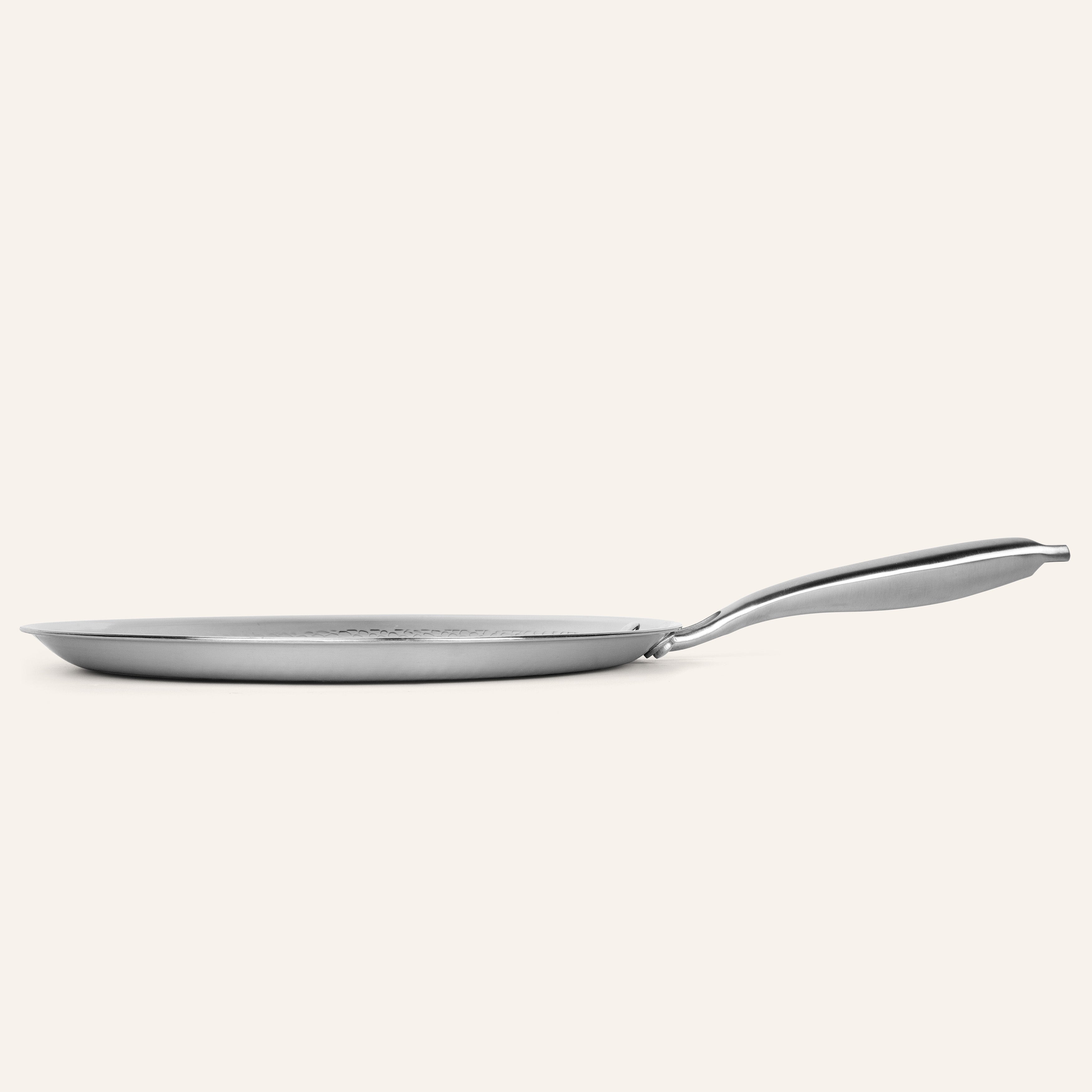
Titanium is non-reactive and chemically stable. It doesn't interact with acidic, salty or alkaline ingredients, so flavors stay intact even when cooking tomato-based dishes or deglazing with wine. Quality titanium cookware has a pure titanium cooking surface without PTFE or other synthetic coatings, which means there is no lining that can wear down and nothing to inspect over time.
Durability & Longevity
Copper is a soft metal. It dents and scratches easily and tarnishes with regular use, so it rarely looks new for long. The lining inside the pan determines how long it stays safe to cook in: tin linings wear down over time and need to be redone, while stainless steel linings last longer. With proper care, quality copper can serve a kitchen for many years, but it asks for regular attention and gentle handling.
Titanium is strong, corrosion-resistant and doesn't warp under everyday use. Because fully clad titanium cookware doesn't rely on a coating or a lining, there is nothing that gradually wears off or peels away. It is designed to last for decades rather than just a few years, with performance that stays consistent over time, even with daily cooking and frequent washing. It is also safe to use with metal utensils, so everyday cooking doesn't call for gentle handling.
Cooking Performance
Copper conducts heat better than most other cookware metals and responds almost instantly when you adjust the heat. That makes it a favorite for delicate sauces, caramel and confectionery, where a few seconds of overheating can ruin the result.
Fully clad titanium cookware takes a different approach. A pure titanium cooking surface is combined with an aluminum core that spreads heat quickly and evenly across the pan, delivering consistent results without the constant heat adjustments copper can demand. The cooking surface stays stable at high temperatures, so searing, sautéing and simmering are all well within its range. Titanium may not react to temperature changes quite as fast as copper, but for everyday cooking the difference is small, and the pan is far more forgiving and needs no special handling.
Ease of Use & Maintenance
Copper needs more care than most other cookware. It tarnishes and requires regular polishing to keep its appearance, and it usually has to be washed by hand. Abrasive scrubbing or metal utensils can damage the lining, so gentle tools and cleaners are recommended. Many cooks accept this as part of owning copper, but it can feel like a lot for a pan used every day.
Titanium is generally simple to look after. It can be cleaned with a little dish soap and a sponge, it is typically dishwasher safe, and it is safe to use with metal utensils. There is no polishing, no special products and no lining to protect. Because the cooking surface is solid metal rather than a coating, everyday washing and cooking don't call for any special care. For busy kitchens that cook daily, this low-maintenance routine is one of titanium's most practical advantages.

Pros and Cons of Titanium vs. Copper Cookware
Both materials have clear strengths. Which one works better depends on how you cook and how much care you want to put in.
Pros & Cons of Titanium Cookware
Pros:
- Built to last – strong, corrosion-resistant and resistant to warping, so the pan keeps performing after years of daily use.
- Non-reactive and coating-free – the pure titanium surface doesn't react with acidic foods like tomato sauce or wine, and there is no PTFE or other synthetic non-stick layer to wear away.
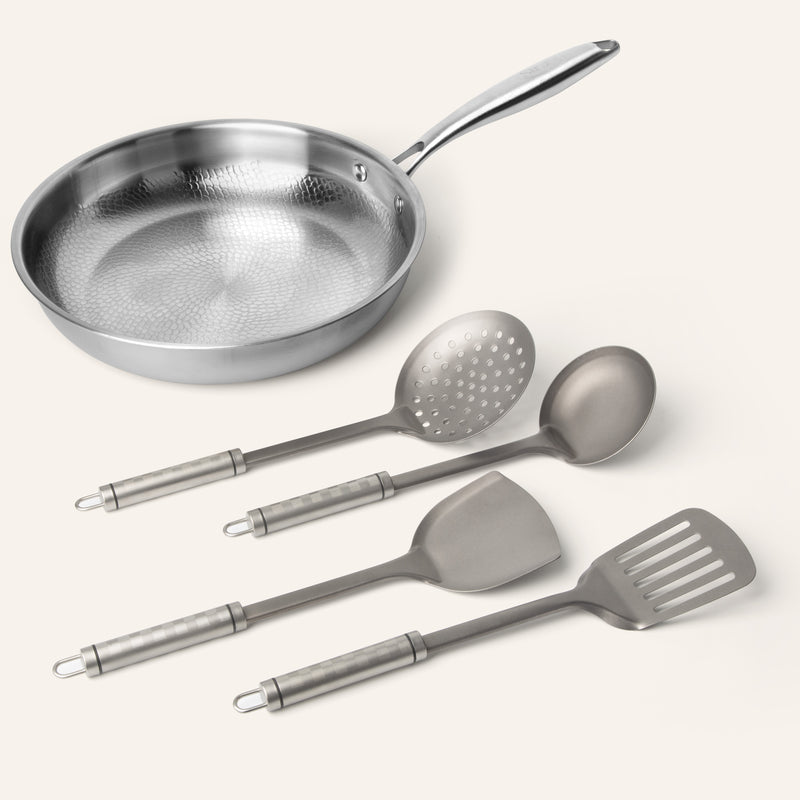
- Safe with metal utensils – with no coating to scratch, everyday cooking doesn't call for special tools.
- Simple to maintain – easy to clean with soap and a sponge, and dishwasher safe.
- Even heating – in fully clad construction, an aluminum core spreads heat quickly and consistently across the cooking surface.
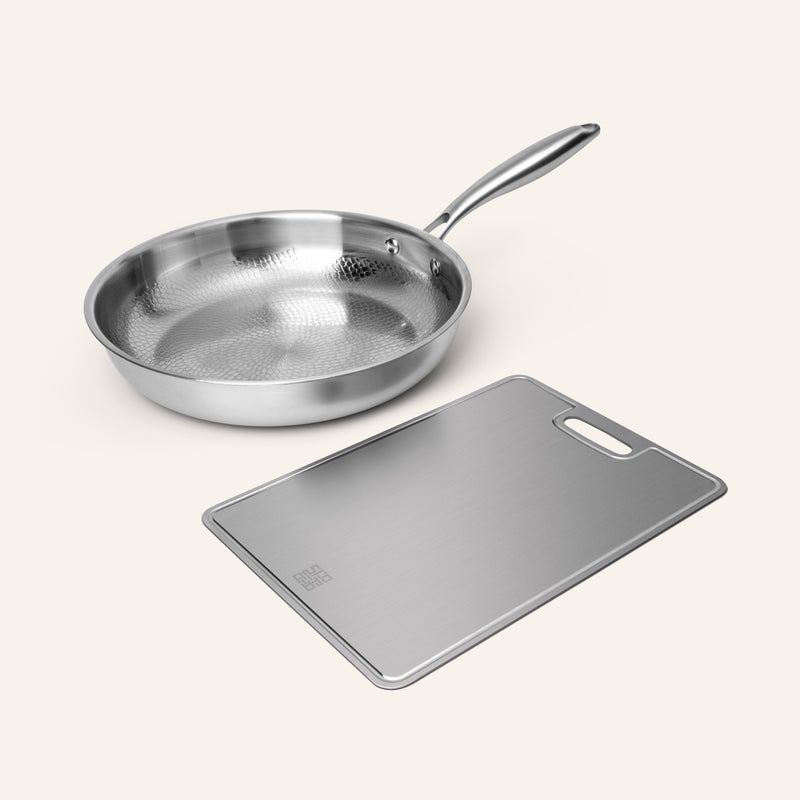
- Naturally low-stick – a hammered titanium surface helps food release with a little oil, without relying on chemical coatings.
Cons:
- Higher upfront cost – quality titanium cookware costs more than basic pans, reflecting its durability and long service life, although compared to many copper pans, the price can still be more favorable.
- Benefits from preheating – heating the pan first and using a small amount of oil gives the best food release.
Pros & Cons of Copper Cookware
Pros:
- Exceptional heat conductivity – heats quickly and responds almost instantly to changes in temperature.
- Precise temperature control – well suited to delicate sauces, caramel and confectionery, where small adjustments matter.
- Classic, professional look – a traditional choice that doubles as a statement piece in the kitchen.
Cons:
- High price – copper is usually among the most expensive types of cookware.
- Regular upkeep – it tarnishes and needs polishing to keep its appearance, and it usually has to be washed by hand.
- Needs a lining – copper reacts with acidic foods, so cookware is lined with stainless steel or tin, and the lining has to be checked and, in the case of tin, eventually redone.
- Soft and easy to damage – it dents and scratches easily, and abrasive cleaning or metal utensils can harm the lining.
- Often limited on induction – copper alone doesn't work on induction cooktops, so many pans depend on an added magnetic base.

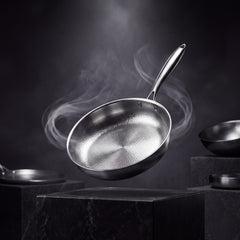
Our durable titanium hammered complete edition
Our #1 seller — a pure titanium cooking surface, no coatings.
Best Use Cases: Which One Is Better for You?
Titanium Cookware: Everyday, Non-Toxic Cooking Without the Upkeep
Titanium suits cooks who want one set of cookware that handles daily meals without extra effort or special care. Its coating-free, non-reactive surface works equally well for everyday sautéing and acidic dishes, and the low-maintenance routine makes it easy to keep in regular rotation. For households that cook most days and don't want to think about replacing cookware every few years, titanium is a dependable long-term choice.
Best for:
- Daily family cooking
- Health-conscious kitchens
- Cooking acidic dishes like tomato sauces or wine reductions
- Induction and mixed-cooktop kitchens
- Easy cleanup, including the dishwasher
- Avoiding the need to replace cookware every few years
Copper Cookware: Precision Heat Control for Experienced Cooks
Copper makes sense for cooks who enjoy the craft of cooking and don't mind maintaining their tools. Its fast response to heat is a genuine advantage for techniques that depend on precise temperature control, and a well-kept copper pan can also serve as a statement piece in the kitchen. It works best as a specialist pan for particular dishes rather than the only pan in a daily-use kitchen.
Best for:
- Delicate sauces, caramel and confectionery
- Cooks who want maximum heat responsiveness
- Those who enjoy polishing and caring for classic cookware
- Display and gifting, where appearance matters
For most households, titanium cookware offers the more practical and long-term solution. While copper remains a strong choice for precision cooking and experienced cooks who enjoy the upkeep, titanium stands out with its non-reactive, coating-free surface, easy maintenance, induction compatibility and resistance to wear. For kitchens that value safety and convenience alongside lasting quality, titanium has become one of the most trusted non-toxic kitchen essentials that you can reach for every day.