




Die Wahl zwischen Kochgeschirr aus Edelstahl und Titan hängt nicht nur vom Aussehen ab, sondern auch von Langlebigkeit, Sicherheit, Kochleistung und Ihrem persönlichen Aufwand beim täglichen Kochen. Beide Materialien sind in modernen Küchen weit verbreitet, unterscheiden sich jedoch in Leistung, Pflege und Eignung für den täglichen Gebrauch. In diesem Ratgeber erläutern wir die wichtigsten Unterschiede und die besten Anwendungsbereiche für Kochgeschirr aus Titan und Edelstahl, damit Sie entscheiden können, welche Option am besten zu Ihrer Küche und Ihren Kochgewohnheiten passt.
Kochgeschirr aus Titan vs. Edelstahl: Die wichtigsten Unterschiede
Sicherheit und Gesundheit
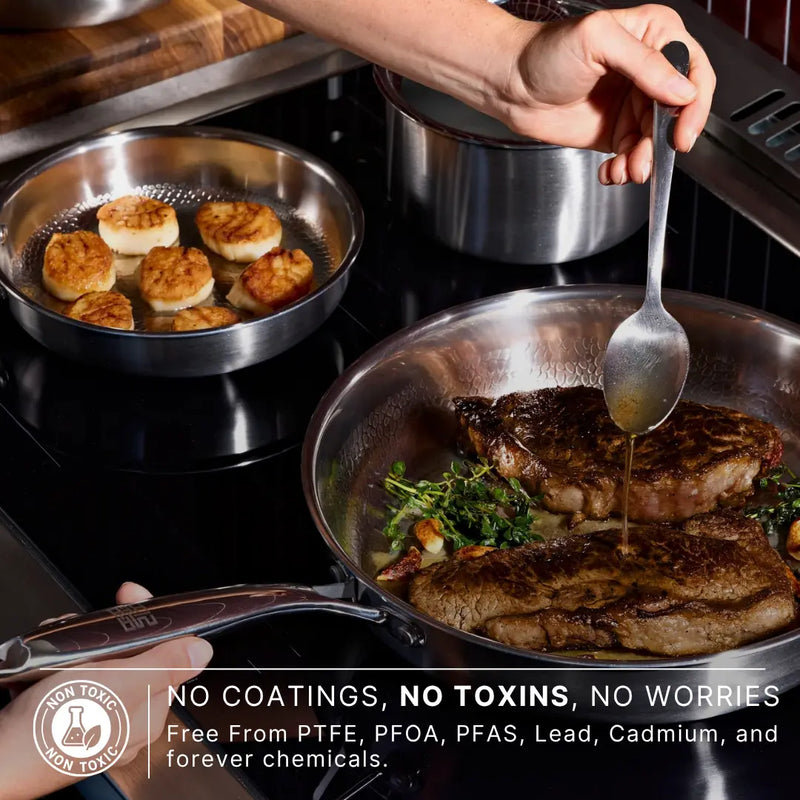
Titan gilt weithin als eines der sichersten Materialien für Kochgeschirr. Pfannen, Töpfe und andere Kochutensilien aus Titan sind von Natur aus ungiftig , reagieren nicht mit Lebensmitteln und geben keine Metalle an die Speisen ab. Dies ist besonders vorteilhaft beim Kochen von säurehaltigen Zutaten wie Tomaten oder Saucen und Gerichten auf Zitrusbasis.
Kochgeschirr aus Edelstahl ist im Allgemeinen für die meisten Menschen unbedenklich, sofern hochwertige Materialien verwendet werden. Es bestehen jedoch gewisse gesundheitliche und sicherheitstechnische Bedenken, insbesondere bei minderwertigem Edelstahl und für empfindliche Personen. Edelstahl minderer Qualität kann mitunter Spuren von Nickel oder Chrom freisetzen , vor allem bei Kontakt mit säurehaltigen Lebensmitteln oder längerem Erhitzen. Obwohl diese Mengen in der Regel innerhalb der zulässigen Grenzwerte liegen, könnten sie für Menschen mit Metallallergien und alle, die auf Nummer sicher gehen wollen, ein Problem darstellen.
Haltbarkeit und Langlebigkeit
Die Langlebigkeit ist einer der größten Vorteile von Titan-Kochgeschirr. Es ist extrem robust und beständig gegen Korrosion, Verformung und Oberflächenbeschädigungen. Dank dieser Widerstandsfähigkeit eignet es sich hervorragend für den privaten Gebrauch, die Profiküche und sogar für das Kochen im Freien. Bei richtiger Pflege behält Titan-Kochgeschirr seine Form und Leistungsfähigkeit über viele Jahre – mitunter sogar ein Leben lang .
Kochgeschirr aus Edelstahl ist auch für seine Langlebigkeit bekannt – diese hängt jedoch stark von der Qualität der verwendeten Materialien, der Verarbeitung und der Pflege ab. Minderwertiges Edelstahlkochgeschirr neigt dazu, sich bei starker Hitze zu verziehen oder mit der Zeit Verfärbungen anzunehmen. Beide Materialien können lange halten, Edelstahl erfordert jedoch oft eine sorgfältigere Behandlung, um sein Aussehen und seine Leistungsfähigkeit zu erhalten.
Kochleistung
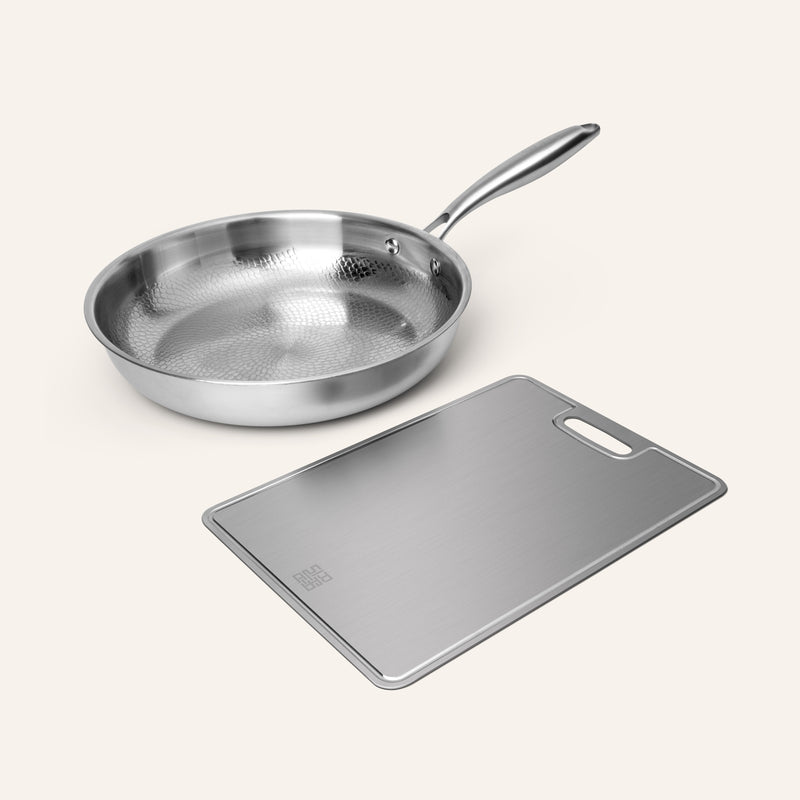
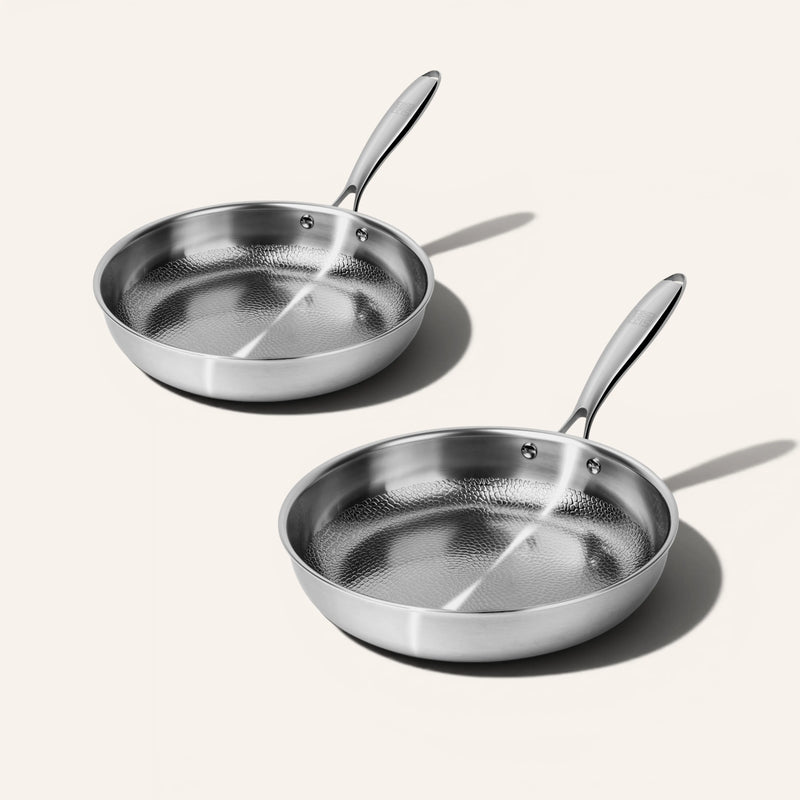
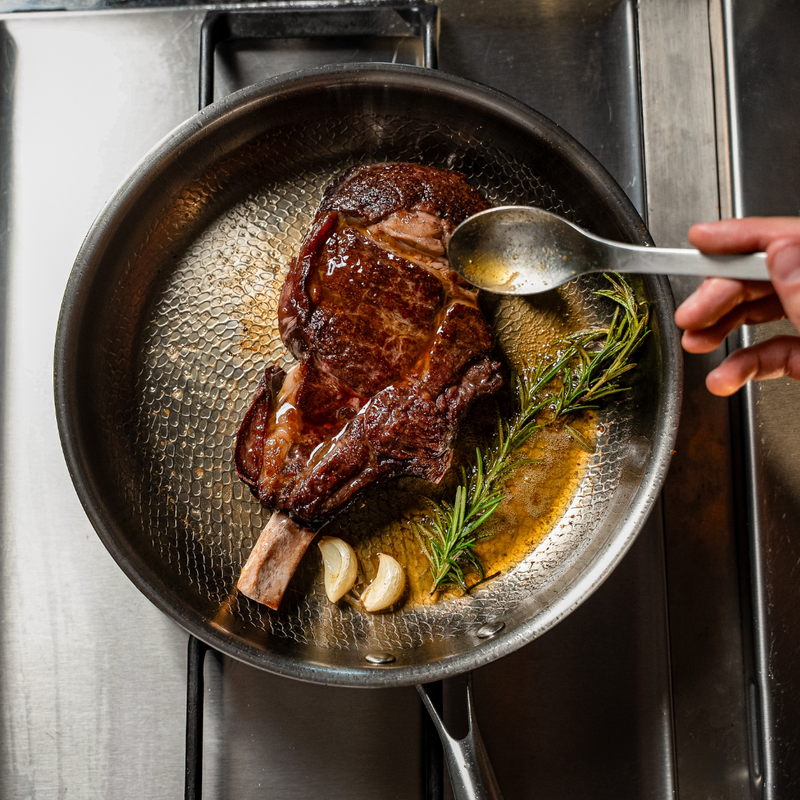
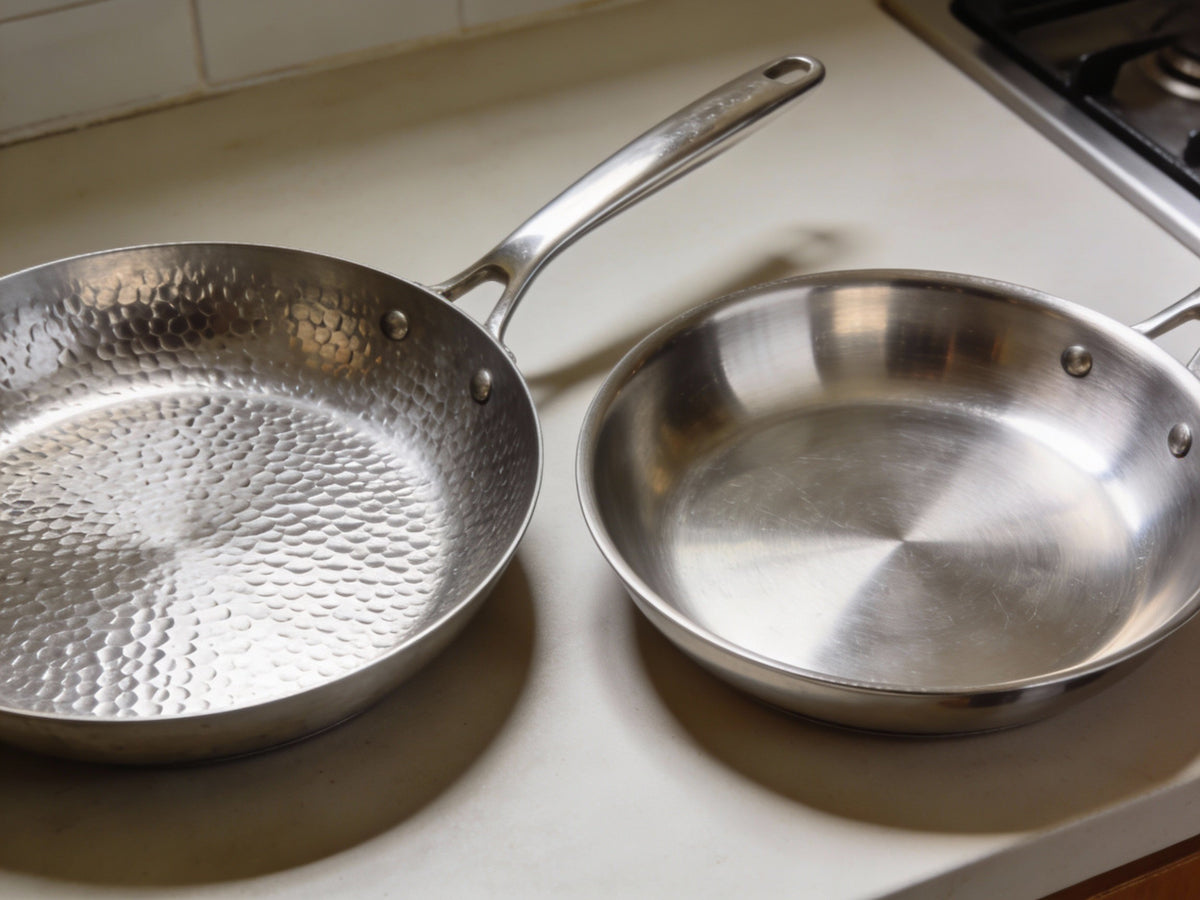
Titan- Töpfe und -Pfannen erhitzen sich langsam und gleichmäßig und halten die Temperatur hervorragend . Einmal richtig erhitzt, bietet Titan eine gleichmäßige Kochfläche und reagiert schnell auf Hitzeänderungen. Dadurch eignet es sich ideal zum präzisen Kochen, Köcheln, Anbraten und für die Zubereitung von Mahlzeiten im Alltag. Die von Natur aus glatte, reaktionsarme Oberfläche ermöglicht bei korrekter Vorheizung auch das Kochen mit wenig Öl und ist gleichzeitig leicht zu reinigen und unempfindlich gegenüber Speiseresten . Gehämmertes Titan-Kochgeschirr verbessert die Leistung zusätzlich durch erhöhte Stabilität und eine gleichmäßigere Wärmeverteilung auf der Kochfläche.
Edelstahl wird von Profiköchen oft bevorzugt, da er eine präzise Wärmeregulierung und -speicherung ermöglicht. Allerdings erfordert er mehr Kocherfahrung , um ihn richtig vorzuheizen und die Temperatur effektiv zu regulieren. Ohne die richtige Technik kann das Essen leicht anhaften, und es kann zu ungleichmäßiger Hitzeverteilung kommen – insbesondere bei minderwertigem Kochgeschirr.
Benutzerfreundlichkeit und Wartung
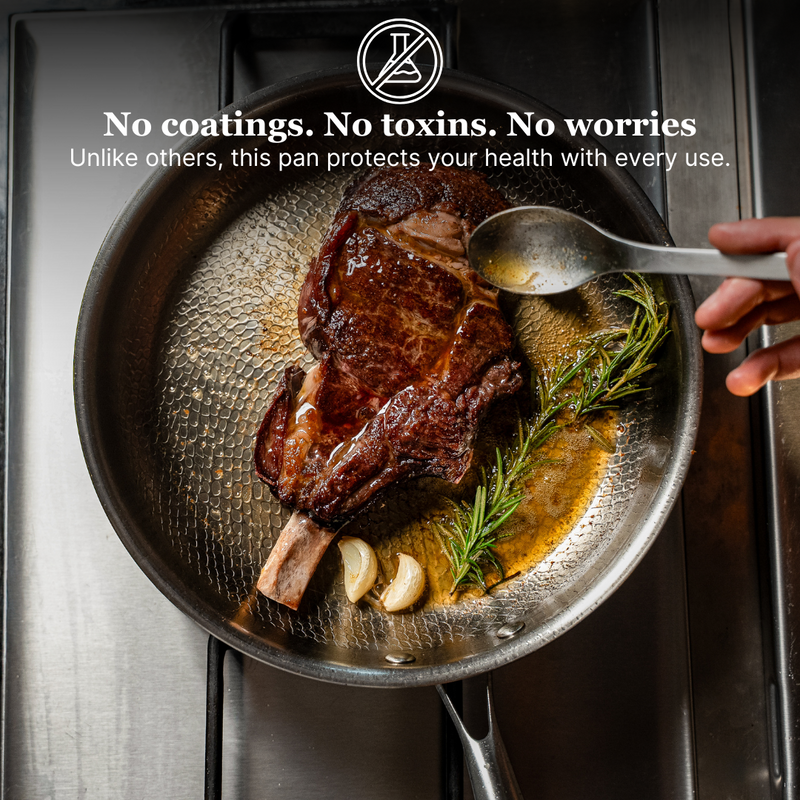
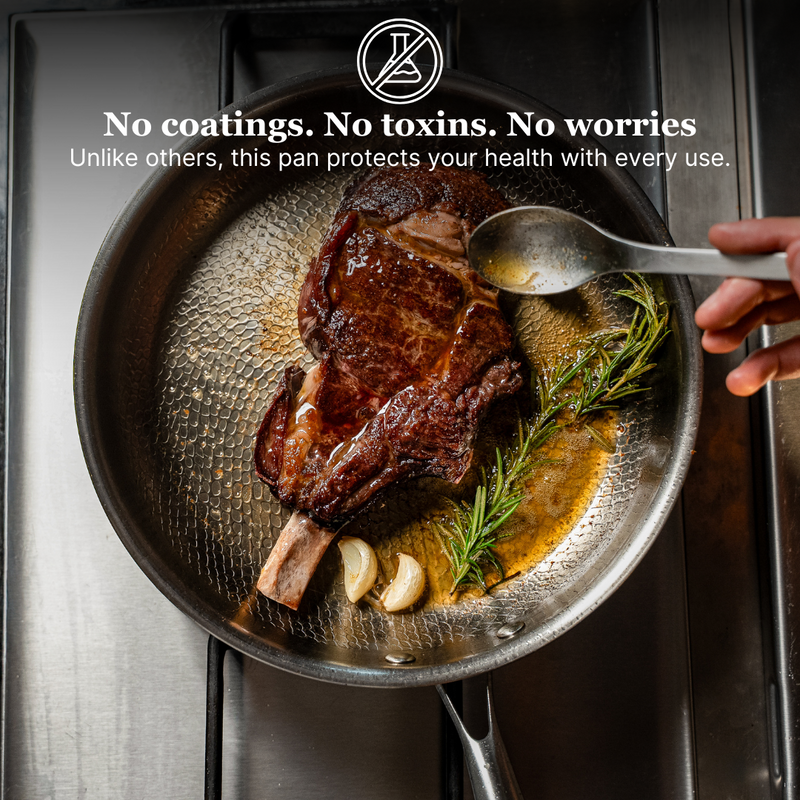
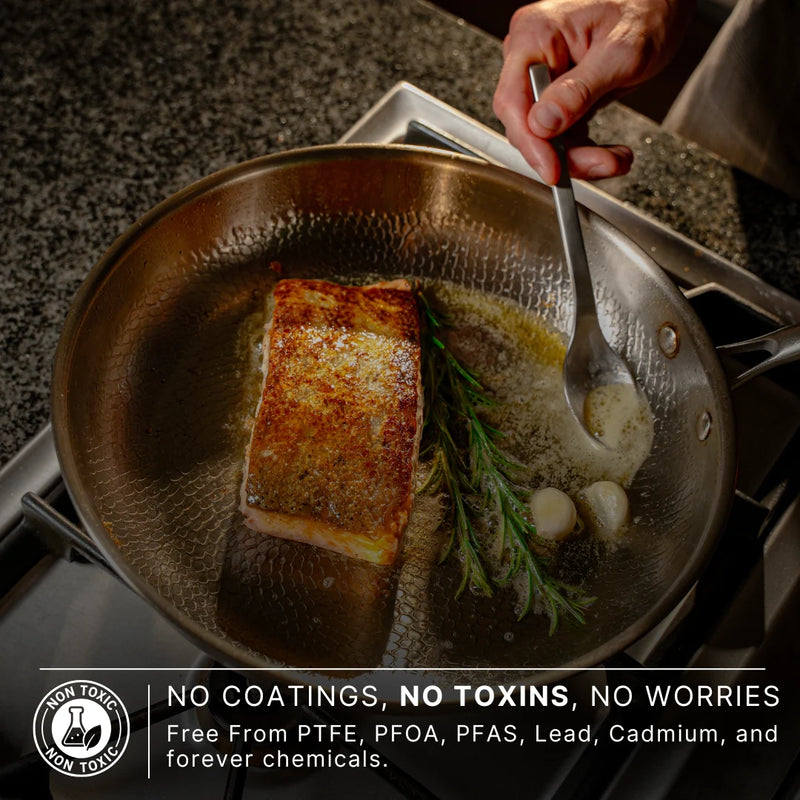
Leicht, handlich und mühelos zu reinigen – Titan-Kochgeschirr wurde mit Blick auf maximalen Komfort entwickelt . Töpfe und Pfannen aus Titan mit handgehämmerter Mikrotextur reduzieren auf natürliche Weise den Kontakt zwischen Speisen und Kochfläche und minimieren so das Anhaften von Speisen, ganz ohne Beschichtungen oder Chemikalien . Das macht Reinigung und Pflege schnell und effizient – ideal für häufiges Kochen und den hektischen Küchenalltag.
Kochgeschirr aus Edelstahl erfordert mehr Aufmerksamkeit . Unzureichende Hitzeregulierung und Temperaturkontrolle können dazu führen, dass Speisen anhaften und anbrennen. Edelstahltöpfe und -pfannen lassen sich dann schwerer reinigen und müssen oft eingeweicht und geschrubbt werden. Erfahrene Köche wissen entweder, wie sie diese Probleme vermeiden, oder nehmen den zusätzlichen Reinigungsaufwand in Kauf, aber im Alltag kann es lästig sein.

Vor- und Nachteile von Titan- gegenüber Edelstahlpfannen und -kochgeschirr
Abgesehen von den Materialunterschieden bieten sowohl Titan- als auch Edelstahlkochgeschirr praktische Vor- und Nachteile, die sich auf das Kochen, die Aufbewahrung und den langfristigen Wert auswirken können.
Vor- und Nachteile von Titan-Kochgeschirr
Vorteile:
-
Langlebigkeit und langfristiger Wert – herausragende Festigkeit und Verschleißfestigkeit, ausgelegt für jahrzehntelange, konsequente Nutzung.
- Ungiftig, umweltfreundlich und reaktionsarm – sicher und ideal für gesundheitsbewusste Haushalte und Küchen: Kochgeschirr aus Titan verändert weder den Geschmack von Speisen noch gibt es Chemikalien oder Metalle an die Gerichte ab.
- Leicht und dennoch robust – einfach zu handhaben, anzuheben und zu verstauen, bietet alltäglichen Komfort ohne Kompromisse bei Haltbarkeit oder Leistung.
- Minimaler Wartungsaufwand – äußerst widerstandsfähig und durch regelmäßige Reinigung einfach zu pflegen, wodurch es sich bestens für den häufigen täglichen Gebrauch eignet.
- Korrosionsbeständig – rostet oder zersetzt sich nicht bei Einwirkung von hoher Hitze und Feuchtigkeit; behält sein Aussehen und seine Leistungsfähigkeit über die Zeit.
- Nahezu antihaftbeschichtet – Kochgeschirr aus gehämmertem Titan bietet von Natur aus geringe Hafteigenschaften ohne die Notwendigkeit chemischer Beschichtungen, was ein leichteres Ablösen der Speisen und einen minimalen Ölverbrauch ermöglicht.
- Modernes Design – die klare und minimalistische Optik passt gut in zeitgenössische Küchen, die Wert auf funktionales Design legen.
Nachteile:
- Höhere Anschaffungskosten – die Kosten spiegeln die Langlebigkeit, Festigkeit und Reinheit des Materials wider, passen aber trotz seines langfristigen Wertes möglicherweise nicht in jedes Budget.
- Beschichtetes Titankochgeschirr kann (bei Verwendung) empfindlich auf übermäßige Hitze reagieren – massives Titankochgeschirr ist extrem langlebig, aber eines mit einer Beschichtung versehenes Kochgeschirr erfordert möglicherweise zusätzliche Pflege, wie z. B. die Vermeidung von Überhitzung.
Vor- und Nachteile von Edelstahlkochgeschirr
Vorteile:
- Weit verbreitet – eine gängige Option für Kochgeschirr, wodurch es einfach ist, Produkte zu finden, die zu unterschiedlichen Budgets und Kochbedürfnissen passen.
- Hervorragend geeignet für Kochtechniken mit hohen Temperaturen – erzielt gute Ergebnisse bei hohen Temperaturen; bei richtiger Anwendung ist es für Techniken wie Anbraten und Ablöschen geeignet.
- Geeignet für professionelle Küchen – kompatibel mit allen Wärmequellen und weit verbreitet unter ausgebildeten Köchen.
- Hervorragende Wärmeregulierung und -speicherung – bietet eine reaktionsschnelle Temperaturregelung und eine solide Wärmespeicherung, insbesondere in professionellen Kochumgebungen.
Nachteile:
- Erfordert sorgfältige Hitzekontrolle und Technik – eine präzise Temperaturregelung ist unerlässlich, um Anhaften, Verbrennen oder ungleichmäßiges Garen der Speisen zu vermeiden.
- Hoher Wartungsaufwand – die Reinigung erfordert oft Einweichen, Schrubben oder spezielle Reinigungsmittel; Anhaften von Speiseresten und hitzebedingte Verfärbungen sind häufig.
- Leistung und Sicherheit variieren erheblich – minderwertiges Kochgeschirr kann sich bei starker Hitze verformen oder Spuren von Metallen in die Speisen abgeben.
- Weniger fehlerverzeihend – lässt wenig Spielraum für Fehler und eignet sich eher für erfahrene Köche als für die alltägliche oder gelegentliche Küche.

Titanium Hammered – Complete Edition
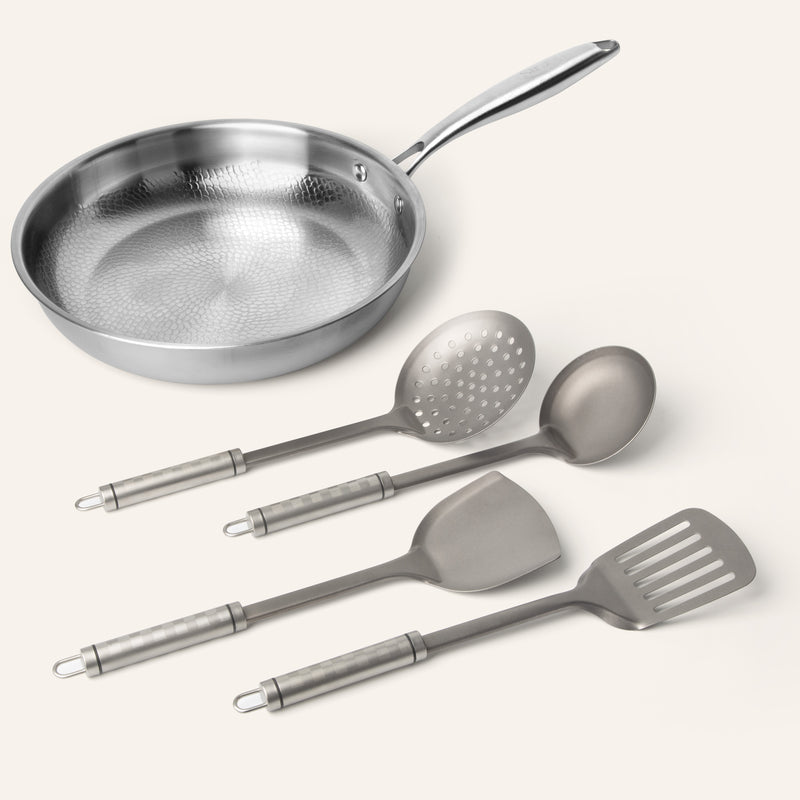
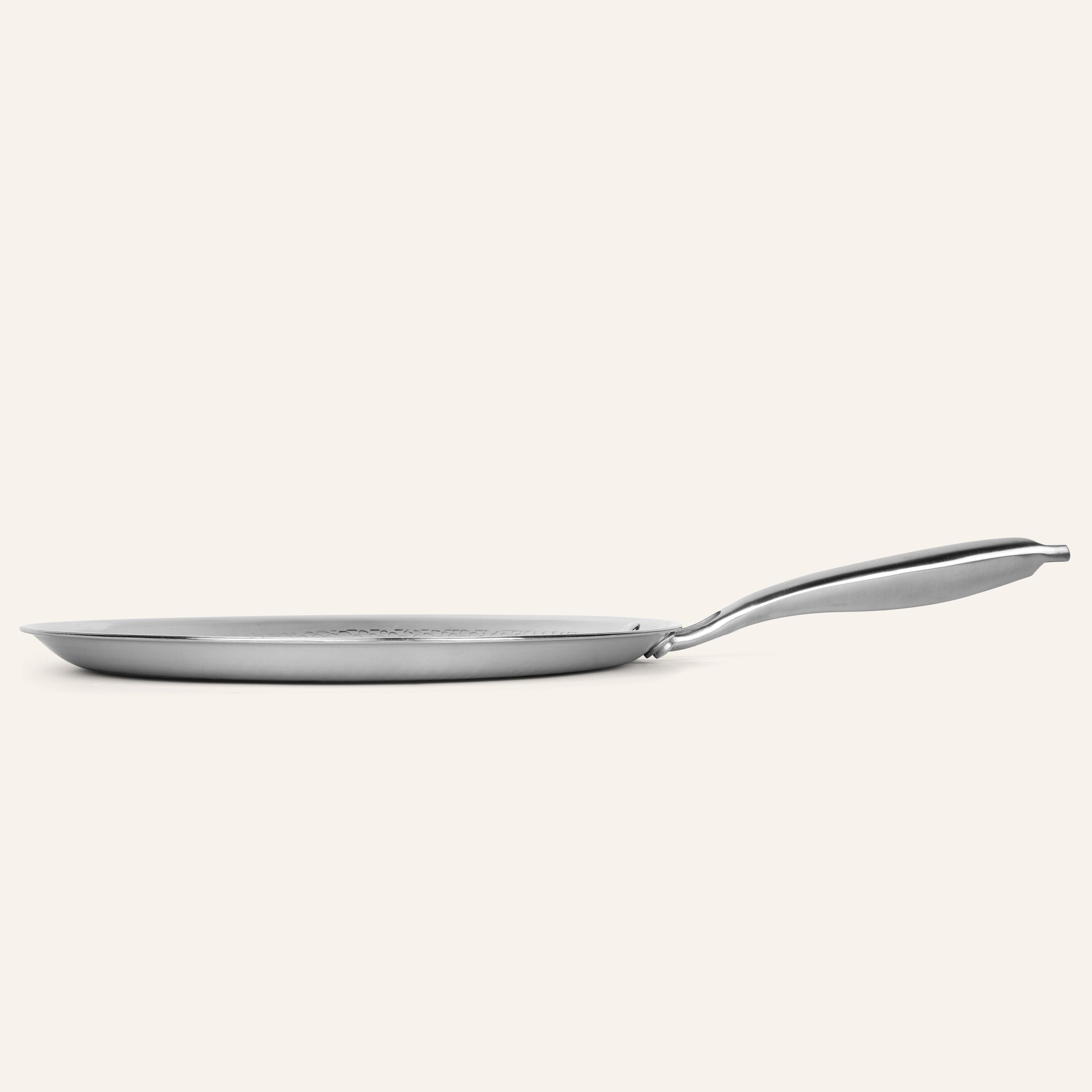
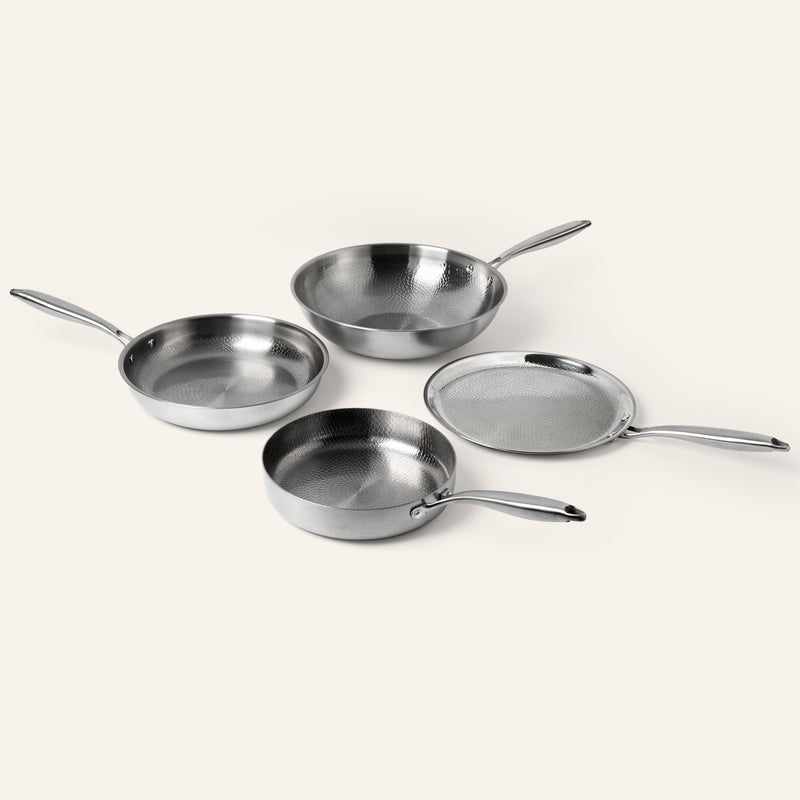
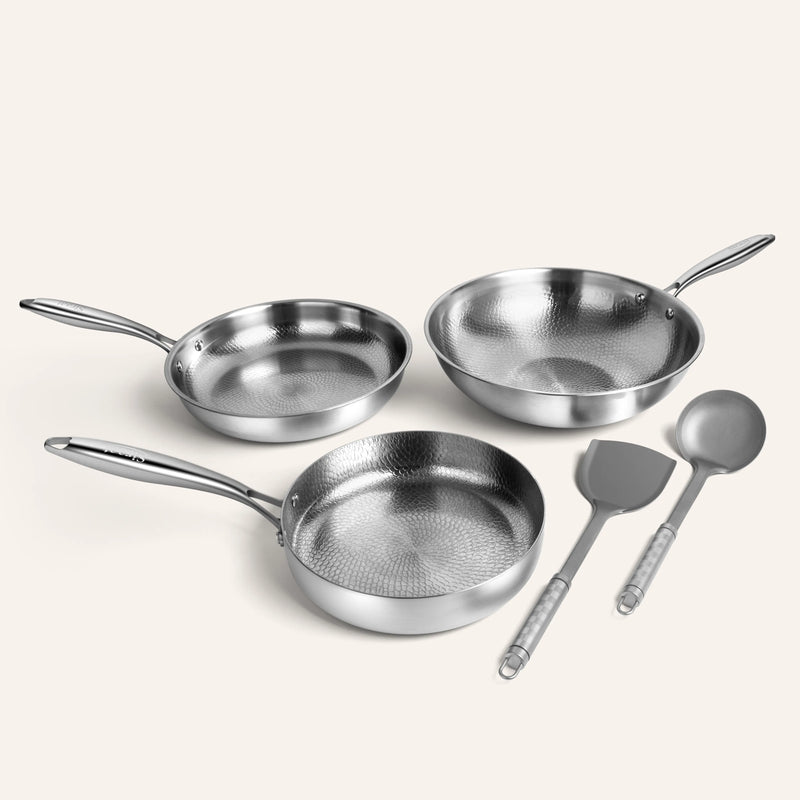
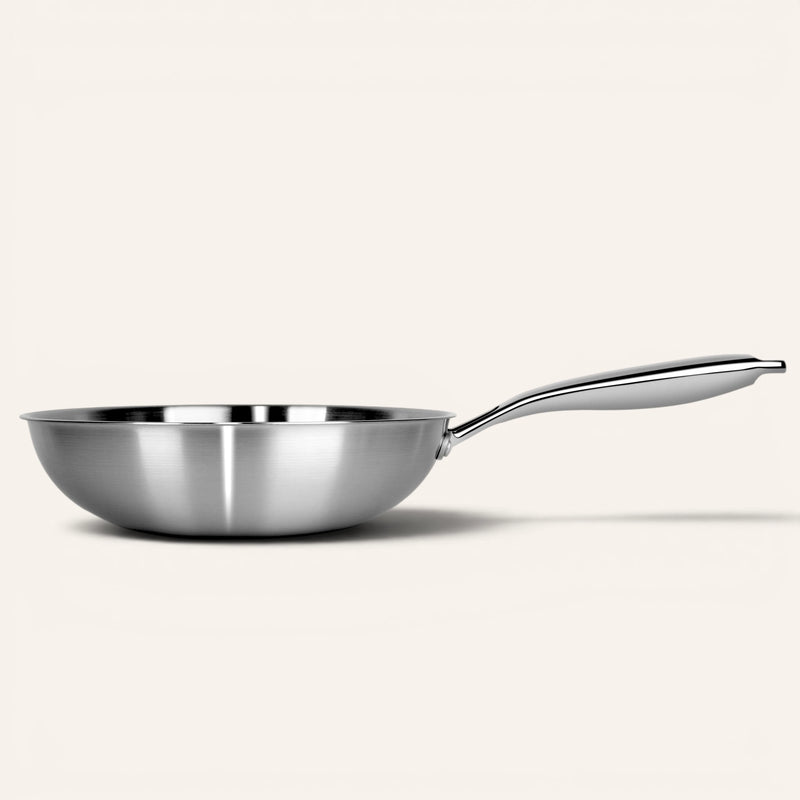
Das Siraat Hammered Kochgeschirr-Set umfasst die Hammered Pan Pro, die Deep Pan Pro, die Wok Pan Pro und die Crêpe Pan Pro. Jedes Teil verfügt über eine Oberfläche aus reinem, gehämmertem Titan, die von Natur aus antihaftbeschichtet, PFAS-frei und besonders langlebig ist. Kratzfest, spülmaschinen- und ofenfest – alles, was Sie für jede Mahlzeit benötigen, in einem zeitlosen Set.
Die besten Anwendungsfälle: Welcher ist der richtige für Sie?
Titan-Kochgeschirr: Alltagstaugliches, ungiftiges Kochen für den langfristigen, praktischen Gebrauch
Wenn Ihnen Sicherheit, Nachhaltigkeit, Langlebigkeit und einfache Pflege wichtig sind, ist Kochgeschirr aus Titan eine ausgezeichnete Wahl. Seine ungiftige, reaktionsarme Oberfläche macht es ideal für gesundheitsbewusste Haushalte, während seine Festigkeit und Korrosionsbeständigkeit eine lange Lebensdauer gewährleisten.
Ideal für:
- Tägliches Kochen und gemeinsame Familienmahlzeiten.
- Haushalte, die den häufigen Austausch von Töpfen und Pfannen vermeiden möchten.
- Gesundheitsbewusste Anwender, die chemische Beschichtungen vermeiden und gleichzeitig ein Antihaft-Erlebnis wünschen (insbesondere Kochgeschirr mit gehämmertem Design).
- Für Hobbyköche, die zuverlässige Ergebnisse ohne technische Anpassungen wünschen.
- Nutzer, die eine einfache Reinigung und geringen Wartungsaufwand wünschen.
Kochgeschirr aus Edelstahl: Technikorientiertes Kochen bei hohen Temperaturen und budgetbewusste Option
Edelstahl ist besonders für Köche attraktiv, die gerne selbst Hand anlegen und regelmäßig Techniken mit hohen Temperaturen wie Anbraten, Ablöschen und Bräunen anwenden. Allerdings erfordert er eine sorgfältige Hitzeregulierung und häufigere Pflege.
Ideal für:
- Hohe Hitzebeständigkeit.
- Geringere Anfangsinvestition (abhängig von Art und Qualität).
- Erfahrene oder technikorientierte Köche.
Für die meisten Menschen bietet Kochgeschirr aus Titan eine praktischere und langfristigere Lösung. Edelstahl bleibt zwar eine solide Wahl für bestimmte Kochtechniken und Anwendungen mit hohen Temperaturen, doch Titan zeichnet sich durch Leistung, Sicherheit, Nachhaltigkeit und Langlebigkeit aus – und ist damit eine hervorragende Option für Küchen, die neben dauerhafter Qualität auch Wert auf Benutzerfreundlichkeit legen.