




Nicht alle Titanpfannen sind wirklich antihaftbeschichtet. Einige haben eine mit Titan verstärkte traditionelle Antihaftbeschichtung, während andere eine massive Kochfläche aus Titan ohne Beschichtung aufweisen. Das Ablösen der Speisen wird nicht allein durch das Material bestimmt – es hängt auch vom Oberflächendesign der Pfanne, dem Vorheizen und der Kochtechnik ab.
In diesem Leitfaden erklären wir, was einige Titanpfannen zu antihaftbeschichtetem Kochgeschirr macht, wie sie sich von beschichteten Antihaftpfannen unterscheiden und was Sie tun können, um die besten Kochergebnisse zu erzielen.
Sind Titanpfannen wirklich antihaftbeschichtet? Die schnelle Antwort
Einige sind es, andere nicht. Nicht alle Titanpfannen bieten die gleiche Kochleistung, da sie unterschiedlich hergestellt werden. Herkömmliche Antihaftpfannen können eine titanverstärkte Beschichtung verwenden, während massives Titankochgeschirr eher auf die Kochfläche selbst als auf eine synthetische Beschichtung zur Unterstützung der Speisenlösung angewiesen ist.
Hochwertige Titanpfannen verbinden eine speziell entwickelte Oberflächenstruktur mit einer gleichmäßigen Wärmeverteilung, um eine natürlich geringe Antihaftwirkung zu erzielen. Richtiges Vorheizen und eine kleine Menge Öl verbessern das Ablösen der Speisen zusätzlich. Obwohl sie sich möglicherweise nicht exakt wie eine brandneue PTFE-beschichtete Pfanne verhalten, bieten hochwertige Titanpfannen eine hervorragende Speisenlösung, eine höhere Hitzebeständigkeit und lang anhaltende Haltbarkeit, ohne auf Beschichtungen angewiesen zu sein, die mit der Zeit verschleißen können.
| Merkmal | Titan-Kochgeschirr | Herkömmliches Antihaft-Kochgeschirr |
|---|---|---|
| Speisenablösung | Natürlich geringe Haftung mit gehämmerter Oberfläche und richtiger Technik | Sehr gut |
| Kochfläche | Reine Titan-Kochfläche | PTFE- oder Keramikbeschichtung |
| Kochen mit Metallutensilien | Ja | Nein, da dies die Beschichtung beschädigen kann |
| Kochen bei hoher Hitze | Ausgezeichnet | Oft zum Schutz der Beschichtung begrenzt |
| Langfristige Leistung | Blättert oder splittert nicht ab; für jahrelangen Gebrauch gebaut | Die Antihaftleistung nimmt mit zunehmendem Verschleiß der Beschichtung allmählich ab |
Wie schneiden Titanpfannen im Vergleich zu herkömmlichem Antihaft-Kochgeschirr ab?
Der größte Unterschied liegt darin, wie jede Pfanne das Ablösen der Speisen erreicht. Herkömmliche Antihaftpfannen verlassen sich auf eine synthetische Beschichtung, wie PTFE oder Keramik, die eine glatte, reibungsarme Kochfläche erzeugt. Speisen lösen sich leicht mit wenig oder ohne Öl, aber die Beschichtung verschleißt allmählich durch regelmäßigen Gebrauch, insbesondere wenn sie hohen Temperaturen, abrasiver Reinigung oder Metallutensilien ausgesetzt wird.
Massives Titan gilt dank seiner Haltbarkeit, Korrosionsbeständigkeit und Fähigkeit, hohen Kochtemperaturen standzuhalten, als eines der besten Materialien für Kochgeschirr. Da es keine Antihaftbeschichtung gibt, entsteht die Speisenablösung durch eine Kombination aus der Oberflächenstruktur der Pfanne, gleichmäßiger Wärmeverteilung, korrektem Vorheizen und einer kleinen Menge Öl. Obwohl dies eine leicht andere Kochmethode erfordert, wird die Kochfläche mit der Zeit nicht abblättern, absplittern oder abplatzen.
Für viele Hobbyköche kommt die Wahl auf die Prioritäten an. Wenn Ihre oberste Priorität die einfachstmögliche Speisenablösung ist, hat eine herkömmliche Antihaftpfanne den Vorteil. Wenn Sie ein ungiftiges Kochgeschirr ohne synthetische Beschichtungen bevorzugen und eine Kochfläche wünschen, die ihre Leistung über Jahre hinweg beibehält, bietet massives Titan-Kochgeschirr eine dauerhafte Alternative.
Was beeinflusst die Antihaftleistung von Titanpfannen?
Gehämmerte Oberflächenstruktur
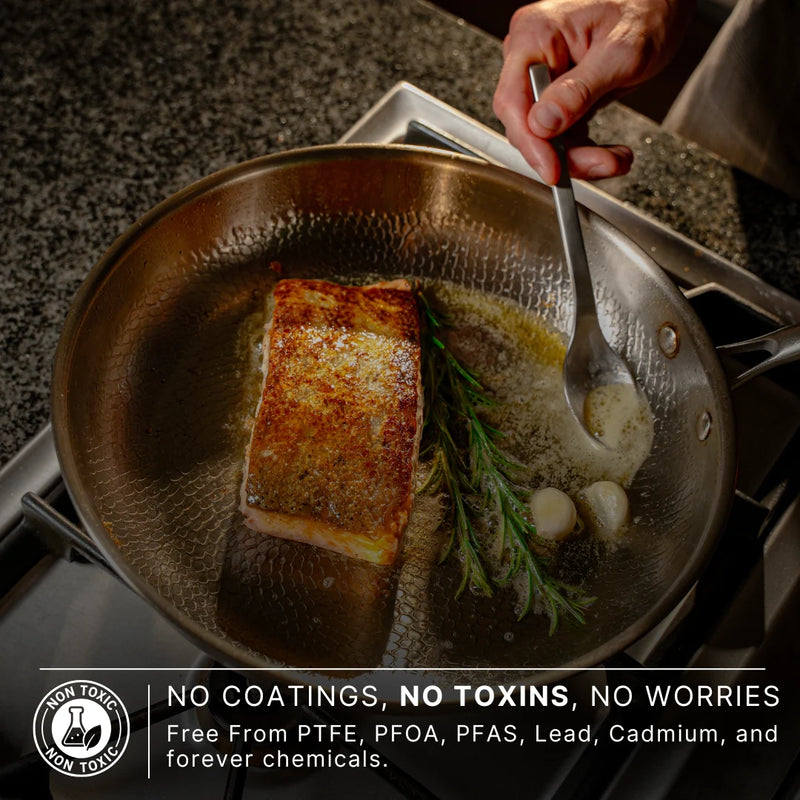
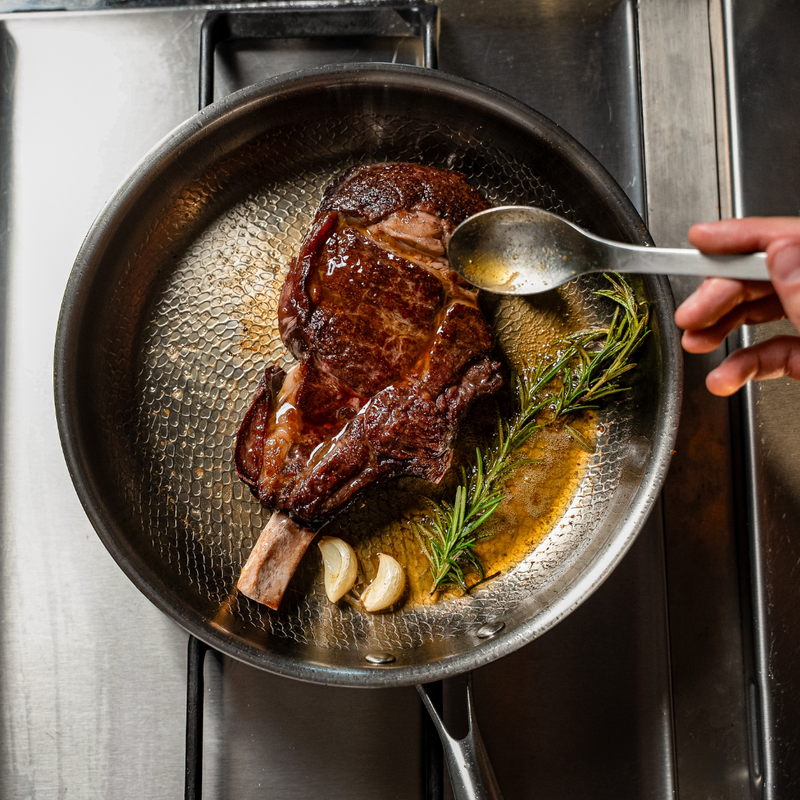
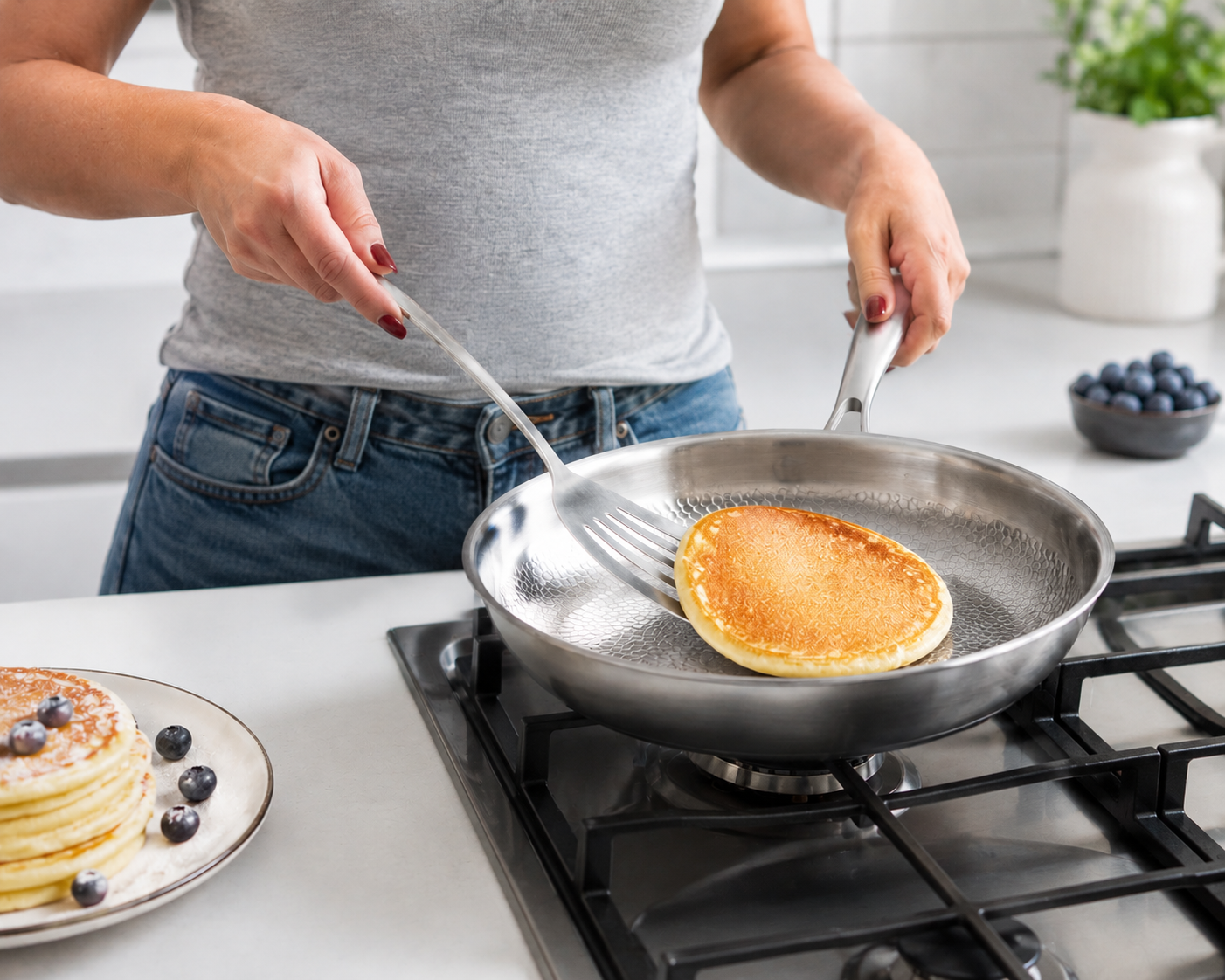
Nicht alle Titanpfannen haben die gleiche Kochfläche. Eine gehämmerte Textur erzeugt winzige Spitzen und Täler, die die Menge an Speisen reduzieren, die direkten Kontakt mit der Pfanne hat. Dies hilft, dass sich Speisen leichter lösen, als es von einer völlig glatten Titanoberfläche der Fall wäre.
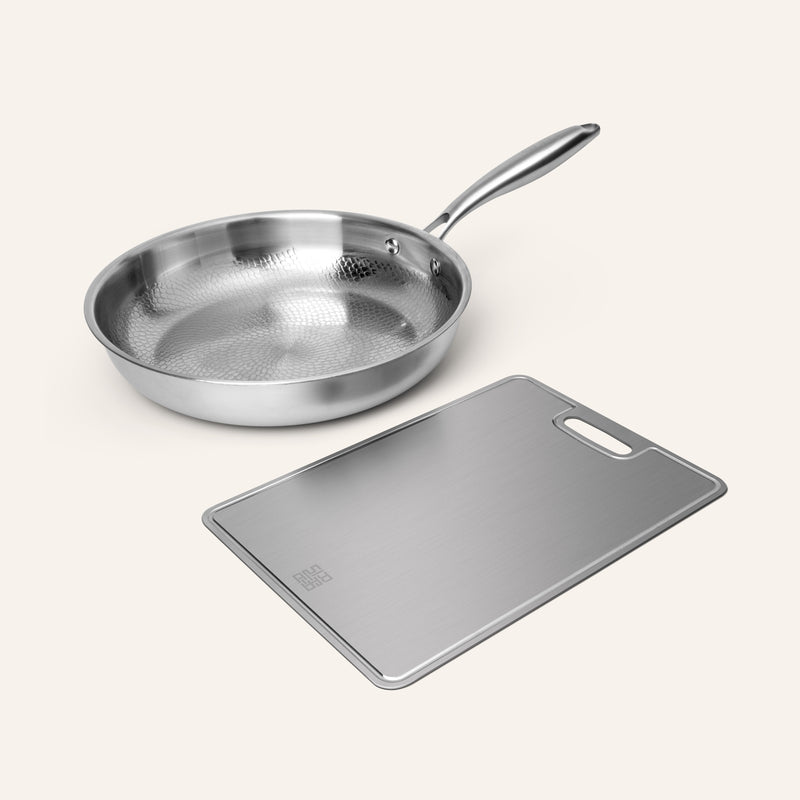
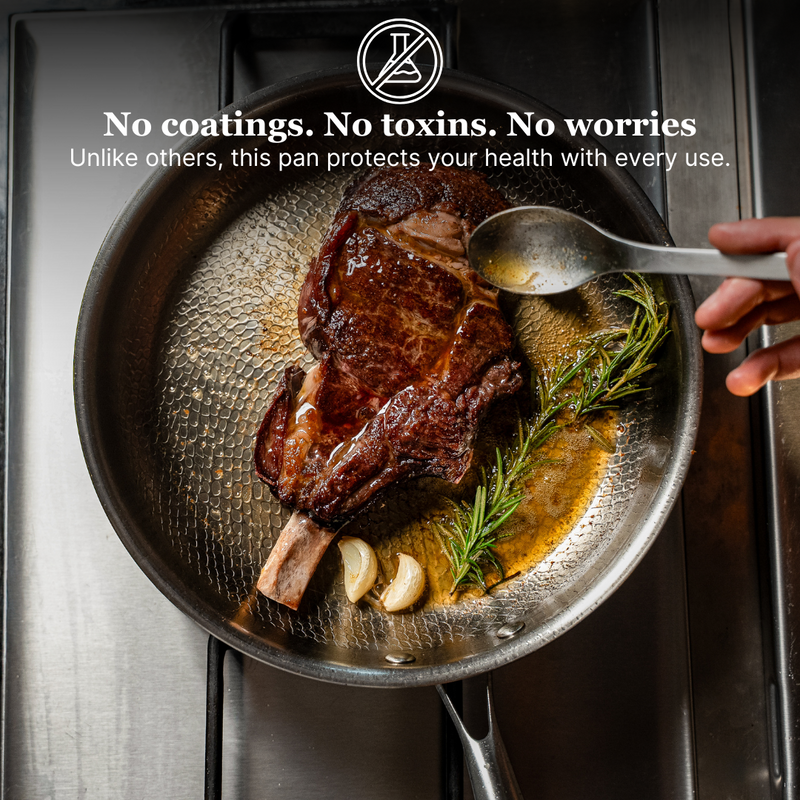
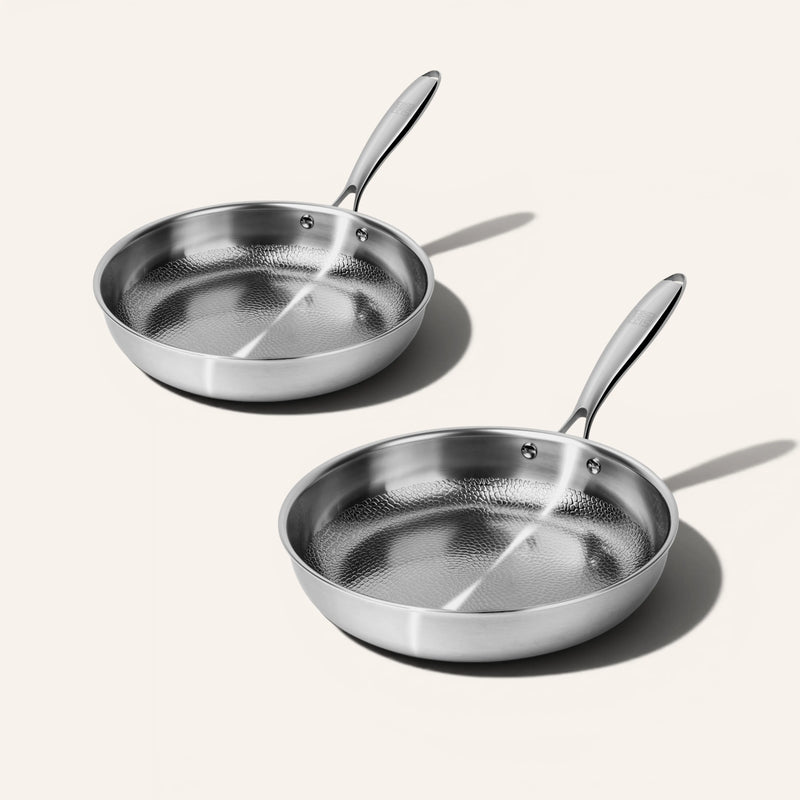
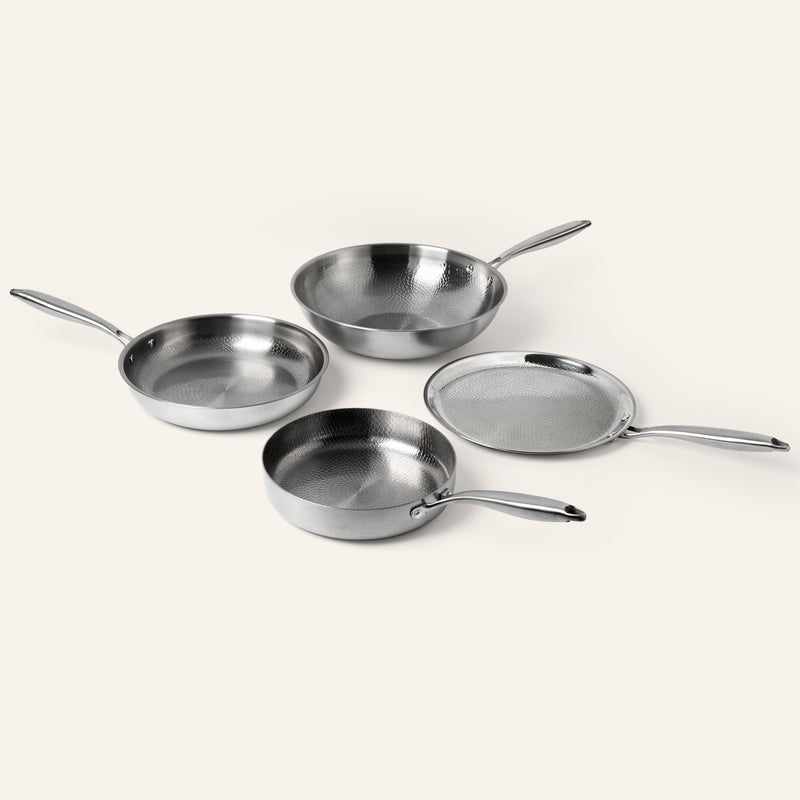
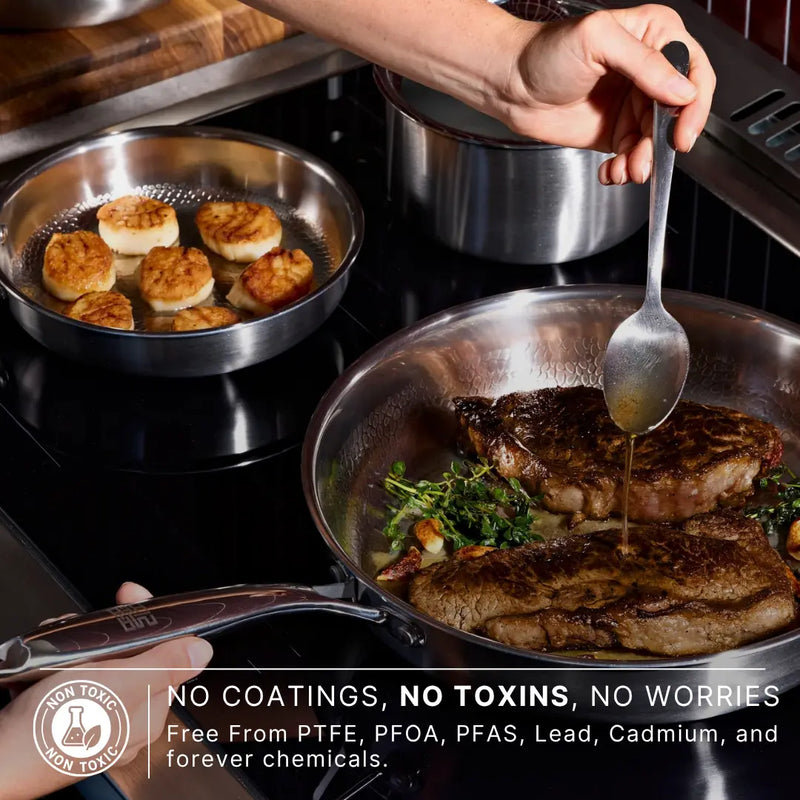
Die Siraat Titanium Hammered Pan Pro ist ein Beispiel dafür. Sie verwendet eine reine gehämmerte Titan-Kochfläche, um das Ablösen der Speisen zu verbessern, ohne auf PFAS, PTFE, PFOA oder andere synthetische Beschichtungen angewiesen zu sein. Da die Kochfläche aus massivem Titan und nicht aus einer Beschichtung besteht, wird sie bei Gebrauch nicht abblättern oder absplittern.
Richtiges Vorheizen
Das Vorheizen spielt eine wichtige Rolle dabei, wie sich Speisen von jeder unbeschichteten Kochfläche, einschließlich Titan, lösen. Das Einlegen von Speisen in eine kalte Pfanne erhöht die Wahrscheinlichkeit, dass sie kleben bleiben, bevor sich eine Kruste bilden kann.
Lassen Sie stattdessen die Pfanne zuerst aufheizen und geben Sie dann eine kleine Menge Öl mit hohem Rauchpunkt hinzu, bevor Sie kochen. Sobald sich Proteine natürlich von der Oberfläche lösen, sind sie bereit zum Wenden. Ein zu frühes Wenden führt oft zu unnötigem Anhaften.
Eine kleine Menge Öl
Massives Titankochgeschirr ist nicht für völlig ölfreies Kochen konzipiert. Ein Teelöffel Öl mit hohem Rauchpunkt reicht normalerweise aus, um eine dünne Kochschicht zu erzeugen, die das Ablösen der Speisen zusätzlich verbessert. Gute Optionen sind Avocadoöl, Traubenkernöl, raffiniertes Olivenöl, Rapsöl und Sonnenblumenöl, die alle höhere Kochtemperaturen vertragen.
Die Verwendung einer kleinen Menge Öl ist einfach Teil davon, die beste Leistung aus massivem Titankochgeschirr herauszuholen. Zusammen mit der gehämmerten Kochfläche und dem richtigen Vorheizen hilft es, dass sich Speisen leichter lösen und reduziert die Wahrscheinlichkeit des Anhaftens.

Titanium Hammered – Complete Edition
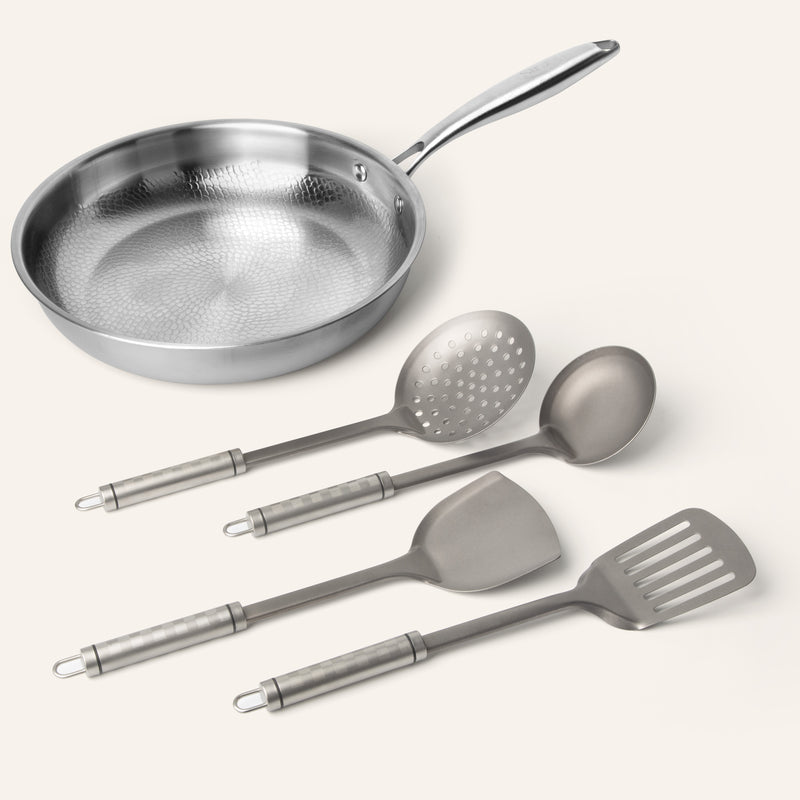
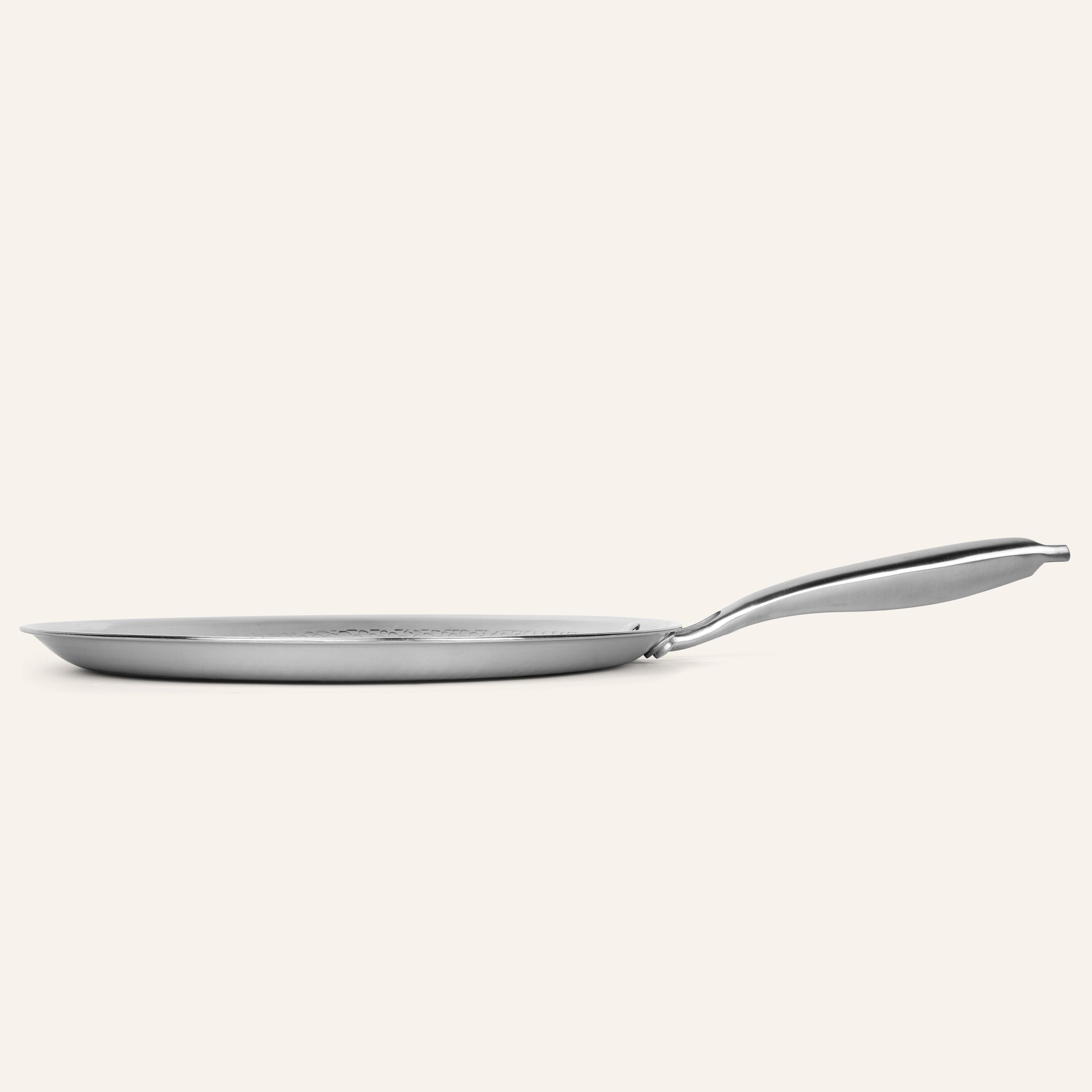
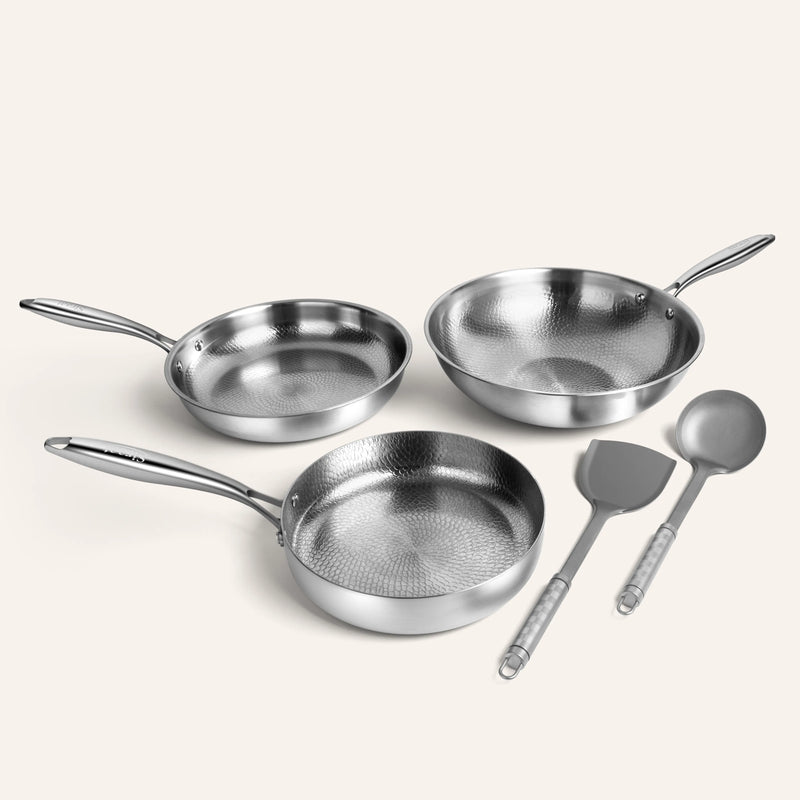
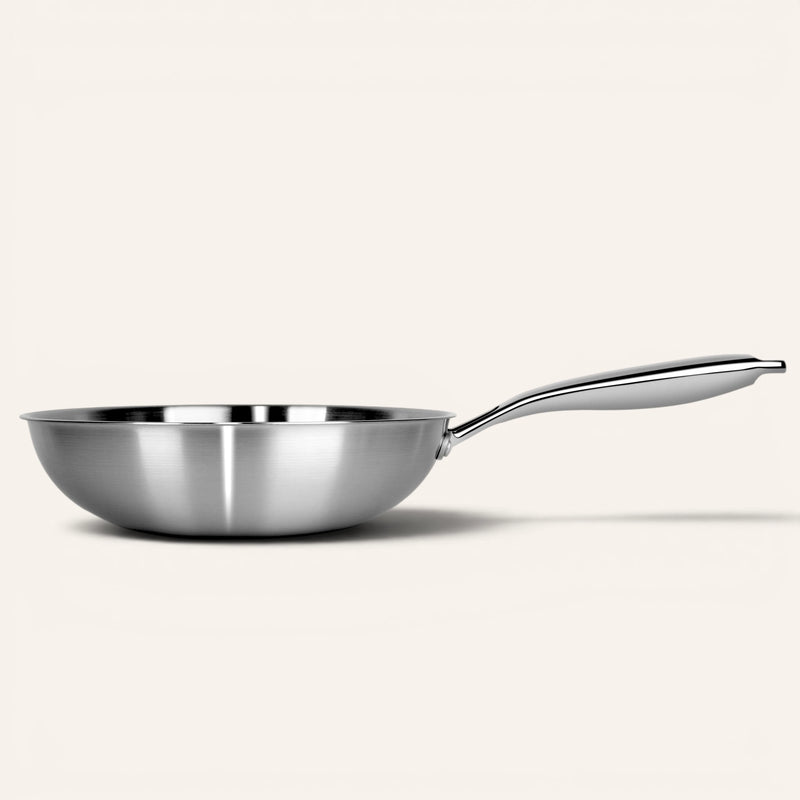
Das Siraat Hammered Kochgeschirr-Set umfasst die Hammered Pan Pro, die Deep Pan Pro, die Wok Pan Pro und die Crêpe Pan Pro. Jedes Teil verfügt über eine Oberfläche aus reinem, gehämmertem Titan, die von Natur aus antihaftbeschichtet, PFAS-frei und besonders langlebig ist. Kratzfest, spülmaschinen- und ofenfest – alles, was Sie für jede Mahlzeit benötigen, in einem zeitlosen Set.
Das Fazit: Sind Titanpfannen also wirklich antihaftbeschichtet?
Titanpfannen verhalten sich nicht exakt wie herkömmliches Antihaft-Kochgeschirr – und das ist beabsichtigt. Anstatt sich auf eine Beschichtung zu verlassen, erreichen sie eine natürlich geringe Antihaftwirkung durch ihre Kochfläche und die Art, wie sie verwendet werden.
Sobald Sie verstanden haben, wie man die Pfanne vorheizt und mit einer kleinen Menge Öl kocht, kann eine hochwertige Titanpfanne alles von Eiern bis zu Steaks zubereiten und bietet dabei eine Haltbarkeit, die beschichtetes Antihaft-Kochgeschirr nicht erreichen kann. Der Schlüssel liegt darin, zu wissen, was man erwarten kann. Sobald Sie verstehen, wie massives Titankochgeschirr funktioniert, ist es einfach, konsistente, natürlich gering anhaftende Ergebnisse zu erzielen, ohne auf eine synthetische Beschichtung angewiesen zu sein.