




Nicht alle Antihaft-Kochgeschirre sind für Metallutensilien geeignet. Während herkömmliche Antihaftpfannen ein einfaches Ablösen von Speisen ermöglichen (insbesondere wenn sie neu sind), können ihre beschichteten Oberflächen empfindlich gegenüber Kratzern und täglicher Abnutzung sein. In den meisten Fällen wird die Verwendung von Metallutensilien auf Antihaft-Kochgeschirr nicht empfohlen. Einige Materialien und moderne Konstruktionen sind jedoch widerstandsfähiger und können Metallutensilien im Laufe der Zeit besser standhalten.
Die Wahl des besten Antihaft-Kochgeschirrs hängt davon ab, wie Sie kochen, wie oft Sie es verwenden und wie viel Pflege Sie bereit sind zu investieren. Dieser Leitfaden vergleicht die gängigsten Optionen, um Ihnen zu helfen zu verstehen, welche Arten von Antihaft-Kochgeschirr besser für die Verwendung mit Metallutensilien geeignet sind.
Können Sie Metallutensilien auf Antihaft-Kochgeschirr verwenden?
Die kurze Antwort lautet: Es hängt von der Beschichtung ab. Die meisten herkömmlichen Antihaftpfannen verwenden eine relativ weiche PTFE-Beschichtung. Wenn eine Metallgabel oder ein Pfannenwender über diese Oberfläche kratzt, können Kratzer oder Abrieb entstehen. Mit der Zeit führen zerkratzte Beschichtungen zu Anhaften – und sie können auch in Ihre Speisen abblättern, was Bedenken hinsichtlich möglicher Gesundheitsrisiken im Zusammenhang mit beschädigten Antihaftbeschichtungen aufwirft.
Allerdings gibt es Antihaft-Kochgeschirr, das für Metallutensilien sicher ist. Diese Pfannen basieren nicht auf synthetischen Beschichtungen oder sind aus haltbareren Materialien gefertigt, die Metallutensilien im täglichen Gebrauch zuverlässiger handhaben. Obwohl keine Pfanne unter extremen Bedingungen 100% kratzfest ist, ermöglichen die modernen Konstruktionen und kratzfesten Materialien den täglichen Gebrauch von Metallutensilien, ohne die Sicherheit oder Leistung der Pfanne zu beeinträchtigen.
| Material | Sicherheit für Metallutensilien | Oberflächentyp | Haltbarkeit | Am besten geeignet für |
|---|---|---|---|---|
| Antihaft (PTFE) | Niedrig | Beschichtet | Niedrig | Leichtes Kochen bei niedriger Hitze & gelegentlichen Gebrauch |
| Titan | Hoch | Feste Oberfläche | Sehr hoch | Gesundes, langfristiges und sorgenfreies tägliches Kochen |
| Edelstahl | Hoch | Feste Oberfläche | Hoch | Professionelles Anbraten & technikintensives Kochen |
| Gusseisen | Hoch | Eingebrannt | Sehr hoch | Kochen bei hoher Hitze & Wärmespeicherung |
| Keramik | Niedrig bis mäßig | Beschichtet | Niedrig bis mittel | Leichtes Kochen & ästhetisch orientierte Küchen |
Die besten Antihaft-Kochgeschirrmaterialien für Metallutensilien im Vergleich
Traditionelles Antihaft
Sicher für Metallutensilien: Nein
Beschichtete Antihaftpfannen sind im Allgemeinen die empfindlichste Art von Kochgeschirr gegenüber Metallutensilien. Obwohl sie ein bequemes Ablösen von Speisen bieten und pflegeleicht sind, hängt ihre Leistung von einer dünnen Oberflächenschicht ab, die mit der Zeit zerkratzen kann. Selbst gelegentlicher Kontakt mit Metallwerkzeugen kann die Beschichtung allmählich abnutzen, insbesondere bei häufigem Gebrauch, höherer Hitze oder mehr Druck beim Kochen.
Aufgrund dessen und der Tatsache, dass diese Oberflächen nicht repariert werden können, ist ihre Lebensdauer typischerweise kürzer im Vergleich zu haltbareren Materialien. Obwohl viele Antihaftpfannen anfänglich budgetfreundlich sind, können wiederholte Ersatzkäufe die langfristigen Kosten erhöhen.
Am besten geeignet für:
Leichten, gelegentlichen Gebrauch und Kochen bei niedriger Hitze, vorausgesetzt, Sie sind bereit, nur Silikon- oder Holzutensilien zu verwenden, um die empfindliche Oberfläche zu schützen.
Titan
Sicher für Metallutensilien: Ja
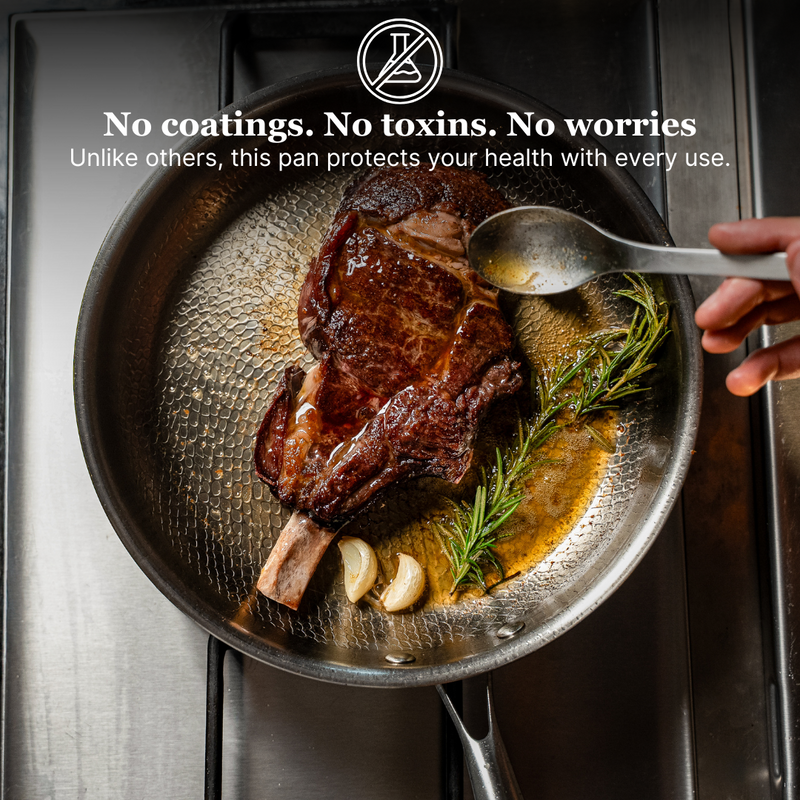
Titan-Kochgeschirr ist viel widerstandsfähiger gegen Kratzer als herkömmliche Antihaftflächen. Es ist ein hochbelastbares, extrem starkes und langlebiges Material, das dem regelmäßigen Gebrauch von Metallutensilien standhält. Im Gegensatz zu beschichteten Pfannen ist es nicht auf eine empfindliche Schicht angewiesen, um das Ablösen von Speisen zu erreichen. Stattdessen ist die Kochfläche selbst fest, nicht reaktiv, pflegeleicht und so konzipiert, dass sie Jahrzehnte hält, selbst bei regelmäßigem Gebrauch.
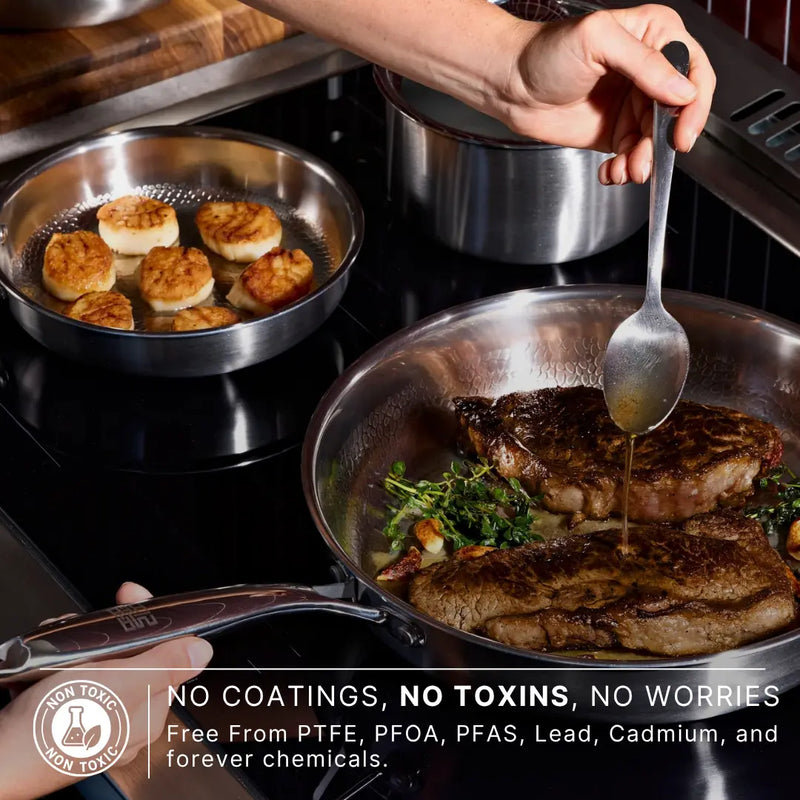
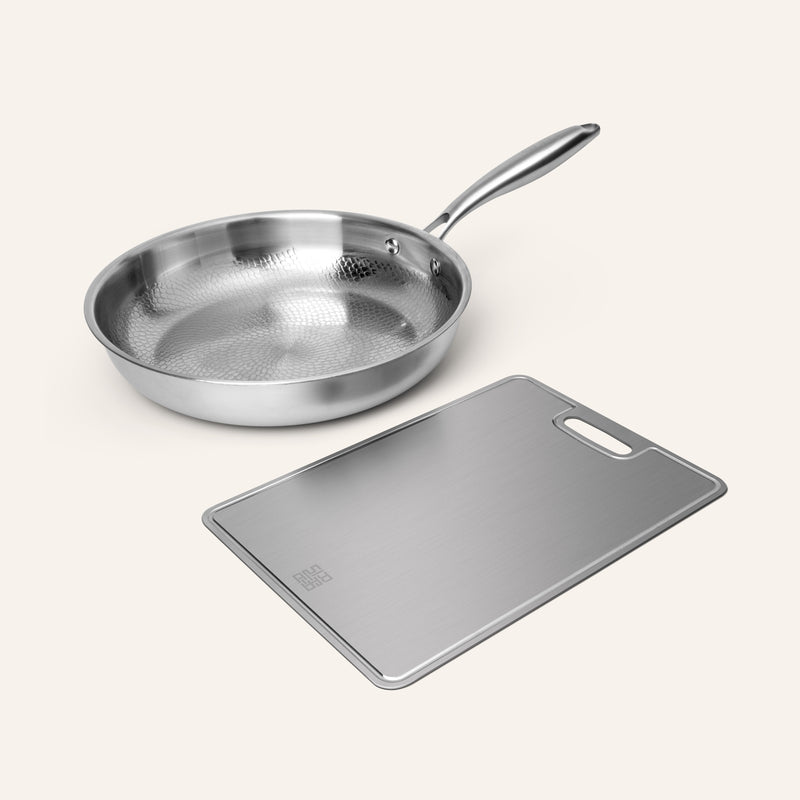
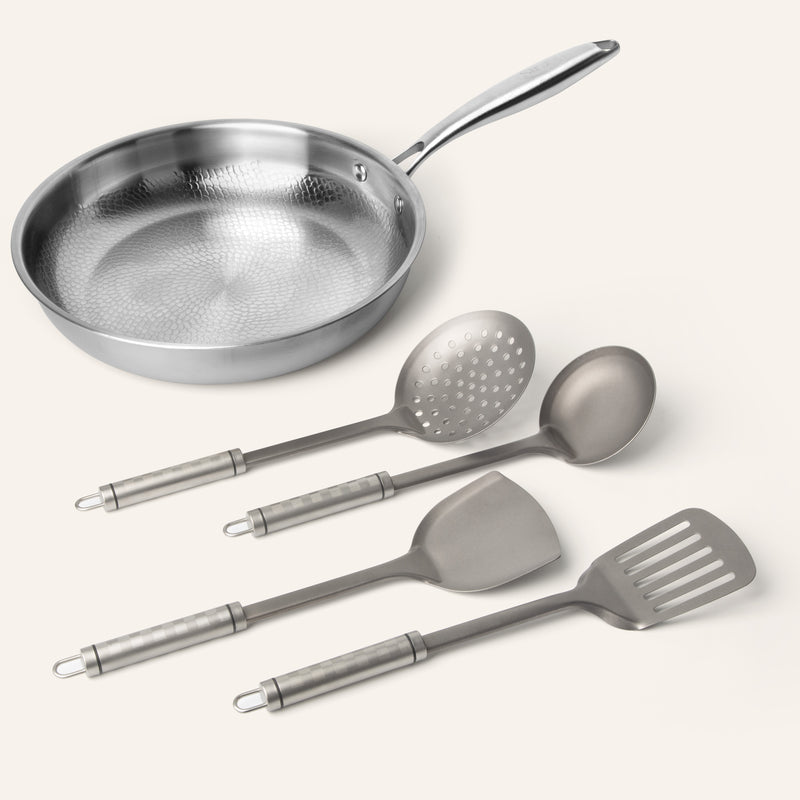
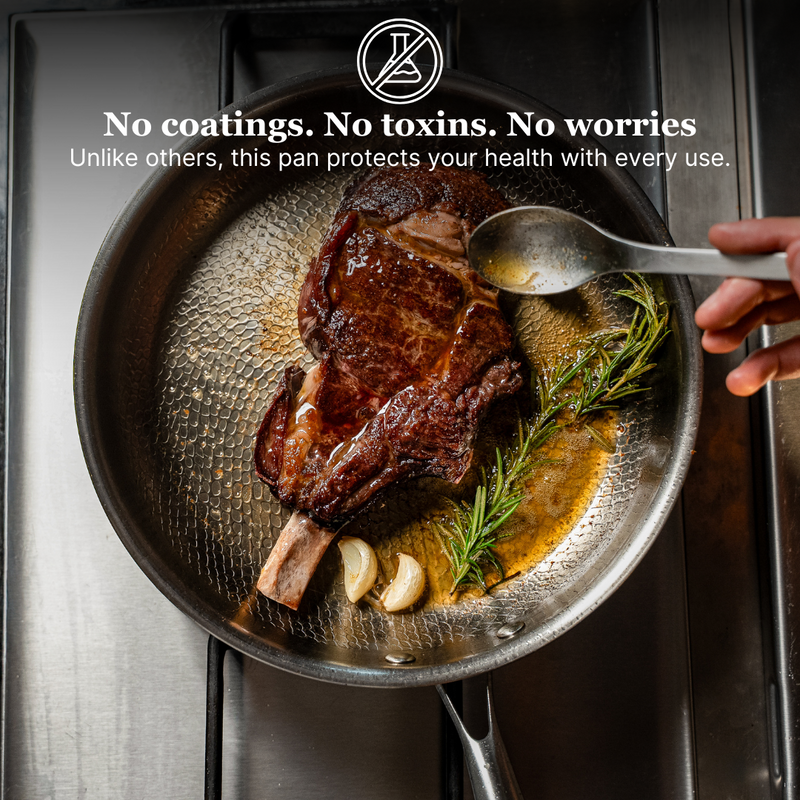
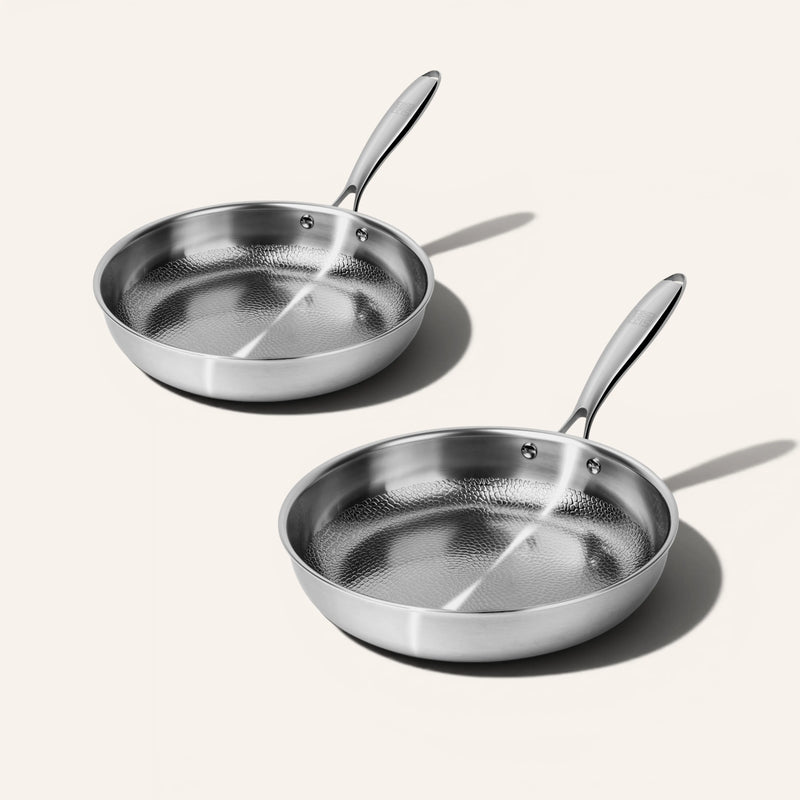
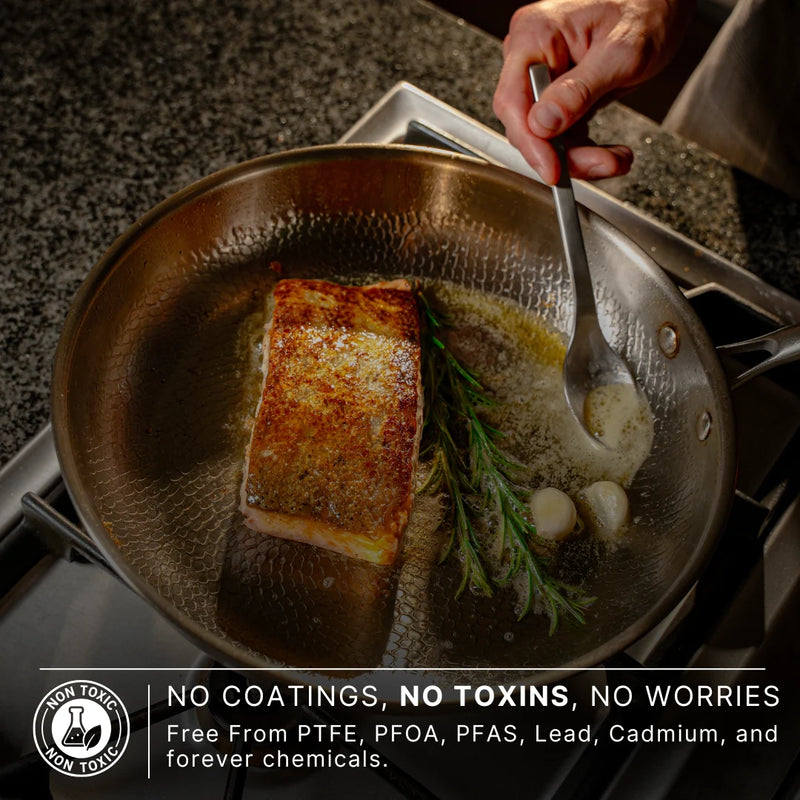
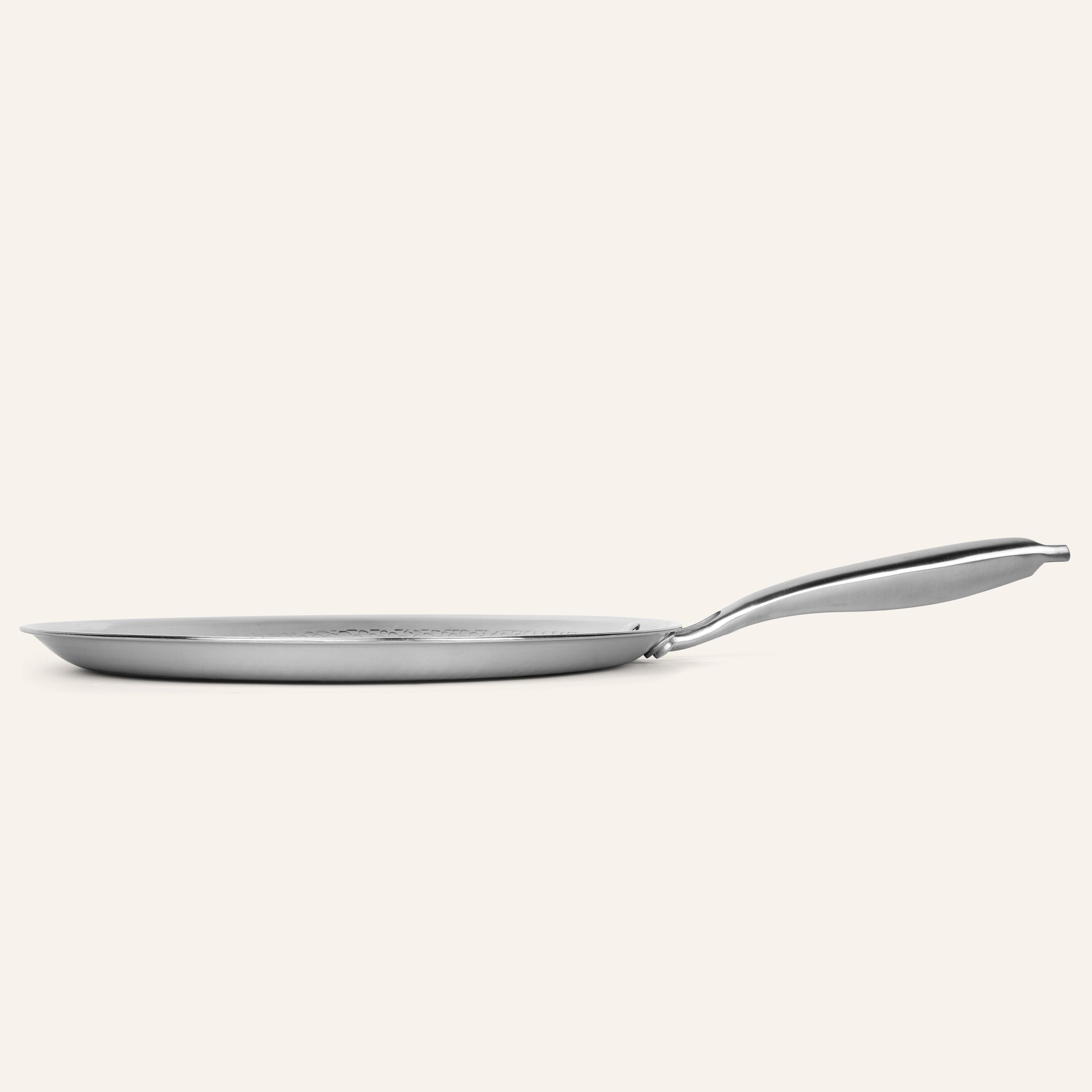
Gehämmerte Titan-Oberflächen, wie die der Siraat's Titanium Hammered Pan Pro, erzeugen auch eine praktisch antihaftbeschichtete Oberfläche, die das Ablösen von Speisen erleichtert, ohne dass synthetische Beschichtungen (PFAS/PTFE) erforderlich sind. Diese Art von Oberfläche ist auch mit einer Vielzahl von Werkzeugen kompatibel, einschließlich Titan-Utensilien, die oft wegen ihrer Haltbarkeit und nicht reaktiven Eigenschaften gewählt werden.
Bei vielen modernen Designs wird Titan-Kochgeschirr mit einer mehrschichtigen Konstruktion hergestellt, bei der eine langlebige Titan-Oberfläche mit einem leitfähigen Kern kombiniert wird. Dies ermöglicht dem Kochgeschirr, eine gleichmäßige Leistung zu erhalten, während es eine Oberfläche bietet, die im Laufe der Zeit wesentlich weniger anfällig für Abnutzung ist.
Am besten geeignet für:
Sorgenfreies tägliches Kochen, gesundheitsbewusste Haushalte und alle, die eine langfristige Investition suchen, die keine speziellen "weichen" Werkzeuge erfordert.

Edelstahl
Sicher für Metallutensilien: Ja
Edelstahl ist von Natur aus langlebig und enthält keine Beschichtungen, die abgekratzt werden könnten. Es kann Metallutensilien ohne erhebliche Oberflächenschäden standhalten. Edelstahlpfannen werden oft zum Kochen bei hoher Hitze verwendet und können mit vielen Materialien von Metallwerkzeugen kombiniert werden.
Edelstahl ist jedoch von Natur aus nicht antihaftbeschichtet. Speisen können an der Oberfläche haften bleiben, insbesondere wenn Hitze und Öl nicht richtig gehandhabt werden. Das bedeutet, dass es beim Kochen mehr Aufmerksamkeit erfordert, eine erlernte Technik, um konsistente Ergebnisse zu erzielen, und eine intensivere Wartung (wie Einweichen und Schrubben), um hartnäckige Rückstände zu entfernen.
In vielen Fällen wird Edelstahl-Kochgeschirr auch mit einer mehrschichtigen Konstruktion hergestellt, die einen Aluminium- oder Kupferkern enthält, um die Wärmeverteilung und -kontrolle zu verbessern.
Am besten geeignet für:
Professionelles Anbraten und Benutzer, die mit einem praktischeren, technikintensiveren Kochen vertraut sind.
Gusseisen
Sicher für Metallutensilien: Ja
Gusseisen-Kochgeschirr ist für den Schwerlastgebrauch gebaut und kann Metallutensilien problemlos ohne strukturelle Schäden handhaben. Seine "Antihaft"-Leistung hängt jedoch von einer eingebrannten Schicht (polymerisiertes Öl) ab, die als natürliche Barriere wirkt.
Während Metallwerkzeuge das Eisen selbst nicht beschädigen, kann aggressives Schaben diese Einbrennung im Laufe der Zeit abnutzen. Im Gegensatz zu synthetischen Beschichtungen ist jede Oberflächenabnutzung nicht dauerhaft – die Pfanne kann durch erneutes Einbrennen immer wiederhergestellt werden. Aufgrund ihres erheblichen Gewichts und der Notwendigkeit einer fortlaufenden Pflege bleibt Gusseisen eher ein selektives Werkzeug als eine schnelle, wartungsarme Alltagsoption.
Am besten geeignet für:
Kochen bei hoher Hitze, langsame, wärmespeichernde Methoden und Benutzer, die mit dem Einbrennen und der fortlaufenden Pflege vertraut sind.
Keramik
Sicher für Metallutensilien: Mit Vorsicht
Während Keramik-Kochgeschirr oft für seine glatte Kochfläche und einfache Handhabung (besonders wenn es neu ist) geschätzt wird, hängt seine Leistung, ähnlich wie bei traditionellem Antihaft, eher von einer Oberflächenbeschichtung als vom Basismaterial selbst ab. Keramikbeschichtungen können leichten, gelegentlichen Kontakt mit Metallutensilien tolerieren, aber regelmäßiger Gebrauch kann zu allmählicher Abnutzung führen. Mit der Zeit kann dies die Antihaftleistung reduzieren und die Oberfläche anfälliger für Anhaften und schwieriger zu reinigen machen.
Im Vergleich zu haltbareren Materialien erfordert Keramik-Kochgeschirr typischerweise eine vorsichtigere Handhabung, um seine Leistung zu erhalten, insbesondere wenn es um die Wahl der Utensilien und die Reinigungsmethoden geht.
Am besten geeignet für:
Kochen bei niedriger bis mittlerer Hitze und Benutzer, die bereit sind, schonendere Utensilien und eine sorgfältigere Pflege zu verwenden.

Titanium Hammered – Complete Edition
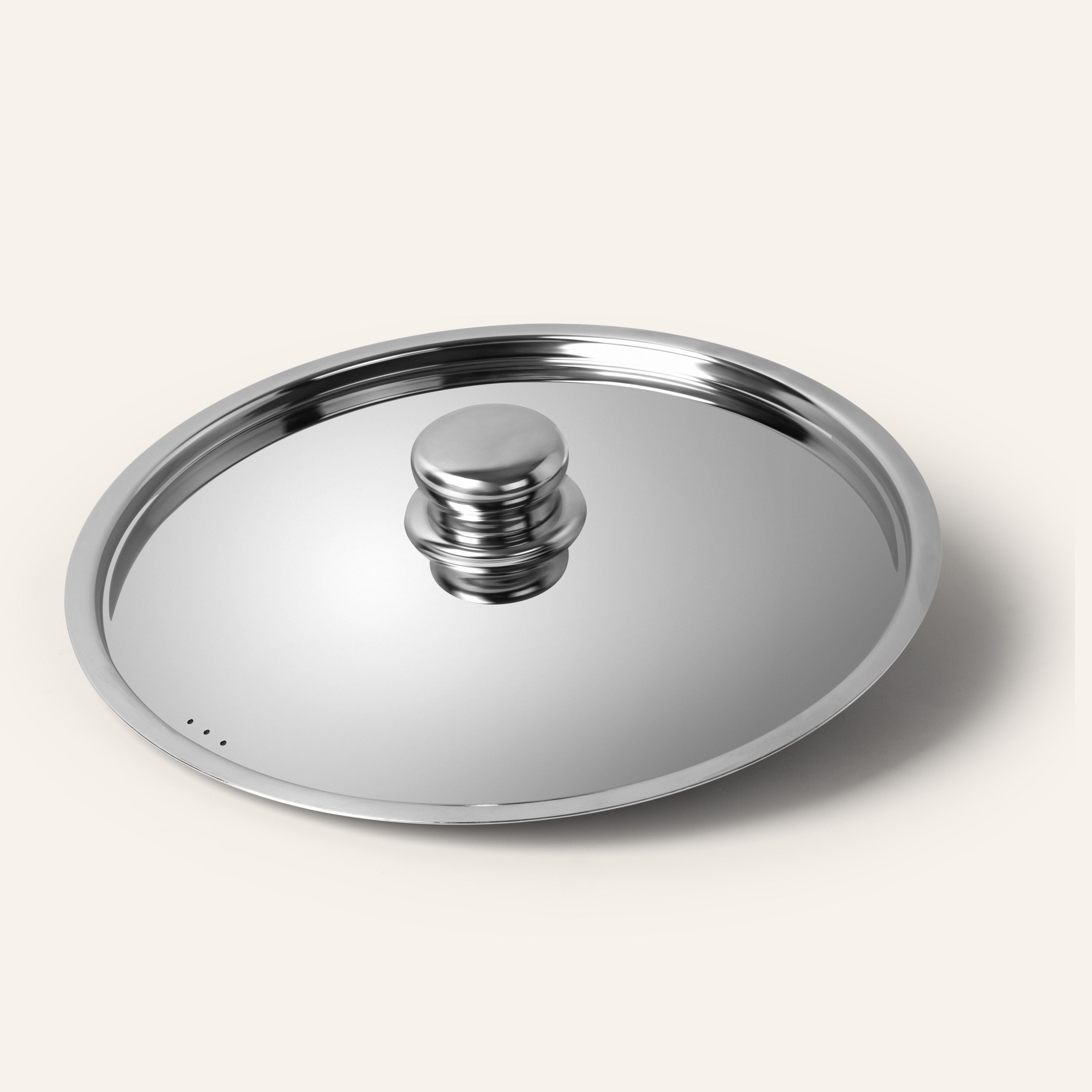
Das Siraat Hammered Kochgeschirr-Set umfasst die Hammered Pan Pro, die Deep Pan Pro, die Wok Pan Pro und die Crêpe Pan Pro. Jedes Teil verfügt über eine Oberfläche aus reinem, gehämmertem Titan, die von Natur aus antihaftbeschichtet, PFAS-frei und besonders langlebig ist. Kratzfest, spülmaschinen- und ofenfest – alles, was Sie für jede Mahlzeit benötigen, in einem zeitlosen Set.
Zusammenfassung: Die Wahl von Antihaft-Kochgeschirr, das Metallutensilien standhält
Wenn Sie die Flexibilität wünschen, eine breite Palette von Utensilien in Ihrer Küche zu verwenden, spielt die Konstruktion der Kochgeschirroberfläche eine wichtige Rolle. Bei der Wahl von Antihaft-Kochgeschirr, das Metallutensilien standhält, ist es hilfreich, über traditionelle beschichtete Optionen hinauszuschauen und sich auf die Konstruktion der Oberfläche zu konzentrieren.
Materialien mit massiven, unbeschichteten Kochflächen, wie Titan, sind im Allgemeinen widerstandsfähiger gegen Kratzer und tägliche Abnutzung. Sie können ein haltbareres, wartungsärmeres Erlebnis bieten, insbesondere in Küchen, in denen regelmäßig verschiedene Utensilientypen verwendet werden. Edelstahl und Gusseisen sind ebenfalls mit Metallutensilien kompatibel, obwohl sie möglicherweise mehr Technik oder fortlaufende Wartung erfordern, um konstant zu funktionieren.
Beschichtetes Kochgeschirr, einschließlich Keramik und traditionellem Antihaft, kann für bestimmte Anwendungsfälle immer noch praktisch sein. Regelmäßiger Kontakt mit Metallutensilien kann jedoch im Laufe der Zeit ihre Oberfläche beeinträchtigen, was sowohl die Leistung als auch die Lebensdauer beeinflussen kann. Letztendlich hängt die beste Wahl von Ihren Kochgewohnheiten ab. Wenn Haltbarkeit, Flexibilität und minimale Wartung Prioritäten sind, bieten Materialien, die nicht auf Beschichtungen angewiesen sind, tendenziell ein konsistenteres Langzeiterlebnis.