




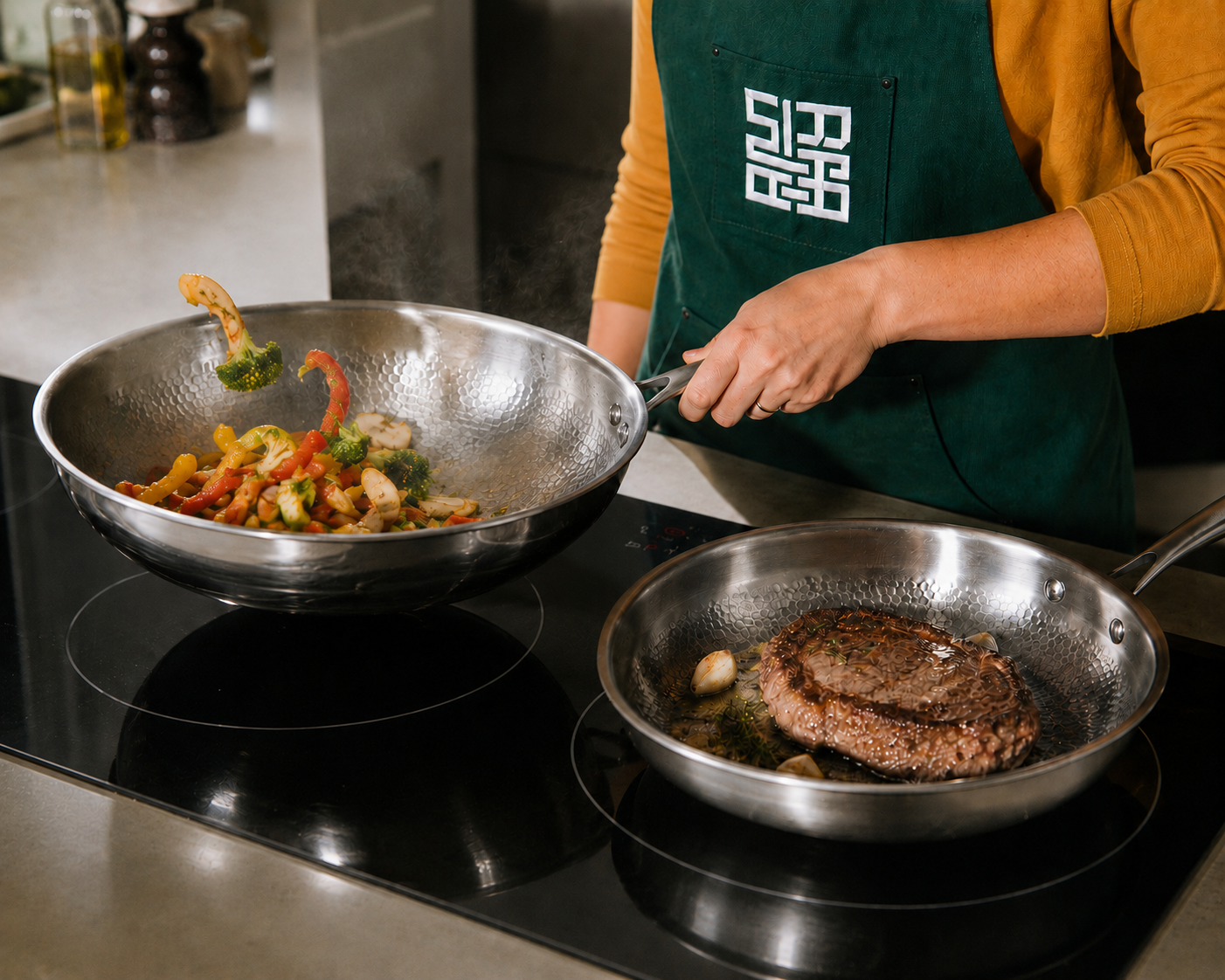
Wenn Sie sich zwischen einem Wok und einer Bratpfanne entscheiden müssen, hängt die bessere Wahl von Ihren Vorlieben und dem, was Sie kochen möchten, ab. Ein Wok eignet sich am besten für Stir-Fries, gebratenen Reis, Nudeln und andere Gerichte, die bei hoher Hitze und ständigem Rühren zubereitet werden. Eine Bratpfanne ist die bessere Wahl für Speisen, die vollen Kontakt mit der Kochfläche benötigen, wie z.B. Eier, Pfannkuchen, Fisch oder Steaks.
Die richtige Option hängt davon ab, was Sie am häufigsten kochen. In diesem Leitfaden werden wir die Hauptunterschiede zwischen einem Wok und einer Bratpfanne vergleichen, erklären, wann man welche verwendet, und Ihnen helfen zu entscheiden, ob Sie eine oder beide in Ihrer Küche benötigen.
| Merkmal | Wok | Bratpfanne |
|---|---|---|
| Form | Tiefe Schale mit hohen, abgeschrägten Seiten | Flacher Boden mit niedrigen, leicht abgeschrägten Seiten |
| Häufige Verwendungen | Wokgerichte, gebratener Reis, Nudeln, Gemüse, One-Pan-Gerichte | Eier, Pfannkuchen, Steaks, Burger, Fisch, Anbraten |
| Kochstil | Hohe Hitze mit häufigem Rühren und Schwenken | Gleichmäßiges Bräunen und direkter Kontakt mit der Kochfläche |
| Kochkapazität | Besser für größere Portionen | Besser für kleine bis mittlere Portionen |
| Vielseitigkeit | Auch geeignet zum Dämpfen, Frittieren und Schmoren | Am besten zum täglichen Braten, Anbraten und Sautieren |
Wok vs. Bratpfanne: Der schnelle Vergleich
Ein Wok und eine Bratpfanne eignen sich jeweils hervorragend für unterschiedliche Kochaufgaben. Die tiefe Form eines Woks erleichtert das Schwenken von Zutaten bei hoher Hitze und das Kochen größerer Mengen, während eine Bratpfanne eine flache Kochfläche bietet, die besser für Lebensmittel geeignet ist, die eine gleichmäßige Bräunung benötigen.
Wenn Sie regelmäßig eine Mischung aus asiatischen Gerichten und alltäglichen Mahlzeiten zubereiten, haben beide Pfannen ihren Platz in der Küche. Die folgenden Abschnitte gehen näher darauf ein, wie sie sich unterscheiden und wann welche die bessere Wahl ist.
Hauptunterschiede zwischen einem Wok und einer Bratpfanne
Form und Design
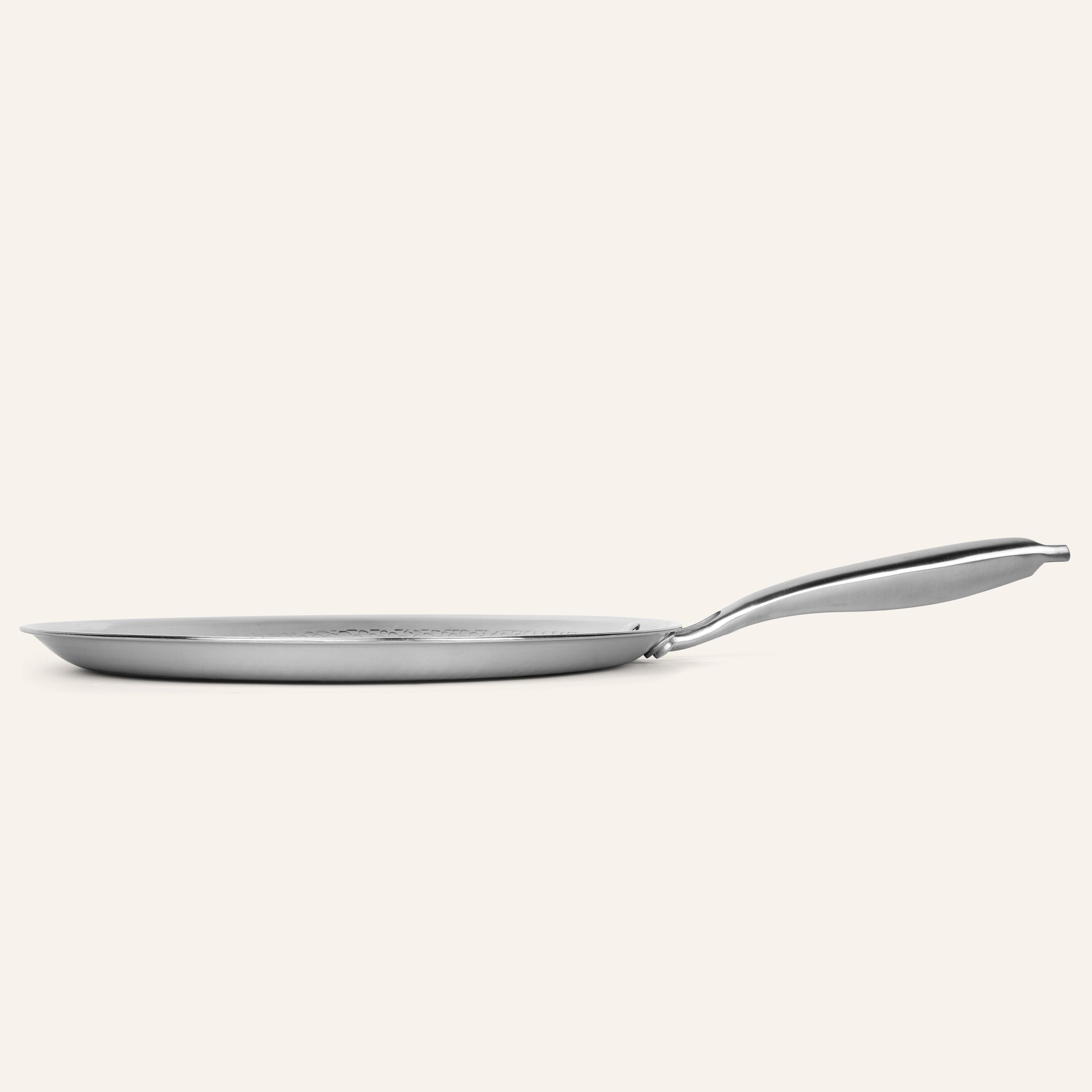
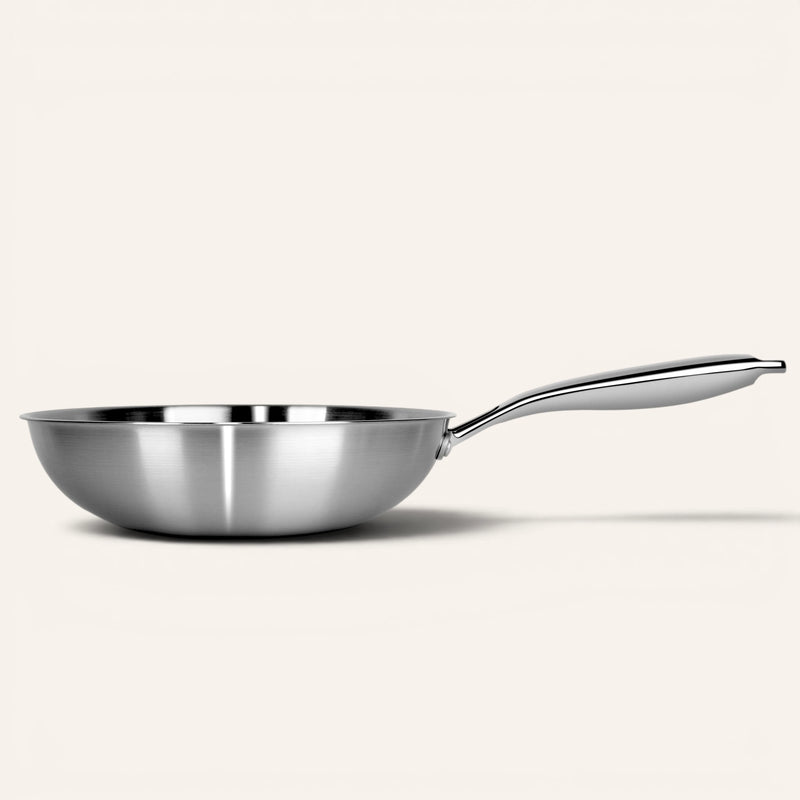
Der auffälligste Unterschied zwischen einem Wok und einer Bratpfanne ist ihre Form. Ein Wok hat eine tiefe Kochschale mit hohen, abgeschrägten Seiten. Eine Bratpfanne hat einen breiten, flachen Boden und flachere Seiten.
Dieses Design verändert die Art und Weise, wie Speisen garen. Die abgeschrägten Seiten eines Woks ermöglichen es Ihnen, Zutaten von der heißesten Stelle der Pfanne wegzuschieben, während Sie neue Zutaten in die Mitte geben. Dies erleichtert das Kochen verschiedener Zutaten bei leicht unterschiedlichen Temperaturen, ohne die Pfanne zu überfüllen.
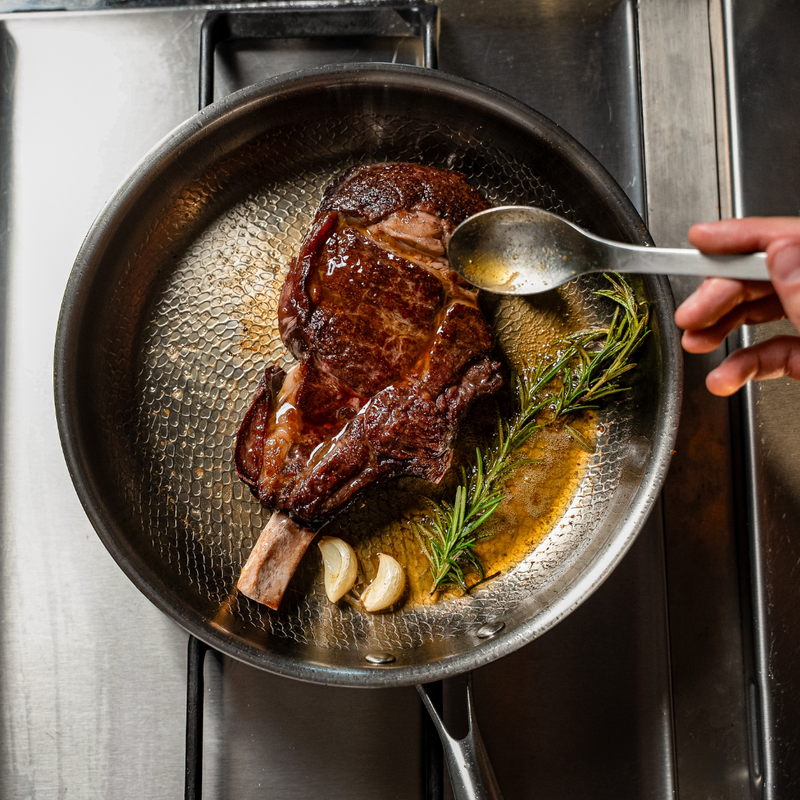
Eine Bratpfanne hält den größten Teil der Kochfläche auf demselben Niveau, sodass die Speisen in direktem Kontakt mit der Hitze bleiben. Das ist genau das, was Sie wollen, wenn Sie ein Steak anbraten, Eier braten oder eine gleichmäßig goldene Kruste auf Fisch oder Pfannkuchen erhalten möchten.
Kochfläche und Wärmeverteilung
Eine Bratpfanne bietet eine flachere Kochfläche, wodurch jede Zutat direkten Kontakt mit der Pfanne hat. Dies hilft, die Speisen gleichmäßig zu bräunen und macht es einfacher, empfindliche Zutaten zu kochen, ohne sie ständig zu bewegen.
Ein Wok konzentriert die höchste Hitze in der Mitte. Während die Zutaten gerührt oder geschwenkt werden, bewegen sie sich zwischen heißeren und kühleren Bereichen der Pfanne, was hilft, ein Überkochen zu verhindern, während Gemüse knackig und Fleisch, Tofu oder Fisch zart bleiben.
Die Wärmeverteilung hängt auch vom Kochgeschirr selbst ab. Vollummanteltes Kochgeschirr mit Aluminiumkern heizt schnell auf und verteilt die Hitze gleichmäßiger als eine einlagige Konstruktion. Ob Sie einen Wok oder eine Bratpfanne wählen, eine gleichmäßige Erwärmung hilft, Hotspots zu reduzieren und liefert konsistentere Kochergebnisse.
Beste Kochtechniken
Ein Wok ist für das Kochen bei hoher Hitze mit ständiger Bewegung gebaut. Stir-Frying ist das bekannteste Beispiel, aber er ist gleichermaßen nützlich für gebratenen Reis, Nudelgerichte, Dämpfen, Frittieren und Schmoren.
Eine Bratpfanne funktioniert am besten, wenn das Essen davon profitiert, an Ort und Stelle zu bleiben. Anbraten, flaches Braten, Sautieren und Bräunen beruhen alle auf einem stetigen Kontakt mit der Kochfläche, um Farbe und Textur zu entwickeln. Obwohl es Überschneidungen gibt, erbringt jede Pfanne die besten Leistungen, wenn sie für die Techniken verwendet wird, für die sie entwickelt wurde.
Kochkapazität
Die hohen Seiten eines Woks bieten mehr nutzbares Volumen als eine ähnlich große Bratpfanne. Dieser zusätzliche Platz erleichtert das Kochen größerer Portionen, ohne dass Zutaten beim Rühren oder Schwenken über den Rand fallen.
Eine Bratpfanne ist oft die bessere Wahl für kleinere Mahlzeiten oder Rezepte, bei denen die Zutaten in einer einzigen Schicht bleiben sollen. Überfüllung kann Dampf einschließen, anstatt dass das Essen bräunt, daher führen das Kochen in Portionen oft zu besseren Ergebnissen.
Wann sollten Sie einen Wok wählen?
Wählen Sie einen Wok, wenn Sie regelmäßig Mahlzeiten zubereiten, die hohe Hitze und ständiges Bewegen erfordern. Seine tiefe Form gibt den Zutaten viel Bewegungsfreiheit, sodass es einfacher ist, größere Mengen zu rühren, zu wenden und zu kochen, ohne die Pfanne zu überfüllen.
Ein Wok eignet sich besonders gut für:
-
Wokgerichte, bei denen Gemüse knackig bleibt und Proteine bei hoher Hitze schnell garen.
-
Gebratener Reis und Nudelgerichte, die häufiges Schwenken benötigen, um Hitze und Gewürze gleichmäßig zu verteilen.
-
One-Pan-Gerichte, dank der zusätzlichen Kochkapazität und der hohen Seiten.
-
Frittieren, da die tiefere Form weniger Öl benötigt als eine breite Bratpfanne für die gleiche Menge an Lebensmitteln.
-
Dämpfen und Schmoren, insbesondere in Verbindung mit dem richtigen Zubehör wie einem Dämpfgestell oder Deckel.
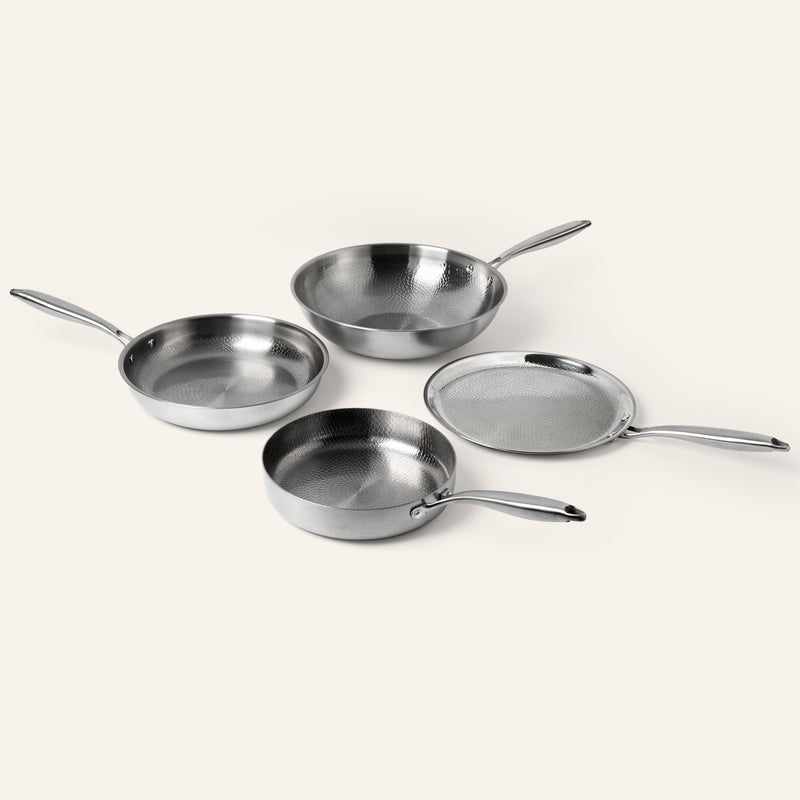
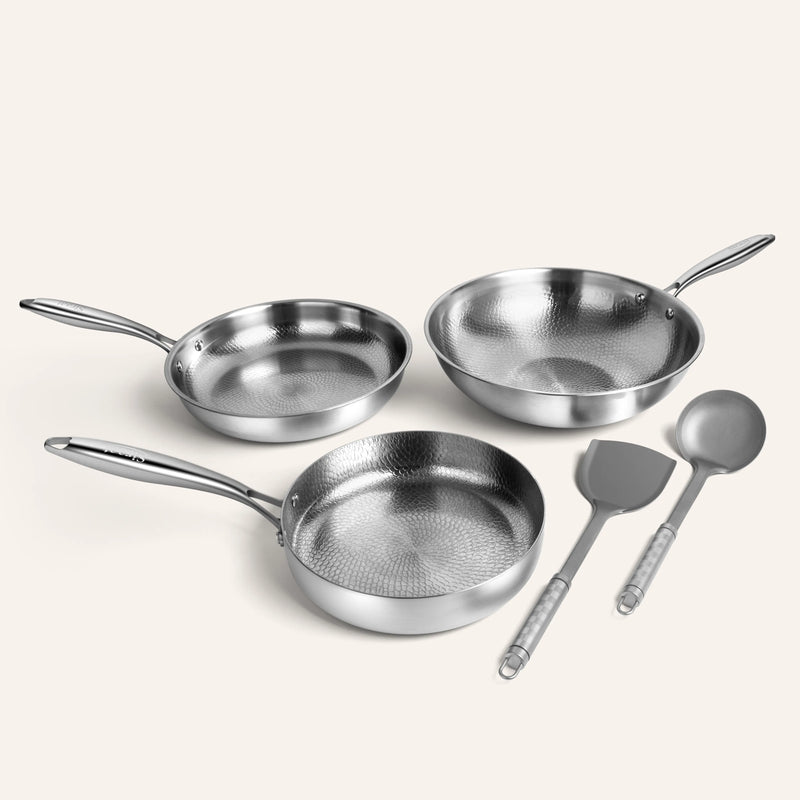
Ein gutes Beispiel ist die Siraat Titanium Hammered Wok Pan Pro. Sie wurde für alles von schnellen Wokgerichten bis hin zu größeren One-Pan-Mahlzeiten entwickelt und verfügt über eine reine gehämmerte Titankochfläche und eine vollummantelte Konstruktion mit einem Aluminiumkern für schnelles, gleichmäßiges Erhitzen. Das Edelstahl-Äußere macht sie mit allen Kochfeldern, einschließlich Induktion, kompatibel.
Obwohl ein Wok viele alltägliche Rezepte bewältigen kann, ist er nicht immer das beste Werkzeug für Speisen, die von einem kontinuierlichen Kontakt mit einer flachen Kochfläche profitieren. Für Eier, Pfannkuchen oder ein gut gebratenes Steak liefert eine Bratpfanne in der Regel bessere Ergebnisse.

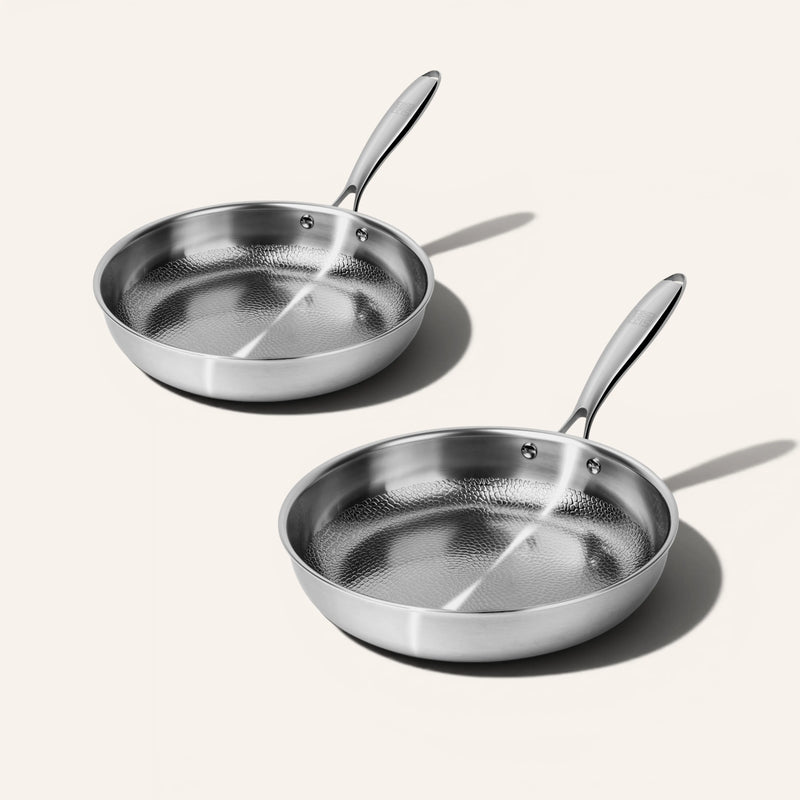
Titan gehämmert Pfanne Pro Standard
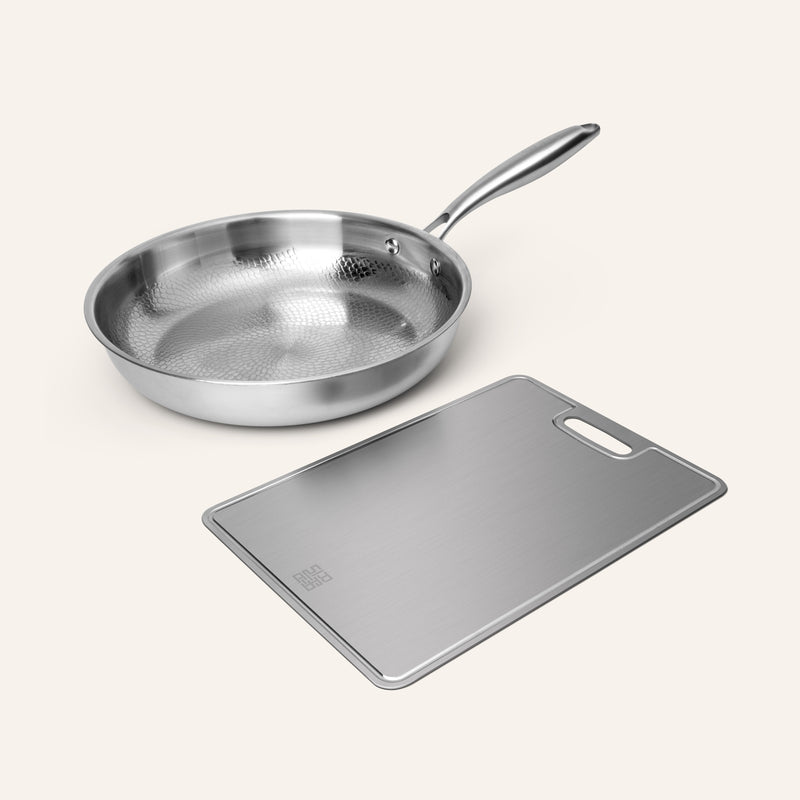
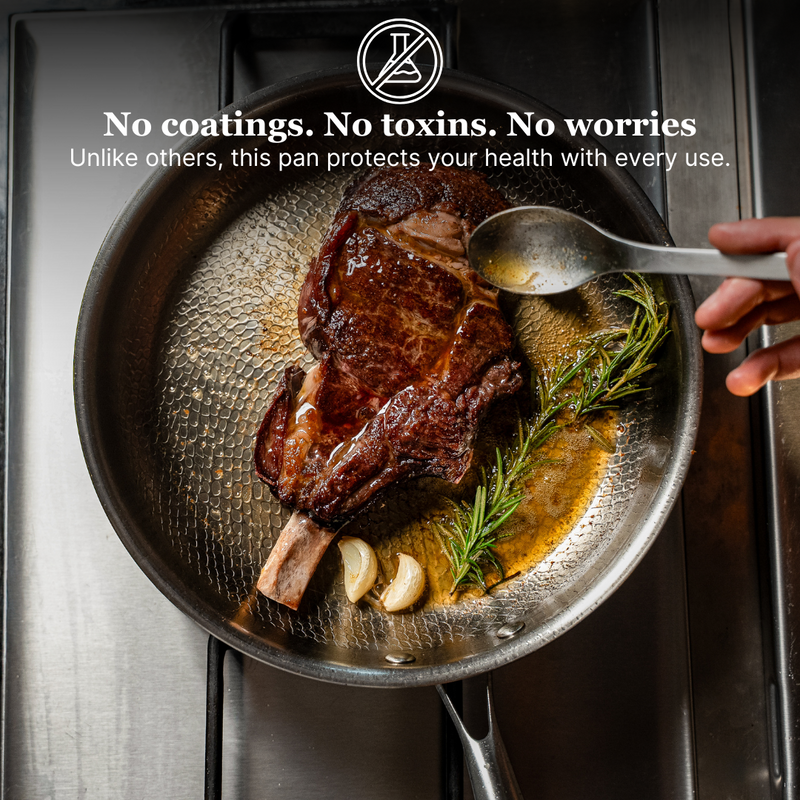
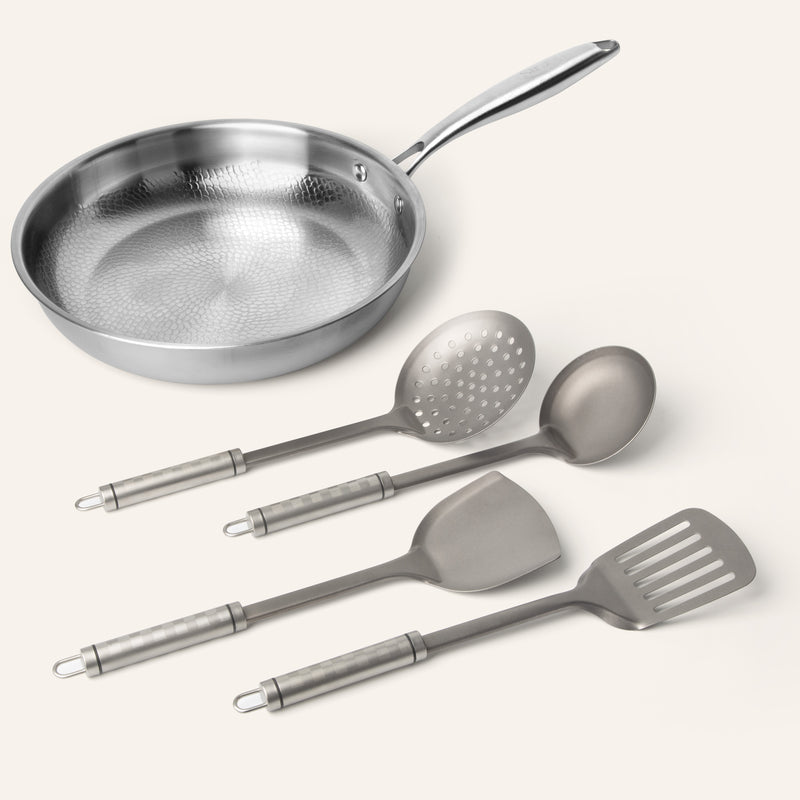
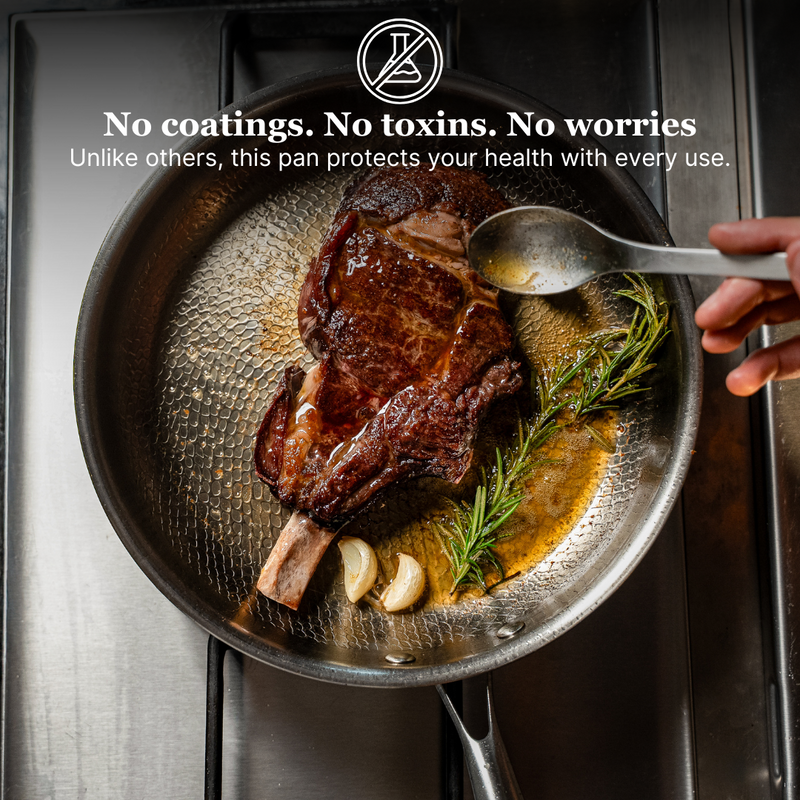
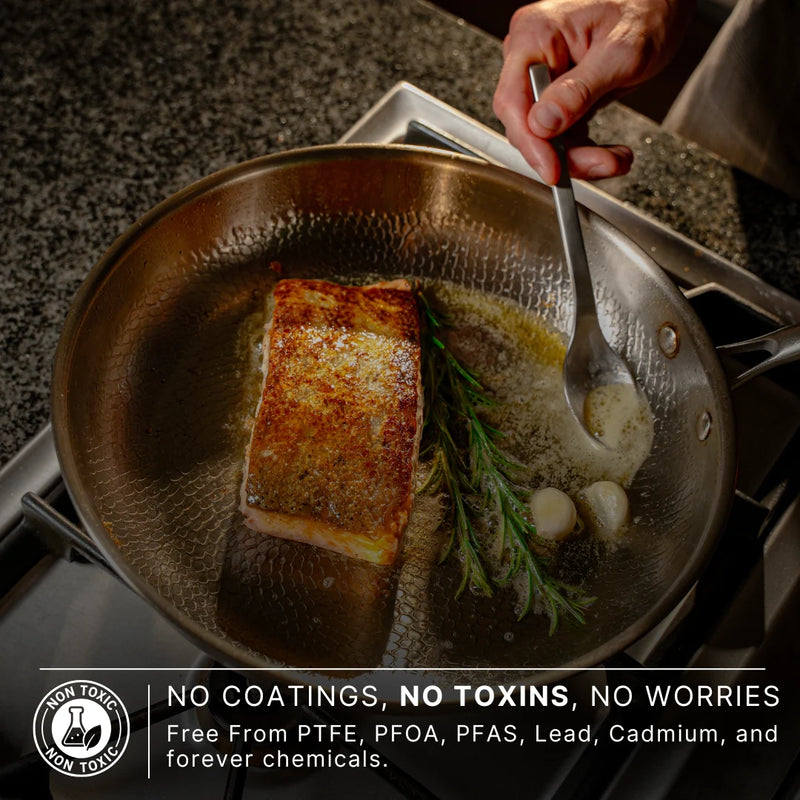
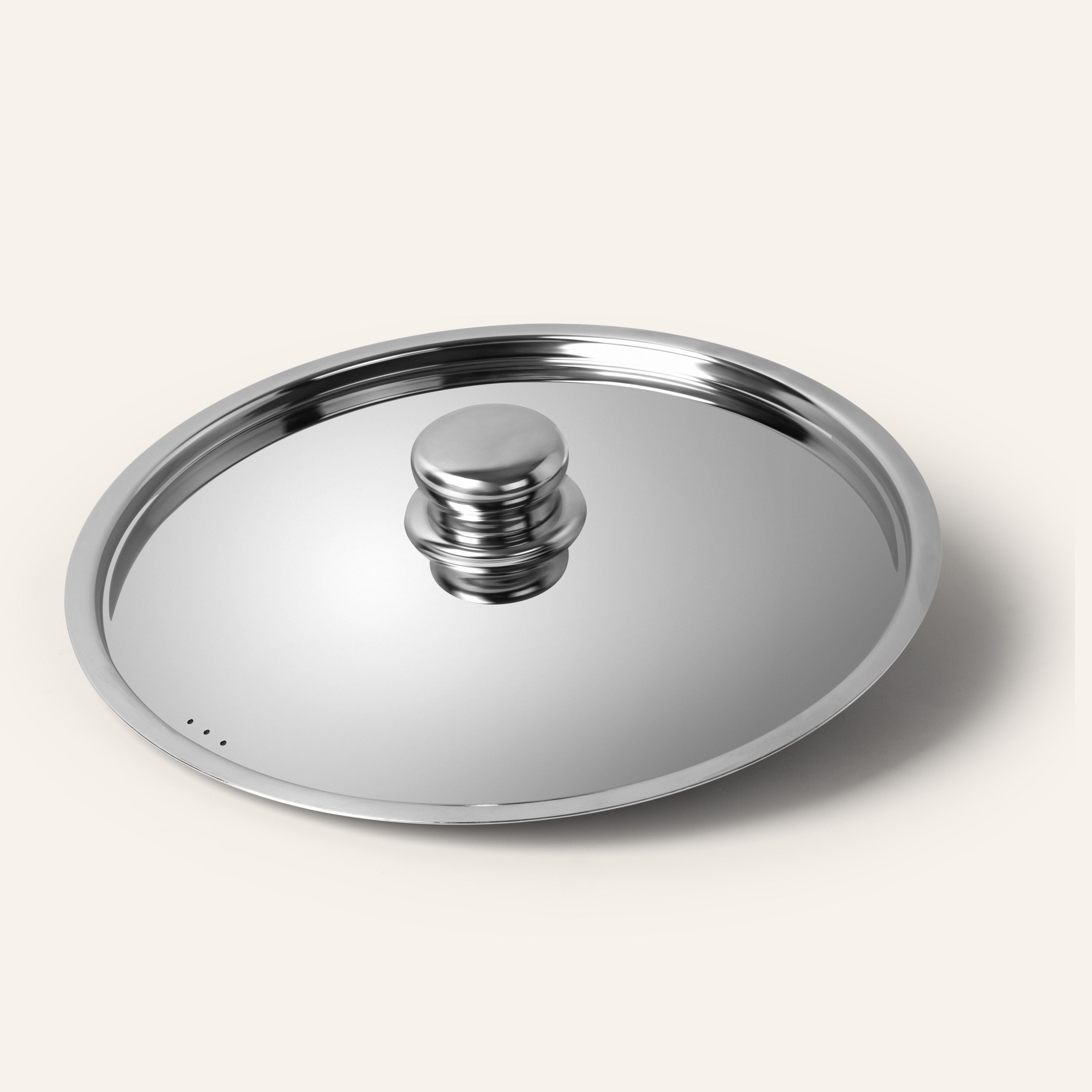
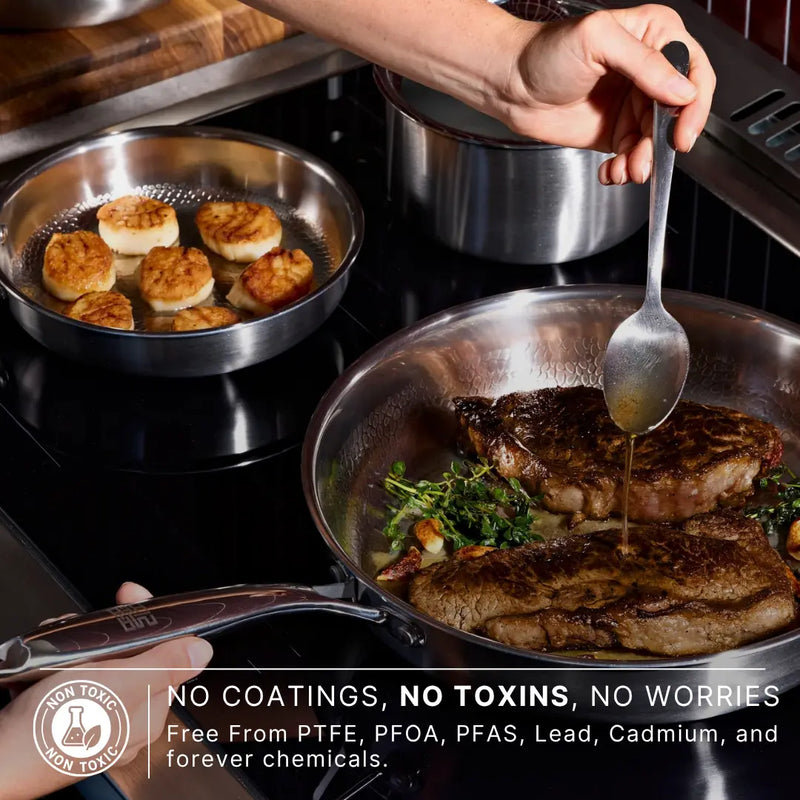
Entdecken Sie die ultimative Kochinnovation mit der Titanium Hammered Pan Pro, jetzt mit einzigartigem Hammerschlagmuster. Dieses Design dient nicht nur der Ästhetik – die gehämmerte Oberfläche erzeugt Mikrospalten, die den direkten Kontakt mit Lebensmitteln reduzieren, ein Anhaften verhindern und gleichzeitig die Ölverteilung für gleichmäßiges Garen verbessern. Warum sollten Sie sich für die Titanium Hammered Pan Pro entscheiden? Innovative gehämmerte Textur : Erzeugt einen natürlichen Antihafteffekt durch Minimierung des Oberflächenkontakts und Optimierung der Wärmeverteilung. Oberfläche aus 100 % reinem Titan : Wissenschaftlich erwiesen, dass mehr Nährstoffe erhalten bleiben und die Mahlzeiten gesünder und geschmackvoller sind. Natürlich antihaftbeschichtet und schadstofffrei : Keine schädlichen Beschichtungen, für ein sicheres und umweltfreundliches Kocherlebnis. Extrem langlebig und kratzfest : Beständig gegen Verschleiß, Rost und Kratzer und ermöglicht so eine lebenslange zuverlässige Nutzung. Schnelle und gleichmäßige Wärmeverteilung : Erhitzt schnell und gleichmäßig, wodurch die Kochzeit und der Energieverbrauch reduziert werden. Vielseitige Kompatibilität : Funktioniert nahtlos mit allen Kochfeldern, einschließlich Gas-, Induktions- und Elektrokochfeldern. Für jede Küche geeignet Mit ihrem geräumigen Innenraum eignet sich die Titanium Hammered Pan Pro perfekt für Familienessen oder die Zubereitung großer Portionen. Sie bietet mühelos Platz für mehrere Steaks, große Portionen oder komplexe Rezepte und liefert stets köstliche Ergebnisse. Ob Anbraten, Braten oder Rösten – diese Pfanne vereint Funktionalität mit Eleganz und ist ein Muss für jede Küche. Verbessern Sie Ihr Kocherlebnis noch heute mit der Titanium Hammered Pan Pro – hier trifft innovatives Design auf beispiellose Leistung.
Wann ist eine Bratpfanne die bessere Wahl?
Eine Bratpfanne ist die bessere Option, wenn das Essen einen gleichmäßigen, konstanten Kontakt mit der Kochfläche benötigt. Ihr breiter, flacher Boden hilft, eine gleichmäßige Bräunung zu erzeugen und erleichtert das Wenden, Drehen oder Lösen empfindlicher Zutaten mit einem Spatel.
Eine Bratpfanne ist eine gute Wahl für:
-
Eier und Omeletts, wobei eine flache Oberfläche hilft, sie gleichmäßig zu garen.
-
Steaks, Burger und Hähnchenbrust, die durch direkten Kontakt mit der Pfanne eine bessere Kruste entwickeln.
-
Fischfilets und Meeresfrüchte, insbesondere empfindliche Sorten, die sich in einer flachen Pfanne leichter wenden lassen.
-
Pfannkuchen, Crêpes und gegrillte Sandwiches, bei denen eine gleichmäßige Bräunung über die gesamte Oberfläche wichtig ist.
-
Alltägliches Sautieren, von Gemüse und Pilzen bis hin zu Zwiebeln und Knoblauch.
Hier zeichnet sich eine Pfanne wie die Siraat Titanium Hammered Pan Pro aus. Ihre flache Kochfläche bietet den Zutaten maximalen Kontakt mit der Pfanne, während die vollummantelte Konstruktion eine gleichmäßige Wärmeverteilung für konsistente Kochergebnisse fördert.
Wenn die meisten Ihrer Mahlzeiten aus Braten, Anbraten oder Sautieren bestehen, wird eine Bratpfanne wahrscheinlich täglich häufiger verwendet. Sie bewältigt eine Vielzahl von Rezepten mit Leichtigkeit und ist oft die erste Pfanne, zu der Hobbyköche greifen.

Titanium Hammered Wok Pan Pro
This Hammered Wok Pan stands apart, indestructible, lifetime durable, and trusted by cooks who crave power and control.
Endgültiges Fazit: Brauchen Sie einen Wok, eine Bratpfanne oder beides?
Wenn Sie nur eine Pfanne kaufen möchten, wählen Sie diejenige, die am besten zu Ihrer Kochweise passt. Ein Wok ist die bessere Wahl für Wokgerichte, Nudelgerichte, gebratenen Reis und größere One-Pan-Mahlzeiten. Eine Bratpfanne ist besser geeignet für Rezepte, die auf gleichmäßige Bräunung angewiesen sind, von Eiern und Pfannkuchen bis hin zu Steaks und Fisch.
Wenn Sie eine große Vielfalt an Mahlzeiten zubereiten, bietet Ihnen beides die größte Flexibilität. Anstatt miteinander zu konkurrieren, ergänzen sich ein Wok und eine Bratpfanne, wobei jede bei unterschiedlichen Kocharten hervorragende Leistungen erbringt.