




Not all titanium pans are truly non-stick. Some have a traditional non-stick coating reinforced with titanium, while others feature a solid titanium cooking surface without any coating. Food release isn't determined by the material alone – it also depends on the pan's surface design, preheating, and cooking technique.
In this guide, we'll explain what makes some titanium pans perform similarly to non-stick cookware, how they compare to coated non-stick pans, and what you can do to achieve the best cooking results.
Are Titanium Pans Really Non-Stick? The Quick Answer
Some are, and some aren't. Not all titanium pans offer the same cooking performance because they're made differently. Traditional non-stick pans may use a titanium-reinforced coating, while solid titanium cookware relies on the cooking surface itself rather than a synthetic coating to help food release.
High-quality titanium pans pair an engineered surface texture with even heat distribution to achieve naturally low-stick performance. Proper preheating and a small amount of oil further improve food release. Although they may not behave exactly like a brand-new PTFE-coated pan, high-quality titanium pans offer excellent food release, greater heat resistance, and long-lasting durability without relying on coatings that can wear down over time.
| Feature | Titanium Cookware | Traditional Non-Stick Cookware |
|---|---|---|
| Food Release | Naturally low-stick with a hammered surface and proper technique | Very good |
| Cooking Surface | Pure titanium cooking surface | PTFE or ceramic coating |
| Cooking with Metal Utensils | Yes | No, as it can damage the coating |
| High-Heat Cooking | Excellent | Often limited to protect the coating |
| Long-Term Performance | Won’t peel or flake; built for years of use | Non-stick performance gradually declines as the coating wears |
How Do Titanium Pans Compare to Traditional Non-Stick Cookware
The biggest difference is how each pan achieves food release. Traditional non-stick pans rely on a synthetic coating, such as PTFE or ceramic, that creates a smooth, low-friction cooking surface. Food releases easily with little or no oil, but the coating gradually wears down through regular use, especially when exposed to high heat, abrasive cleaning, or metal utensils.
Solid titanium is considered one of the best materials for cookware thanks to its durability, corrosion resistance, and ability to withstand high cooking temperatures. Because there's no non-stick coating, food release comes from a combination of the pan's surface texture, even heat distribution, proper preheating, and a small amount of oil. While this requires a slightly different cooking approach, the cooking surface won't peel, chip, or flake over time.
For many home cooks, the choice comes down to priorities. If your top priority is the easiest possible food release, a traditional non-stick pan has the advantage. If you prefer a non-toxic cookware without synthetic coatings and want a cooking surface that maintains its performance for years, solid titanium cookware offers a durable alternative.
What Affects Non-Stick Performance in Titanium Pans?
Hammered Surface Texture
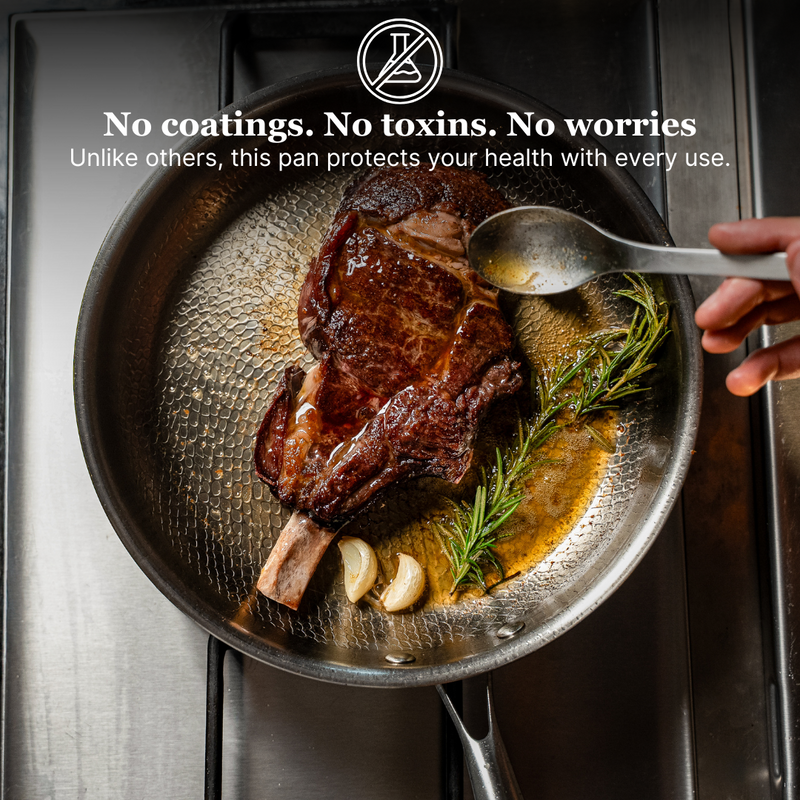
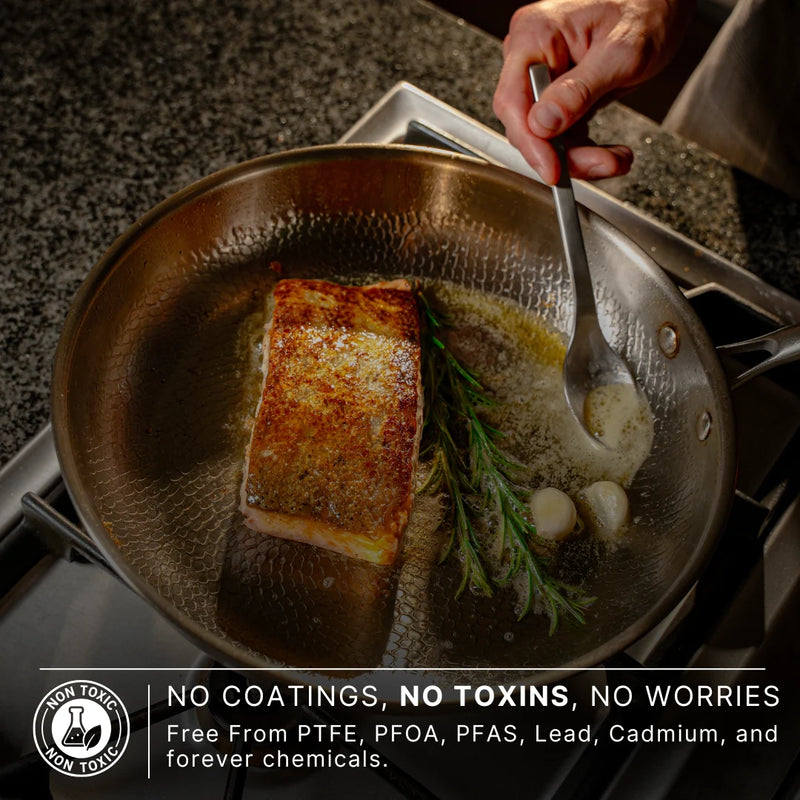
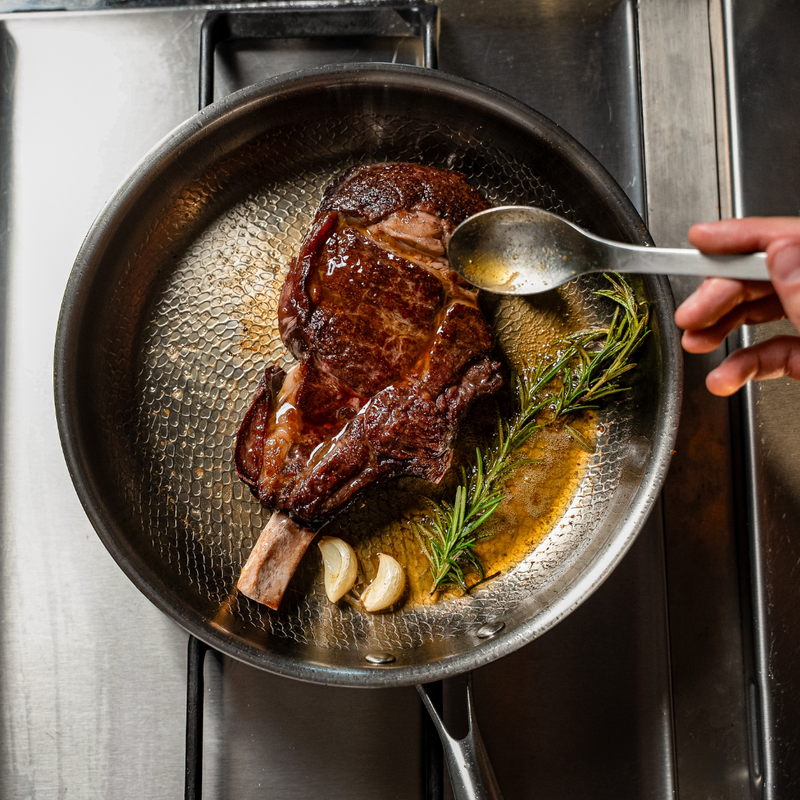
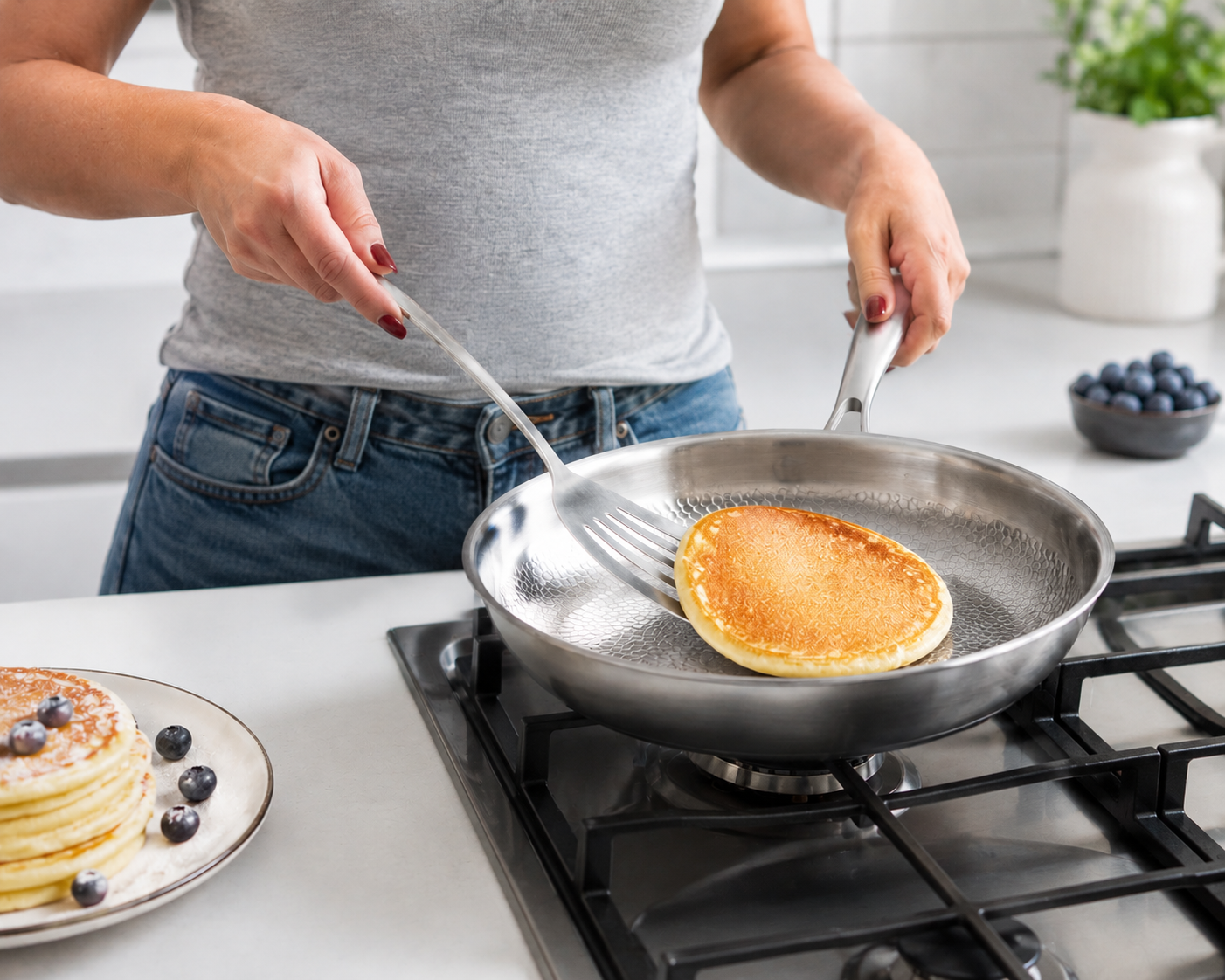
Not all titanium pans have the same cooking surface. A hammered texture creates tiny peaks and valleys that reduce the amount of food in direct contact with the pan. This helps food release more easily than it would from a completely smooth titanium surface.
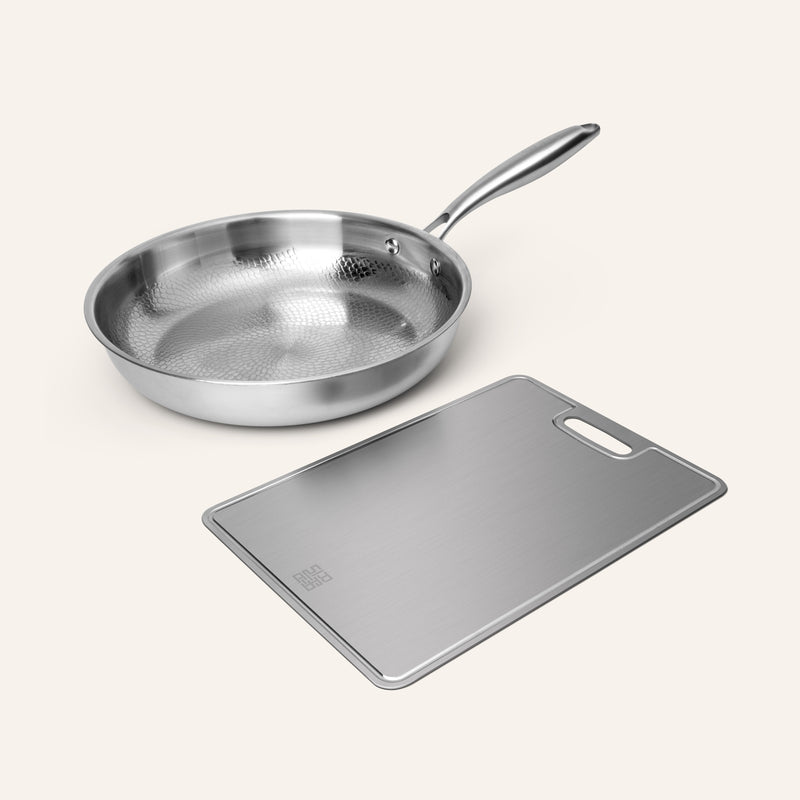
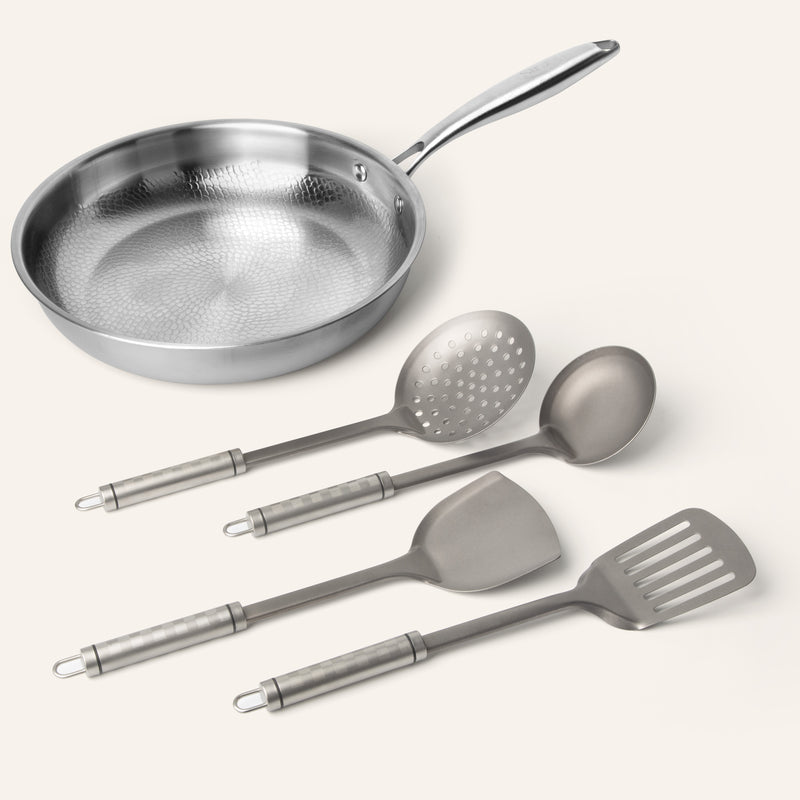
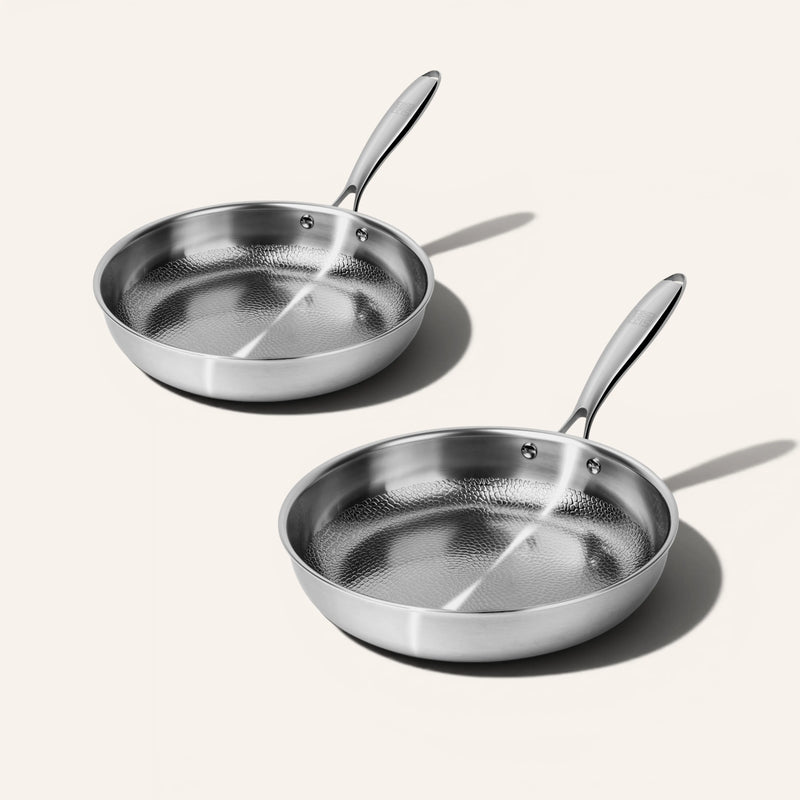
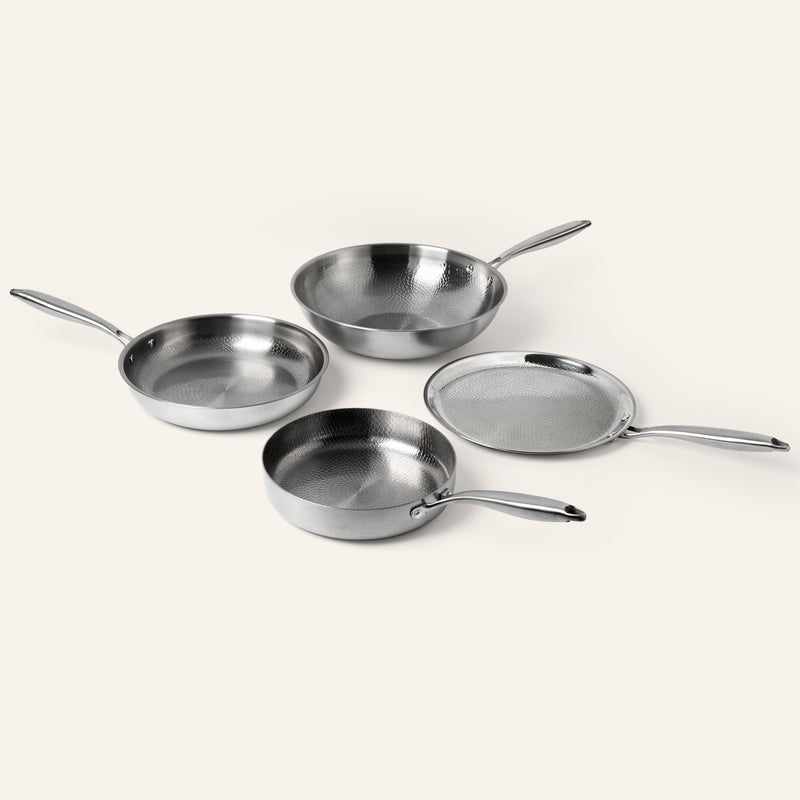
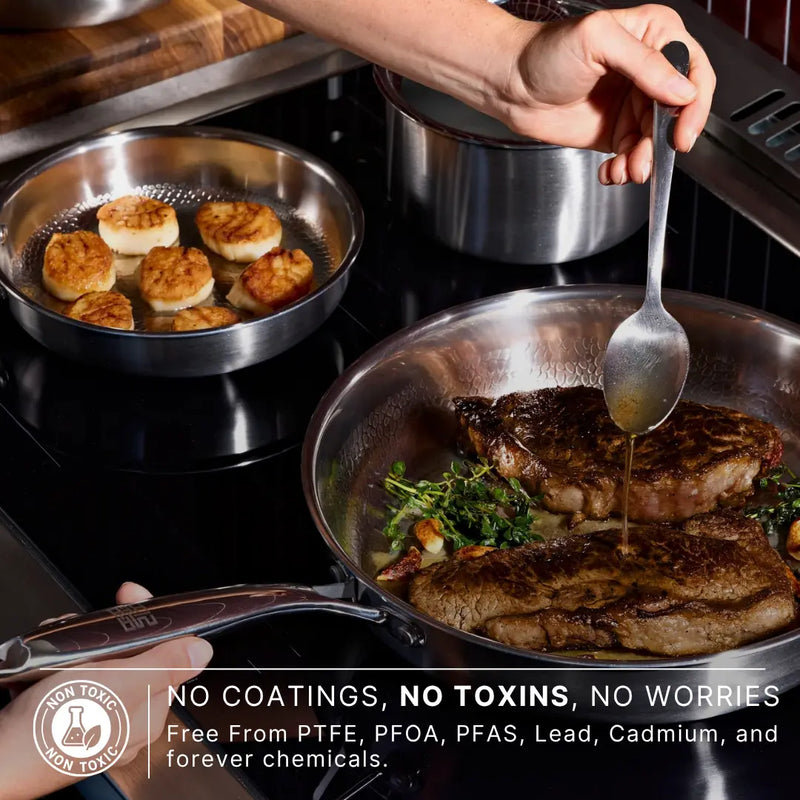
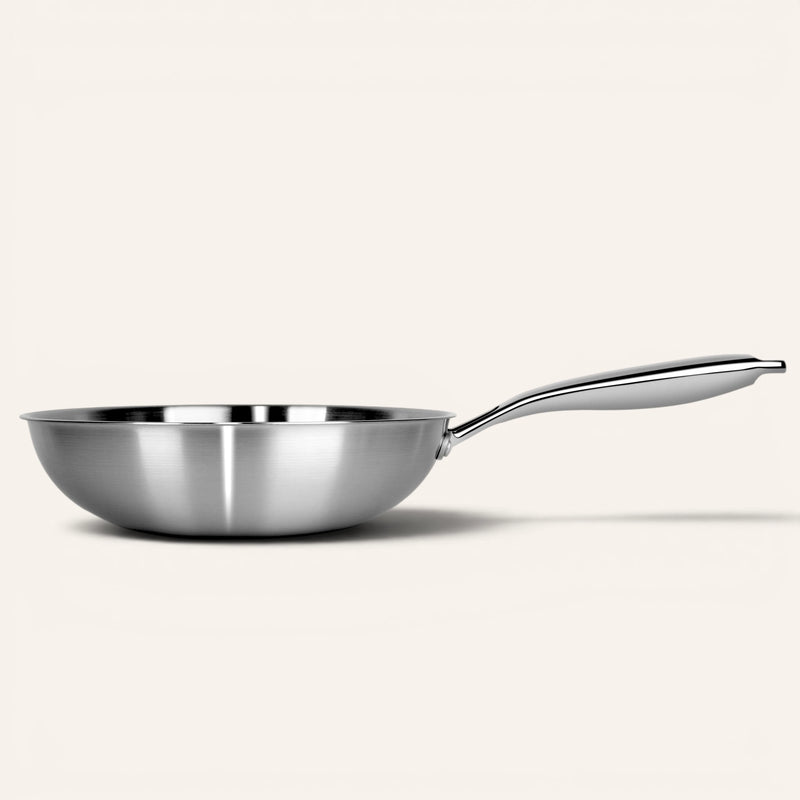
The Siraat Titanium Hammered Pan Pro is one example. It uses a pure hammered titanium cooking surface to improve food release without relying on PFAS, PTFE, PFOA, or other synthetic coatings. Because the cooking surface is solid titanium rather than a coating, it won't peel or flake with use.
Proper Preheating
Preheating plays an important role in how food releases from any uncoated cooking surface, including titanium. Placing food in a cold pan increases the chance of it sticking before a crust has time to develop.
Instead, allow the pan to heat first, then add a small amount of high smoke point oil before cooking. Once proteins naturally release from the surface, they're ready to turn. Trying to flip them too early often causes unnecessary sticking.
A Small Amount of Oil
Solid titanium cookware isn't designed for completely oil-free cooking. A teaspoon of high smoke point oil is usually enough to create a thin cooking layer that further improves food release. Good options include avocado oil, grapeseed oil, refined olive oil, canola oil, and sunflower oil, all of which can withstand higher cooking temperatures.
Using a small amount of oil is simply part of getting the best performance from solid titanium cookware. Together with the hammered cooking surface and proper preheating, it helps food release more easily and reduces the chance of sticking.

Pacchetto tutto in uno
Edizione completa in titanio martellato
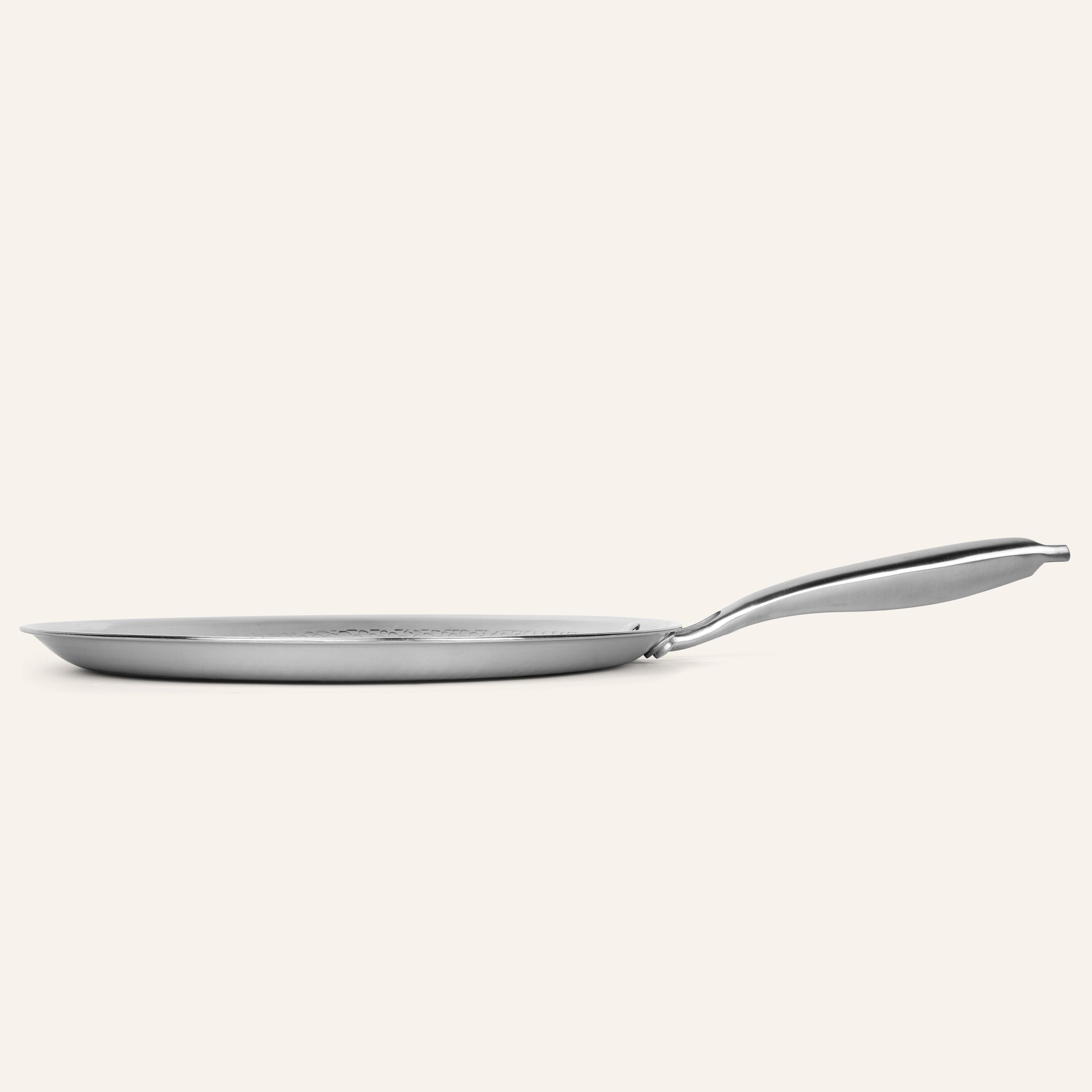
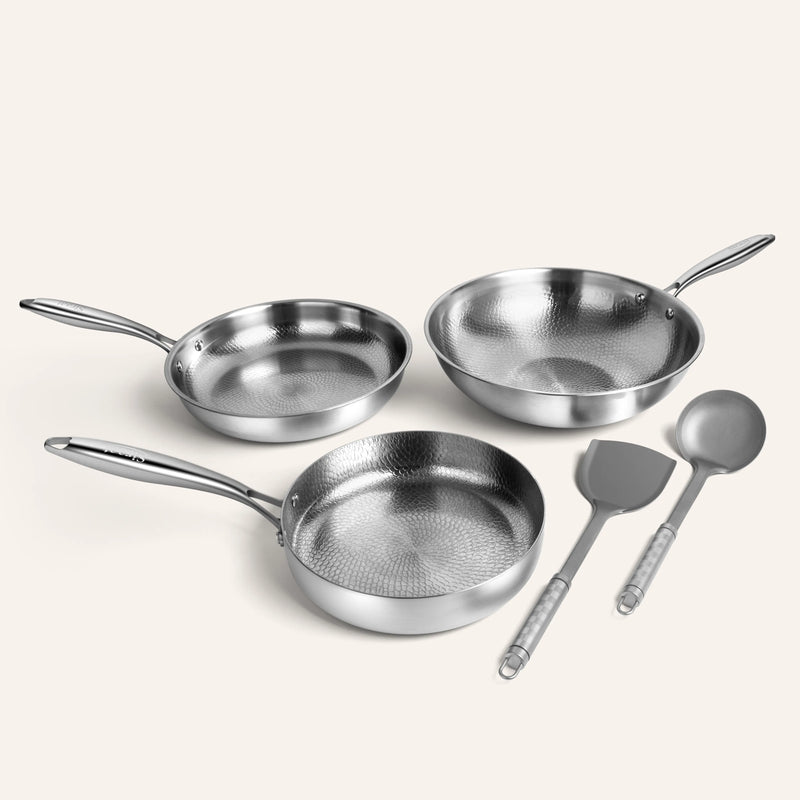
Il set di pentole martellate Siraat include la padella martellata Pro, la padella profonda Pro, la padella wok Pro e la padella per crêpes Pro. Ogni pezzo presenta una superficie in titanio martellato puro, naturalmente antiaderente, priva di PFAS e costruita per durare. Antigraffio, lavabile in lavastoviglie e utilizzabile in forno, tutto il necessario per ogni pasto, in un set senza tempo.
The Bottom Line: So, Are Titanium Pans Really Non-Stick?
Titanium pans don't behave exactly like traditional non-stick cookware – and that's by design. Rather than relying on a coating, they achieve naturally low-stick performance through their cooking surface and the way they're used.
Once you understand how to preheat the pan and cook with a small amount of oil, a high-quality titanium pan can handle everything from eggs to steaks while offering durability that coated non-stick cookware can't match. The key is knowing what to expect. Once you understand how solid titanium cookware works, it's easy to get consistent, naturally low-stick results without relying on a synthetic coating.