





Yes, titanium cutting boards are safe to use every day, especially when they are made from pure titanium and properly cleaned after use. Their non-porous surface does not absorb food liquids, odors, or stains. Thanks to that, they are easy to clean and well suited for everyday food preparation.
But are titanium cutting boards actually safer and more hygienic than plastic, wood, glass, or stainless steel? And are there any risks to consider? This guide breaks down what to expect when using a titanium cutting board, how it compares to other cutting board materials, and what you can do to keep your board safe and hygienic.
Are Titanium Cutting Boards Safe to Use Every Day?
Yes, a well-made titanium cutting board is suitable for everyday food preparation. The main advantage is that titanium provides a stable and non-porous surface that does not absorb moisture from food. That makes the board easy to wash thoroughly and less likely to hold onto stains or odors over time.
For everyday use, though, the material is only part of the equation. The board still needs to be cleaned after each use, especially after handling raw meat, poultry, or seafood.
Is Titanium Safe for Food Contact?
Pure titanium is considered a suitable material for direct contact with food because it is highly corrosion-resistant and does not react with food. For a titanium cutting board, the quality and composition of the material still matter. A board made from clearly identified, food-contact-safe titanium gives you more confidence in what comes into contact with your food.
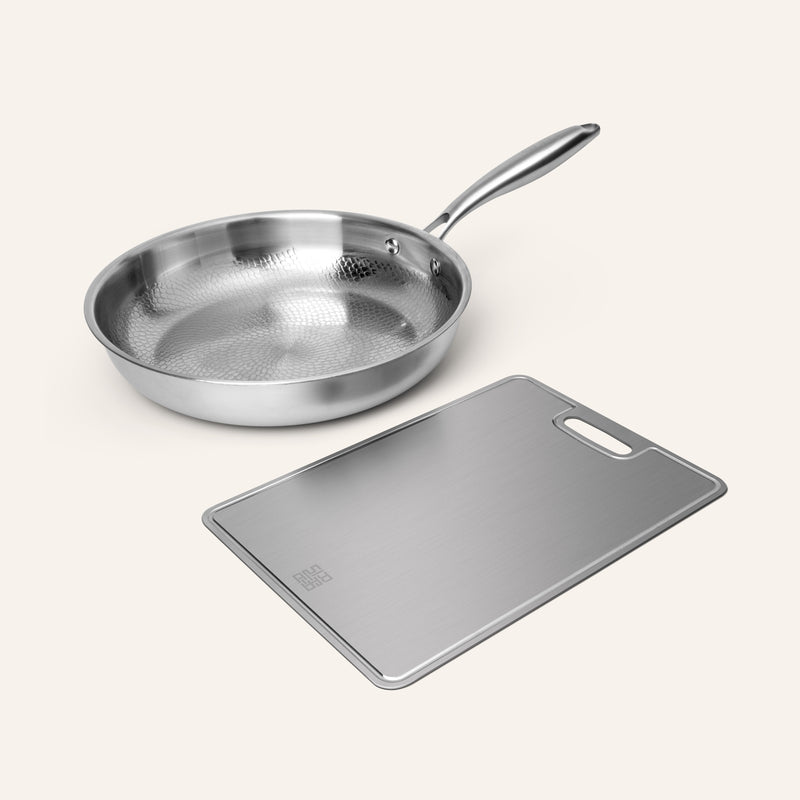
For example, Siraat's Titanium Cutting Board V2 is made from 100% pure titanium with no coatings, which means it’s naturally antibacterial & non-porous, therefore safe for contact with food.
Are Titanium Cutting Boards Safe for Raw Meat?
Yes, titanium cutting boards can be used for raw meat and poultry, provided they are properly cleaned after preparation. In fact, titanium is considered one of the safest materials for a cutting board when handling raw meat. Because titanium is non-porous, meat juices remain on the surface rather than soaking into the board, which makes thorough cleaning more straightforward.
A juice groove can also help keep liquids from running onto the countertop while cutting meat. However, it does not eliminate the risk of cross-contamination. After preparing raw meat, the board, knife, and any other surfaces that came into contact with the food should be cleaned before preparing ready-to-eat foods.

Are Titanium Cutting Boards Safer and More Hygienic Than Other Materials? A Quick Comparison
Titanium vs. Plastic Cutting Boards
Titanium has an advantage over plastic when it comes to long-term surface wear. Plastic cutting boards can develop deep knife cuts over time. That creates grooves where food residue can collect and makes the surface harder to clean thoroughly.
Plastic boards do have one practical advantage: they are generally softer on knife edges and tend to be less expensive to replace. But a titanium surface does not absorb liquids and is resistant to warping, staining, and odors. It also does not introduce plastic material into the cutting surface, which may be a consideration for people looking to reduce their use of plastic in the kitchen.
Titanium vs. Wood Cutting Boards
Wood is naturally absorbent, so it requires more attention to cleaning and drying. It also needs regular maintenance to keep the surface in good condition. That said, a well-maintained wooden cutting board can still be a safe and hygienic choice, but the maintenance needed to keep it hygienic and in a good condition might not suit everyone.
Titanium cutting boards need much less maintenance. They do not require the same type of conditioning and will not absorb food liquids or odors. They are also less likely to warp from moisture, which makes it a lower-maintenance option for everyday use.
Titanium vs. Glass and Stainless Steel
Glass and stainless steel are both non-porous and easy to clean, so they can also be hygienic choices for food preparation. The main difference is how they interact with knives. Glass is particularly hard and can quickly dull knife edges. It is also more prone to cracking and breaking. Stainless steel is also harder on knives than softer cutting surfaces.
Titanium offers a middle ground: it provides the durability and easy-clean properties of a metal surface while being more forgiving to knife edges than glass or harder metals. For anyone prioritizing both hygiene and long-term durability without using plastic, titanium can therefore be a practical alternative to these materials.

Our Durable Non-Toxic Cutting Boards
100% pure titanium. Antibacterial, scratch-proof, toxin-free. Built to last, for chefs who demand the best
Potential Risks and Drawbacks of Titanium Cutting Boards
Impact on Knives
One of the most common concerns about titanium cutting boards is whether they dull knives. Compared with softer materials like wood or plastic, titanium is a firmer cutting surface, which can lead to more edge wear over time.
This does not necessarily mean your knives will chip or suffer structural damage. They may simply need to be honed and sharpened more regularly. For cooks who already maintain their knives regularly, this may be a reasonable trade-off for the durability and easy maintenance of a titanium board.
Higher Upfront Cost
Titanium cutting boards typically have a higher upfront cost than plastic or basic wooden boards. For some households, the initial investment may be difficult to justify, especially if the board will only be used occasionally.
However, the long-term value can look different. A durable titanium board is designed to resist warping, cracking, staining, and odors, so it may not need to be replaced as frequently as a lower-cost board. Whether that makes the higher price worthwhile ultimately depends on how often you cook and what you expect from a cutting board.

How to Keep Your Titanium Cutting Board Safe and Hygienic
Keeping a titanium cutting board safe and hygienic is straightforward. The key is to clean it after every use and take extra care when preparing raw meat, poultry, or seafood.
-
Wash after every use: Clean the board with warm water and dish soap to remove food residue and oils.
-
Use the dishwasher: If your titanium cutting board is dishwasher safe, it can be placed in the dishwasher for convenient cleaning.
-
Clean thoroughly after raw meat: After preparing meat or poultry, wash the board carefully before using it for other foods to help prevent cross-contamination.
-
Sanitize when needed: If the board has been used for raw meat, poultry, or seafood, use an appropriate food-safe sanitizing method when necessary.
-
Keep the board dry: Allow the board to dry fully after washing, particularly before storing it.
-
Keep knives and other utensils clean: Cleaning the board alone is not enough if the knife or other utensils used with raw food are not washed as well.
Titanium's non-porous surface makes these steps simple, but it does not replace basic food-safety practices. Proper cleaning and preventing cross-contamination are still the most important parts of keeping any cutting board safe to use.
Final Verdict: So, Are Titanium Cutting Boards Safe?
Yes, titanium cutting boards can be a safe and hygienic choice for everyday food preparation. They offer a durable, low-maintenance surface that works well for everything from fresh produce to raw meat and poultry.
The higher upfront cost and potential for more knife-edge wear are the main trade-offs to consider. For cooks who value durability, easy cleaning, and a plastic-free cutting surface, titanium offers a practical combination of features that can make it a worthwhile long-term choice. With the right care, a high-quality titanium cutting board can provide a reliable cutting surface for years to come – without warping, absorbing odors, or needing to be replaced as often as many lower-cost alternatives.