



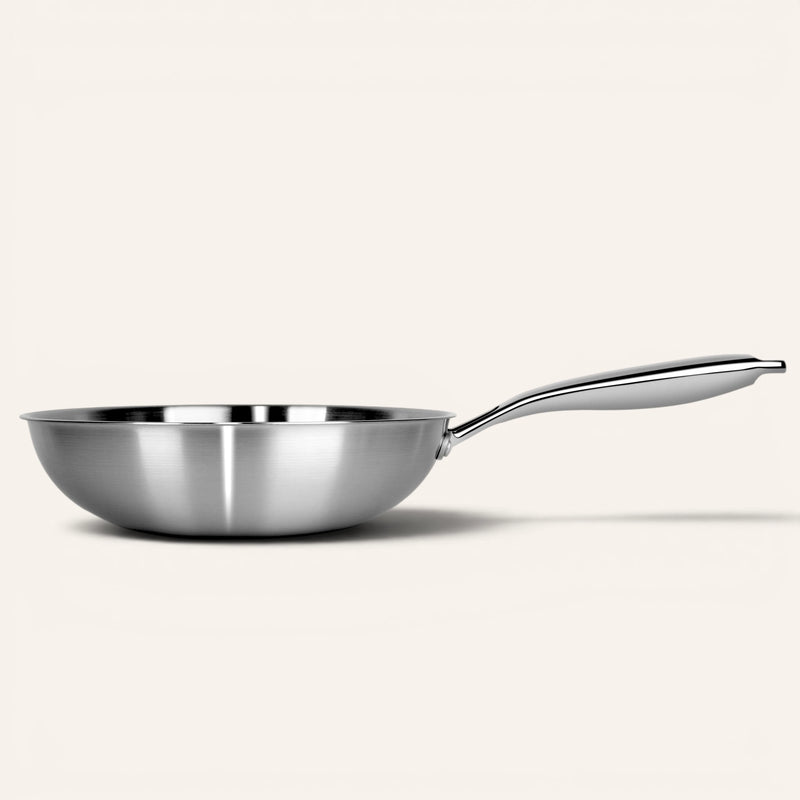

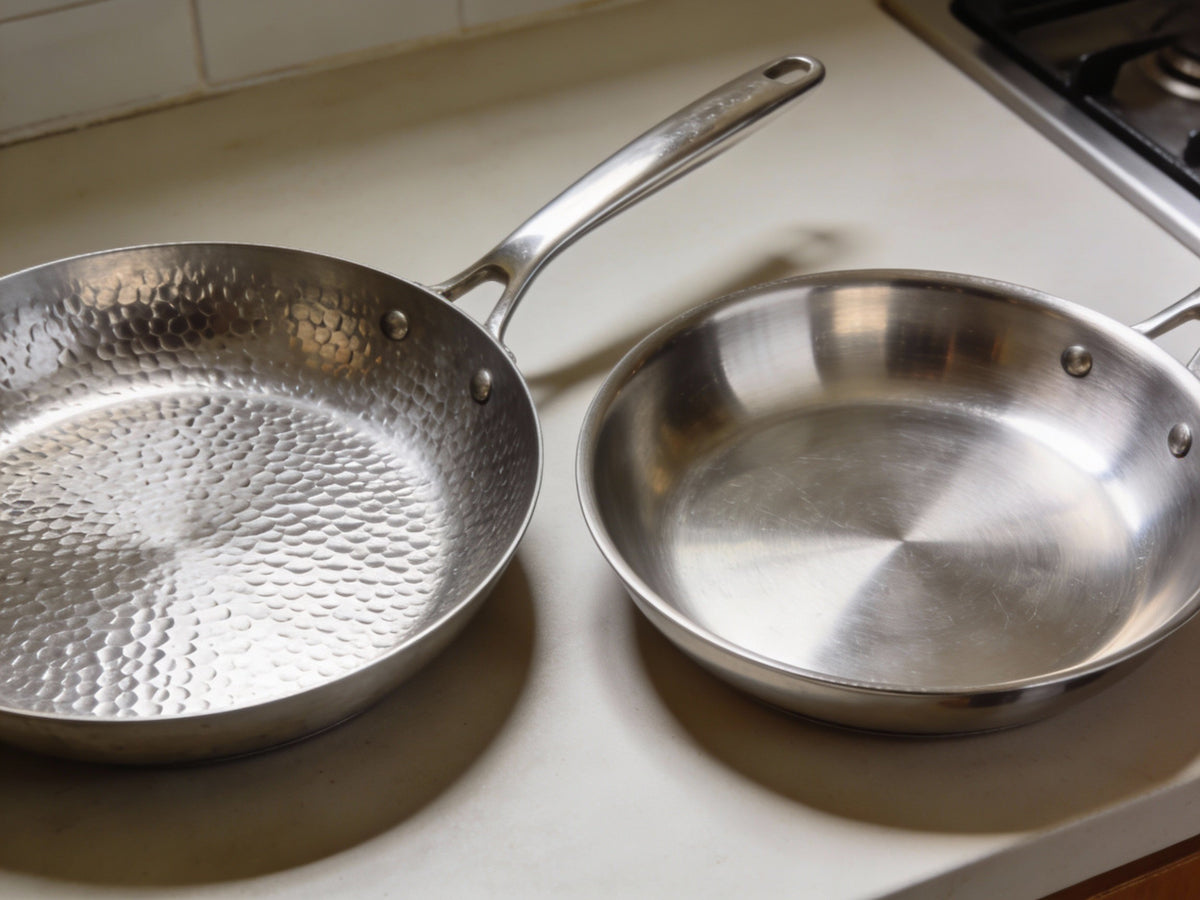
Choosing between stainless steel and titanium cookware isn’t just about appearance, but also durability, safety, cooking performance, and how much effort you want to put into everyday cooking. Both materials are widely used in modern kitchens, however, their performance, maintenance and suitability for daily use vary. In this guide, we’ll break down the key differences and best use cases for both titanium and stainless steel cookware to help you decide which option fits your kitchen and cooking habits best.
Titanium vs Stainless Steel Cookware: Key Differences
Safety & Health
Titanium is widely considered one of the safest options for cookware. Titanium pans, pots and other cookware are naturally non-toxic, do not react with food, and do not leach metals into meals. That is especially helpful when cooking acidic ingredients such as tomatoes or citrus-based sauces and meals.
Stainless steel cookware is generally safe for most people when high-quality materials are used. However, there are certain health & safety concerns, especially with lower-quality stainless steel and sensitive individuals. Lower-grade stainless steel can sometimes release trace amounts of nickel or chromium, particularly if exposed to acidic foods or prolonged high heat. While this is usually within safe limits, individuals with metal sensitivities and those looking for the safest option might find it a concern.
Durability & Longevity
Durability is one of the biggest advantages of titanium cookware. It’s incredibly strong, resistant to corrosion, warping and surface damage. Thanks to its resistance, it performs well in households, professional kitchens, and even outdoor cooking environments. With proper care, titanium cookware can maintain its structure and performance for many years – even a lifetime.
Stainless steel cookware is also known for its durability – but that depends a lot on the quality of materials used, construction and care. Lower-quality stainless steel cookware has a tendency to warp under high heat or develop discoloration over time. Both materials can last a long time – but stainless steel often requires more careful handling to maintain its appearance and performance.
Cooking Performance
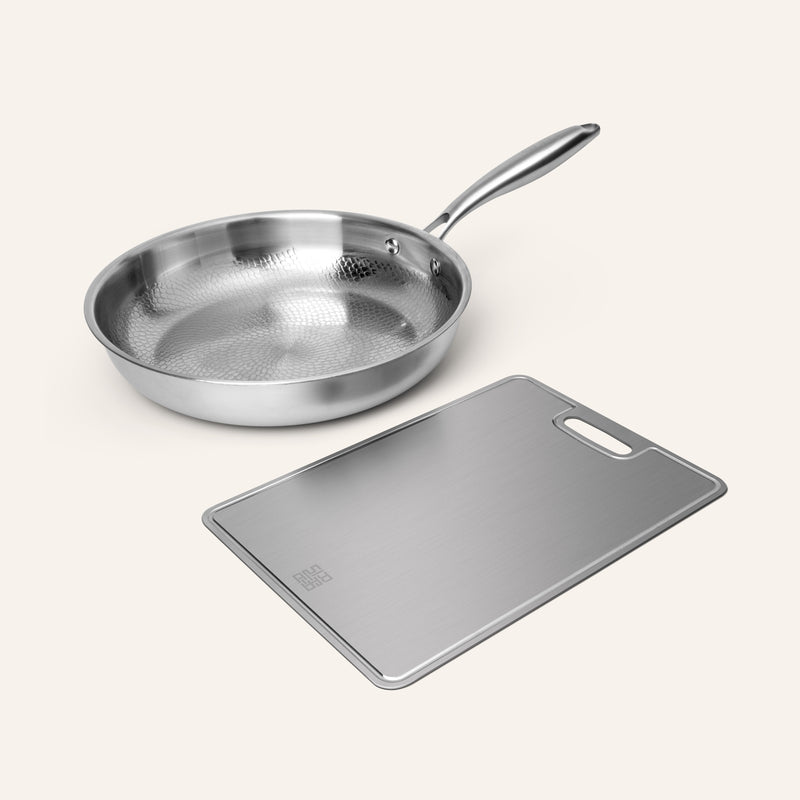
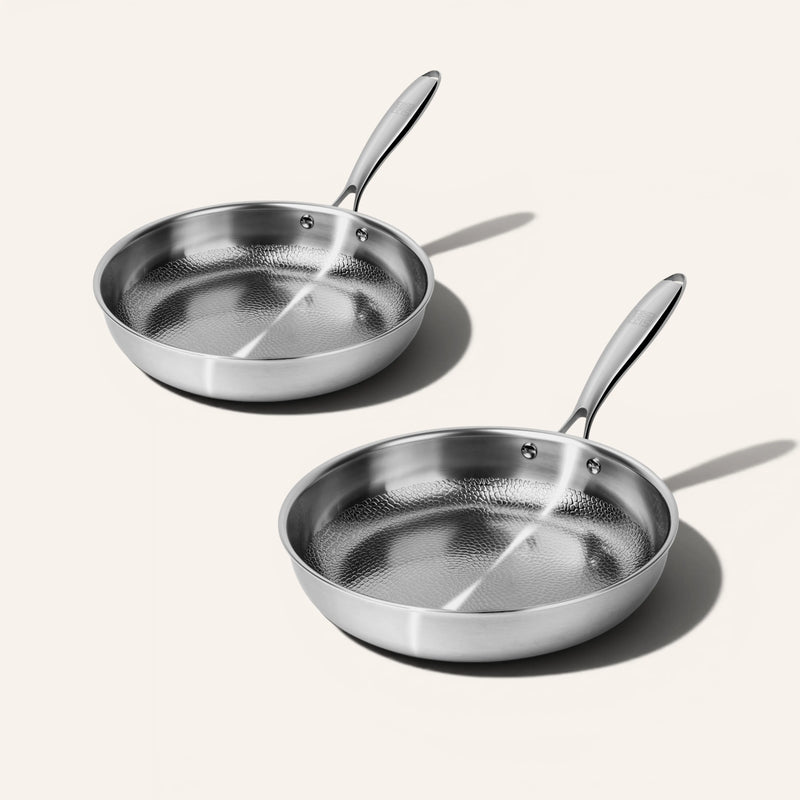
Titanium pots and pans heat up gradually and evenly while maintaining temperature well. Once properly heated, titanium maintains a steady cooking surface and responds quickly to adjustments in heat, making it well suited for precision cooking, simmering, sautéing, and everyday meal preparation. Its naturally smooth, non-reactive surface also allows for cooking with minimal oil when preheated correctly, while remaining easy to clean and resistant to food residue. Hammered titanium cookware further enhances performance by improving structural rigidity and helping distribute heat more consistently across the cooking surface.
Stainless steel is often favored by professional chefs because it allows for precise heat control and retention. However, it requires more cooking experience to know how to properly preheat it and manage temperature effectively. Without proper technique, food can stick easily, and uneven heating may occur – especially in lower-quality cookware.
Ease of Use & Maintenance
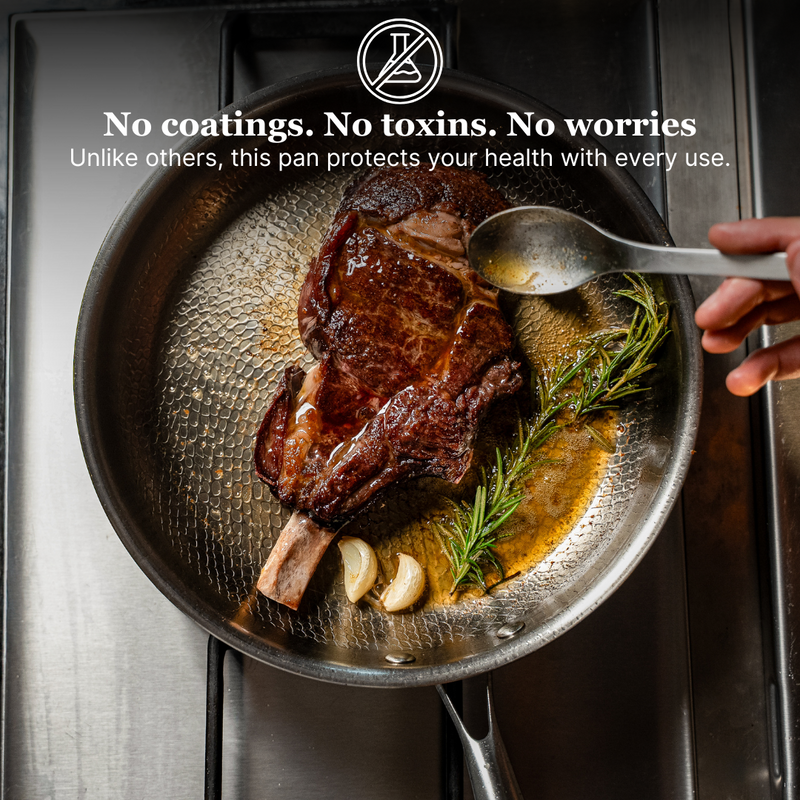
Lightweight, easy to handle, and effortless to clean after use – titanium cookware is designed with convenience in mind. Titanium pots and pans with a hand-hammered microtexture naturally reduce contact between food and the cooking surface, helping minimize sticking without the need for coatings or chemicals. That makes cleanup and maintenance quick and efficient for frequent cooking and busy kitchens.
Cookware made of stainless steel requires more attention. Improper heat control and poor temperature management can lead to food sticking and burning. Stainless steel pots and pans then become harder to clean, and often need soaking and scrubbing. Experienced cooks either know how to avoid these issues or don’t mind the extra cleanup, but it can be frustrating for everyday use.

Pros and Cons of Titanium vs Stainless Steel Pans & Cookware
Beyond material differences, both titanium and stainless steel cookware come with practical advantages and trade-offs that can impact cooking, storage and long-term value.
Pros & Cons of Titanium Cookware
Pros:
-
Durability and long-term value – outstanding strength and resistance to wear, designed to last for decades of consistent use.
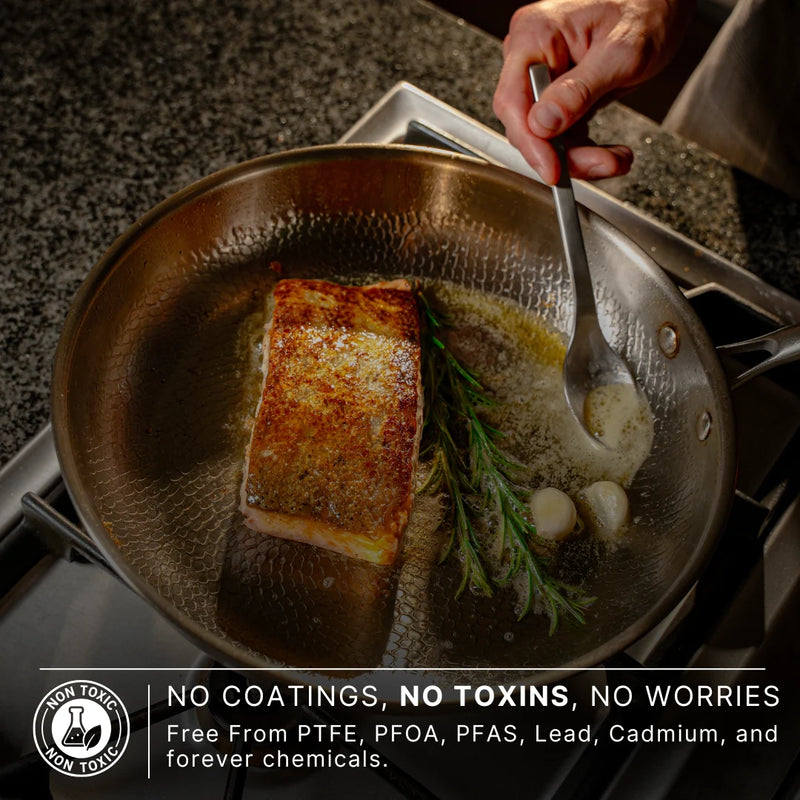
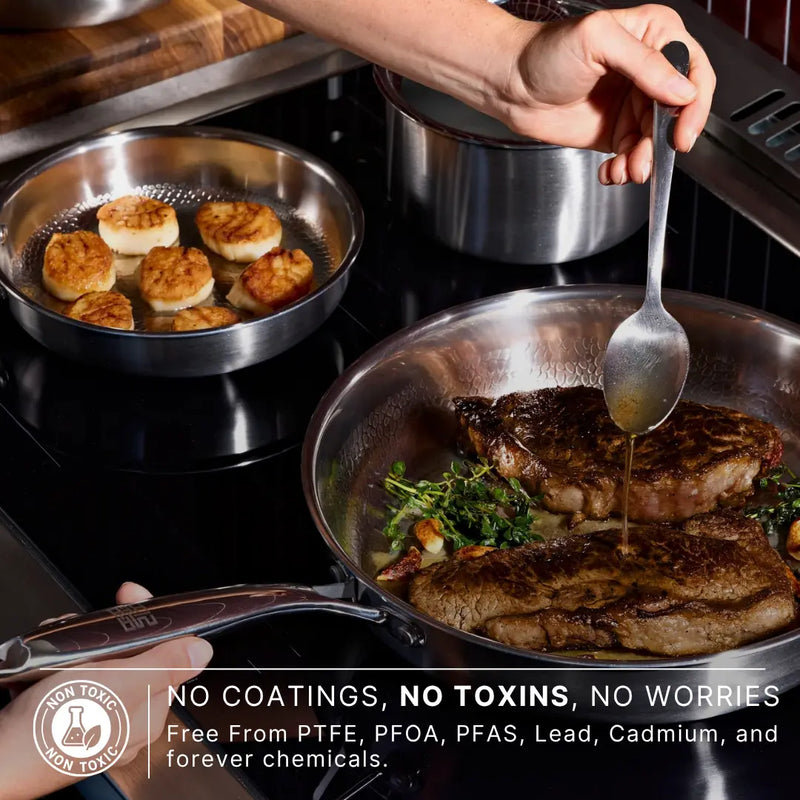
- Non-toxic, eco-friendly and non-reactive – safe and ideal for health-conscious households and kitchens, titanium cookware does not alter food flavors or leach chemicals or metals into meals.
- Lightweight yet strong – easy to handle, lift and store, offering everyday convenience without sacrificing durability or performance.
- Minimal maintenance – highly resilient and simple to maintain with routine cleaning, making it well suited for frequent everyday use.
- Corrosion-resistant – does not rust or degrade when exposed to high heat and moisture; preserves its appearance and performance over time.
- Virtually non-stick – hammered-surfaced titanium cookware has naturally low-stick performance without the need for chemical coatings, allowing for easier food release and minimal oil use.
- Modern design – clean and minimalist appearance fits well in contemporary kitchens that value functional design.
Cons:
- Higher upfront cost – the cost reflects the material’s durability, strength and purity, but it may not suit every budget despite its long-term value.
- Coated titanium cookware (when used) may be sensitive to excessive heat – solid titanium cookware is extremely durable, but one that includes a coating may require additional care, such as avoiding overheating.
Pros & Cons of Stainless Steel Cookware
Pros:
- Widely available – common option for cookware, making it easy to find products that suit different budgets and cooking needs.
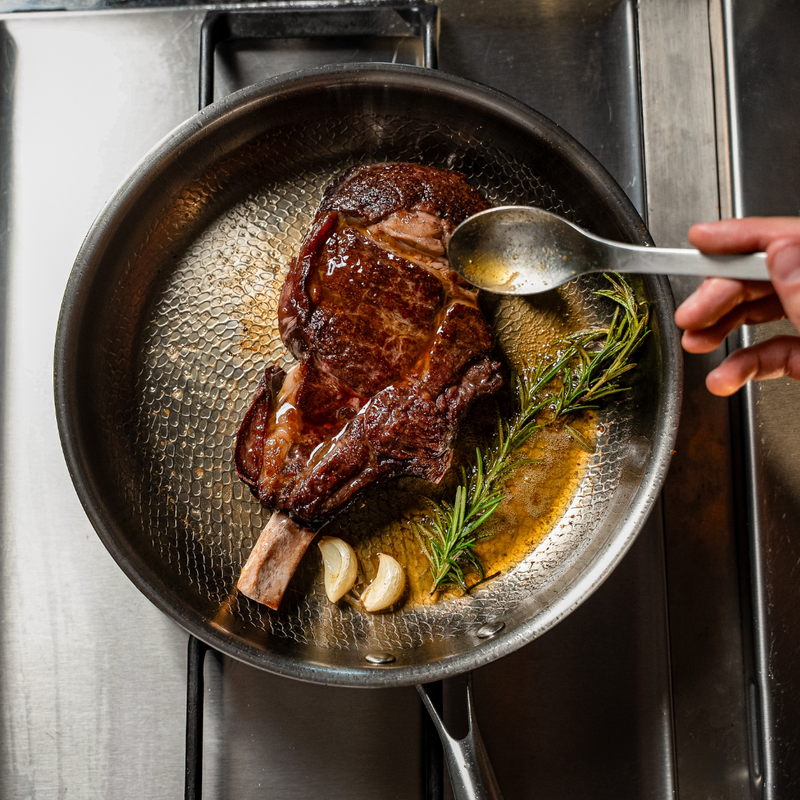
- Excellent for high-heat cooking techniques – performs well at high temperatures; when used correctly, it is suitable for techniques such as searing and deglazing.
- Suitable for professional kitchens – compatible with all heat sources and common among trained chefs.
- Great heat control and retention – offers responsive temperature control and solid heat retention, particularly in professional cooking environments.
Cons:
- Requires careful heat control and technique – demands precise temperature management to avoid food sticking, burning, or uneven cooking.
- Maintenance-heavy – cleanup often requires soaking, scrubbing, or specialized cleaning products; food sticking and heat-related discoloration are common.
- Performance and safety vary significantly – lower-quality cookware may warp under high heat or release trace metals into meals.
- Less forgiving – offers little margin for error and is more suitable for experienced cooks rather than everyday or casual cooking.

Pacchetto tutto in uno
Edizione completa in titanio martellato
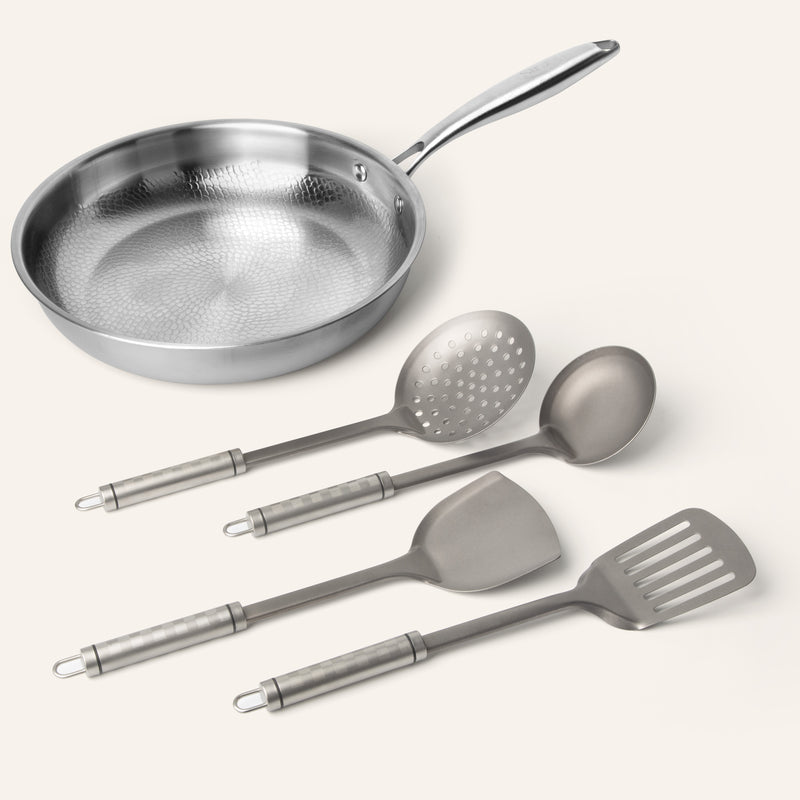
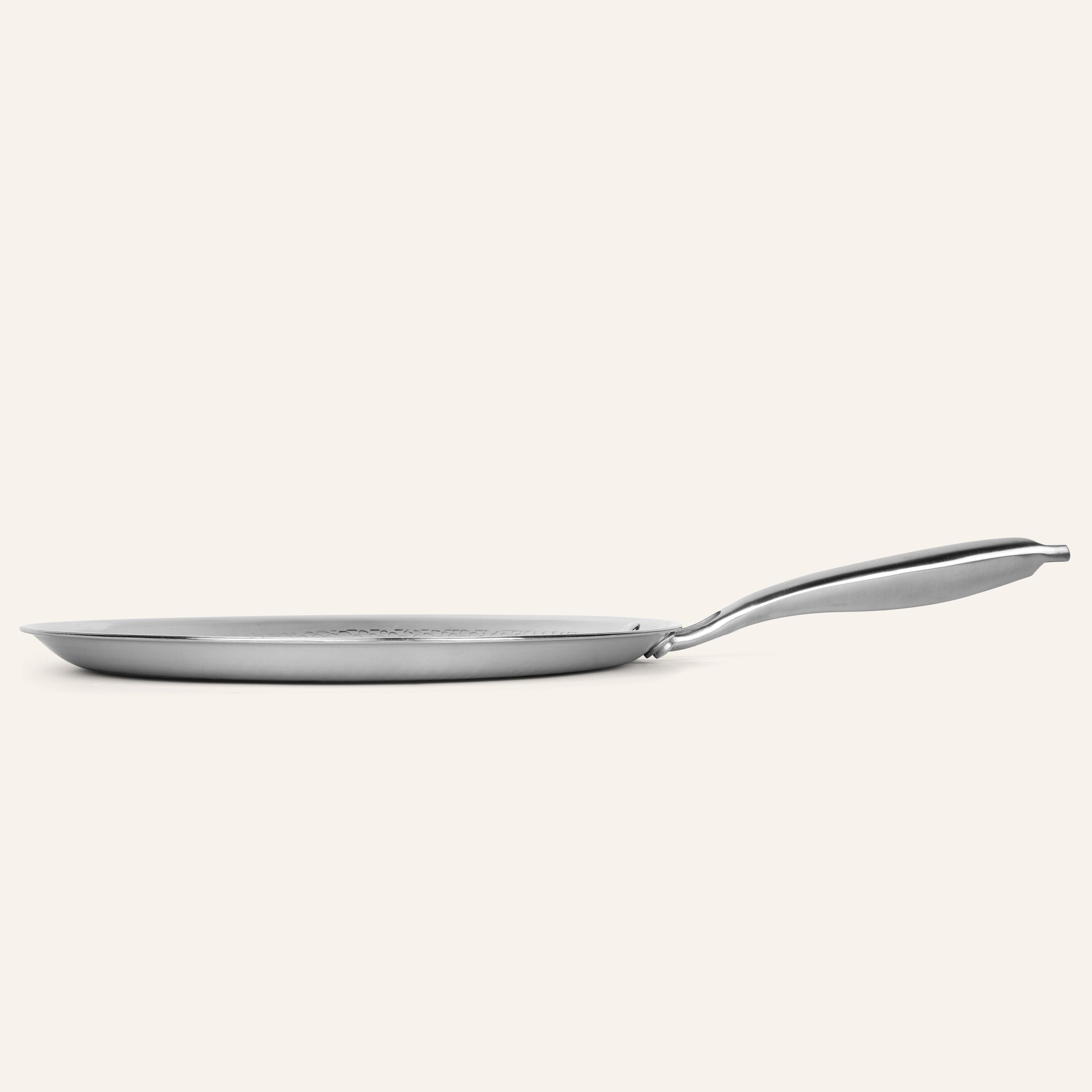
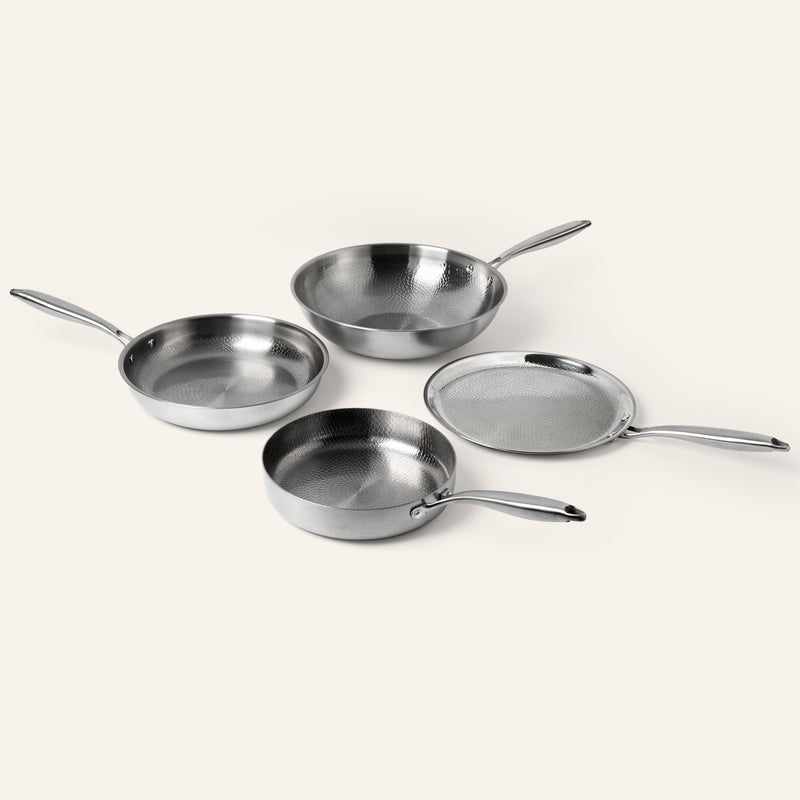
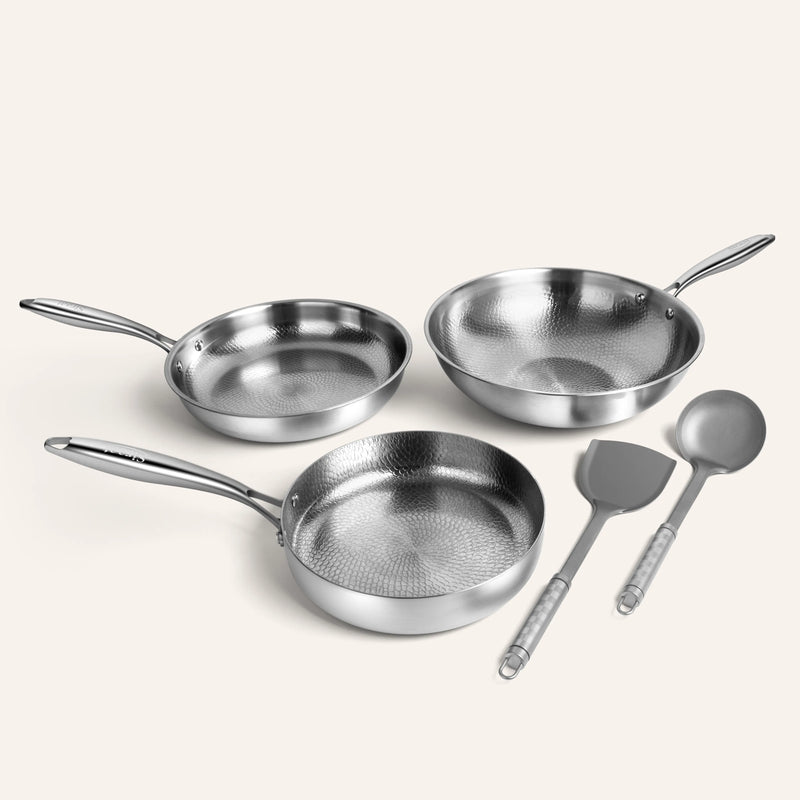
Il set di pentole martellate Siraat include la padella martellata Pro, la padella profonda Pro, la padella wok Pro e la padella per crêpes Pro. Ogni pezzo presenta una superficie in titanio martellato puro, naturalmente antiaderente, priva di PFAS e costruita per durare. Antigraffio, lavabile in lavastoviglie e utilizzabile in forno, tutto il necessario per ogni pasto, in un set senza tempo.
Best Use Cases: Which One Is Better for You?
Titanium Cookware: Everyday, Non-Toxic Cooking for Long-Term Practical Use
If you prioritize safety, sustainability, durability and ease of maintenance, titanium cookware is an excellent choice. Its non-toxic, non-reactive surface makes it ideal for health-conscious households, while its strength and corrosion resistance support long-term use.
Best for:
- Daily cooking and family meals.
- Households looking to avoid replacing pots and pans often.
- Health-conscious users avoiding chemical coatings while seeking a non-stick experience (particularly cookware with hammered design).
- Home cooks who want reliable performance without technical adjustments.
- Users seeking simple cleanup and low maintenance
Stainless Steel Cookware: Technique-Driven, High-Heat Cooking & Budget-Conscious Option
Stainless steel appeals most to cooks who prefer hands-on experience and regularly use high-heat techniques such as searing, deglazing and browning. However, it requires careful heat control and more frequent maintenance.
Best for:
- High-heat performance.
- Lower initial investment (depending on type and quality).
- Experienced or technique-focused cooks.
For most people, titanium cookware offers a more practical and long-term solution. While stainless steel remains a solid choice for specific techniques and high-heat applications, titanium stands out in performance, safety, sustainability, and durability – making it an excellent option for kitchens that value ease of use alongside lasting quality.