



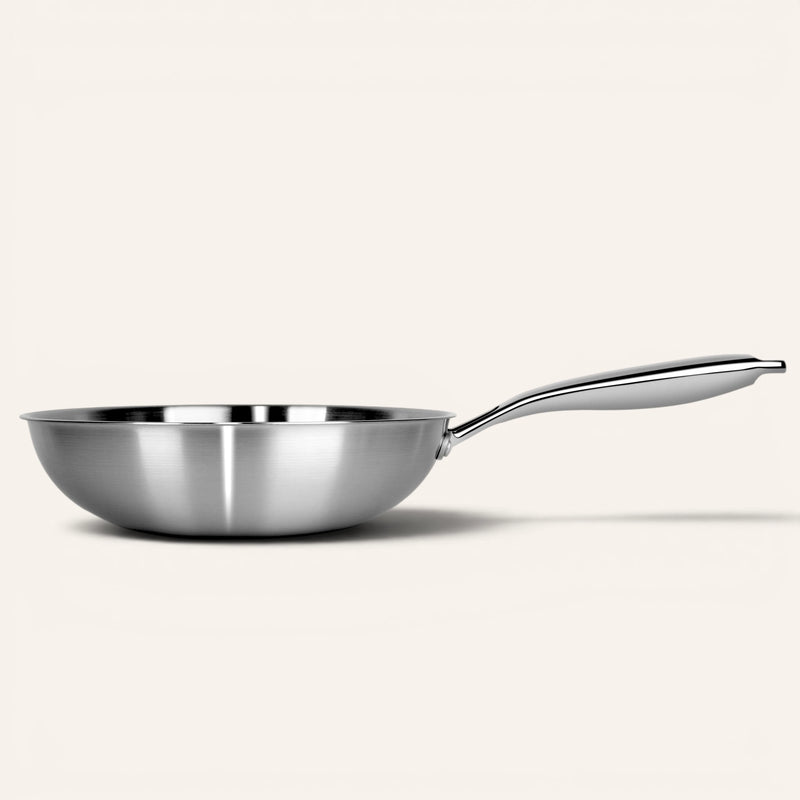

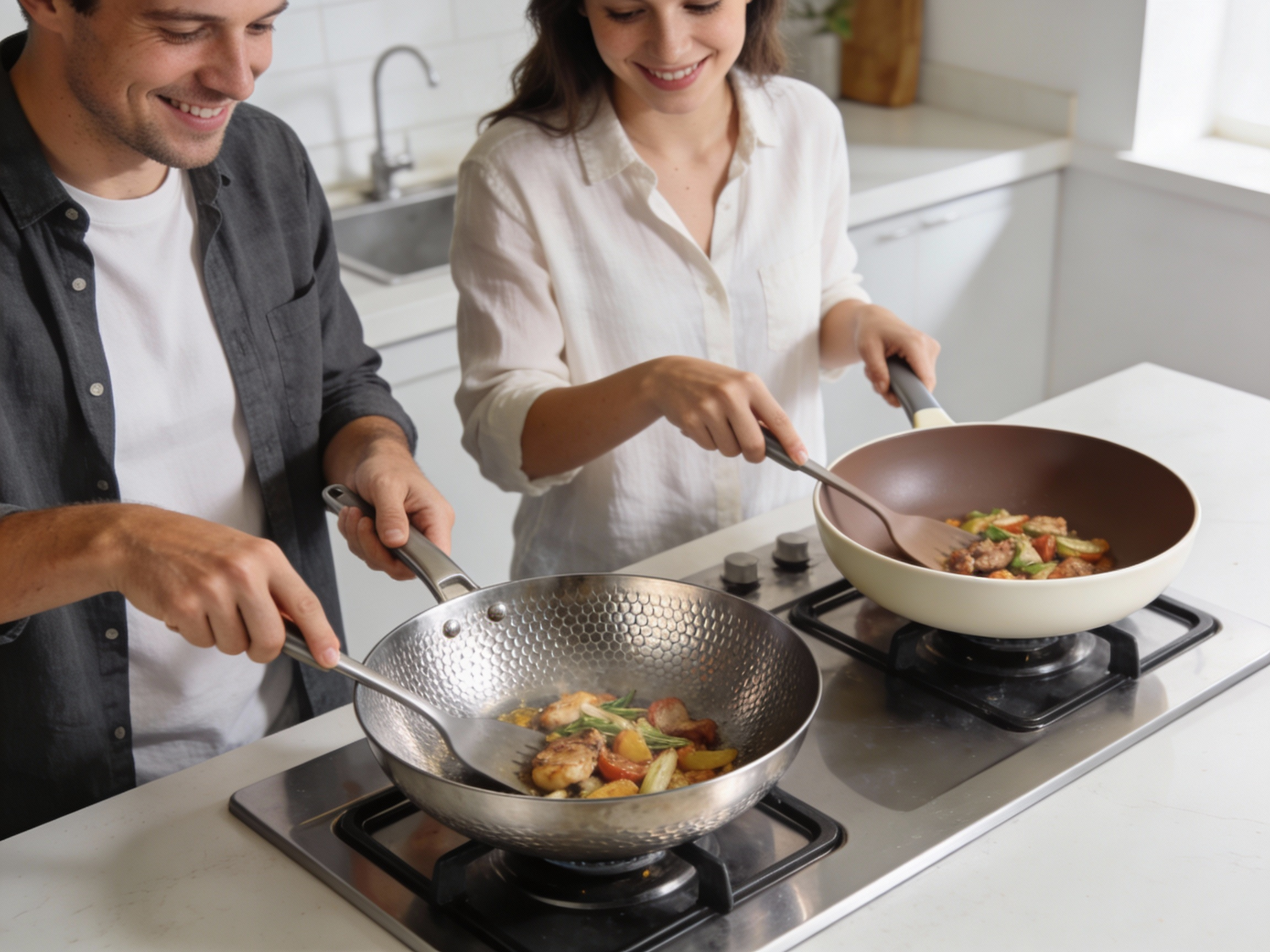
Titanium and ceramic cookware are often compared because both are seen as health-focused alternatives to traditional non-stick pans. As more cooks move away from cookware with synthetic coatings, these two materials frequently come up as safer options.
While both titanium and ceramic cookware aim to provide non-toxic cooking experiences, they differ significantly in other areas. Understanding these differences is key to choosing cookware that aligns with your cooking habits, health priorities, and long-term expectations.
In this comparison, “ceramic cookware” refers to ceramic-coated cookware, which features a ceramic-based non-stick coating applied over a metal base.
Titanium vs Ceramic Cookware: Key Differences
Safety & Health
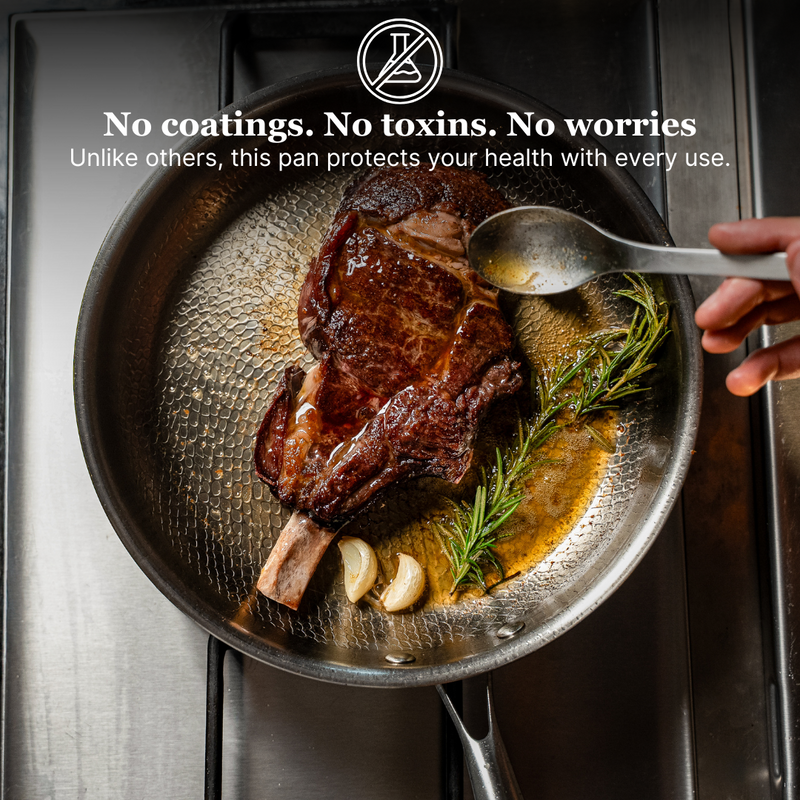
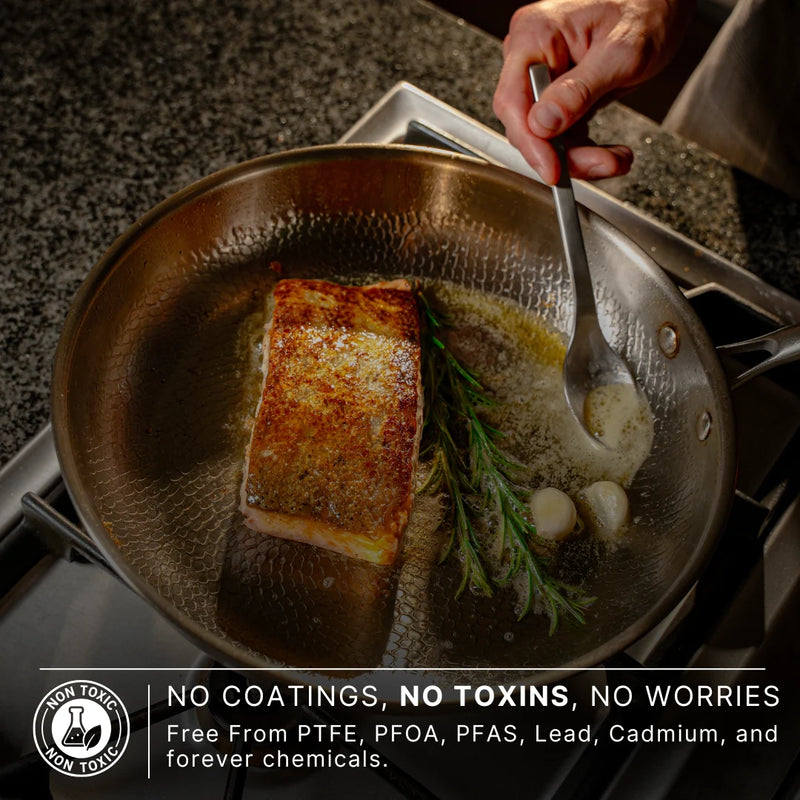
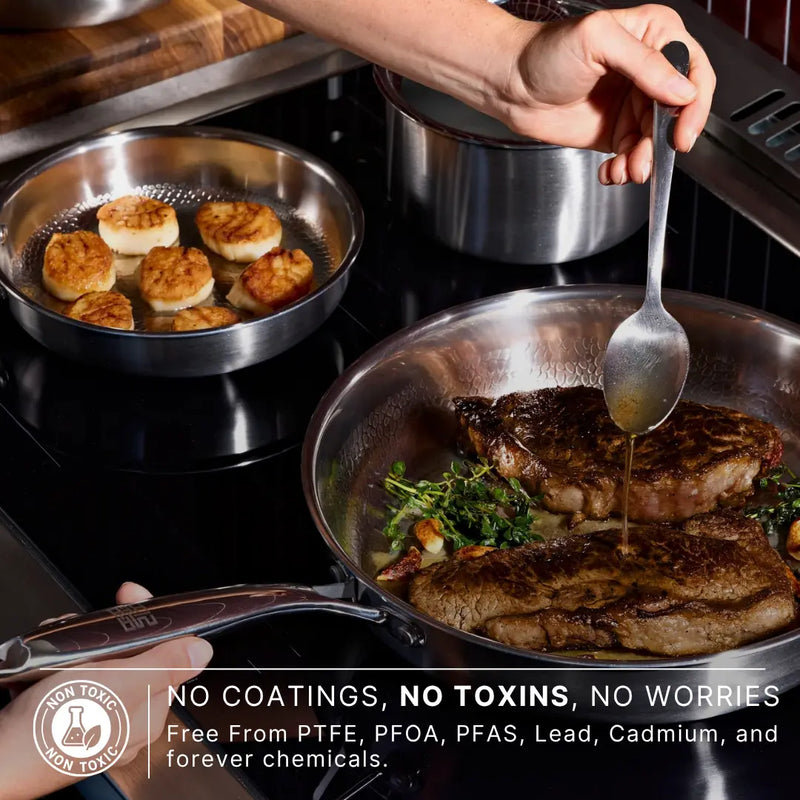
Titanium is inherently non-reactive, meaning it doesn’t leach metals or unwanted particles into meals and doesn’t contain coatings that can degrade over time. It’s one of the safest and healthiest options for cookware. It remains chemically stable even with repeated use and higher heat, which makes it a strong option for cooks who prioritize non-toxicity and long-term food safety.
Ceramic cookware is often considered non-toxic, since its coating doesn’t contain PTFE (polytetrafluoroethylene) or similar chemicals. However, the non-stick surface is often layered on a metal base. While the coating may be free of certain chemicals, it is a surface layer that may wear over time – especially with lower-quality materials. This can potentially affect performance and, over time, reduce the consistency of the cooking surface.
Durability & Longevity
One of the strongest qualities of titanium cookware is its resistance to wear. It’s incredibly durable – high-quality titanium cookware can last for decades, or even a lifetime. Titanium is naturally corrosion-resistant and doesn’t warp easily. Its resistance to surface damage and durability are among the main reasons why it’s popular with home cooks, professional chefs, and outdoor enthusiasts.
While ceramic cookware can provide a very good initial performance, its non-stick coating is generally less durable over time. Repeated heating, cooling, and regular utensil contact can cause ceramic coatings to crack, chip, and wear over time. Once the coating begins to degrade, cooking performance declines. Even with careful use, ceramic cookware typically has a shorter lifespan than titanium, often requiring replacement within a few years.
Cooking Performance
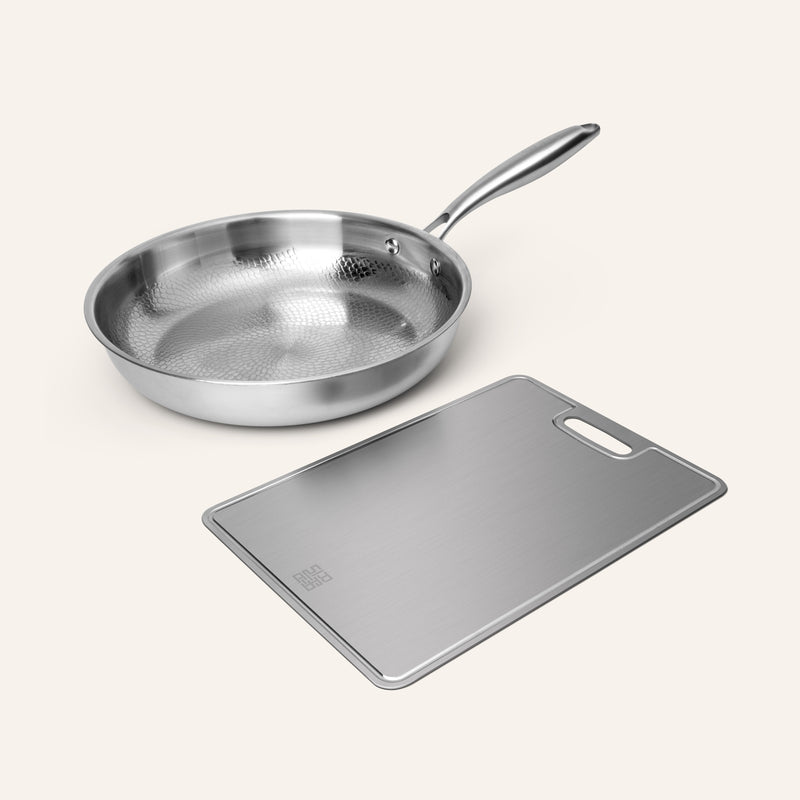
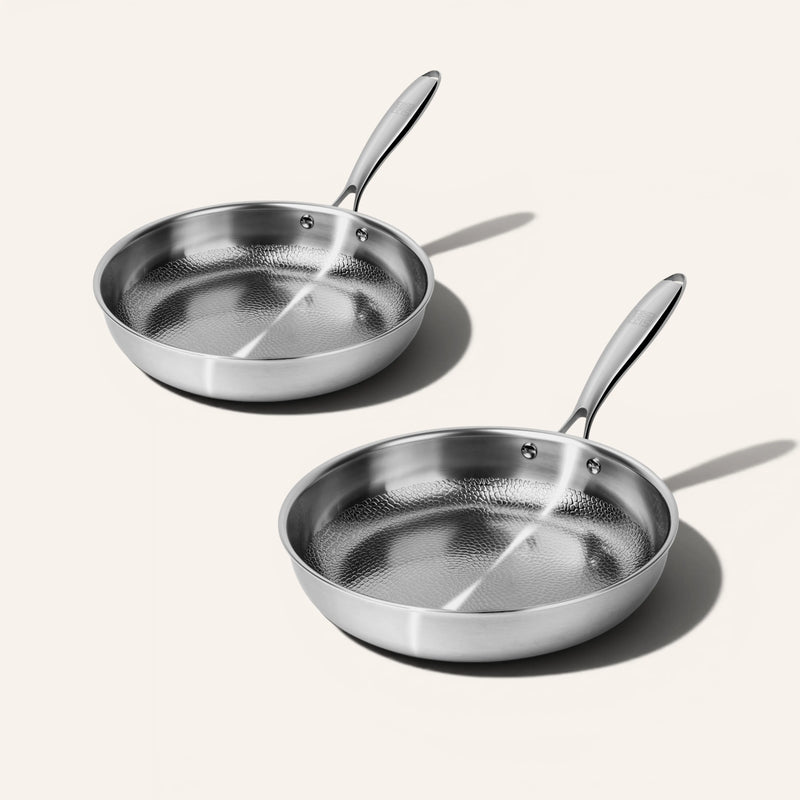
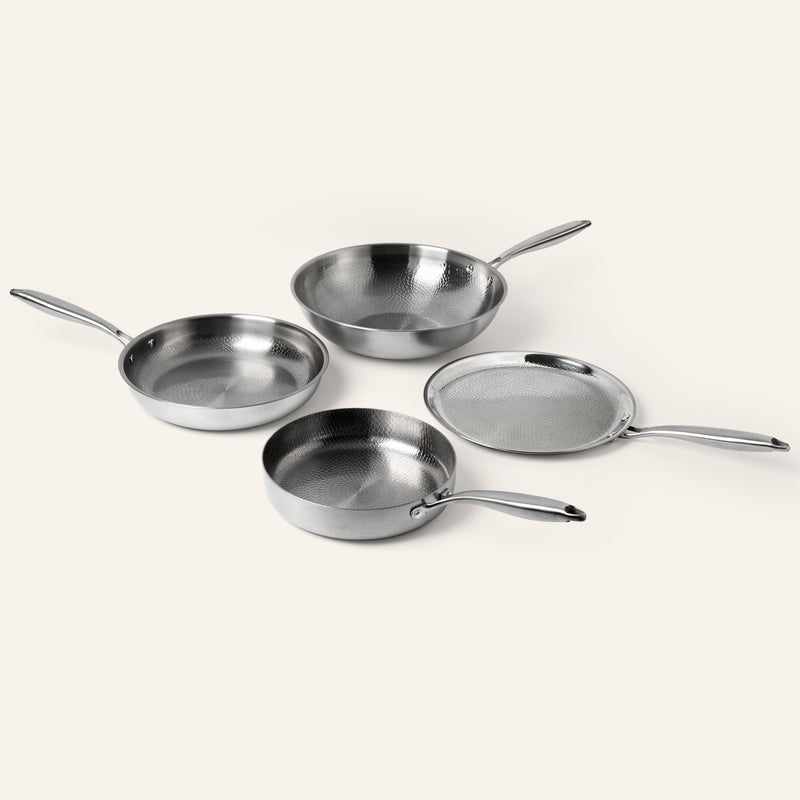
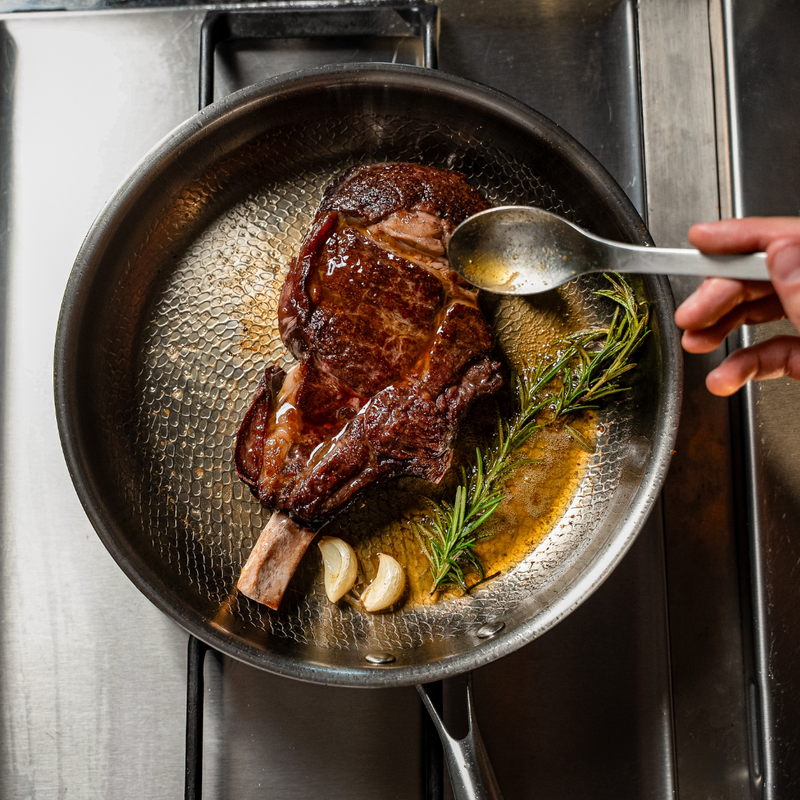
Titanium cookware heats up gradually and distributes heat evenly, which helps food cook consistently across the surface. It tolerates high temperatures well and is suitable for a range of cooking techniques, from sautéing to searing. The natural surface of titanium – especially when finished with precise methods like hammered textures – also provides virtually non-stick characteristics without the need for chemical coatings.
Ceramic cookware can offer excellent food release when new – but this performance often diminishes as the surface wears over time. Ceramic surfaces also tend to be more sensitive to sudden temperature changes and overheating, which makes them less suitable for different cooking methods. While ceramic cookware works well for certain low to moderate heat techniques, it’s generally less forgiving with frequent high-heat cooking.
Ease of Use & Maintenance
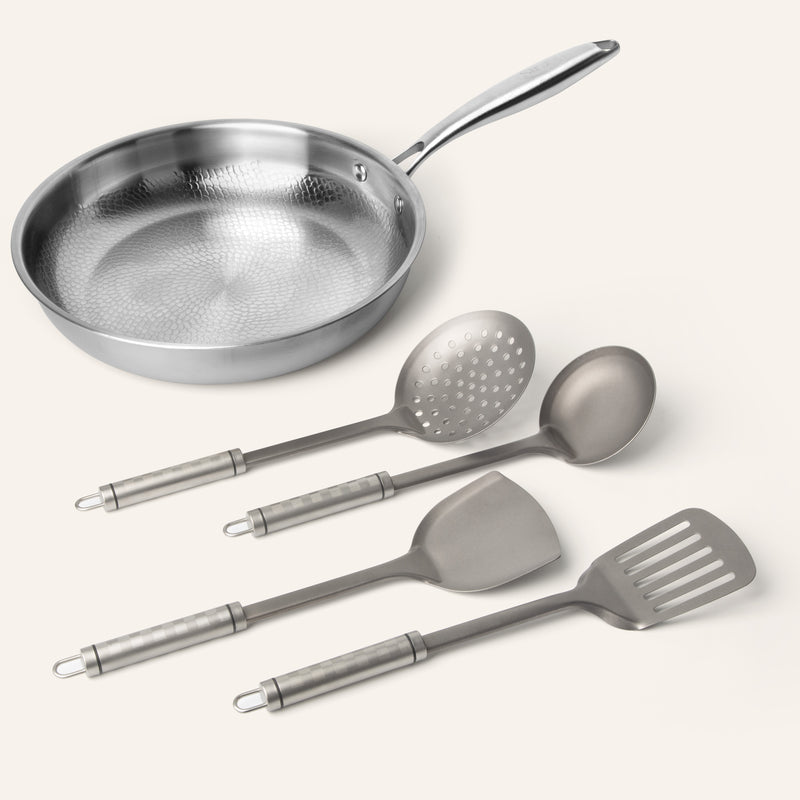
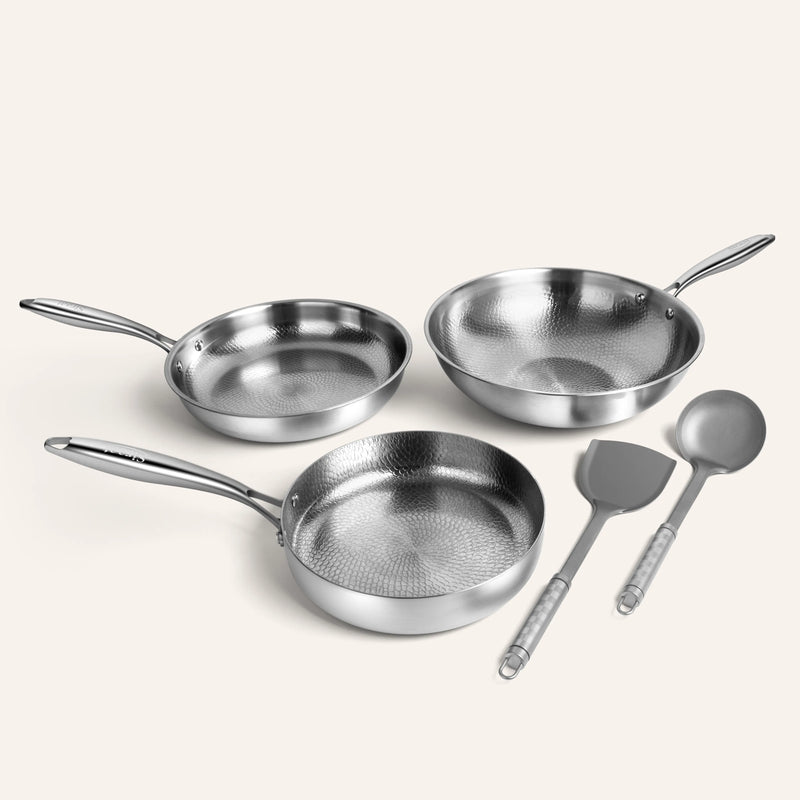
Daily care of titanium cookware typically involves warm water and mild dish soap, which is usually all that’s needed. Titanium is straightforward to maintain and easy to clean, and its surface resists corrosion and staining over time. Pans with hammered surfaces minimize contact between the cookware and food, which makes cleanup even easier. Titanium cookware is also compatible with a wide range of utensils, with minimal concern about damaging the cooking surface.
Ceramic pans require more deliberate care to preserve their surface. Especially as the coating ages, sticking and cleanup can become more challenging. Ceramic pans also often benefit from hand washing and careful heat control to help extend their usable lifespan.
| Cookware Type | Average Lifespan | Maintenance Required | Safety | Heat Tolerance |
|---|---|---|---|---|
| Titanium | Decades, and even lifetime with proper care | Low | Naturally non-reactive and non-toxic | High; suitable for varied cooking methods |
| Ceramic | Typically a few years | Moderate | PTFE-free coating, but relies on a surface layer | Best for low to moderate heat |
Pros and Cons of Titanium vs Ceramic Pans & Cookware
Pros & Cons of Titanium Cookware
Pros:
- Highly durable – offers excellent long-term value, as it’s extremely strong and resistant to warping and corrosion even with frequent use.
- Non-reactive and non-toxic – doesn’t react with acidic or salty foods, alter flavors, or leach metals or chemicals into meals, making it a safe option for health-conscious cooking.
- Low-maintenance – easy to clean, resistant to staining, and doesn’t require special care routines to perform well.
- Versatile – suitable for everyday cooking and reliable across different heat levels, stove types, environments, including home kitchens and outdoor use.
- Virtually non-stick – titanium cookware with a hammered surface is naturally low-stick without relying on a surface layer that can chip, peel, or potentially release chemicals into meals.
- Modern design – clean and minimalistic appearance fits well into modern kitchens that value functionality.
Cons:
- Higher initial cost – quality titanium cookware often costs more upfront, reflecting the material’s strength, durability, and longevity.
- Heat sensitivity in coated versions – titanium cookware that includes an added coating may have heat limitations, whereas solid or uncoated titanium cookware does not rely on coatings for performance.
Pros & Cons of Ceramic Cookware
Pros:
- Smooth cooking surface – many ceramic pans offer good initial food release.
- Accessible price point – often more budget-friendly upfront, though more frequent replacement can increase long-term cost.
- Visually appealing – available in a wide range of colors and finishes that suit different kitchen styles.
Cons:
- Limited durability – the non-stick coating tends to wear down over time, especially with frequent use or improper care.
- Performance declines as the surface degrades – as the coating wears, food is more likely to stick and cooking results become less consistent.
- Heat sensitivity – more prone to damage from high heat and overheating.
- Maintenance-sensitive – to preserve the surface, ceramic pans require careful utensil choice, gentle cleaning, and controlled heat use.
Best Use Cases: Which One Is Better for You?
Titanium Cookware: Long-Term, Non-Toxic Cooking for Everyday Use
For those who prioritize reliability and long-term performance, titanium cookware is a strong choice. Its corrosion resistance, strength, and non-reactive nature make it well suited for everyday cooking, especially in households that value food safety. Titanium cookware is also practical for cooks who prefer low-maintenance cookware and don’t want to spend extra time on deep cleaning.
Best for:
- Health-conscious households looking to avoid coatings while still enjoying a naturally low-stick cooking experience (particularly cookware with hammered surface).
- Everyday home cooks who value ease of maintenance and consistent performance.
- Kitchens that prioritize durability and long-lasting materials.
- Cooks who want reliable results across a wide range of cooking styles.
Ceramic Cookware: Budget-Friendly Convenience for Gentle Cooking
Ceramic cookware can be a suitable option for cooks who prioritize affordability and a smooth cooking surface, especially for low-heat meals. When new, its non-stick coating provides good food release, making it appealing for simpler cooking tasks. However, ceramic cookware is best approached as a shorter-term solution. Its performance depends heavily on handling, heat control, and regular maintenance.
Best for:
- Cooks looking for an accessible, budget-friendly alternative for occasional use.
- Simple cooking tasks that involve low to moderate heat.
- Users who prefer a smooth, non-stick surface and are comfortable with more deliberate care.
- Kitchens where cookware is replaced frequently rather than relied on daily for long-term performance.
Conclusion: Choosing Between Titanium and Ceramic Cookware
Both titanium and ceramic cookware offer benefits, but they serve different needs. Ceramic cookware can be a convenient, budget-friendly option for gentle, occasional cooking. Titanium cookware, on the other hand, stands out for its durability, stability, and low-maintenance, making it better suited for everyday use and long-term cooking. For those who prioritize longevity, food safety, and consistent results over time, titanium is the more reliable choice.