




Yes, titanium cutting boards can feel more slippery on countertops compared to some other materials like wood, especially on smooth surfaces such as marble. This is mainly due to their non-porous, smooth finish, which creates less natural friction.
However, stability depends less on the material alone and more on how the board is used and positioned. In most kitchens, simple adjustments can significantly improve grip and make titanium cutting boards just as practical in everyday use.
Are Titanium Cutting Boards Slippery?
In general, titanium cutting boards may be more prone to sliding, particularly when placed on smooth or slightly wet countertops. Some materials create natural friction, but titanium has a sleek surface that does not grip the countertops in the same way.
That said, this doesn’t necessarily mean that they are unstable for everyday use. When placed on a dry, flat surface, or when paired with a simple non-slip layer, titanium boards can stay securely in place during normal food preparation.
Why Do Some Cutting Boards Slip on Countertops?
Cutting board stability is influenced by several factors, not just the material itself. Most boards move because of a combination of the surface material and the environment they are placed in. Smooth materials naturally create less friction. When both the board and the countertop surface are sleek – for example, a glass cutting board on polished quartz – there is very little resistance to hold the board in place.
Moisture plays a significant role in stability. Even a thin layer of water or condensation trapped underneath the board can act as a lubricant, reduce grip, and make it easier for the board to slide dangerously during use.
Other factors include weight and the contact area. While heavy boards or those with rubberized bases stay in place due to their own weight, flat, lighter, and smooth boards rely more on external support to remain secure.
Because of this, slipping is not unique to titanium boards. It can happen with marble, plastic, or even wood boards, depending on your specific kitchen setup.

Are Titanium Cutting Boards More Slippery Than Other Materials?
Titanium cutting boards tend to have less natural grip compared to textured materials. In this regard, titanium shares similar properties with glass, marble, and stainless steel.
Wood usually offers the highest level of stability. Its textured surface creates natural friction, and its weight helps it stay in place. While stable, wood is highly porous. It absorbs moisture and odors, and deep knife grooves can become breeding grounds for bacteria, making it much harder to sanitize than titanium. This is especially important to consider if you are handling raw meat and poultry often. Wood is also more high-maintenance than titanium, as it requires regular oiling.
Plastic boards can vary. Some are lightweight and smooth, which can make them prone to movement. Others include rubber edges or feet designed to improve grip. Plastic boards are also prone to deep scratches. Over time, small plastic particles (microplastics) can end up in your food, and the board itself can warp, losing that flat contact with your counter.
On its own, titanium doesn't provide the same friction, but it offers a surface that does not absorb odors, resists deep scratching, is non-toxic, and highly durable. While titanium may feel more slippery initially, its stability can be easily solved. With simple adjustments, titanium becomes a highly practical and safe choice for everyday use.
How to Keep a Titanium Cutting Board from Slipping
Use a Non-Slip Mat
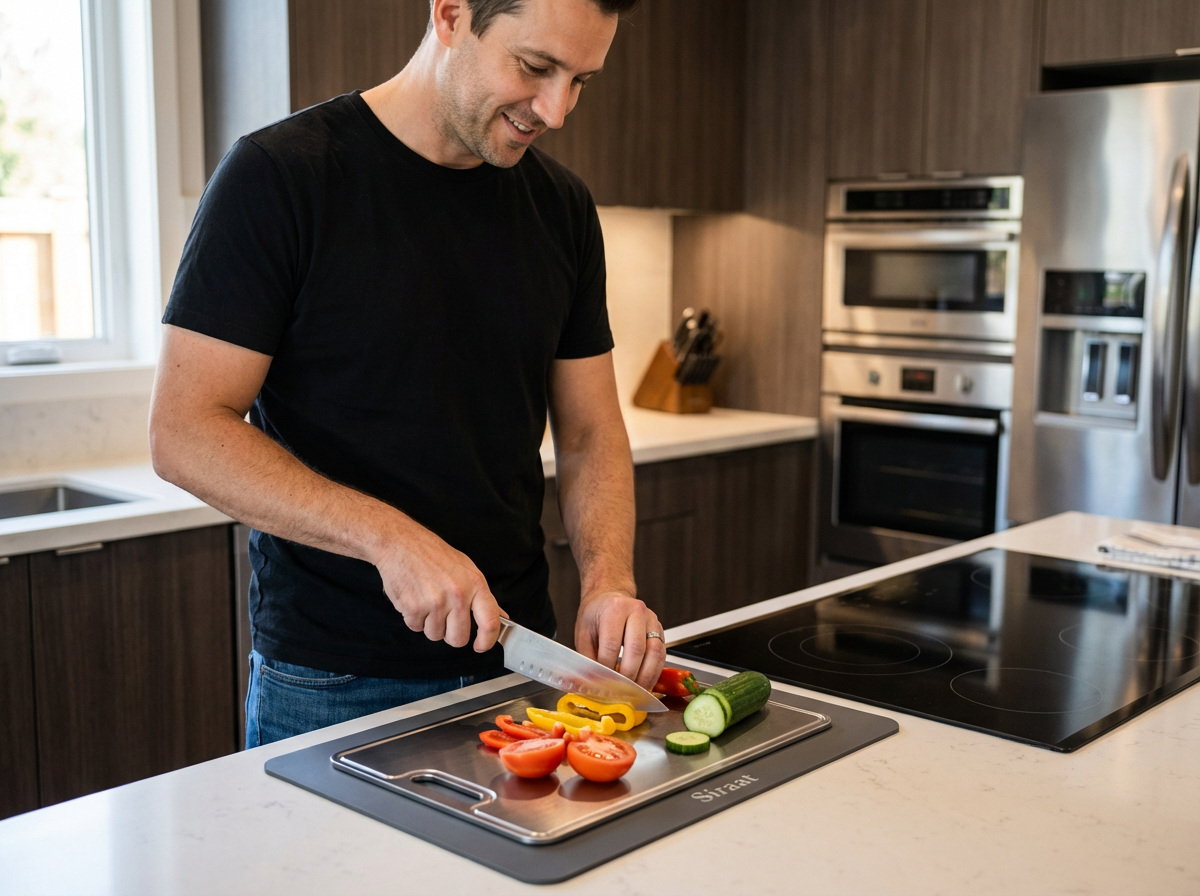
The most reliable way to stabilize a cutting board is to place a non-slip silicone layer underneath it. Silicone creates high friction between the board and the countertop, helping keep the board stable during use.
A thin, flexible mat helps keep the board in place without adding bulk or affecting usability. For example, Siraat’s non-slip mat for cutting boards made from premium food-grade silicone is designed to sit flat under the board and provide consistent grip across different countertop surfaces. This approach works especially well on smooth materials like quartz, marble, or polished stone.
Use a Damp Paper Towel
A simple and widely used method is placing a slightly damp paper towel or cloth under the cutting board. While a wet countertop makes slipping worse, a damp paper towel creates enough surface tension to prevent sliding.
This is a quick solution that works well for most materials, including titanium. However, the towel can dry out during long prep sessions or become unsanitary if it absorbs food liquids. While it’s a good short-term solution, a dedicated silicone mat is a much more stable and hygienic option for everyday cooking.
Check Your Countertop Surface
The type and condition of your countertop also influence stability. Smooth or polished surfaces provide less grip, while slightly textured materials can help keep the board in place.
Before placing the cutting board on the countertop, make sure that the surface is clean and dry. Even a small amount of moisture or oil can cause the board to slip. If one spot feels particularly unstable, simply moving the board to a different area of the counter can sometimes improve the grip.

Our Durable Non-Toxic Cutting Boards
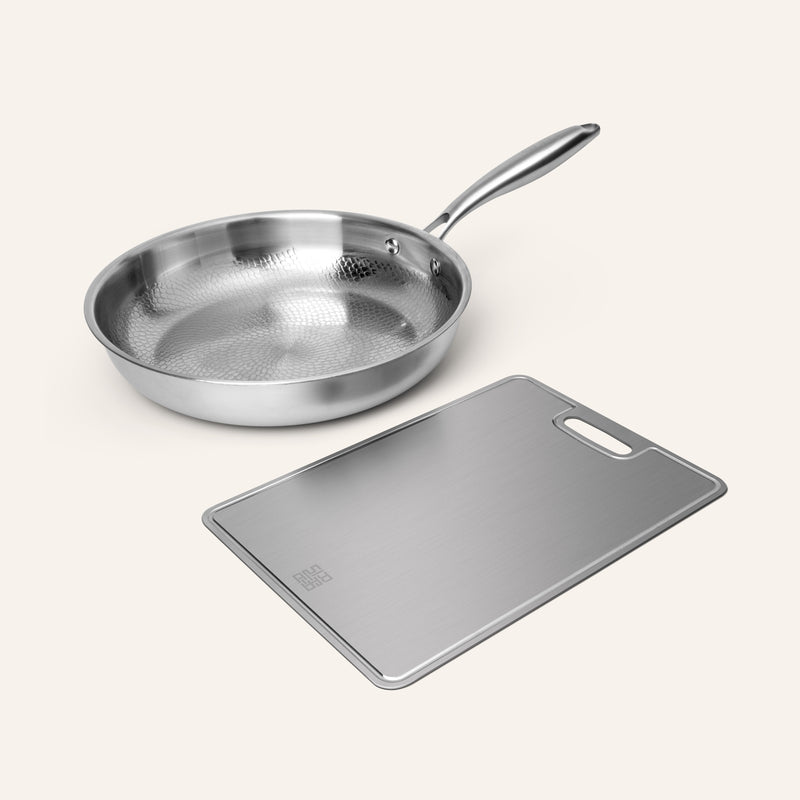
100% pure titanium. Antibacterial, scratch-proof, toxin-free. Built to last, for chefs who demand the best
Conclusion: Balancing Hygiene with Stability
Titanium cutting boards can be more slippery than boards made from more textured, porous materials. In everyday use, the tendency to slip is rarely a major limitation. Stability depends largely on your setup – for example, using a non-slip mat underneath the board can significantly improve grip during food preparation.
For many kitchens, the durability, hygiene, and low-maintenance nature of titanium tend to outweigh this minor trade-off. With the right setup, titanium cutting boards can remain stable and practical for daily use.