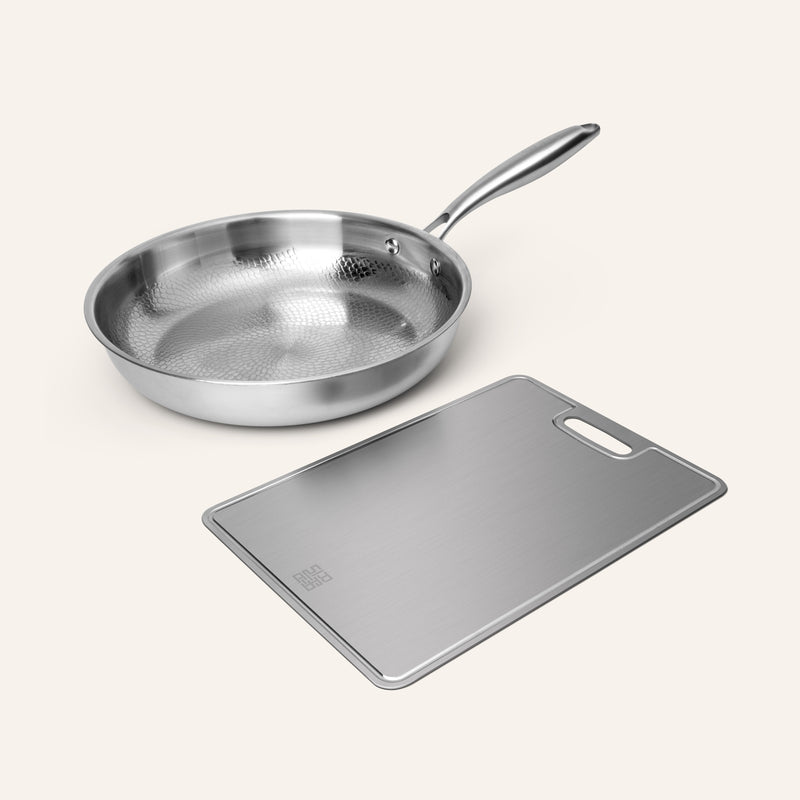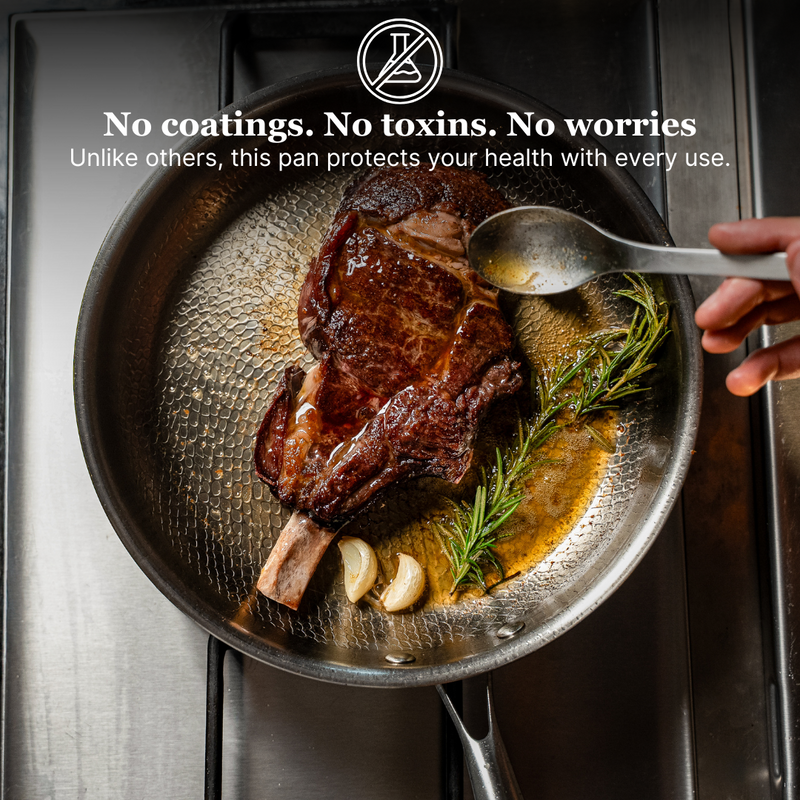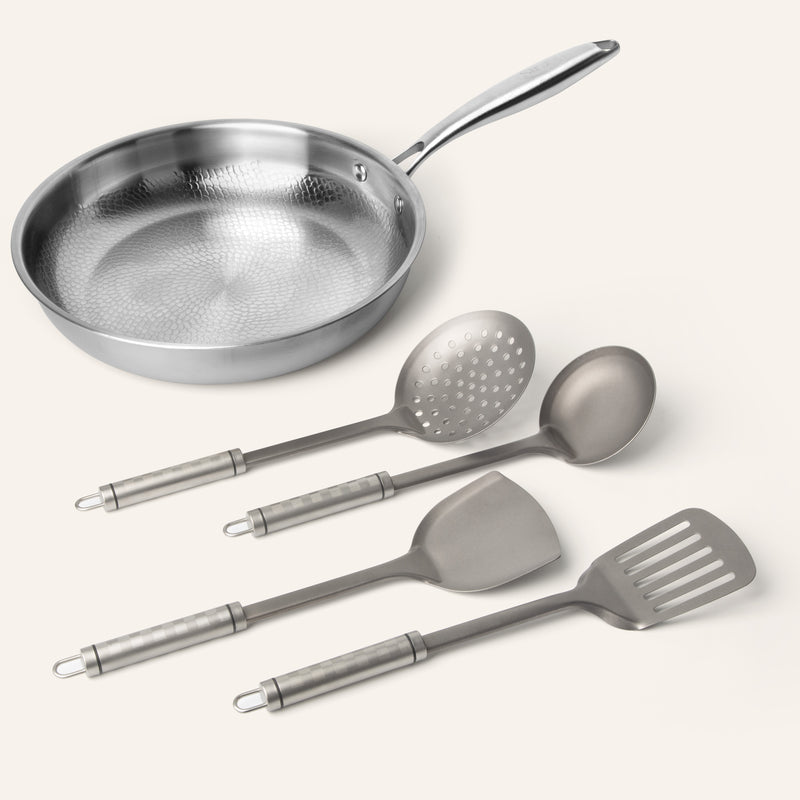





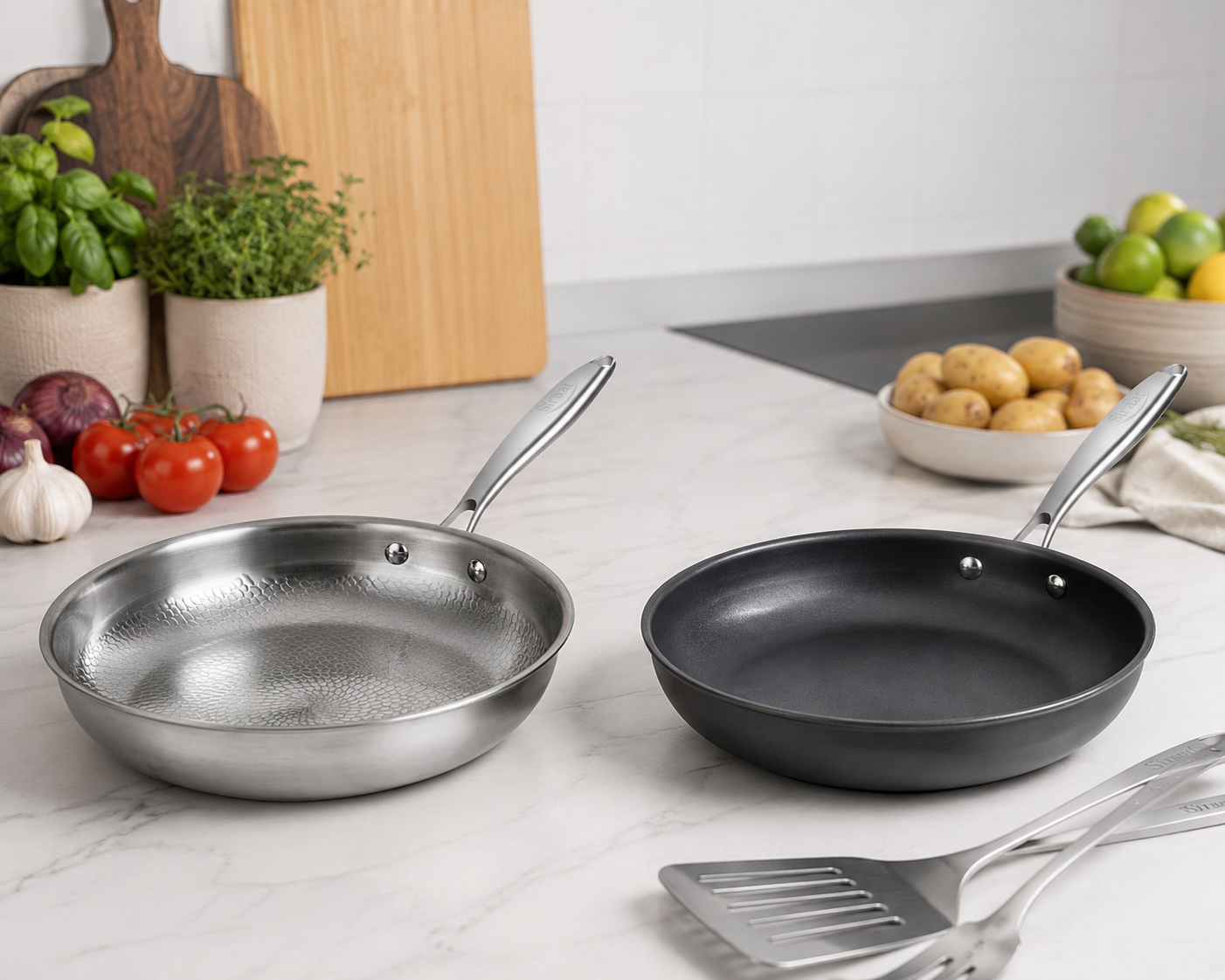
Titanium cookware is generally the better choice if you prioritize long-term durability, a cooking surface without synthetic coatings, and resistance to scratches and corrosion. Hard anodized cookware can be a better fit for those looking for a lower upfront cost and the convenience of traditional non-stick cooking.
While both materials are suitable for everyday use, they differ in construction, maintenance, cooking performance, and lifespan. It's also important to understand that hard anodized describes a treatment applied to aluminum – not a non-stick coating, even though many hard anodized pots and pans are finished with one. In this guide, we'll compare titanium vs. hard anodized cookware to help you choose the right option for your cooking style.
| Feature | Titanium Cookware | Hard Anodized Cookware |
|---|---|---|
| Cooking Surface | Pure titanium | Hard anodized aluminum (often with a non-stick coating) |
| Average Lifespan | Decades with proper care | Shorter for coated cookware; longer for uncoated models |
| Safety | Non-reactive, non-toxic, PFAS/PTFE-free cooking surface | Hard anodized aluminum is non-reactive; coated models depend on the coating |
| Heat Distribution | Even heating with fully clad construction | Fast, even heating |
| Maintenance | Low | Low to moderate |
Titanium vs. Hard Anodized Cookware: Key Differences
Safety & Health
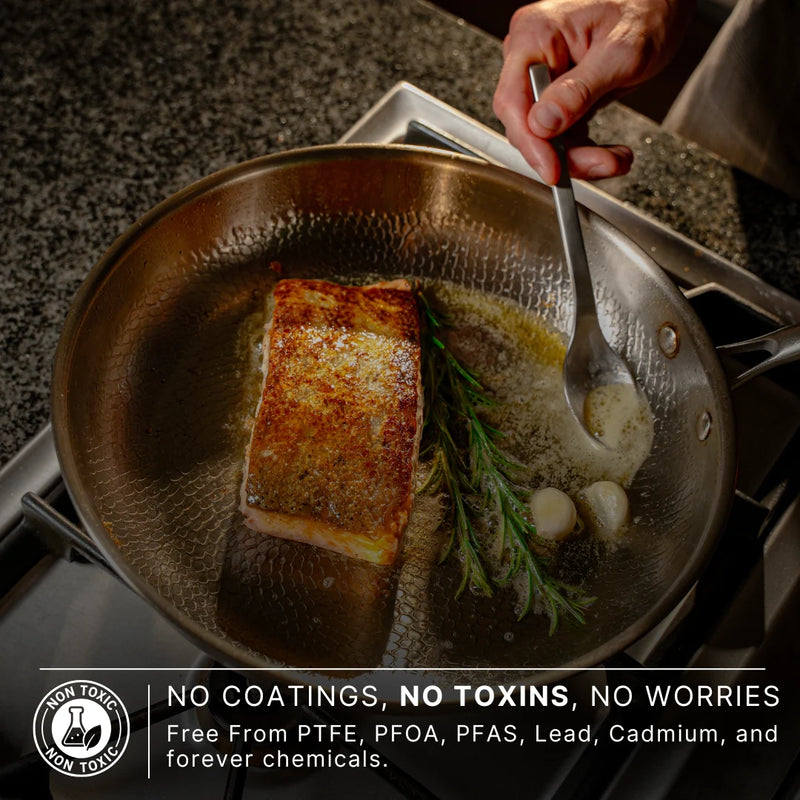
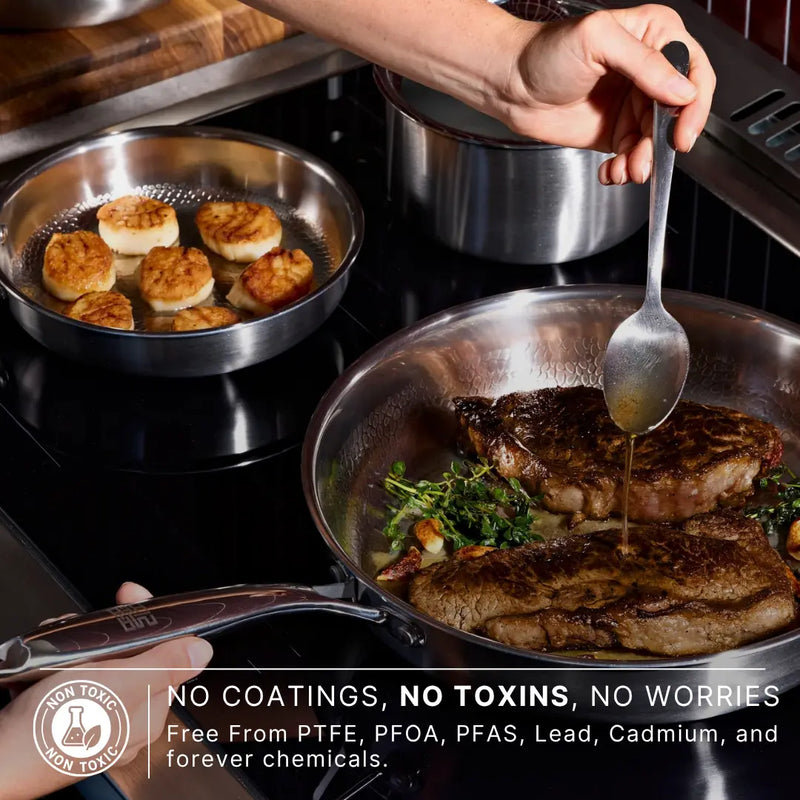
Titanium is widely regarded as one of the safest cookware materials available. Pure titanium is naturally non-reactive, meaning it won't interact with acidic or alkaline foods or affect their flavor. It also doesn't rely on synthetic non-stick coatings, making it a popular choice for those looking to avoid PFAS, PTFE, PFOA, and other chemicals commonly associated with coated cookware.
Hard anodized cookware is also considered safe for everyday cooking. The anodization process creates a hardened, stable layer on the aluminum surface that helps protect it from corrosion and reduces reactivity. However, hard anodized cookware is often finished with a PTFE-based non-stick coating. While these coatings are generally considered safe when used according to the manufacturer's instructions, they have different care requirements and may wear down over time. If you're comparing hard anodized cookware, it's worth checking whether the cooking surface is coated or uncoated, as this can affect both maintenance and long-term performance.
Durability & Longevity
Titanium cookware is built for long-term use. Pure titanium is highly resistant to corrosion, scratches, warping, and everyday wear. Its cooking surface won't chip, peel, or flake because it doesn't rely on a synthetic coating. Fully clad titanium cookware combines a durable titanium cooking surface with an aluminum core for strength and consistent cooking performance. With proper care, quality titanium cookware can maintain its appearance and performance for decades.
Hard anodized cookware is also more durable than standard aluminum thanks to the anodization process, which hardens the surface and improves resistance to scratches and corrosion. However, overall longevity often depends on whether the cookware has a non-stick coating. While the hard anodized body itself can last for many years, coated cooking surfaces typically wear down faster and may eventually need replacing. Uncoated hard anodized cookware generally offers a longer service life but requires different cooking techniques than coated alternatives.
Cooking Performance
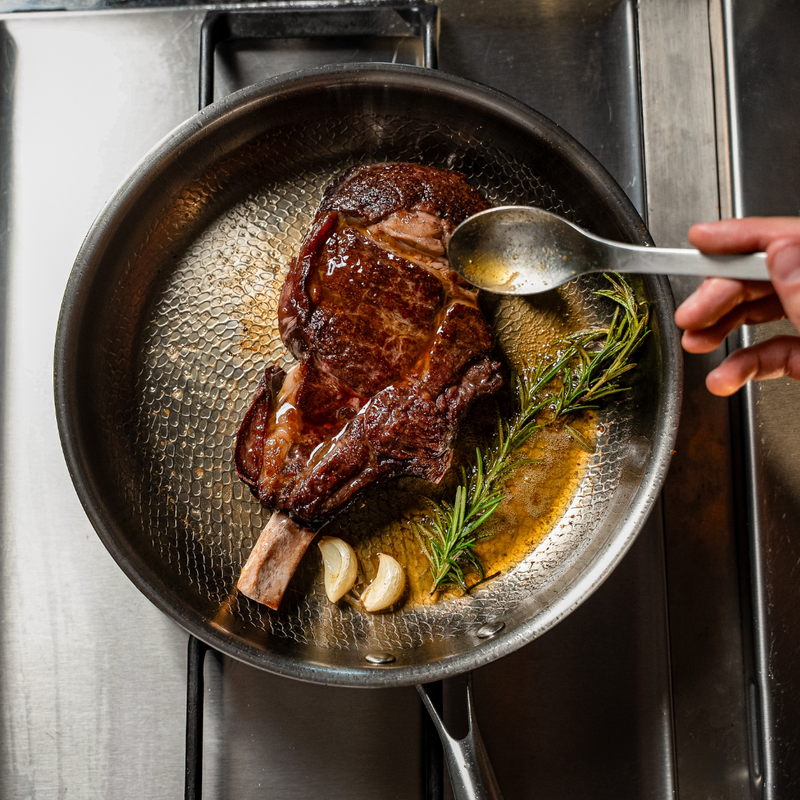
Titanium cookware delivers consistent cooking performance when paired with a quality multi-layer construction. While pure titanium itself is not an excellent heat conductor, fully clad cookware with an aluminum core combines the durability and non-reactive properties of titanium with fast, even heat distribution. Once preheated, titanium provides a stable cooking surface that responds well to temperature adjustments. Hammered titanium cookware can further improve food release by reducing the contact area between the food and the cooking surface, allowing for cooking with less oil and without synthetic non-stick coatings.
Hard anodized cookware is made from aluminum, which naturally conducts heat well and heats up quickly. As a result, quality hard anodized pans typically provide even heat distribution and responsive cooking performance. When coated with a traditional non-stick surface, they also offer excellent food release with little oil. However, cooking performance can gradually change as the coating wears over time, particularly with frequent use or improper care.
Ease of Use & Maintenance
Titanium cookware is designed for everyday use and long-term durability. Its pure titanium cooking surface is resistant to scratches, compatible with metal utensils, and doesn't require special care to protect a coating. Hand-hammered titanium cookware also helps reduce sticking naturally when preheated properly with a small amount of oil. Cleanup is simple, and many titanium pans, including fully clad designs, are dishwasher safe.
Hard anodized cookware is also easy to cook with, especially when it features a non-stick coating that helps food release easily and makes cleanup quick. However, coated surfaces generally require a bit more care to maximize their lifespan. Manufacturers often recommend using wooden or silicone utensils, avoiding abrasive cleaners, and preventing overheating, as the coating can gradually wear over time. Uncoated hard anodized cookware is more resistant to wear but may require slightly more attention during cooking to prevent food from sticking.

Pros and Cons of Titanium vs. Hard Anodized Cookware
Beyond their different materials and construction, titanium and hard anodized cookware each offer distinct advantages and trade-offs. The right choice depends on what you value most, whether that's long-term durability, a non-toxic coating-free cooking surface, lower upfront cost, or traditional non-stick performance.
Pros & Cons of Titanium Cookware
Pros:
-
Long-lasting durability – highly resistant to scratches, corrosion, and warping, with a cooking surface designed to withstand years of regular use.
-
Non-toxic and non-reactive – a pure titanium cooking surface won't react with acidic foods and contains no PFAS, PTFE, or other synthetic non-stick coatings.
-
Compatible with metal utensils – durable enough for everyday cooking without worrying about scratching a coating.
-
Easy to maintain – simple to clean, dishwasher safe, and resistant to staining and corrosion.
-
Even heating with fully clad construction – an aluminum core provides fast, consistent heat distribution while the titanium surface offers durability and stability.
-
Naturally low-stick surface – hammered titanium cookware helps reduce sticking without relying on chemical coatings.
Cons:
-
Higher upfront cost – quality titanium cookware often costs more upfront, reflecting the material’s strength, durability, and longevity.
-
Benefits from proper preheating – cooking with a small amount of oil and allowing the pan to preheat helps achieve the best food release.
Pros & Cons of Hard Anodized Cookware
Pros:
-
Durable aluminum construction – harder and more scratch-resistant than standard aluminum cookware.
-
Fast, even heating – aluminum provides excellent heat conductivity for everyday cooking.
-
Often available with non-stick coatings – many models offer easy food release and quick cleanup.
-
Generally more affordable – lower initial cost than most premium titanium cookware.
Cons:
-
Many models rely on a non-stick coating – cooking performance may decline as the coating wears over time.
-
Often requires gentler care – coated surfaces are usually not recommended for metal utensils or abrasive cleaners.
-
Lifespan varies by construction – while the hard anodized body is durable, coated cookware may need replacing sooner than cookware with an uncoated cooking surface.

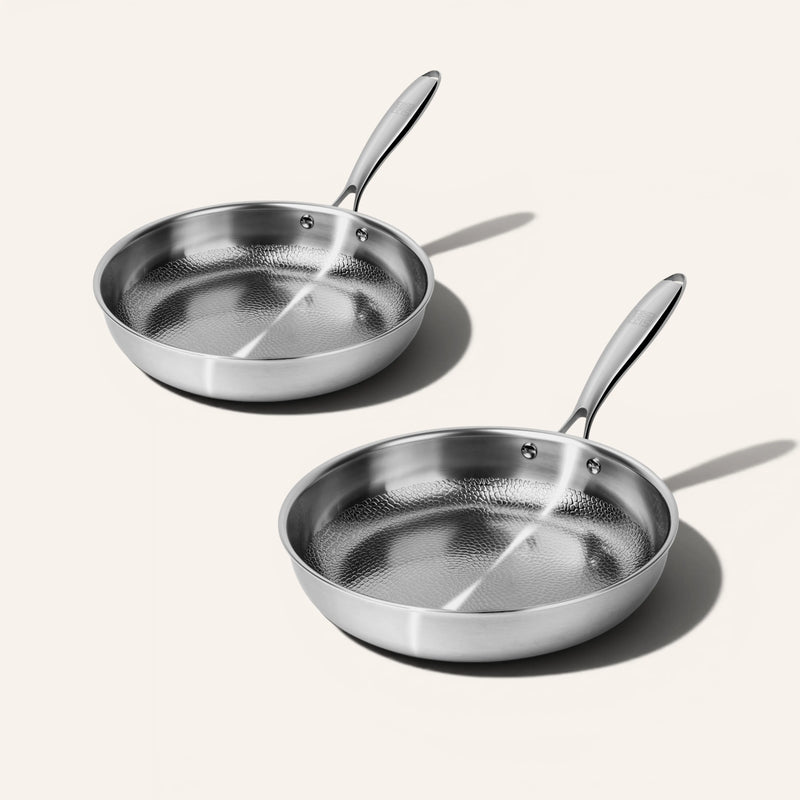
Titanium Hammered Complete Edition
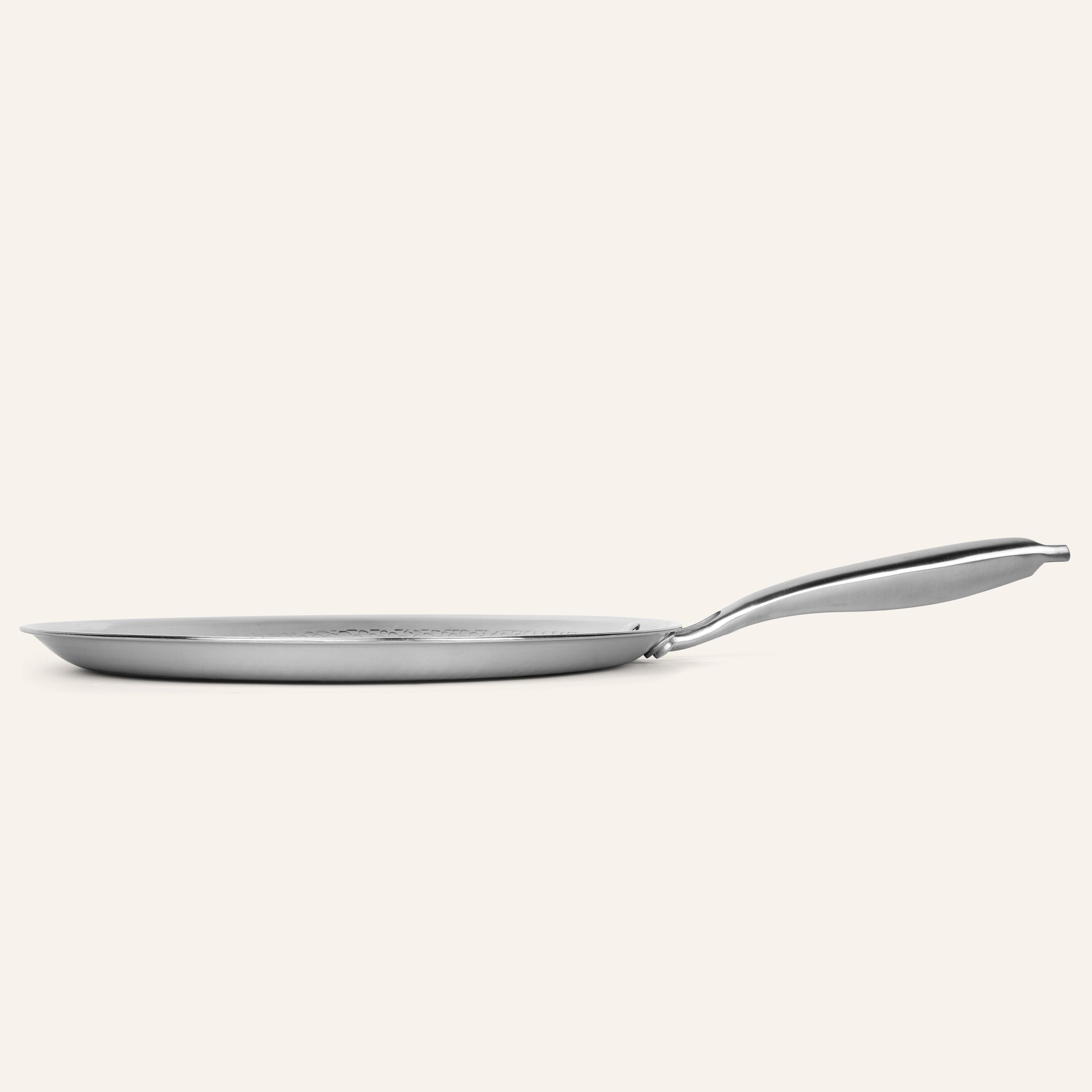
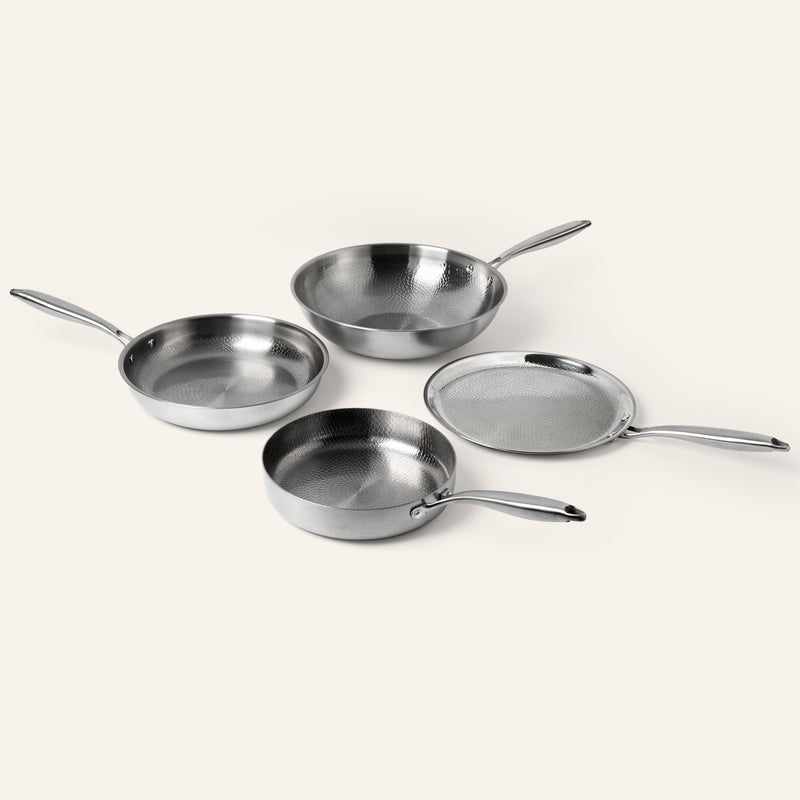
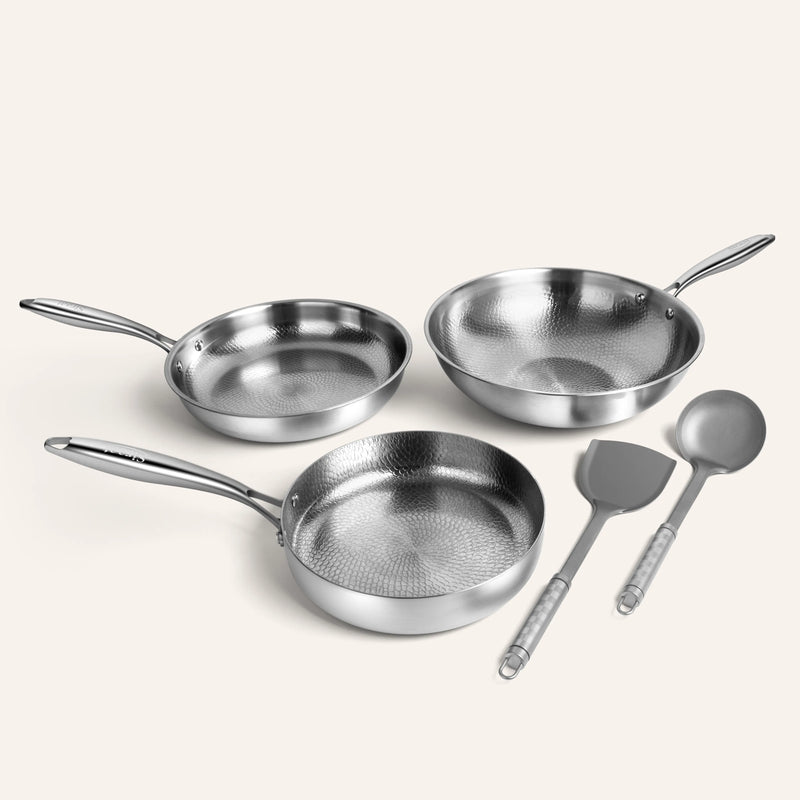
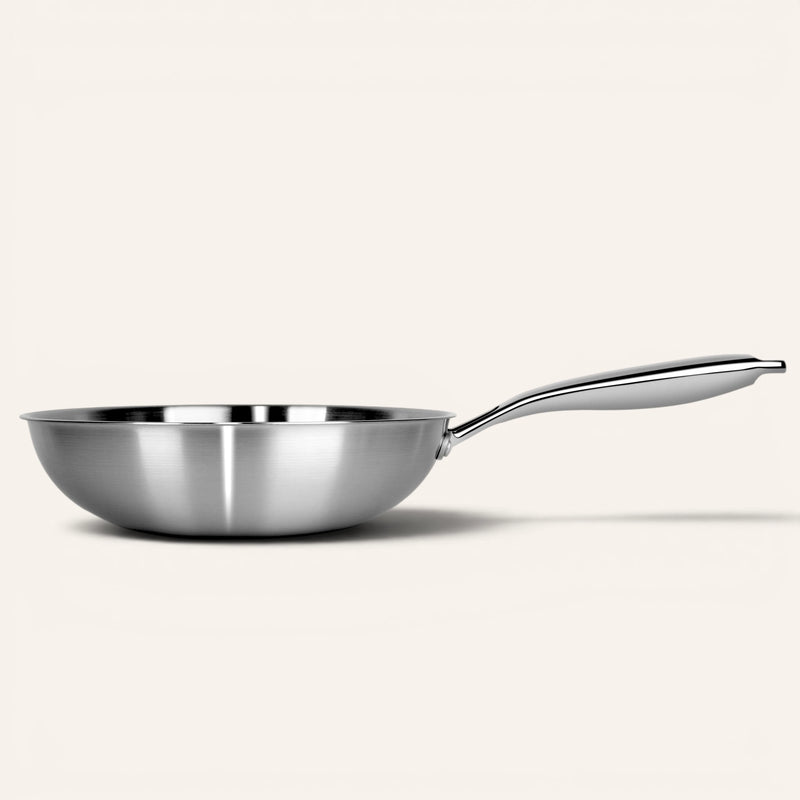
The Siraat Hammered Cookware Set includes the Hammered Pan Pro, Deep Pan Pro, Wok Pan Pro, and Crepe Pan Pro. Each piece features a pure hammered titanium surface that’s naturally non-stick, PFAS-free, and built to last. Scratch-proof, dishwasher and oven safe, everything you need for any meal, in one timeless set.
Best Use Cases: Which One Is Better for You?
Titanium Cookware: Long-Term Performance Without Synthetic Coatings
If you want cookware designed to last for years, titanium is an excellent choice. Its pure, non-reactive cooking surface contains no synthetic non-stick coatings, and its durable construction resists scratches, corrosion, and everyday wear. For those looking to build a healthier kitchen, titanium cookware has become one of the most trusted non-toxic kitchen essentials thanks to its durable, coating-free cooking surface. Fully clad titanium cookware also offers reliable heat distribution, making it well suited for everyday cooking.
Best for:
-
Daily cooking and family meals.
-
Households looking for cookware with a long lifespan.
-
Home cooks who prefer a PFAS- and PTFE-free cooking surface.
-
People who regularly cook with metal utensils.
-
Anyone looking for durable, low-maintenance cookware.
Hard Anodized Cookware: Affordable Everyday Non-Stick Cooking
Hard anodized cookware appeals to cooks who want the convenience of a traditional non-stick pan without a significant upfront investment. It heats quickly, is easy to cook with, and is widely available across different price ranges. However, many hard anodized pans rely on a PTFE-based non-stick coating, which can gradually wear over time and typically requires more careful handling than an uncoated cooking surface.
Best for:
-
Everyday cooking with lower initial investment.
-
Users who prefer traditional non-stick cookware.
-
Home cooks who don't mind replacing cookware more often.
For most households, titanium cookware offers the more durable long-term solution. While hard anodized cookware remains a practical choice for everyday non-stick cooking, fully clad titanium cookware stands out with its coating-free cooking surface, compatibility with metal utensils, and resistance to scratches and wear. For those looking to invest in cookware designed to last for decades rather than years, titanium is the stronger choice.