



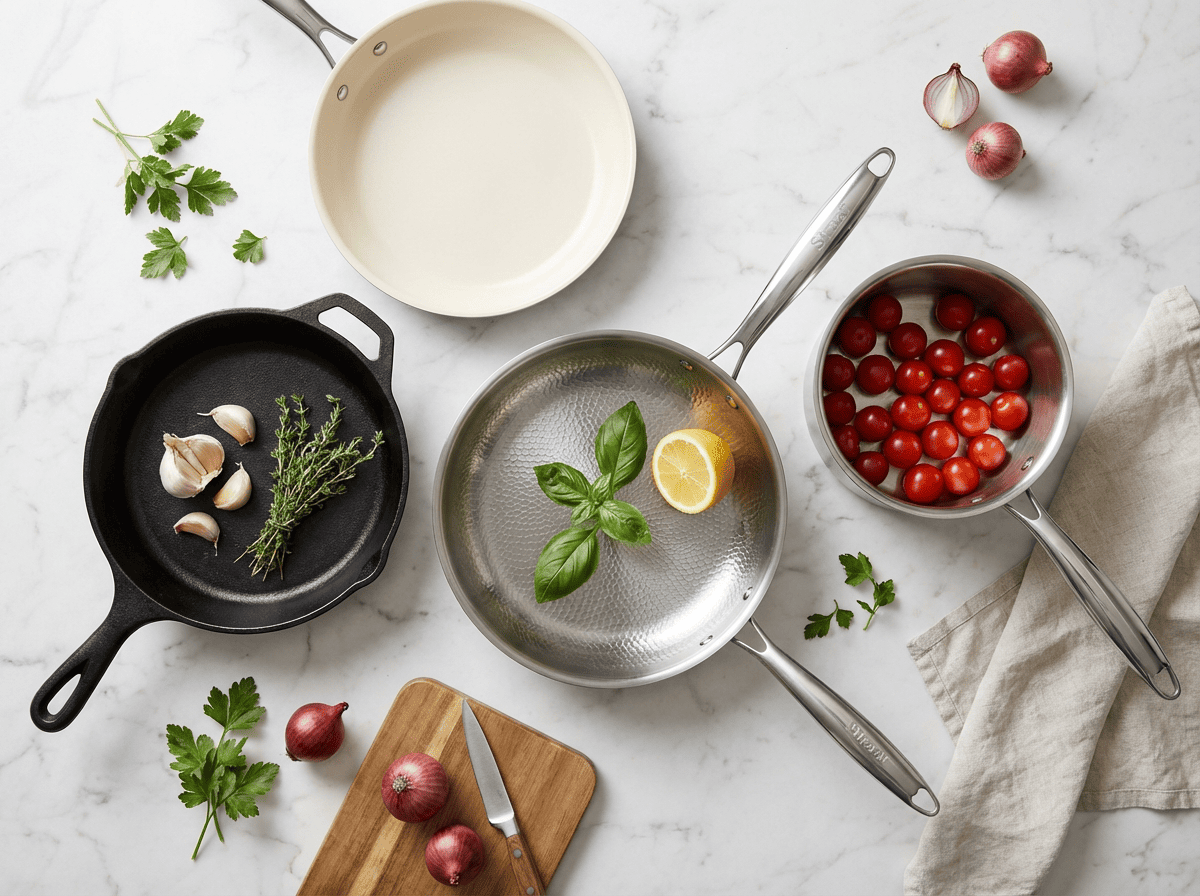
There is no single “best” metal for cookware. The right choice depends on how you cook, what you cook, and what you prioritize – whether that’s heat control, durability, budget, or ease of maintenance. That said, there are some popular materials people frequently choose for their cookware, such as stainless steel, increasingly popular titanium, or non-stick.
Some materials heat quickly but require more care. Others are more stable and low maintenance but may respond differently to temperature changes. From a health and everyday use perspective, factors like reactivity and surface type can also play a role. This guide compares some of the most common cookware metals to help you choose which one is the best for you.
What Matters When Choosing Cookware Material?
Choosing cookware is less about finding the best material and more about understanding how different metals behave in real kitchen conditions. First, consider heat performance. Some metals, like aluminum and copper, heat quickly and evenly. Others, like stainless steel, may heat more slowly but can offer consistent results once they reach the right temperature. Titanium on its own doesn’t offer high thermal conductivity – but it is resistant to very high temperatures. When combined with other metals in a multi-layer construction, it provides very well-controlled cooking.
Durability should play a role when choosing the best metal for cookware. Materials like titanium and cast iron typically last longer, while others, like pans with traditional non-stick coatings, may show wear sooner. Another thing to consider is reactivity with food. Certain metals can react with acidic ingredients (like tomatoes or lemon), potentially affecting the flavor. Non-reactive materials, such as titanium or stainless steel, are generally more stable in these situations.
Some cookware requires regular upkeep, such as seasoning, careful cleaning, or specific cleaning methods. Others – such as titanium – are more straightforward and can be cleaned with minimal effort after everyday cooking. Consider also weight and handling – materials like cast iron may be less practical for frequent use as they are notably heavier compared to options like aluminum or titanium. Compatibility with different stove types can also vary depending on construction, especially with modern materials that combine multiple layers.
| Material | Heat Performance | Durability | Reactivity | Maintenance |
|---|---|---|---|---|
| Titanium | Moderate (core improves it) | Very high | Non-reactive | Low |
| Stainless Steel | Moderate (core improves) | High | Non-reactive | Medium |
| Cast Iron | Slow, retains heat well | Very high | Can react | High |
| Aluminum | High, heats quickly | Medium | Reactive if untreated | Low |
| Ceramic | Moderate (declines over time) | Low to medium | Non-reactive (coated) | Medium |
| Copper | Very high, responsive | Medium | Reactive if unlined | High |
| Non-Stick | Moderate | Low | Non-reactive (coated) | Low |
Best Cookware Materials Compared (Pros & Cons)
Titanium
Pros:
- Highly durable – can last decades or even a lifetime – and resistant to wear
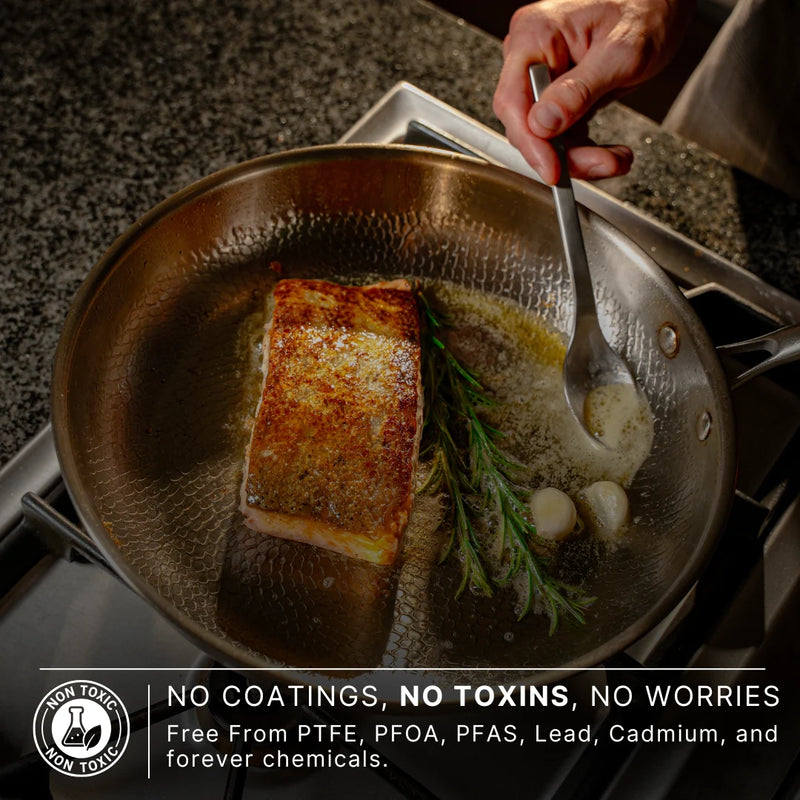
- Non-toxic, non-reactive surface, suitable for a wide range of ingredients
- Low maintenance and easy to clean
- Lightweight compared to many other metals
- Corrosion and moisture-resistant
- Virtually non-stick, particularly hammered-surfaced titanium cookware
Cons:
- Higher upfront cost, reflecting durability, strength, and purity of the material
- Lower natural heat conductivity when not combined with other materials
Best for:
Long-term use in health-conscious kitchens where durability and easy maintenance are equally valued.
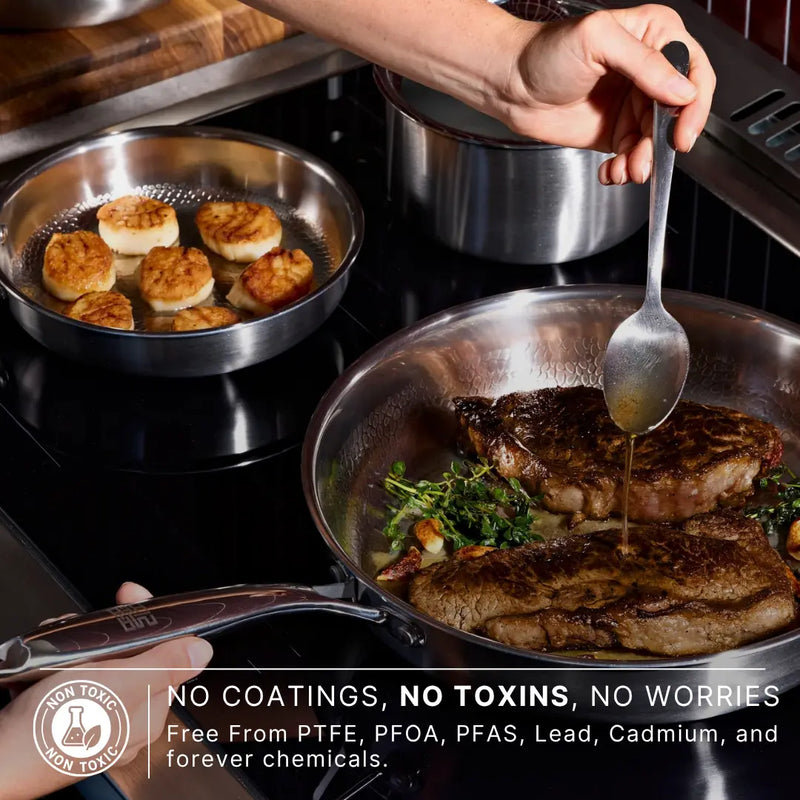
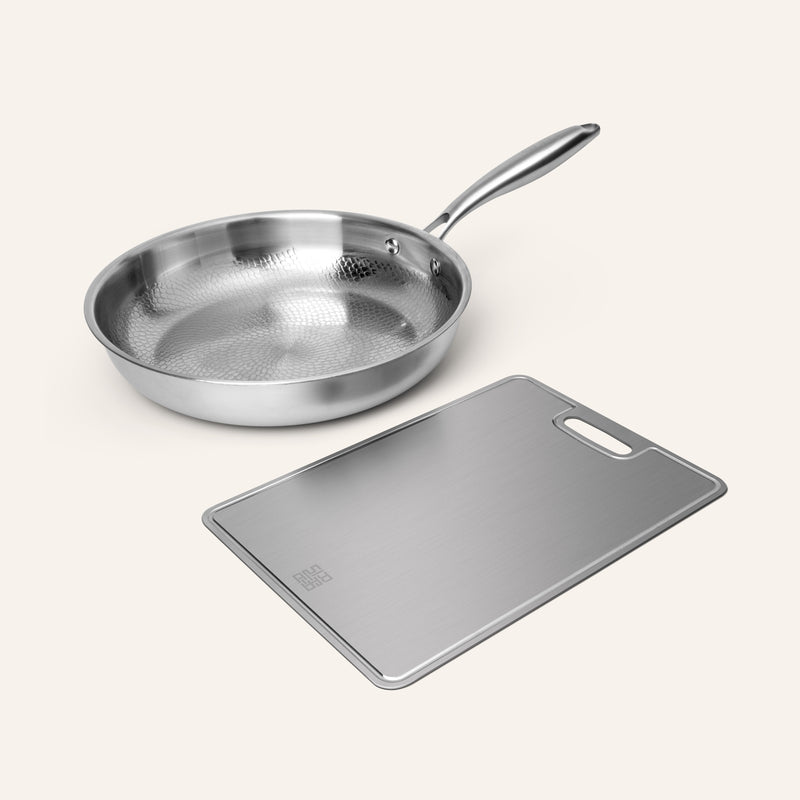
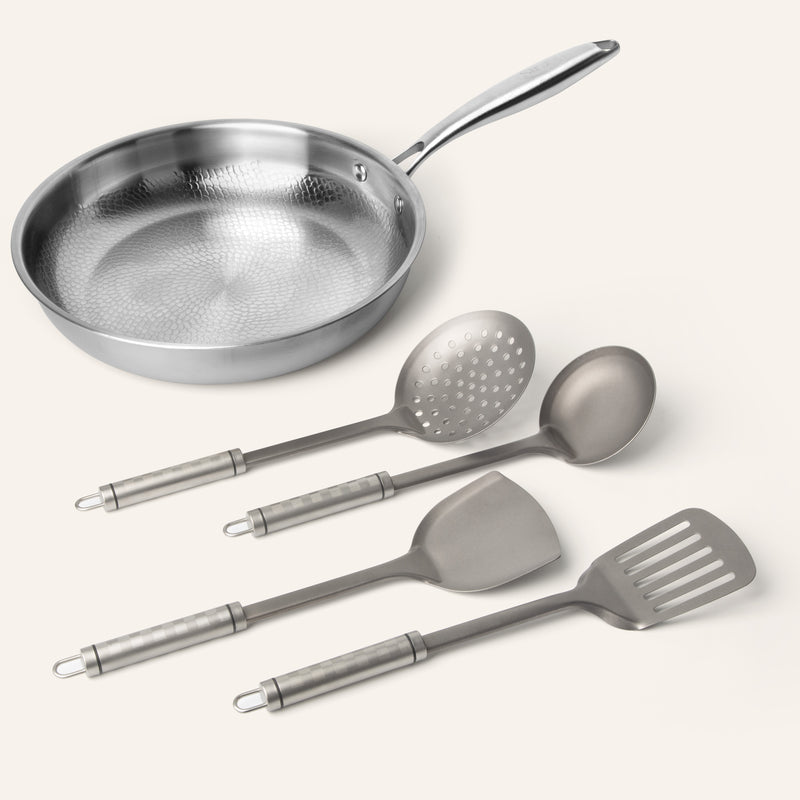
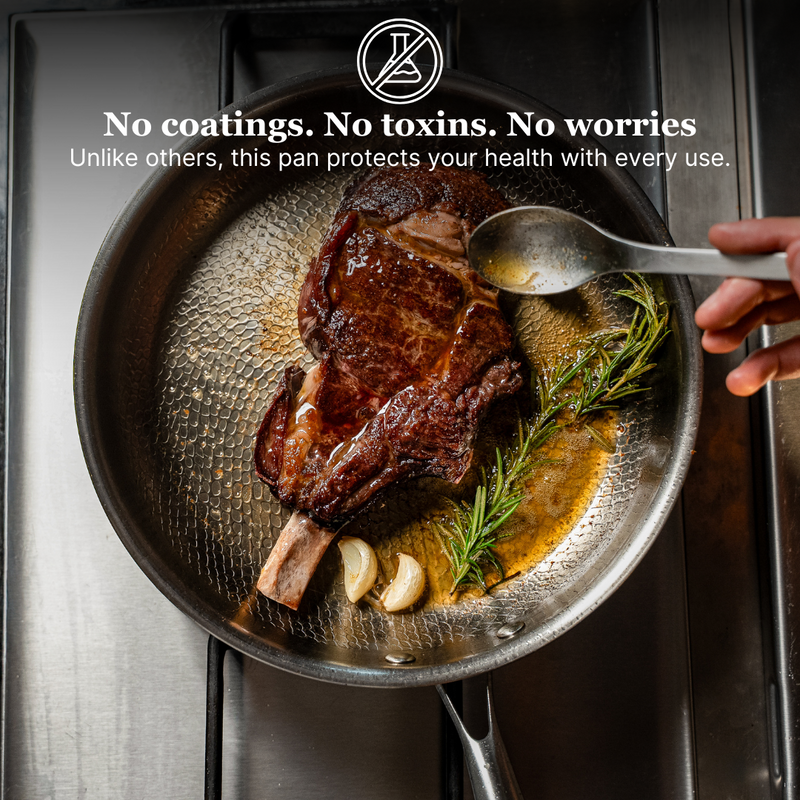
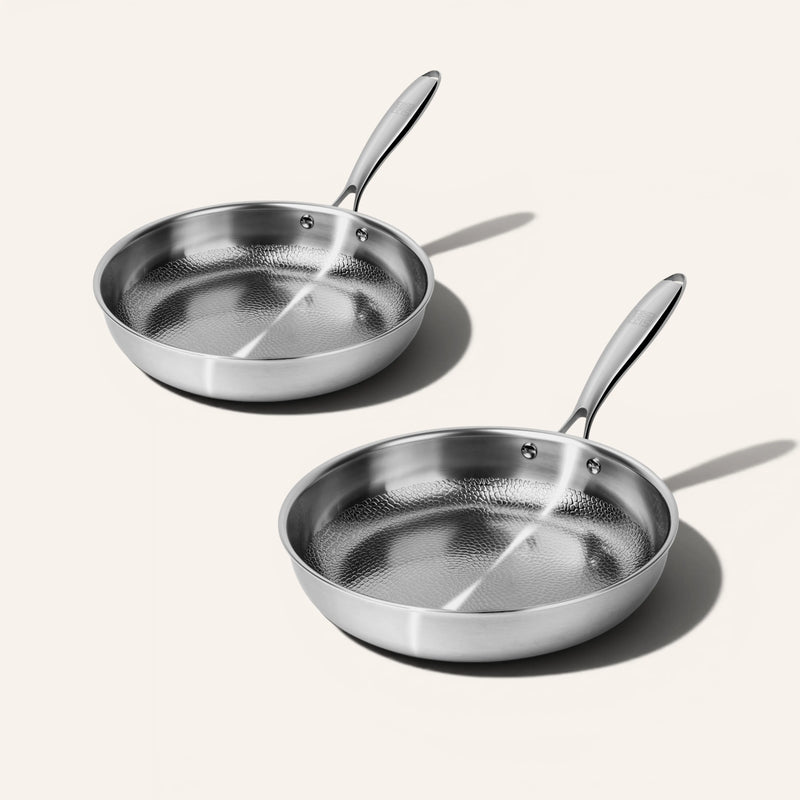
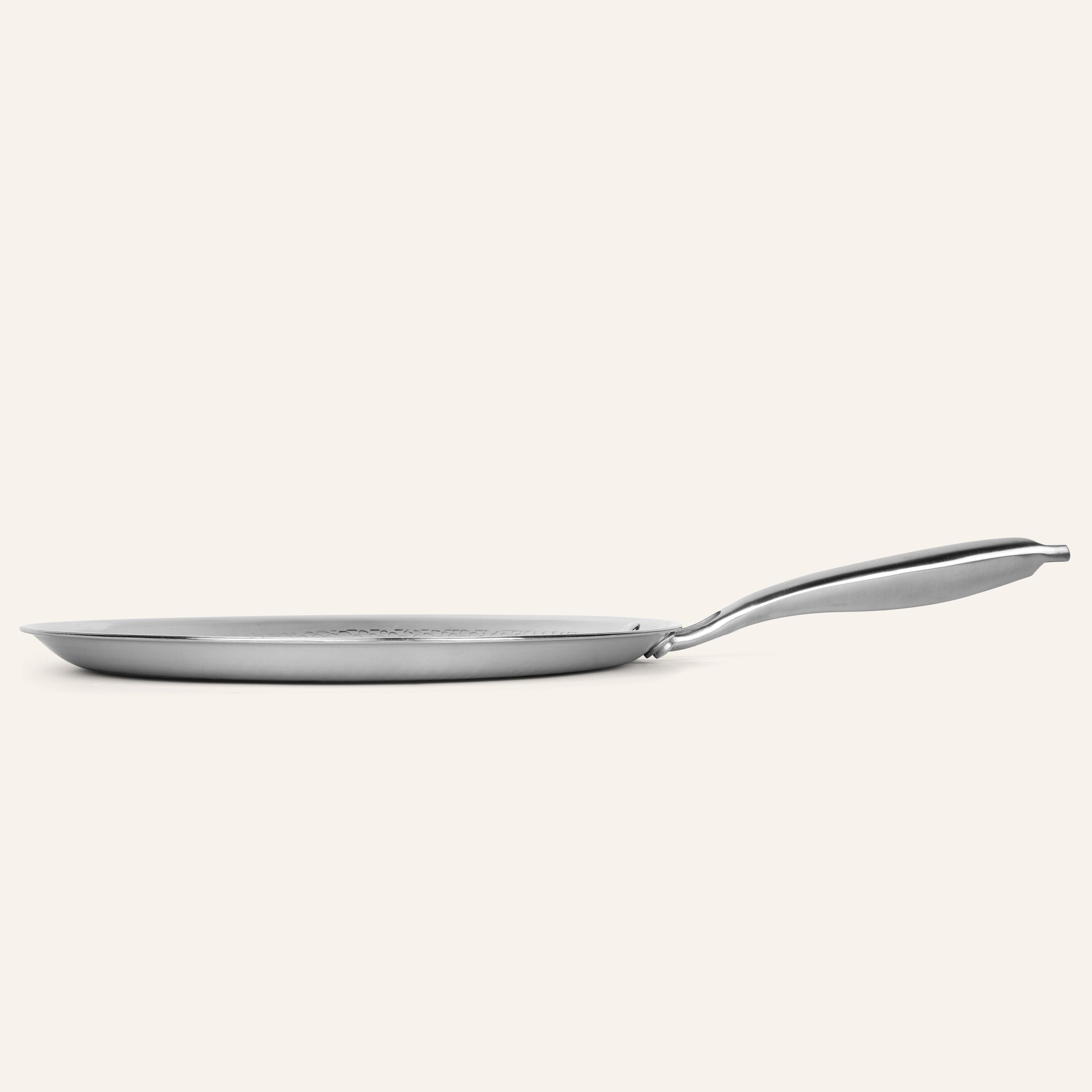
In many modern designs, titanium cookware is engineered as a fully-clad construction to optimize performance. By layering a pure titanium cooking surface over a conductive core (like aluminum) and a magnetic base (like stainless steel), the cookware balances titanium’s health benefits with professional-grade heat distribution. For example, Siraat’s Titanium Hammered Pan Pro utilizes this 3-layer build to ensure even cooking while maintaining a toxin-free, ultra-durable surface.
Stainless Steel
Pros:
- Durable and resistant to scratches and corrosion
- Non-reactive and safe for cooking acidic foods
-
Suitable for a wide range of cooking techniques
- Excellent for high-heat cooking techniques
Cons:
- Lower heat conductivity without an internal core
- Food may stick without proper technique and heat control
- Maintenance-heavy; may require soaking or specialized cleaning to remove burnt-on residue or “rainbow” heat tints
Best for:
Technique-focused cooking and high-heat performance, for those who don’t mind a steeper learning curve.
Cast Iron
Pros:
- Excellent heat retention, maintains steady temperatures over long periods of time
- Suitable for high-heat cooking and searing
- Can last for decades with proper care
Cons:
- Heavy and less practical for frequent or quick handling
- Requires regular seasoning, ongoing maintenance, and specific cleaning methods to prevent rust
- Can react with acidic foods if not properly maintained
Best for:
High-heat cooking and slow, heat-retentive methods, and tasks where heat retention is more important than ease of handling.
Aluminum
Pros:
- Very good heat conductivity and heat distribution
- Lightweight and easy to handle
- Heats up quickly and cools down rapidly, allowing for precise temperature control
Cons:
- Can react with acidic foods if the metal is untreated (not anodized)
- Typically less durable than titanium or stainless steel
- May warp, scratch, or dent over time
Best for:
Fast, everyday cooking where quick heat response is useful, though it may lack the long-term durability of more stable metals.
Ceramic
Pros:
- Smooth cooking surface, especially when new
- Often accessible price point
- Visually appealing, trend-focused designs and colors
Cons:
- Limited durability as the non-stick properties tend to decline over time
- Fragility, as the surface can be prone to chipping or cracking, especially if handled roughly or exposed to sudden temperature changes
- Performance declines as the surface degrades
- Heat sensitivity, not suitable for high heat cooking
- Maintenance-sensitive, requires more deliberate care
Best for:
Low to medium heat cooking, budget-conscious households that don’t mind replacing their cookware often.
Copper
Pros:
- Excellent heat conductivity and responsiveness
- Immediate temperature control, which is essential for delicate tasks like sauces or confectionery
Cons:
- Requires more maintenance and regular polishing to prevent tarnish and maintain its appearance
- Often requires lining (usually stainless steel or tin) due to copper’s reactivity with acidic foods
- Significant financial investment compared to standard materials
Best for:
Professional chefs or culinary enthusiasts who prioritize ultimate temperature precision above ease of care.
Non-Stick (PTFE)
Pros:
- Easy food release
- Minimal oil or butter required
- Simple cleaning
Cons:
- Coating can degrade or peel over time
- Sensitive to high heat and scratches, which can compromise the stability of the coating
- Lifespan is typically shorter than other materials, like titanium
Best for:
Low-heat, convenience-focused cooking, and beginner cooks.

What Is the Best Cookware Material for Health?
Although there is no single safest or healthiest cookware material, some are generally considered more stable and predictable in everyday use. From a health perspective, the key factors are reactivity, surface stability, and the absence of synthetic chemical coatings.
Titanium and high-quality stainless steel are typically preferred because they are inert, meaning they do not interact with acidic or alkaline foods. Compared to coated alternatives like ceramic, which rely on a surface layer that may wear over time, non-reactive materials tend to offer more stable long-term performance. This makes them a reliable choice for a wide range of cooking styles without requiring additional surface treatments. While stainless steel is stable, it often requires a learning curve and more careful handling to prevent sticking. In contrast, titanium offers a naturally smoother experience while maintaining that same level of chemical stability.
Materials like cast iron may also be suitable in many kitchens, though they require maintenance (seasoning) and can react with certain ingredients if the protective layer is compromised.
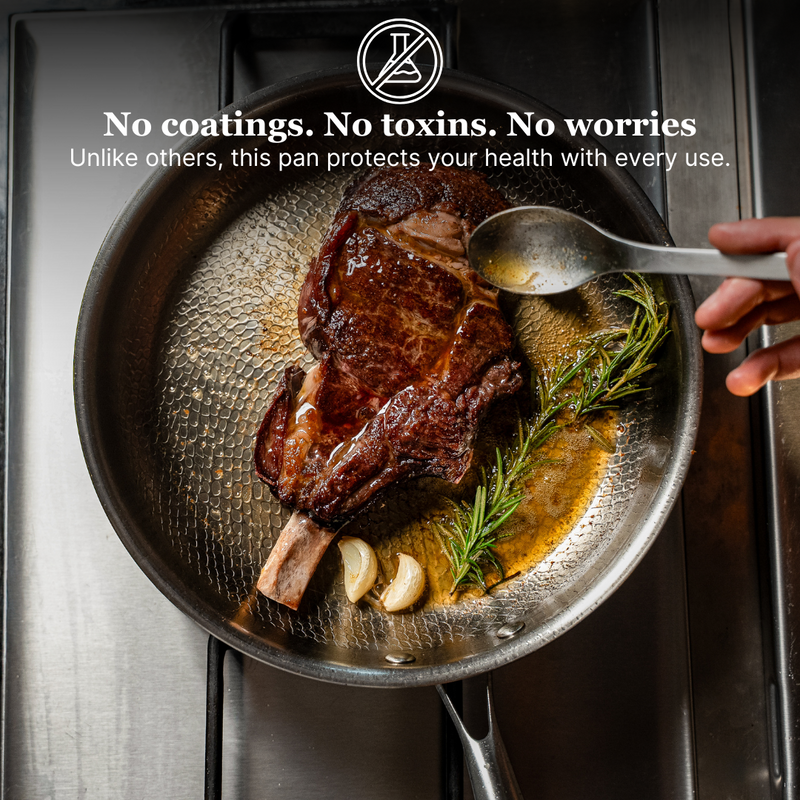
Traditional non-stick cookware can be convenient, but it is often viewed with caution by health-conscious cooks. Concerns regarding PTFE and other "forever chemicals" (PFAS) in coatings – which can degrade at high temperatures or leach into food if scratched – have led many to seek more modern, non-toxic alternatives. Titanium cookware, for instance, provides a stable, long-lasting surface that doesn't rely on these chemical layers. In general, cookware that combines a non-reactive cooking surface with durability and minimal maintenance tends to be the most practical and sustainable choice for health-focused kitchens.
Which Cookware Material Is Best for Everyday Use?
For everyday cooking, versatility and ease of use tend to matter more than any single performance feature. In most households, materials that balance durability, manageable maintenance, and consistent results are the most practical.
- Titanium cookware is often chosen for its exceptional durability and low-maintenance surface, especially in kitchens where easy cleaning and non-toxic, healthy materials are a priority. This becomes more relevant when considering long-term everyday use, where durability and ease of maintenance tend to have a bigger impact over time.
- Stainless steel remains a popular choice due to its versatility and ability to handle various techniques, though it requires practice to master temperature control and prevent sticking.
- Aluminum (or aluminum-core cookware) can be useful for quick, responsive cooking, particularly for simple meals, but it’s reactive if untreated, and it’s less durable.
Heavier or maintenance-intensive materials, such as cast iron or copper, may still be good for everyday use, but they are typically used more selectively rather than as all-purpose, everyday cookware.
The Verdict: Selecting the Best Metal for Cookware Based on Your Needs
The answer to which is the best metal for cookware is simple – it’s one that matches the way you actually cook. If you are a professional chef who demands extreme precision, copper may be your best ally. If you enjoy the ritual of maintaining your tools and want something that lasts for a long time, cast iron is a classic choice. For the modern cook who prioritizes health, durability, and convenience, titanium is increasingly becoming the preferred choice.
By combining the non-reactive, safe properties of titanium with the thermal efficiency of an aluminum core, you no longer have to choose between health and performance. Investing in high-quality, multi-layered titanium cookware means choosing a tool that is as easy to clean as a non-stick pan, as durable as steel, and offers the peace of mind that comes with using a naturally stable, non-toxic material.
Ultimately, your choice should make your time in the kitchen more enjoyable and your meals better. Choose the metal that fits your lifestyle, and your cookware will serve you well for years to come.