




Not all non-stick cookware is designed to handle metal utensils. While traditional non-stick pans offer easy food release (particularly when new), their coated surfaces can be sensitive to scratches and everyday wear. In most cases, using metal utensils on non-stick cookware is not recommended. However, some materials and modern constructions are more resistant and can handle metal utensils better over time.
Choosing the best non-stick cookware depends on the way you cook, how often you use it, and how much maintenance you’re willing to handle. This guide compares the most common options to help you understand which types of non-stick cookware are better suited for use with metal utensils.
Can You Use Metal Utensils on Non-Stick Cookware?
The short answer is: it depends on the coating. Most traditional non-stick pans use a PTFE coating that is relatively soft. When a metal fork or spatula scrapes across this surface, it can create scratches or abrasions. Over time, scratched coatings cause sticking – and they can also flake into your food, raising concerns about potential health risks associated with damaged non-stick coatings.
That said, non-stick metal utensil safe cookware exists. These pans do not rely on synthetic coatings, or are built with more durable materials that tend to handle metal utensils more reliably in everyday cooking. While no pan is 100% scratch-proof under extreme use, the modern constructions and scratch-resistant materials allow for everyday use of metal utensils without compromising the pan’s safety or performance.
| Material | Metal Utensils Safety | Surface Type | Durability | Best for |
|---|---|---|---|---|
| Non-stick (PTFE) | Low | Coated | Low | Light, low-heat cooking & occasional use |
| Titanium | High | Solid surface | Very high | Healthy, long-term, and worry-free everyday cooking |
| Stainless Steel | High | Solid surface | High | Professional searing & technique-heavy cooking |
| Cast Iron | High | Seasoned | Very high | High-heat cooking & heat retention |
| Ceramic | Low to moderate | Coated | Low to medium | Light cooking & aesthetic-focused kitchens |
Best Non-Stick Cookware Materials for Metal Utensils Compared
Traditional Non-Stick
Metal Utensil Safe: No
Coated non-stick pans are generally the most sensitive type of cookware to metal utensils. While they offer convenient food release and are easy to maintain, their performance depends on a thin surface layer that can scratch over time. Even occasional contact with metal tools may gradually wear down the coating, especially with frequent use, higher heat, or more pressure during cooking.
Because of this and the fact that these surfaces can’t be repaired, their lifespan is typically shorter compared to more durable materials. Although many non-stick pans are initially budget-friendly, repeated replacement can increase long-term cost.
Best for:
Light, occasional use and low-heat cooking, provided you are willing to use only silicone or wooden utensils to protect the delicate surface.
Titanium
Metal Utensil Safe: Yes
Titanium cookware is much more resistant to scratching than traditional non-stick surfaces. It’s a highly resilient, extremely strong, and durable material that can withstand regular metal utensil use. Unlike coated pans, it doesn’t rely on a fragile layer to achieve food release. Instead, the cooking surface itself is solid, non-reactive, easy to maintain, and designed to last for decades, even with regular use.
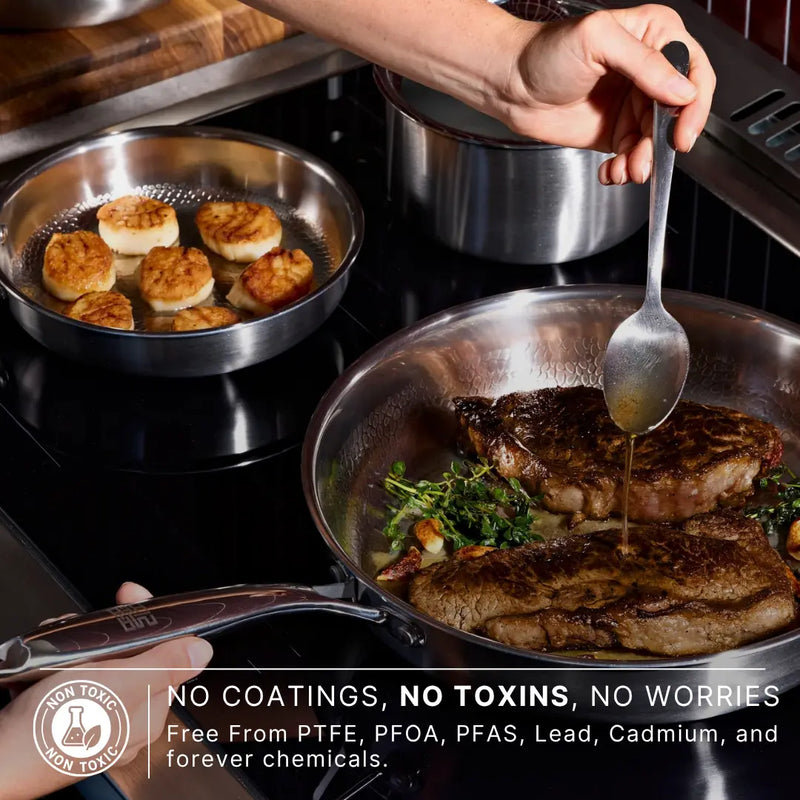
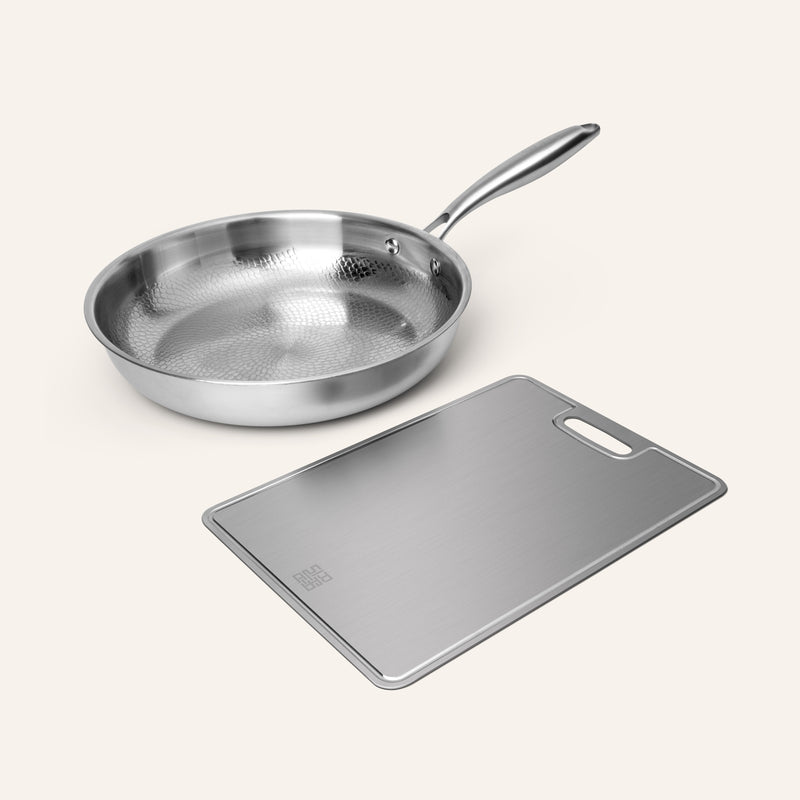
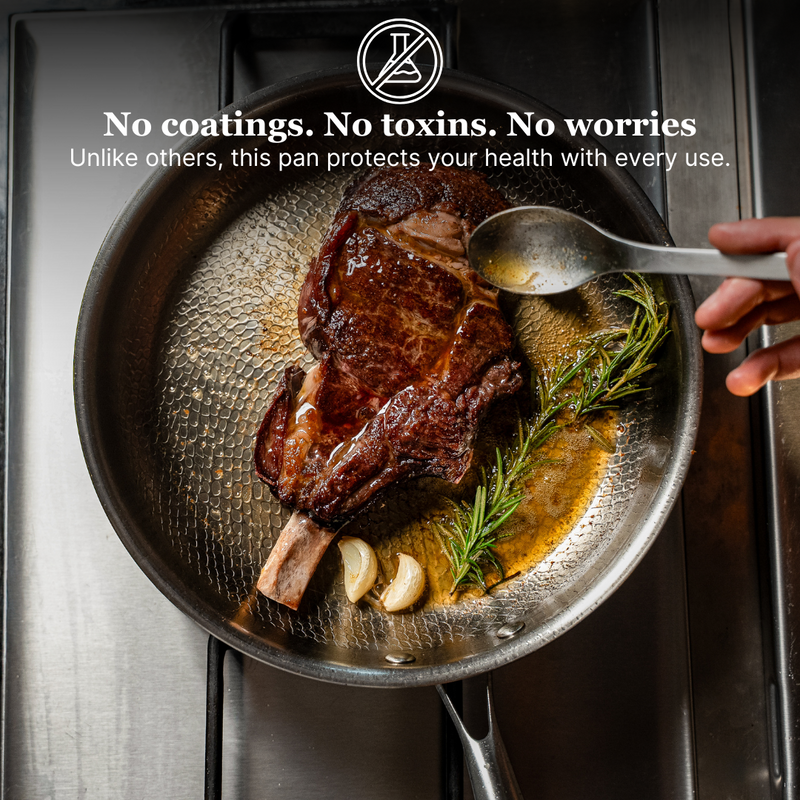
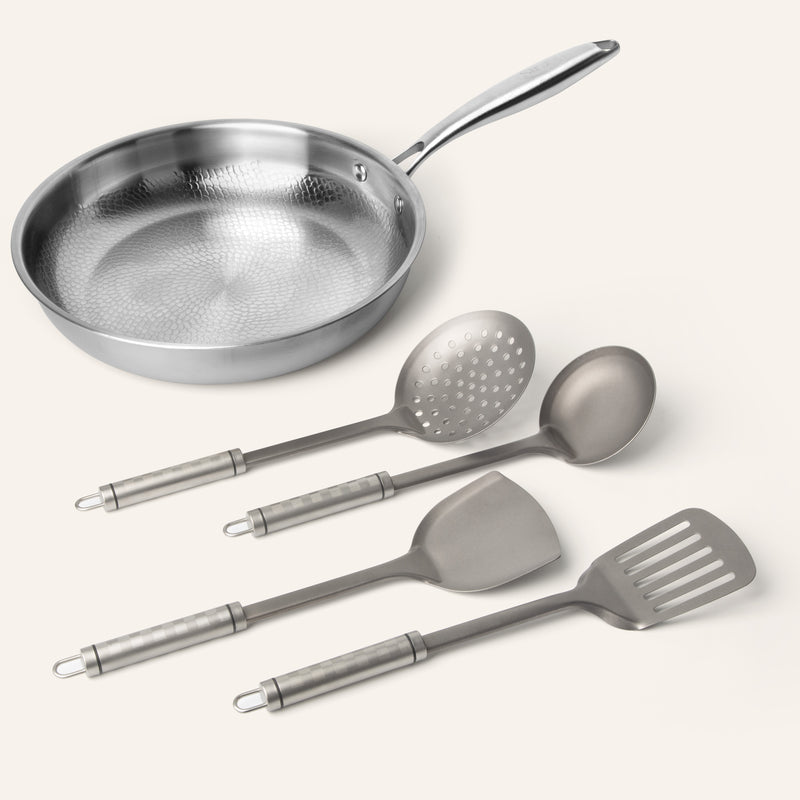
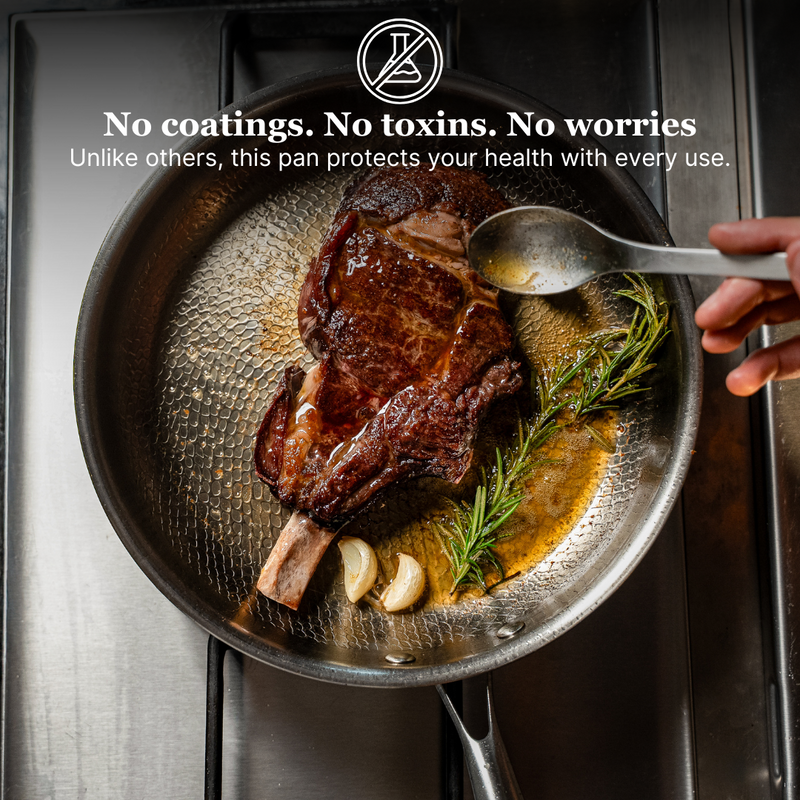
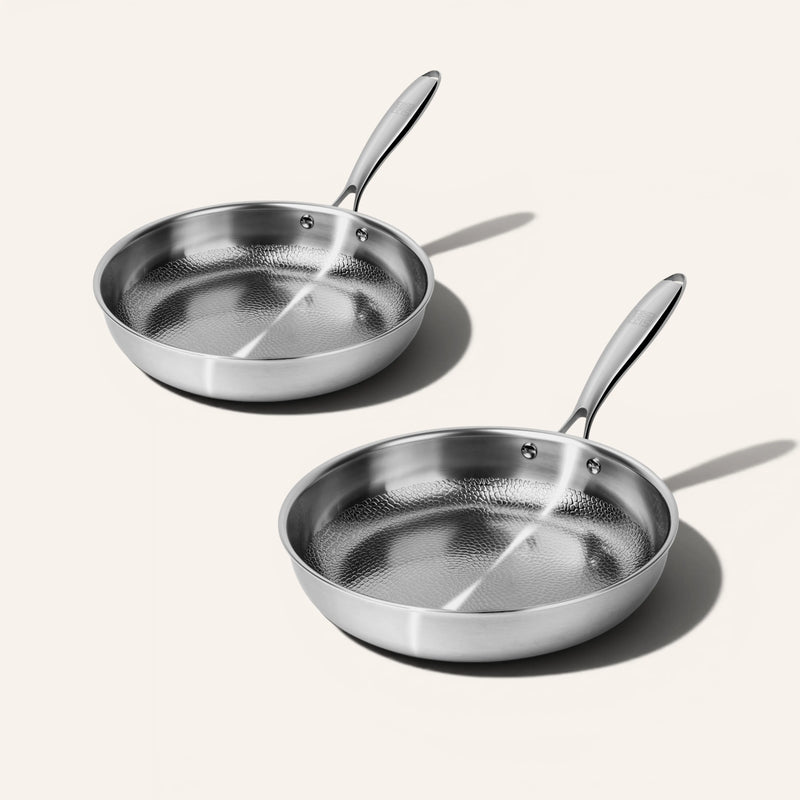
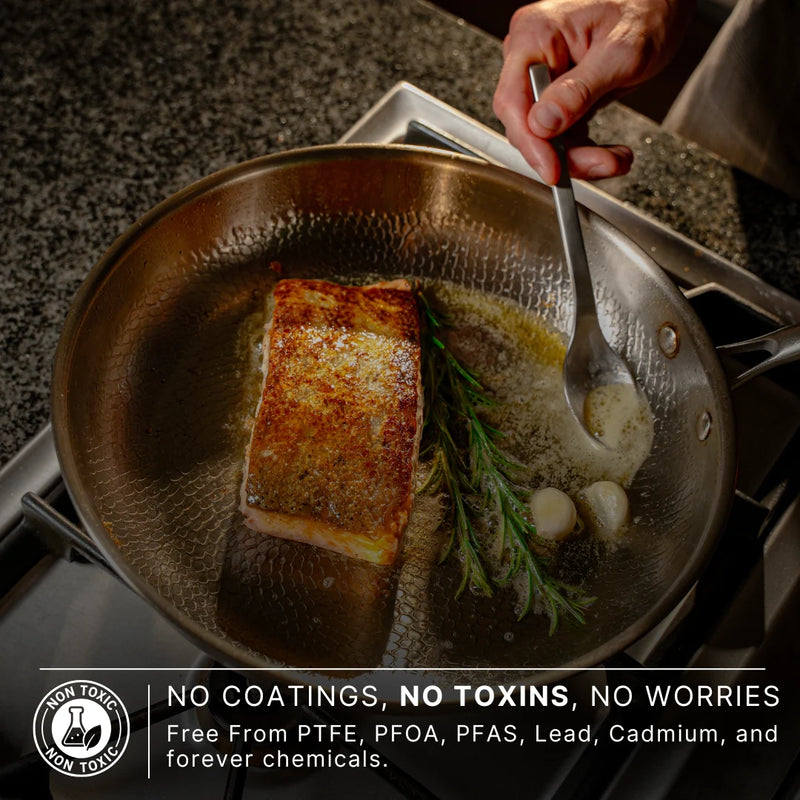
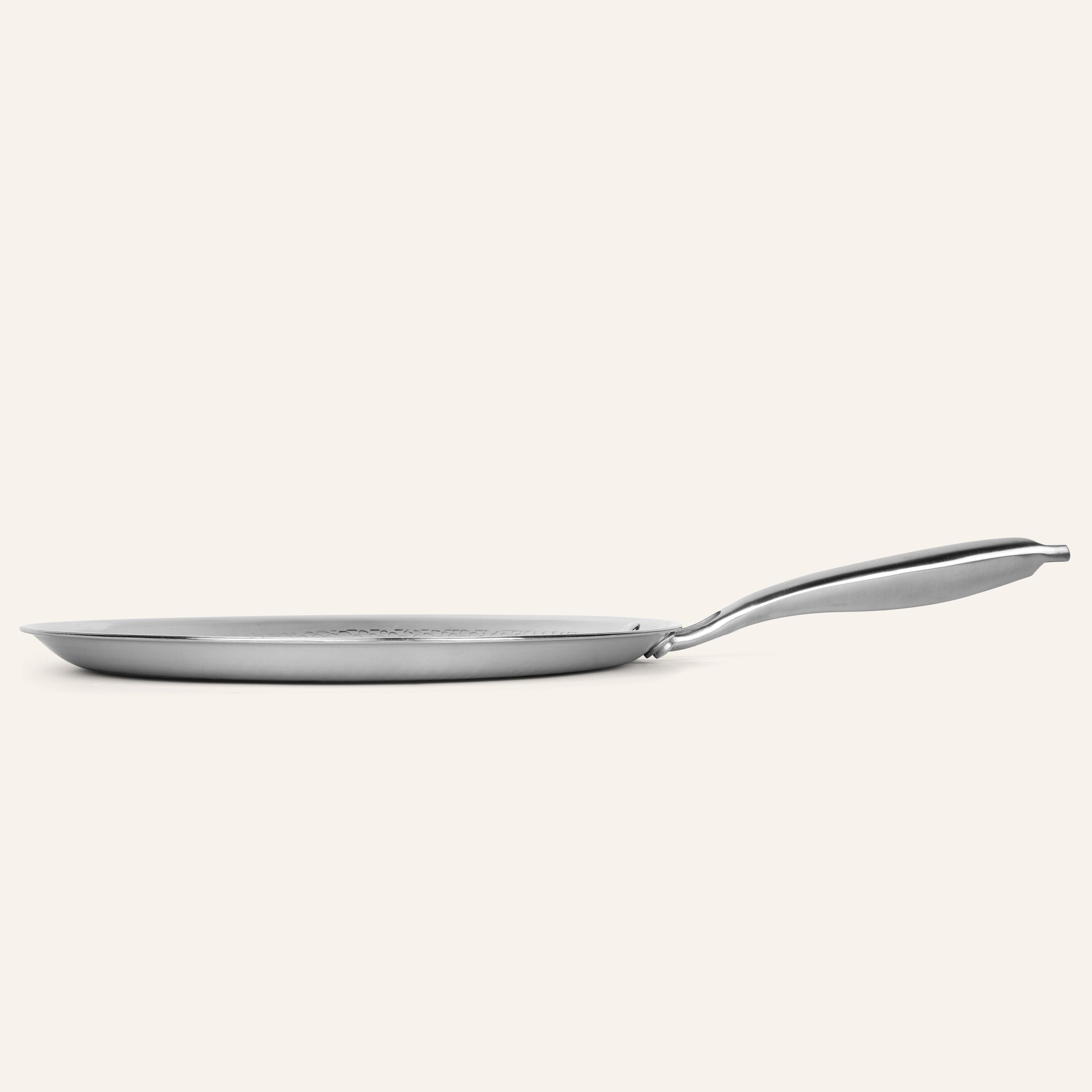
Hammered titanium surfaces, like the one Siraat’s Titanium Hammered Pan Pro has, also create a virtually non-stick surface, helping food release more easily without the need for synthetic coatings (PFAS/PTFE). This type of surface is also compatible with a wide range of tools, including titanium utensils, which are often chosen for their durability and non-reactive properties.
In many modern designs, titanium cookware is built using a multi-layer construction, where a durable titanium surface is combined with a conductive core. This allows the cookware to maintain consistent performance while offering a surface that is much less prone to wear over time.
Best for:
Worry-free everyday cooking, health-conscious households, and anyone looking for a long-term investment that doesn't require specialized "soft" tools.

Stainless Steel
Metal Utensil Safe: Yes
Stainless steel is inherently durable and doesn’t contain any coatings that could be scratched off. It can handle metal utensils without significant surface damage. Stainless steel pans are often used for high-heat cooking and can be paired with many materials of metal tools.
However, stainless steel is not non-stick by nature. Food can stick to the surface, especially if heat and oil are not managed properly. This means it may require more attention during cooking, a learned technique to achieve consistent results, and more intensive maintenance (such as soaking and scrubbing) to remove stubborn residue.
In many cases, stainless steel cookware is also built with a multi-layer construction that includes an aluminum or copper core, helping improve heat distribution and control.
Best for:
Professional searing and users comfortable with more hands-on, technique-heavy cooking.
Cast Iron
Metal Utensil Safe: Yes
Cast iron cookware is built for heavy-duty use and can easily handle metal utensils without structural damage. However, its "non-stick" performance depends on a seasoned layer (polymerized oil), which acts as a natural barrier.
While metal tools won’t hurt the iron itself, aggressive scraping can wear down this seasoning over time. Unlike synthetic coatings, any surface wear is not permanent – the pan can always be restored through re-seasoning. Because of its significant weight and the need for ongoing upkeep, cast iron remains a more selective tool rather than a quick, low-maintenance everyday option.
Best for:
High-heat cooking, slow, heat-retentive methods, and users comfortable with seasoning and ongoing maintenance.
Ceramic
Metal Utensil Safe: With Caution
While ceramic cookware is often valued for its smooth cooking surface and ease of use (especially when new), similar to traditional non-stick, its performance depends on a surface coating rather than the base material itself. Ceramic coatings may tolerate light, occasional contact with metal utensils, but regular use can lead to gradual wear. Over time, this may reduce the non-stick performance and make the surface more prone to sticking and harder to clean.
Compared to more durable materials, ceramic cookware typically requires more careful handling to maintain its performance, particularly when it comes to utensil choice and cleaning methods.
Best for:
Low to medium heat cooking and users who are comfortable using gentler utensils and more deliberate care.

Titanium Hammered Complete Edition
The Siraat Hammered Cookware Set includes the Hammered Pan Pro, Deep Pan Pro, Wok Pan Pro, and Crepe Pan Pro. Each piece features a pure hammered titanium surface that’s naturally non-stick, PFAS-free, and built to last. Scratch-proof, dishwasher and oven safe, everything you need for any meal, in one timeless set.
Summary: Choosing Non-Stick Cookware That Handles Metal Utensils
If you want the flexibility to use a wide range of utensils in your kitchen, the construction of the cookware surface plays an important role. When choosing non-stick cookware that can handle metal utensils, it helps to look beyond traditional coated options and focus on how the surface is built.
Materials with solid, non-coated cooking surfaces, such as titanium, are generally more resistant to scratching and everyday wear. They can offer a more durable, low-maintenance experience, especially in kitchens where different utensil types are used regularly. Stainless steel and cast iron are also compatible with metal utensils, although they may require more technique or ongoing maintenance to perform consistently.
Coated cookware, including ceramic and traditional non-stick, can still be practical for certain use cases. However, regular contact with metal utensils may affect their surface over time, which can influence both performance and lifespan. Ultimately, the best choice depends on your cooking habits. If durability, flexibility, and minimal maintenance are priorities, materials that do not rely on coatings tend to offer a more consistent long-term experience.