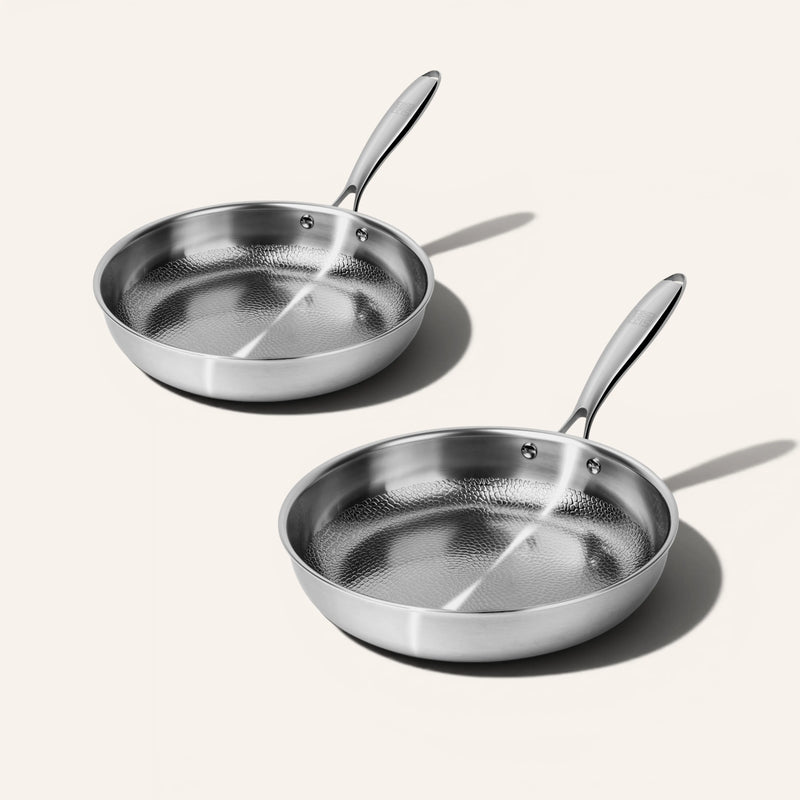


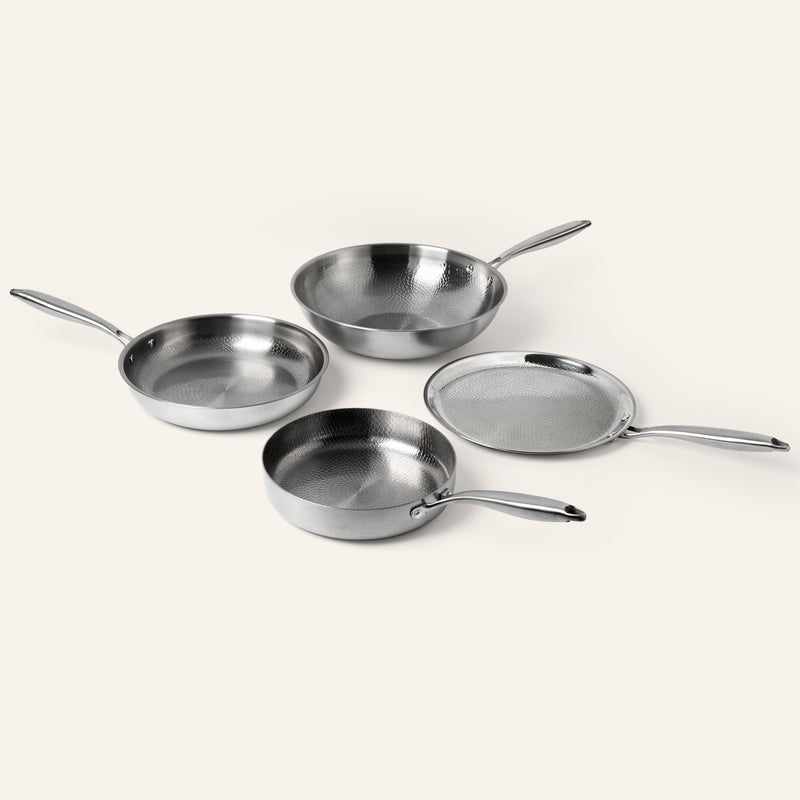
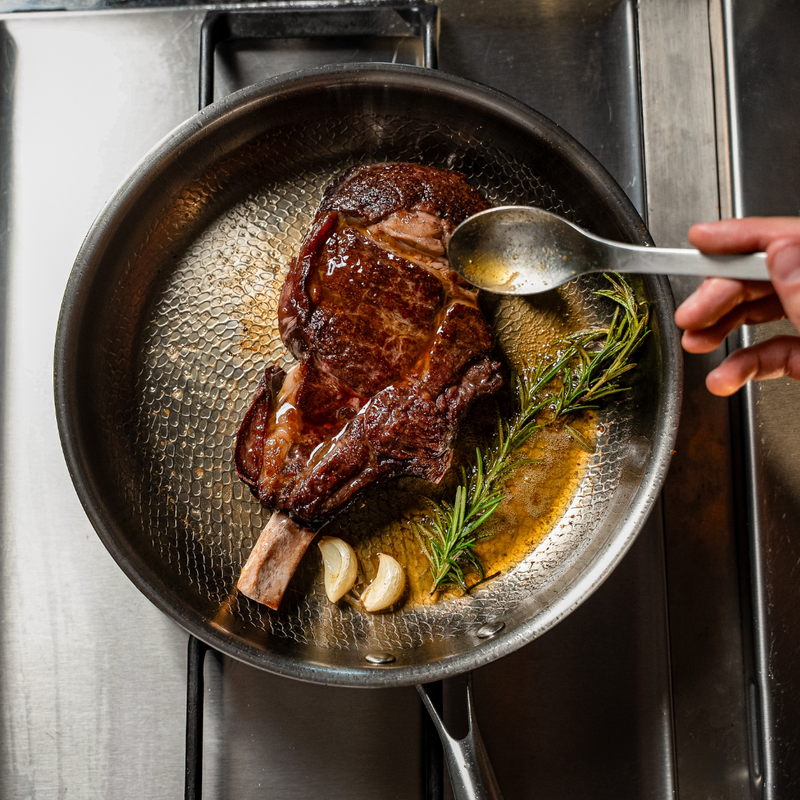
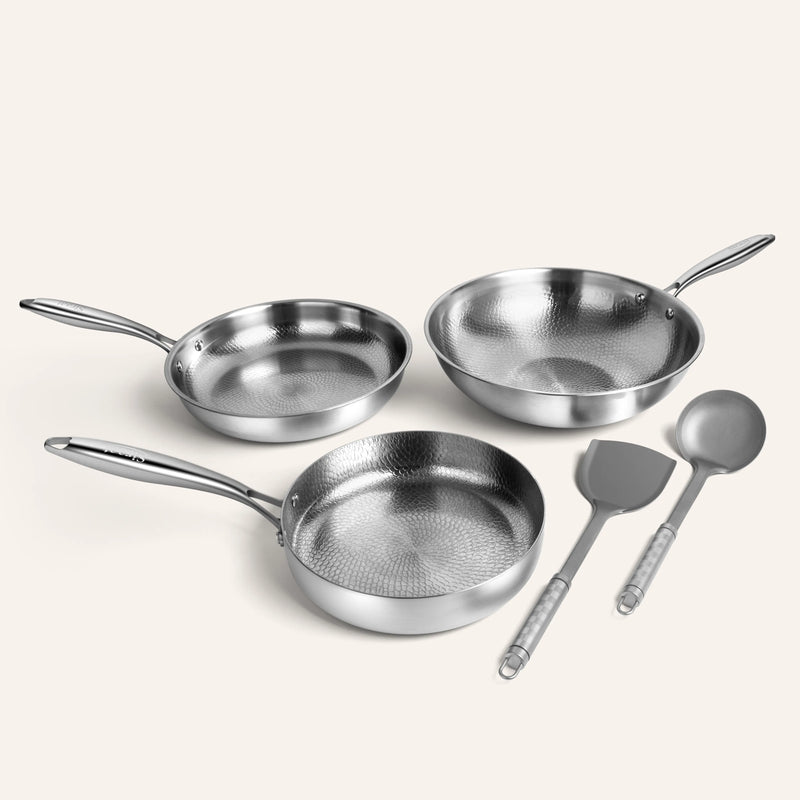


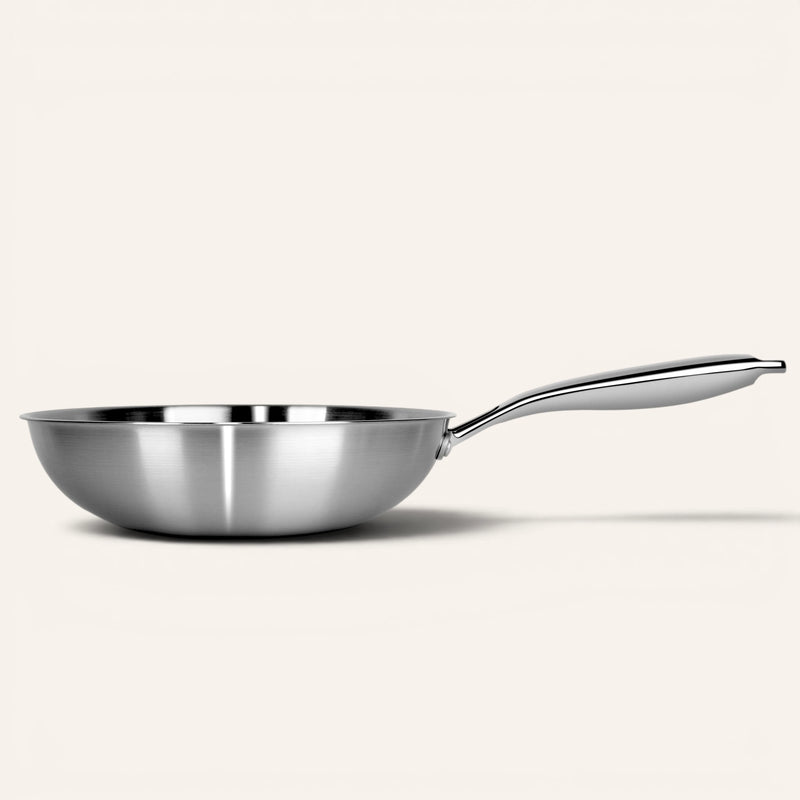


The safest cooking pans are generally made from stable, non-reactive materials and have a durable cooking surface that can withstand regular use and heat. Titanium, stainless steel, cast iron, carbon steel, and some ceramic cookware can all be good options, but they differ in reactivity, maintenance, heat performance, and durability.
If you are looking for non-toxic cooking pans, it is also important to look beyond the name of the material. The cooking surface, coatings, construction, and manufacturer's specifications can all affect how a pan performs over time. In this guide, we compare the most common cookware materials and explain what to look for when choosing a safe, durable pan for your kitchen.
What Makes a Cooking Pan “Safe” or “Non-Toxic”?
There is no single feature that makes a cooking pan “safe” or “non-toxic.” Instead, several characteristics can help you evaluate whether a pan is a good choice for everyday cooking.
Non-Reactive and Stable Cooking Surface
A non-reactive cooking surface is less likely to interact with the food being prepared. This is particularly relevant when cooking acidic or salty ingredients, which can react more readily with certain metals.
Materials such as titanium and stainless steel are valued for their non-reactive properties. The surface of the pan matters most, so it is worth checking exactly what comes into contact with your food rather than looking only at the material named in the product title.
Avoiding Unwanted Coatings & Chemicals
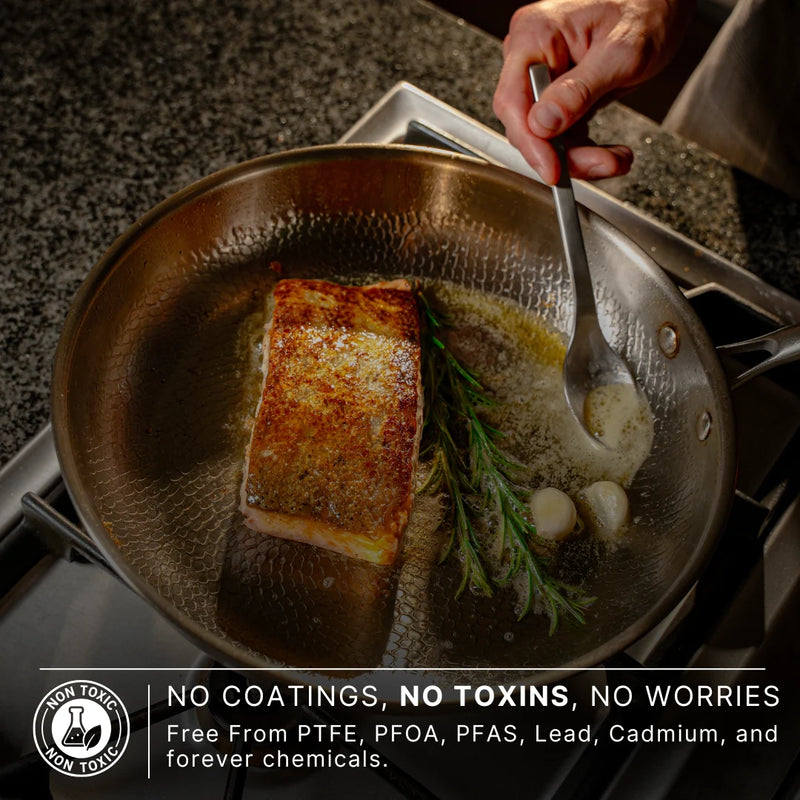
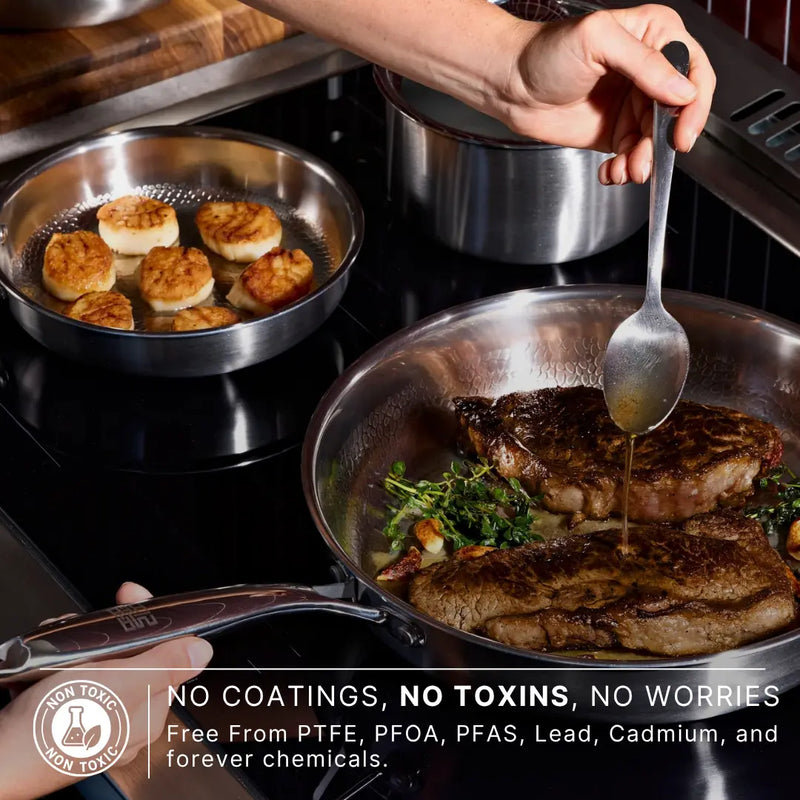
Choosing non-toxic cookware also means avoiding certain coatings or chemicals that you would rather not have in your cookware. This is where product descriptions can become confusing. Terms such as PFOA-free, PFAS-free, PTFE-free, and non-toxic do not all mean the same thing. If avoiding a particular substance is important to you, check the manufacturer's specifications and find out exactly what the cooking surface is made from.
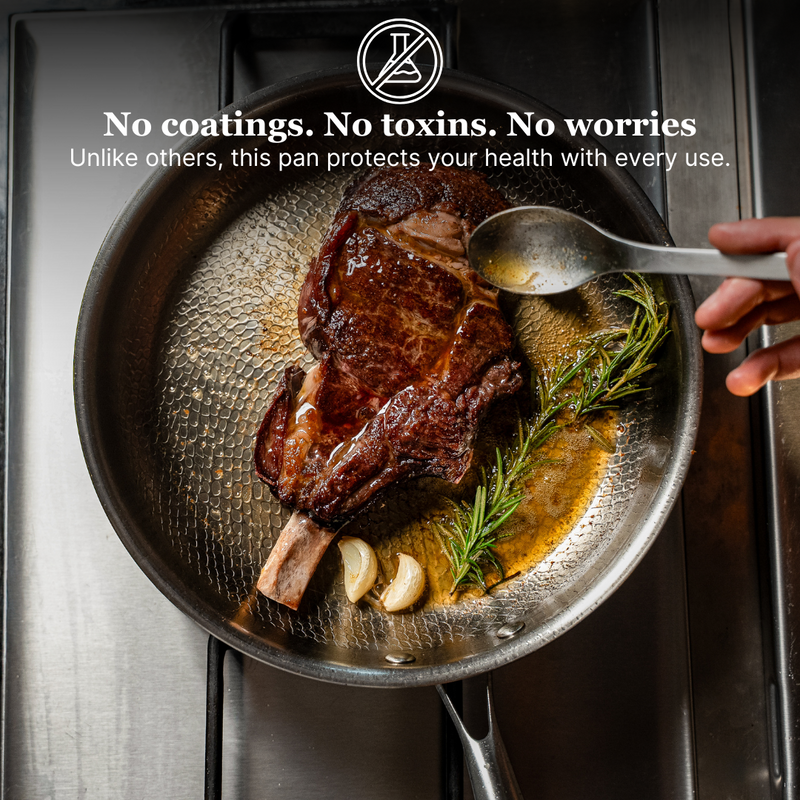
When comparing products, look for clear statements such as “PFAS-free,” “PTFE-free,” or “PFOA-free,” depending on the substances you want to avoid. Ideally, the manufacturer should also clearly state what the cooking surface is made from rather than simply describing it as “non-toxic.” An uncoated pan can also simplify this decision because there is no separate surface coating to consider.
Heat Resistant and Suitable for Your Cooking Methods
Cookware needs to withstand the temperatures involved in everyday cooking without becoming damaged or unstable. Heat resistance is particularly important for high-heat cooking methods such as searing, stir-frying, and roasting. However, heat resistance varies between materials and individual products, so always check the manufacturer's recommended temperature limits and whether the pan is suitable for your cooking method.
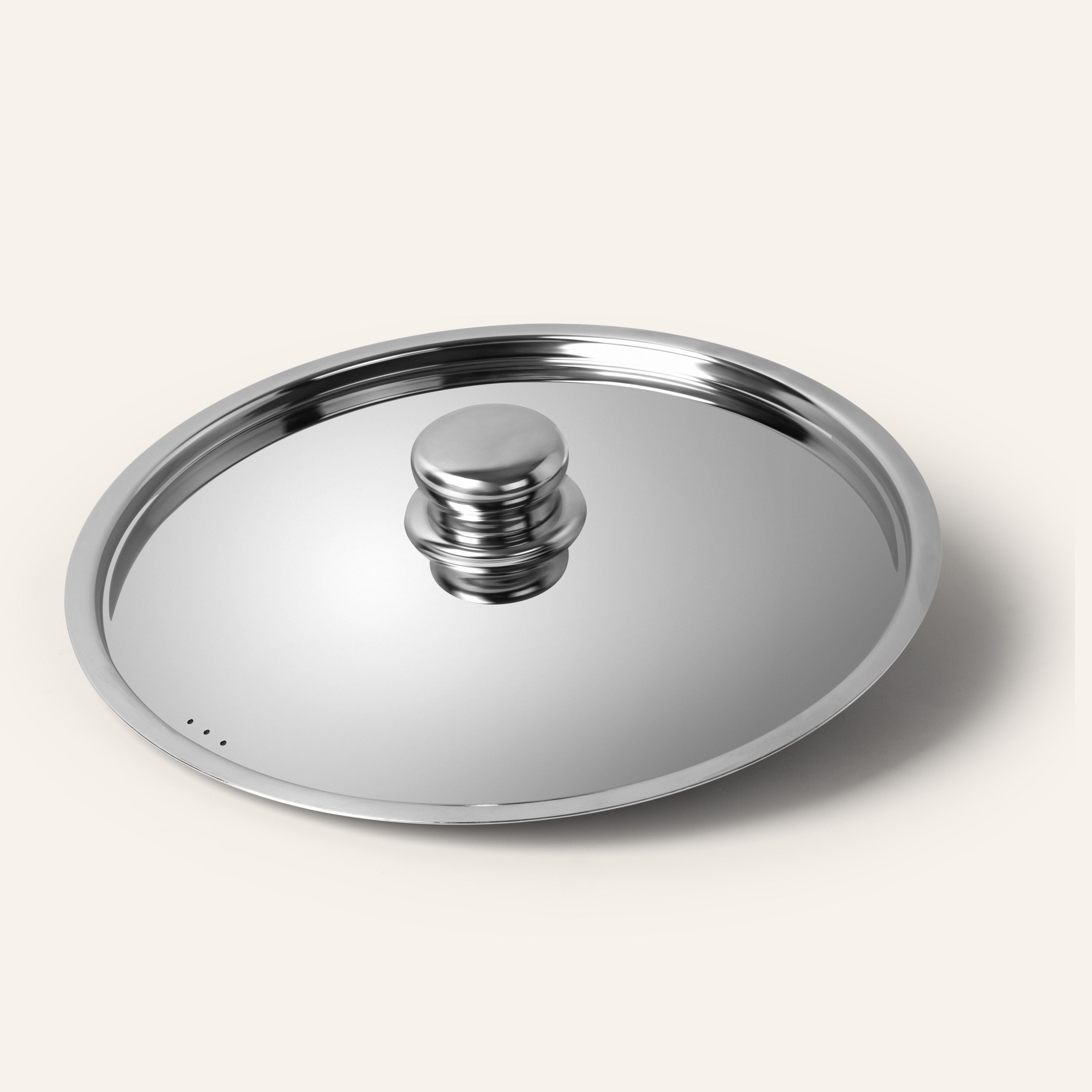
When comparing products, look for a clearly stated maximum oven or cooking temperature. If you regularly cook at high heat, choose cookware with a temperature limit that comfortably covers the temperatures you use. Also check whether the limit applies to the pan itself, the coating, the lid, or the handle, as these may have different limits.
Easy to Maintain
The safest and healthiest cookware is only a good choice if you can maintain it properly over time. Some pans need regular seasoning. Others can simply be washed after use. Dishwasher compatibility, resistance to staining and corrosion, and the need for special care can all affect how practical a pan is for everyday cooking. Proper care can also help prevent damage to the cooking surface and keep the cookware in good condition for longer.
When comparing products, check the manufacturer's care instructions, whether the pan is dishwasher-safe, and whether it requires seasoning or special cleaning products. If a material is difficult to maintain, make sure you are comfortable with the care it requires. A material that fits your cleaning and maintenance routine is more likely to remain a safe, practical, and durable choice for everyday cooking.
Durable and Scratch-Resistant
Durability is another factor worth considering when choosing cookware that is safe and healthy for long-term use. A well-made pan should be able to handle regular cooking, cleaning, and everyday handling without quickly becoming damaged or losing its intended performance.
Scratch resistance can be especially important for cookware with a coated cooking surface, as scratches and wear can affect the condition of the surface over time. However, scratch resistance varies between materials, coatings, and individual products.
When comparing products, look for information about the material's durability, scratch resistance, and how well the cooking surface holds up to everyday use. If you use metal utensils or cook frequently, choose a pan designed to withstand that type of use and check the manufacturer's care recommendations. For long-term use, look for cookware made from a durable material with a cooking surface that can withstand the way you actually cook, clean, and use your pan.
| Material | Main Benefits | Things to Consider |
|---|---|---|
| Titanium | Non-reactive, lightweight, durable, corrosion-resistant, and highly heat-resistant | Higher upfront cost; pure titanium has relatively low thermal conductivity |
| Stainless Steel | Durable, versatile, non-reactive, and suitable for high heat | Food can stick without proper temperature and cooking technique |
| Cast Iron | Excellent heat retention, highly durable, and ideal for high-heat cooking | Heavy and requires seasoning and care |
| Carbon Steel | Durable, relatively lightweight, and excellent for high-heat cooking | Requires seasoning and regular maintenance |
| Ceramic | Non-reactive and can provide easy food release | True ceramic and ceramic-coated cookware are different; quality and durability vary |
The Healthiest Cooking Pans: Materials Compared
Titanium Cookware
Titanium is a well-rounded cookware material for cooks who want a durable, non-reactive pan without adding unnecessary weight. It is highly resistant to corrosion, handles high cooking temperatures well, and can provide a long-lasting cooking surface. Because pure titanium does not require a synthetic non-stick coating, it can be an appealing choice for those looking to minimize coatings and chemicals in their cookware.
Titanium's stability is one reason it is also used in medical and dental applications. This does not mean that every titanium product is automatically suitable for every purpose, but it demonstrates the material's well-established stability in contact with the human body.
Pure titanium has relatively low thermal conductivity, so a clad construction can help improve heat distribution. High-quality titanium pans can combine a non-toxic titanium cooking surface with a more conductive core, such as aluminum, helping distribute heat more evenly while retaining the benefits of titanium where food actually touches the pan.
This combination makes titanium particularly appealing for everyday cooking. It brings together low weight, durability, corrosion resistance, a non-reactive cooking surface, and relatively low maintenance.
Stainless Steel Cookware
Stainless steel is one of the most versatile cookware materials and a common choice for everyday kitchens. It is durable, resistant to corrosion, suitable for high heat, and does not require seasoning.
Its main learning curve is cooking technique, as food can stick if the pan is not properly preheated or if too little cooking fat is used. Stainless steel can also release small amounts of nickel and chromium into food, particularly when cooking acidic foods for long periods or when using new cookware. The amount varies depending on the grade, surface, cooking conditions, and how the cookware is used. For most people, this is not considered a concern, but those who are sensitive to nickel or want to minimize metal exposure may prefer cookware made from a different material.
Cast Iron Cookware
Cast iron is valued for its excellent heat retention and durability. A well-maintained cast iron pan can last for a long time and is particularly useful for searing, frying, and other high-heat cooking.
The main trade-off is weight. Cast iron is considerably heavier than titanium and can also require more maintenance because the cooking surface is typically seasoned. Acidic foods can also interact with bare cast iron and may affect the seasoning or increase the amount of iron transferred to food, particularly when the seasoning is not well established.
Carbon Steel Cookware
Carbon steel offers many of the benefits associated with cast iron while generally being lighter and easier to handle. It heats relatively quickly, works well at high temperatures, and is popular for searing, frying, and stir-frying.
Like cast iron, carbon steel typically needs to be seasoned and maintained to protect the cooking surface. It can also be more reactive with acidic foods than stainless steel or titanium.
Ceramic Cookware
Ceramic cookware needs a little clarification because the term can refer to different types of products. True ceramic cookware is made primarily from ceramic material, while ceramic-coated cookware has a metal body covered with a ceramic-based coating. These products can behave quite differently, particularly in terms of durability and long-term food release.
Ceramic cookware can be appealing to cooks who want a non-reactive cooking surface and easy food release without a traditional PTFE-based non-stick coating. When choosing ceramic cookware, check whether you are buying solid ceramic or ceramic-coated cookware, what the cooking surface is made from, and what the manufacturer says about durability and care. Avoid assuming that every pan marketed as “ceramic” has the same construction or properties.

How to Tell If a Pan Is Truly Non-Toxic
When shopping for non-toxic cooking pans, start by checking the actual cooking surface. The word “titanium,” “ceramic,” or another material in a product name does not necessarily tell you what the food is coming into contact with.
Look for clear information about the pan's construction and whether the cooking surface is coated or uncoated. If you are specifically trying to avoid substances such as PFAS or PTFE, check whether the manufacturer clearly addresses them rather than assuming that a general “non-toxic” claim covers everything. If the manufacturer does not clearly disclose what the cooking surface is made from, it is difficult to assess the product with confidence.
It is also worth checking the manufacturer's care instructions. A pan that is designed for high heat but has specific limitations for oven use, cleaning, or utensils should be used accordingly. Proper care helps preserve the cooking surface and extend the life of the pan.
Finally, buy from manufacturers that clearly disclose the materials used in their cookware. Specific information about the cooking surface, coatings, temperature limits, and care requirements is much more useful than broad marketing claims such as “non-toxic” or “healthy.” The more transparent the product information is, the easier it is to make an informed decision.
How to Choose the Safest and Most Non-Toxic Cooking Pan for Your Kitchen
The best and safest pan for your kitchen depends on how you cook and which characteristics matter most to you. If you want a lightweight, durable pan that is resistant to corrosion and does not readily react with food, titanium is one of the strongest all-around options. Stainless steel is another excellent choice if you want versatile, widely available cookware that requires little maintenance. However, stainless steel is a bit harder to work with and requires a learning curve.
Cast iron and carbon steel are particularly well suited to high-heat cooking and searing, but both require more care and can be heavier or more reactive with acidic foods than titanium. Ceramic can provide easy food release, but it is important to distinguish true ceramic from ceramic-coated cookware and to consider the durability of the specific product.
If your priority is minimizing concerns about coatings and choosing a stable cooking surface, start by looking for cookware with clearly stated materials and construction. From there, consider weight, heat performance, maintenance, durability, and how well the pan fits your everyday cooking habits.
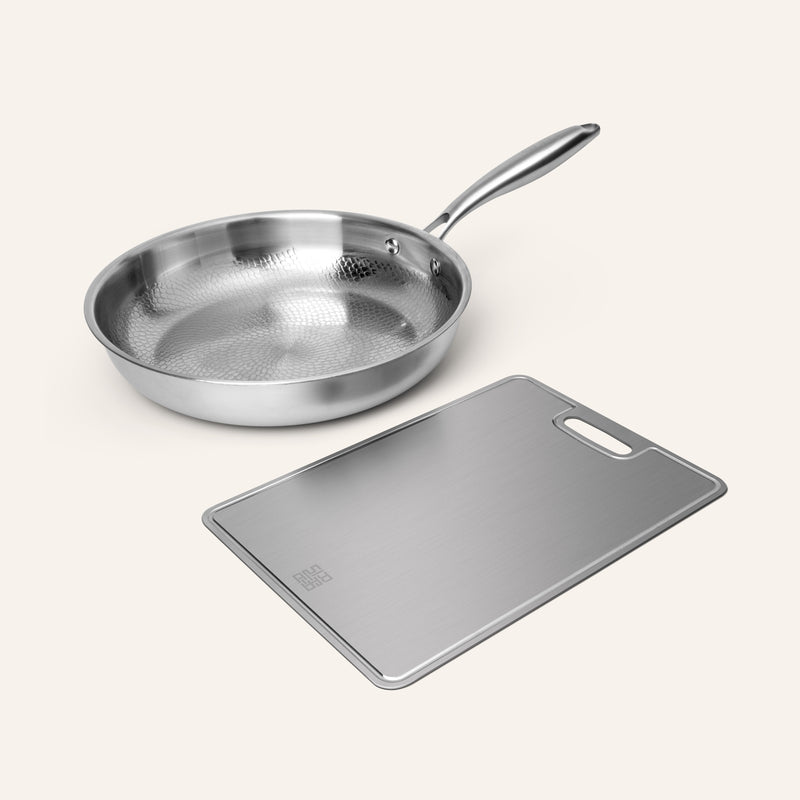
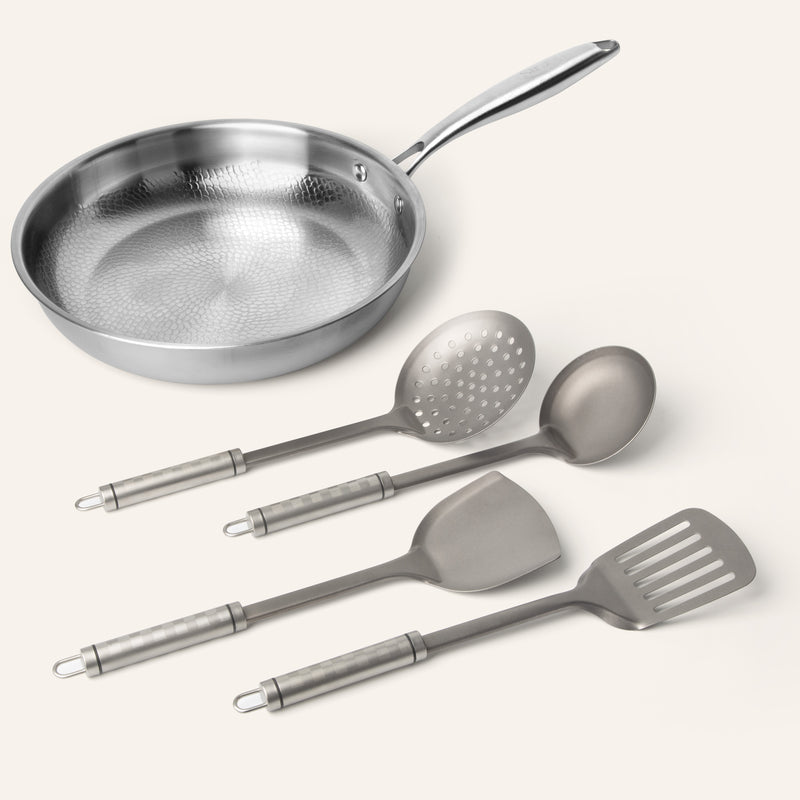
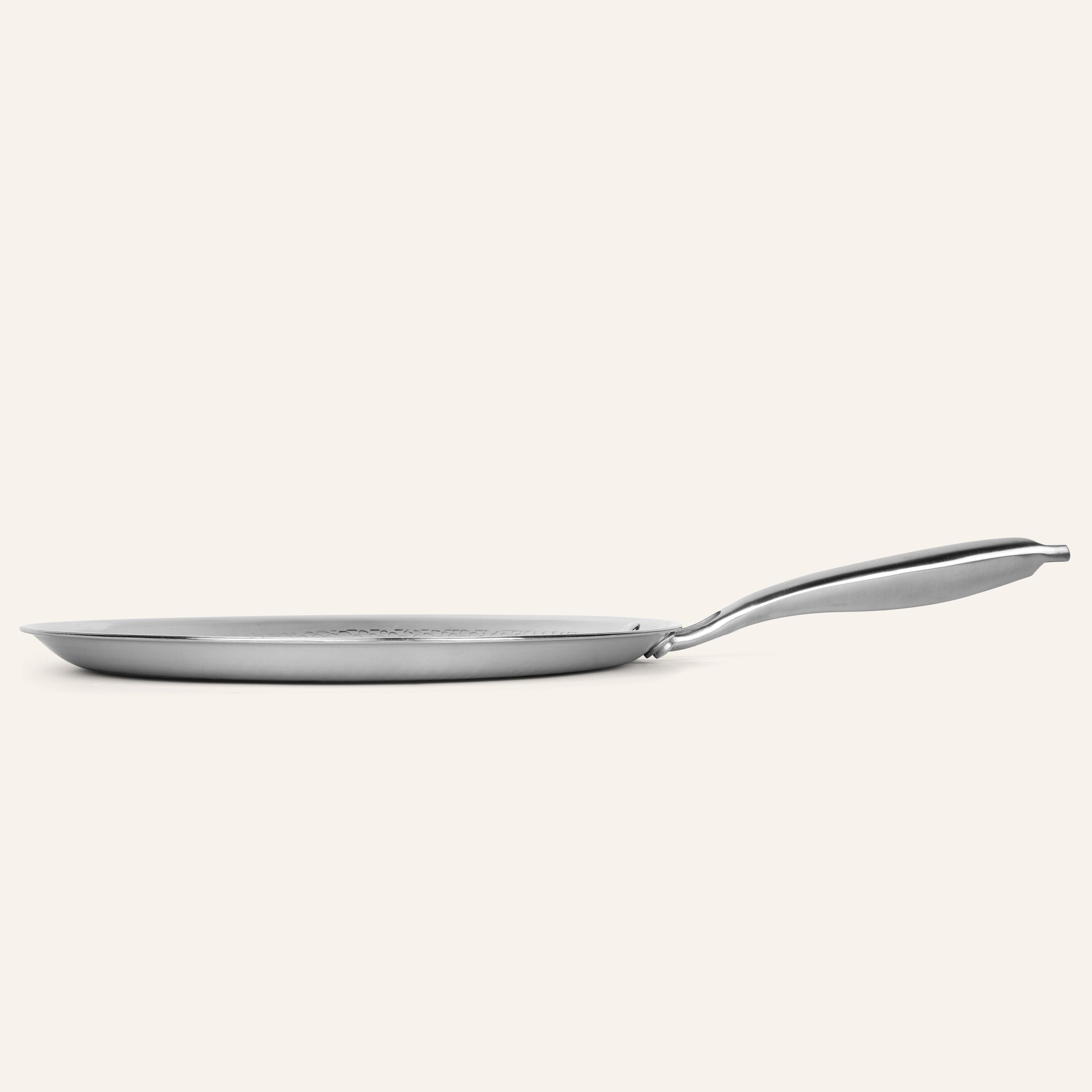
For cooks who prioritize a lightweight, durable, and low-maintenance pan, titanium is a compelling option because it combines several desirable properties in one material. Siraat's titanium cookware, for example, uses a 100% pure Grade 1 titanium cooking surface with a fully-clad construction designed to improve heat distribution while retaining the benefits of titanium where food comes into contact with the pan. This makes it a practical choice for everyday cooking without traditional seasoning or a synthetic non-stick coating.

Our durable titanium hammered complete edition
Our #1 seller — a pure titanium cooking surface, no coatings.
Final Verdict: Selecting the Safest Cooking Pan for Your Needs
There is no single cooking pan that is perfect for every kitchen, but some materials make it easier to meet the priorities of health-conscious cooks. Titanium stands out as one of the most well-rounded options, while stainless steel, cast iron, carbon steel, and ceramic can each be good choices depending on how you cook and what matters most to you.
When choosing non-toxic cookware, look beyond broad marketing claims and focus on the actual cooking surface, materials, construction, and care requirements. A well-made pan made from a stable, durable material can be a simple, long-term addition to your kitchen – and titanium is a particularly compelling choice if you want to combine durability, low maintenance, and a lightweight design.