








You can cook eggs in a titanium pan without sticking, and you don't need a coating to do it. What matters is how you prepare the pan: heat the pan first, then add oil, then have patience. Once you get that order right, eggs slide around the pan instead of gripping it.
A pan with a solid titanium cooking surface works differently from a traditional non-stick pan, so habits built on coated cookware don't always carry over. In this guide, we'll walk through how to heat the pan, how to test if it’s ready, how to cook an egg that releases easily, and how to clean the pan afterwards.
Why Do Eggs Stick to a Titanium Pan?
Eggs are one of the stickiest foods you can cook. They're rich in protein, and when proteins heat up, they bond with the metal surface of the pan. Even a pan that looks perfectly smooth has microscopic crevices, and the liquid egg white flows into them before it sets. That's why eggs tend to stick to any uncoated metal pan, titanium included, and why they release so easily from a coated one.
It's also worth knowing which type of titanium pan you have. Some use a non-stick coating reinforced with titanium, while others have a solid, uncoated titanium cooking surface. This guide is about the second type. With a coated pan, the manufacturer's heat and utensil guidelines matter more than technique.
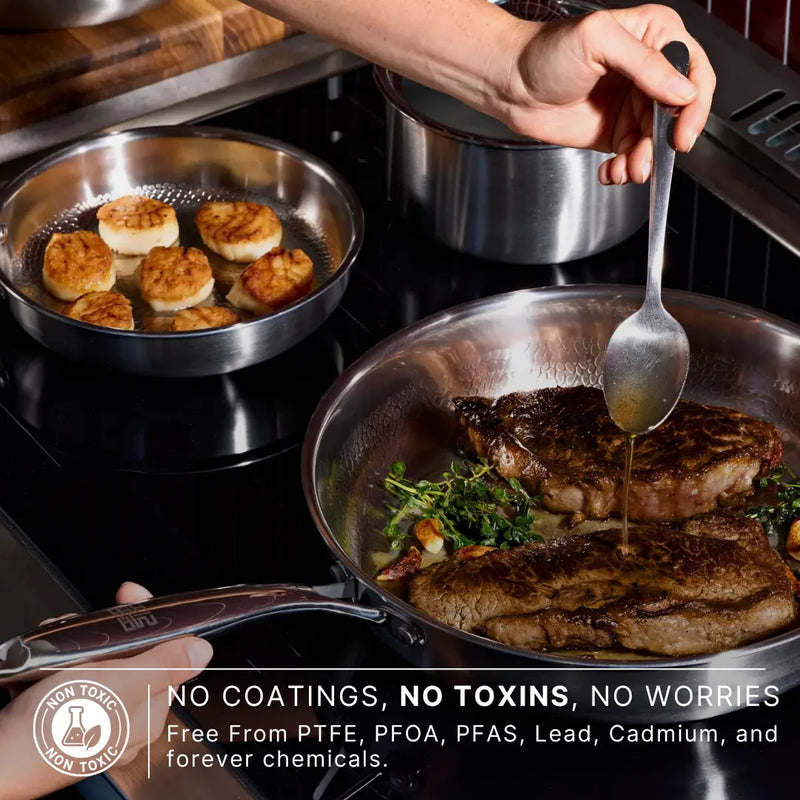
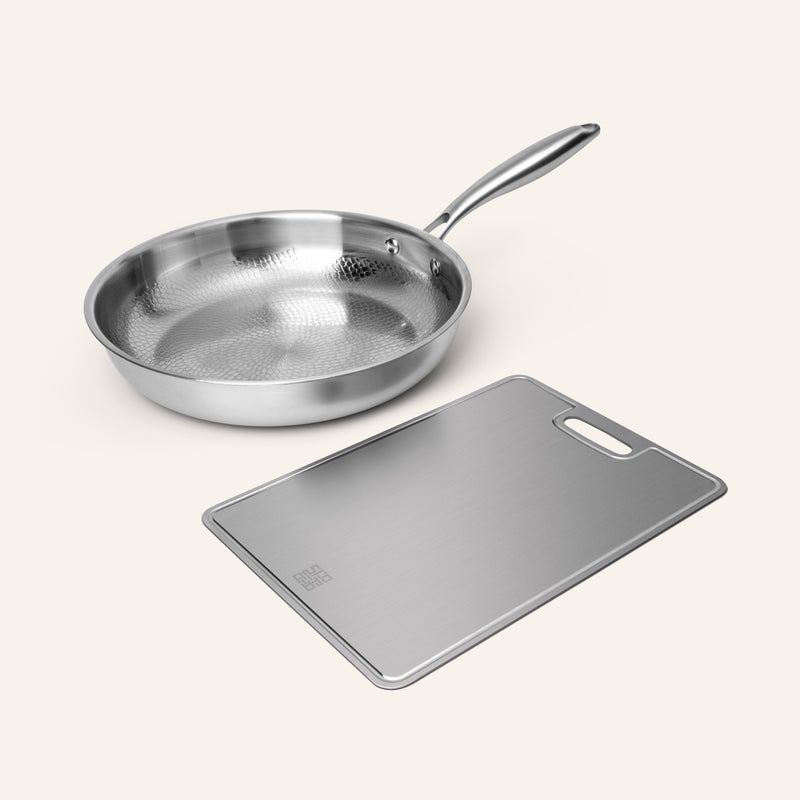
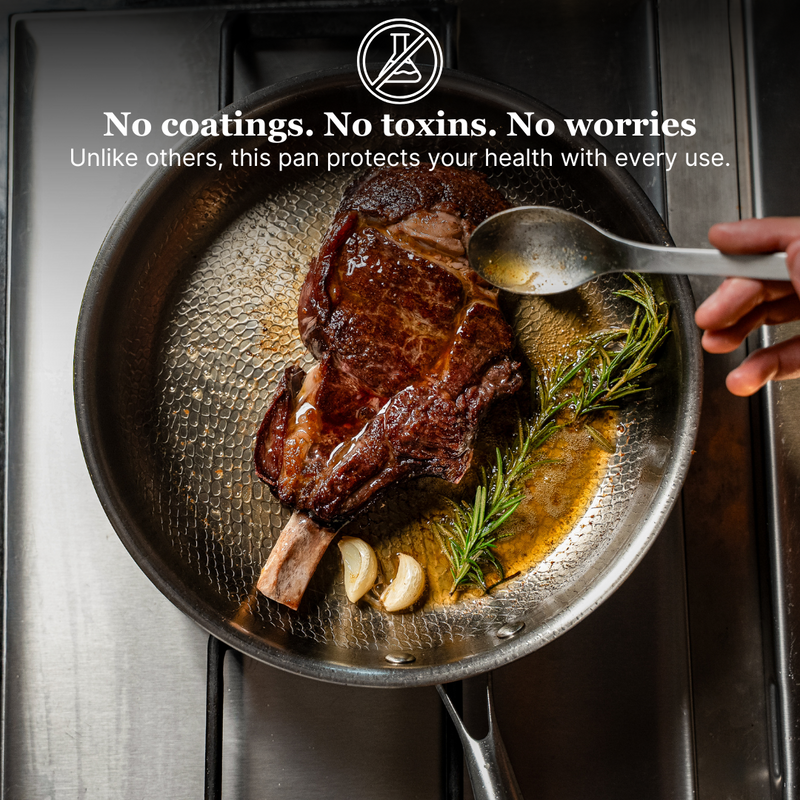
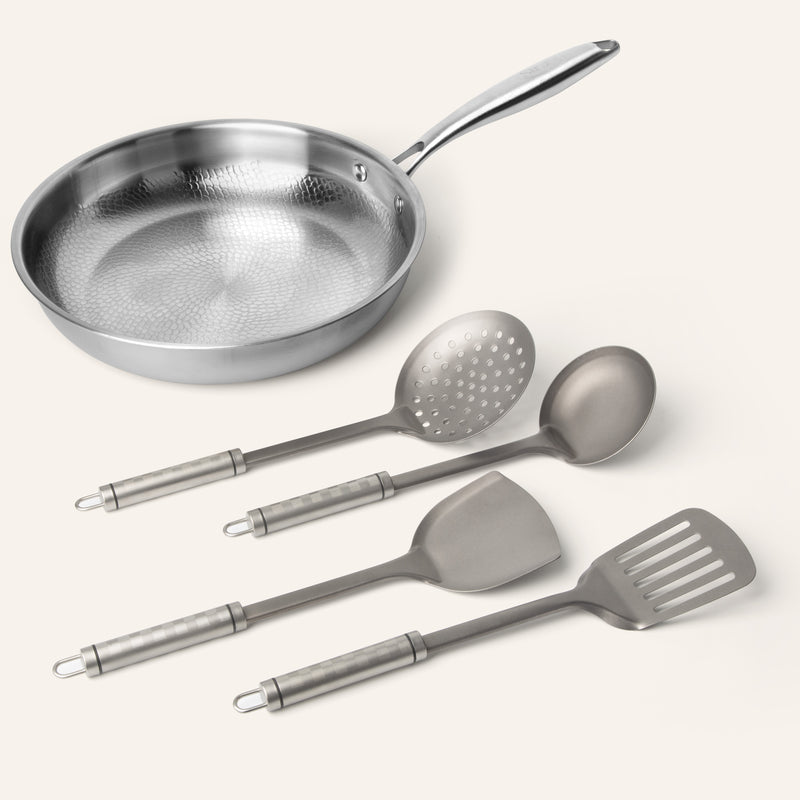
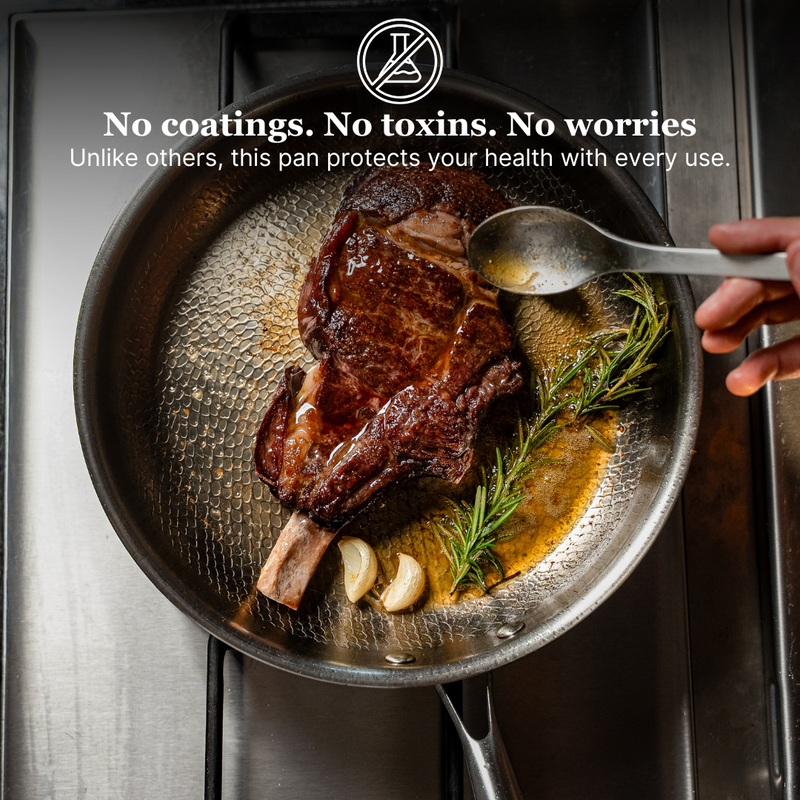
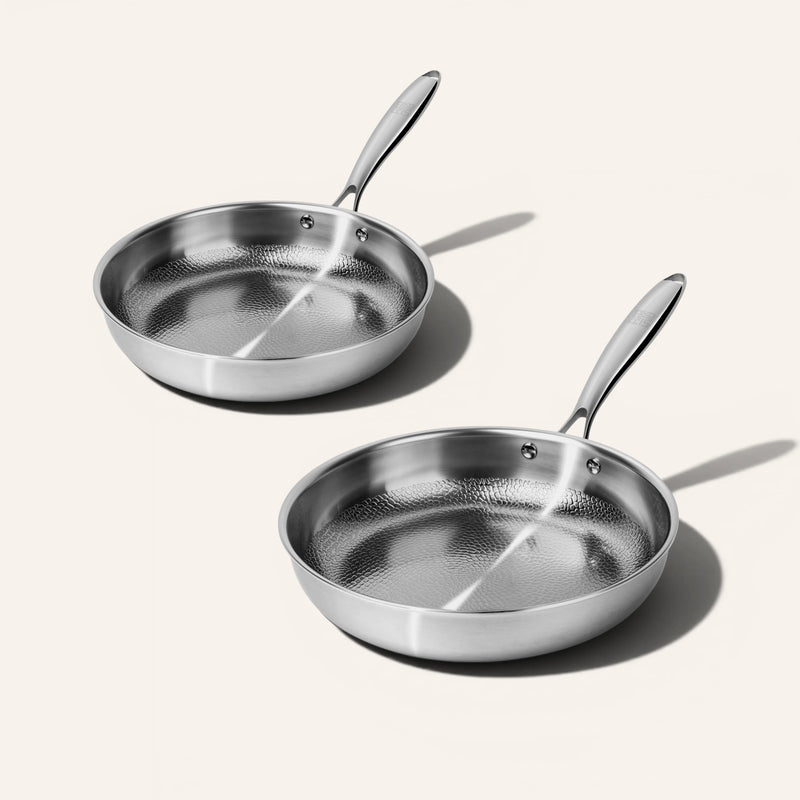
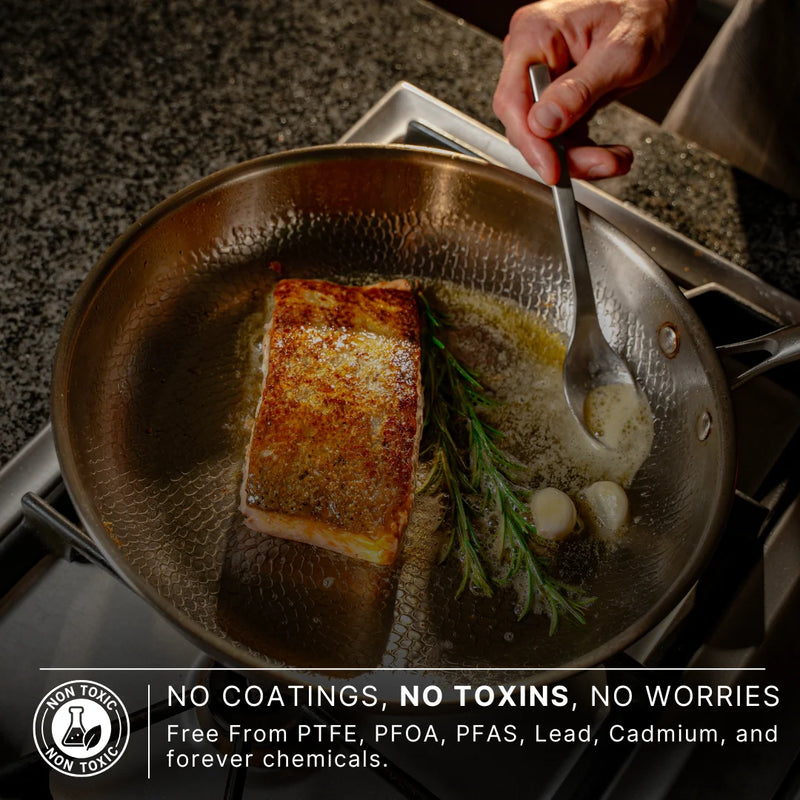
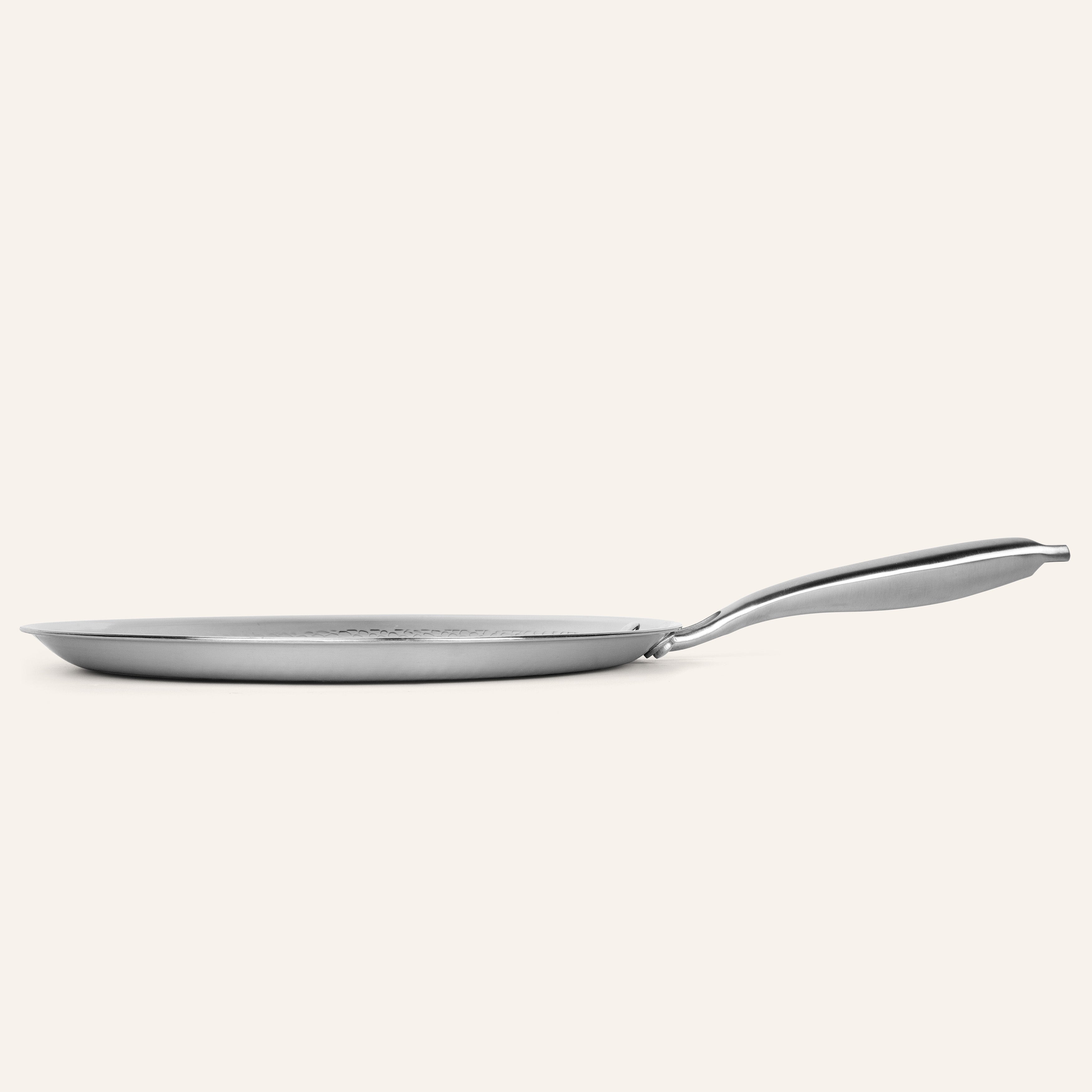
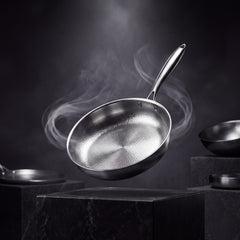
On an uncoated surface, there's no coating doing the work for you, so release depends on three things you control: the pan's temperature, a thin layer of fat, and how long you leave the egg alone. Surface design helps too. For example, the hammered pattern on the Siraat Titanium Hammered Pan Pro creates tiny peaks and valleys that reduce how much of the egg touches the metal, and because the cooking surface is solid titanium rather than a coating, there's nothing to peel or flake over time.
How to Cook Eggs in a Titanium Pan Without Sticking
Step 1: Heat the Pan on Medium
Place the pan on medium heat and give it two to three minutes. Titanium heats up quickly, so you rarely need more than medium, and high heat only makes eggs burn faster. If your pan is thin or single-layer, check the manufacturer's heat guidance, as these can heat unevenly. Don't skip the wait. A pan that isn't fully heated is the main reason food sticks.
Step 2: Test the Temperature with Water
Add a few drops of water to the pan and watch how they behave. If they evaporate immediately, the pan may not be the right temperature. If they form small beads that move across the surface, the pan is hot enough for this test. However, this is only a rough temperature indicator, not a guarantee that the pan is at the ideal temperature for eggs. Always adjust the heat based on how your pan responds.
Step 3: Add the Fat to the Hot Pan
Always add butter or oil once the pan is hot, never to a cold one. Swirl it around and wait until oil shimmers or butter melts and turns foamy. A thin, even layer is plenty, and the hammered texture on some pans helps spread it across the surface.
Step 4: Turn the Heat Down and Add the Eggs
Now lower the heat to low and crack in the egg. Eggs need gentle heat, and by this point the pan has already stored enough to do the work. You should hear a quiet sizzle. If the edges of the white turn brown and crisp straight away, the heat is usually still too high, so turn it down a little more.
Step 5: Let the Egg Release
Give the egg time to set before you touch it. Once it moves freely when you tilt the pan, it's ready to flip or slide out. If it still grips the surface, it simply isn't ready yet, so resist the urge to force it. Wooden and silicone utensils are always safe, and on a solid titanium surface, metal utensils are generally fine as well. Check your manufacturer's guidance to be sure. If your pan is oven safe, you can also start eggs on the stove and finish them in the oven.
Fried, Scrambled, and Omelet Eggs: What Changes
The preparation stays the same for every style. Only what you do after the eggs go in the pan is different.
Fried Eggs
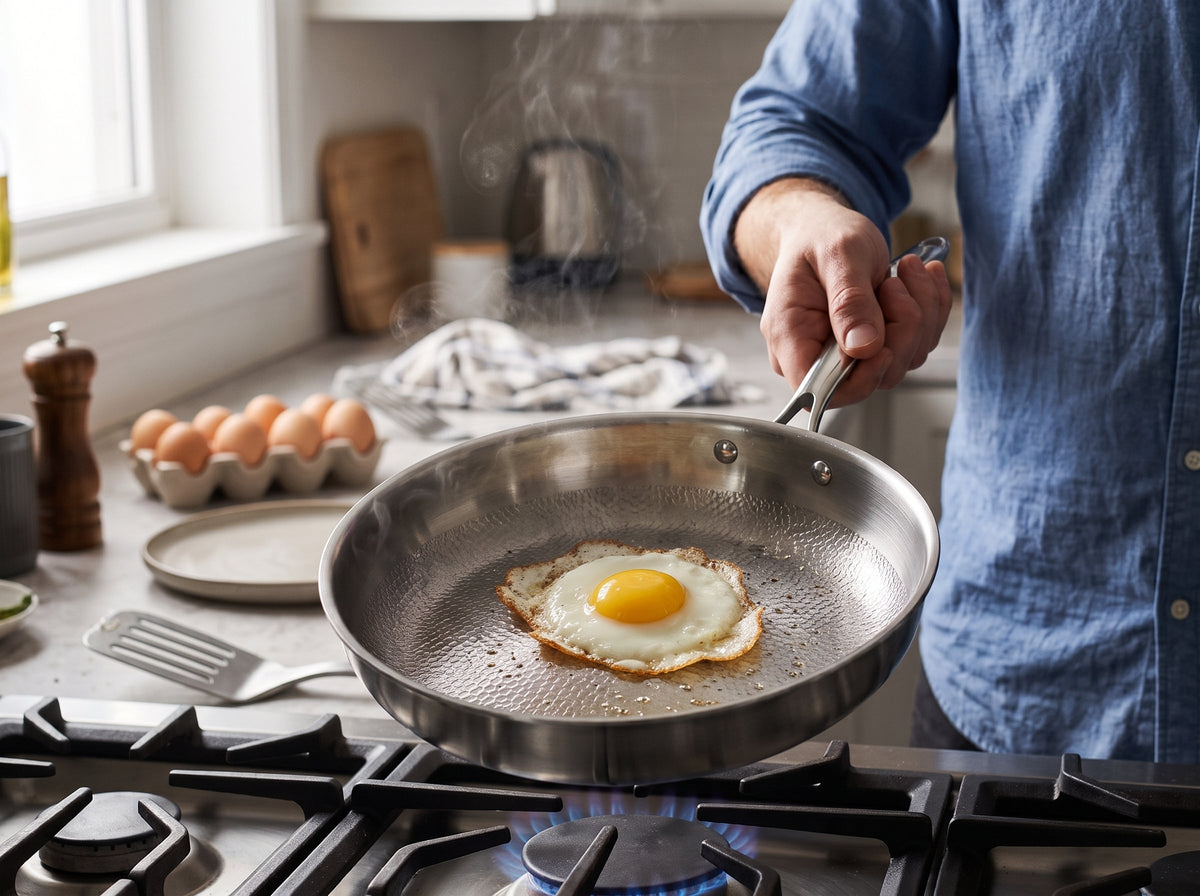
For the cleanest release, crack the egg into a small bowl first and slide it into the pan, which also keeps the yolk intact. Leave it undisturbed on low heat until the whites turn opaque and set.
- Sunny-side up: leave the egg as it is. If you want the top of the white to set faster, cover the pan with a lid for a short moment.
- Over easy or over medium: wait until the egg slides freely when you tilt the pan, then flip it once. A few seconds on the second side keeps the yolk runny, and a little longer gives you a jammy yolk.
- Crispy edges: use oil rather than butter, and raise the heat slightly after the egg has released, but stay below high.
Scrambled Eggs
Beat the eggs well, and add salt and a splash of milk or cream if you like. Pour them into the pan once the butter or oil is hot and the heat is turned down to low. Let the eggs sit for a few seconds, then gently push them from the edges toward the center with a spatula so they form soft curds.
Keep the heat low. Higher heat makes scrambled eggs dry and rubbery, and also makes them more likely to stick. Take the pan off the heat while the eggs still look slightly glossy and soft, because they'll finish cooking on the plate.
Omelets
Whisk the eggs and pour them into the pan once the butter has melted and is slightly foamy. As the edges begin to set, lift them gently or tilt the pan so the raw egg on top flows underneath. When the surface is still slightly glossy, add your filling to one half and fold the other half over it.
Cook watery fillings like mushrooms or tomatoes separately first, since their moisture can make the omelet soggy. Because beaten eggs cover a larger part of the surface than a fried egg, a properly preheated pan matters even more here.

How to Clean Your Titanium Pan After Cooking Eggs?
Cleaning matters more than it seems, because a thin layer of leftover residue is often what makes the next batch of eggs stick.
- Everyday cleaning: Let the pan cool before washing, then use dish soap and a soft sponge. Many solid titanium pans, including the Siraat Titanium Hammered Pan Pro, are dishwasher safe, although a quick hand wash keeps them looking their best. Check your pan's care instructions if you're not sure.
- When the pan starts sticking again: If eggs begin to stick even when you follow the steps above, the pan usually isn't damaged. More often it has a thin layer of cooked-on residue that's hard to see, and that's what food grabs onto. Mix a paste of gentle cleanser or baking soda and water, rub it on with a soft sponge, and rinse. The surface will feel smooth again. Stick with soft sponges rather than abrasive pads, as scratches and rough spots give food more to grip.
- Cleaning rainbow tint and cloudy spots: Titanium sometimes naturally develops a blue, gold, or rainbow sheen when heated. It's a thin oxide layer and doesn't affect how the pan cooks. Cloudy spots can also appear from hard water or the dishwasher. A soft cloth with a mix of white vinegar and water usually wipes those away. To limit tinting, stay on low to medium heat.

#1 Ranked Frying Pan
Titanium Hammered Pan Pro
The Bottom Line: Eggs Work Great in Titanium When the Pan Is Ready
A titanium pan can be a great choice for eggs, but it doesn't work the way a coated pan does. There's no synthetic layer to make the egg slide, so the pan's temperature and a thin layer of fat do that job instead. On one hand, the lack of a traditional non-stick coating appeals to cooks trying to move away from it. On the other hand, cooking on a titanium pan requires a bit of a routine.
The routine is short, though: medium heat for a few minutes, a quick water test, put oil into a hot pan, then low heat for the egg itself. After that, let the egg cook undisturbed until it releases naturally.
It takes a couple of tries to get a feel for it, especially for the heat level, which varies between pans and stoves. But once the order becomes a habit, eggs slide without tearing, cleanup is quick, and you're cooking on a surface with no coating to wear down.