



The best pan for cooking steak is one that can withstand high heat, retain it well, and distribute it evenly across the cooking surface. Materials like cast iron, titanium, carbon steel, and stainless steel all produce excellent results, but they differ in heat retention, maintenance, durability, and overall cooking experience.
A great steak starts long before it hits the pan. While the quality of the meat matters, the cookware you use plays an equally important role in developing a rich, flavorful crust and even browning. In this guide, we'll compare the best pan materials for cooking steak, explain what makes a pan suitable for high-heat searing, and help you choose the right option for you.
What Makes the Best Pan for Cooking Steak?
High Heat Tolerance
Steak is best cooked over high heat, especially if you want a crisp crust. The pan needs to reach and maintain temperatures high enough to trigger the Maillard reaction – the chemical process responsible for the rich browning and savory flavor that make a well-seared steak so appealing.
Not all cookware is designed for this kind of cooking. Some pans are best to use over moderate heat but they aren't intended for repeated high-temperature searing. A pan that can safely handle high heat gives you more flexibility, whether you're cooking on the stovetop or finishing your steak in the oven.
Heat Retention
When a cold steak hits a hot pan, the cooking surface immediately loses some of its heat. A pan with good heat retention recovers quickly and stays consistently hot throughout cooking, allowing the steak to develop an even crust instead of steaming in its own juices.
This becomes especially important when cooking thicker cuts or preparing multiple steaks, as pans with poor heat retention can struggle to maintain the temperatures needed for proper searing.
Even Heat Distribution
A quality steak pan should heat evenly across its entire cooking surface. Uneven heating creates hot spots that can burn parts of the steak while leaving other areas under-seared, making it more difficult to achieve a consistent crust.
Materials and multi-layer cookware designed for even heat distribution help ensure the steak browns uniformly from edge to edge, resulting in more predictable cooking and better overall texture.
A Safe, Non-Toxic Cooking Surface
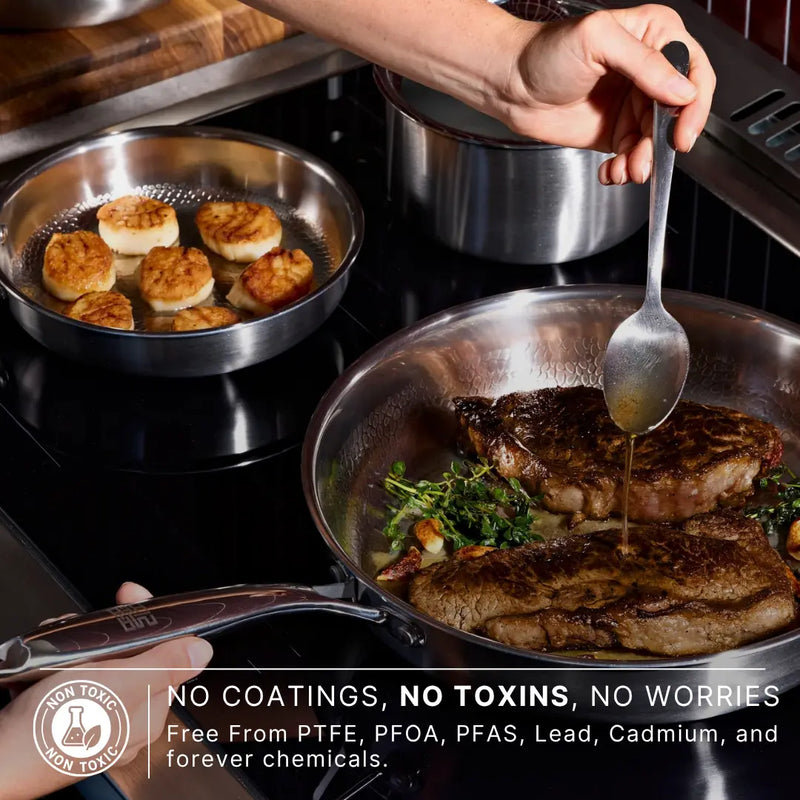
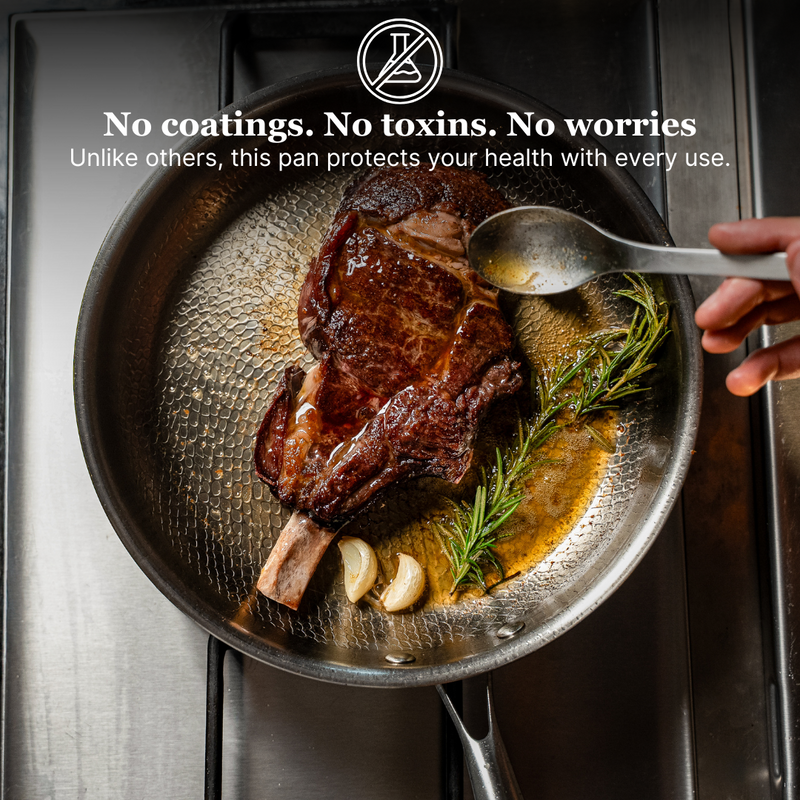
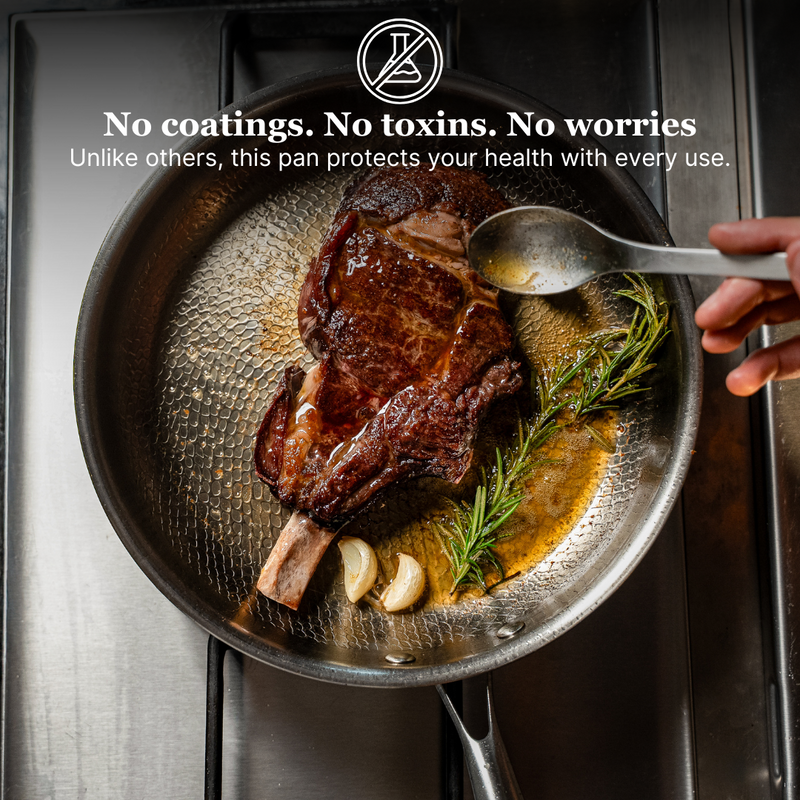
High-heat cooking also makes the cooking surface itself worth considering. Many home cooks prefer cookware made without synthetic non-stick coatings, especially for tasks like searing steak that require high temperatures.
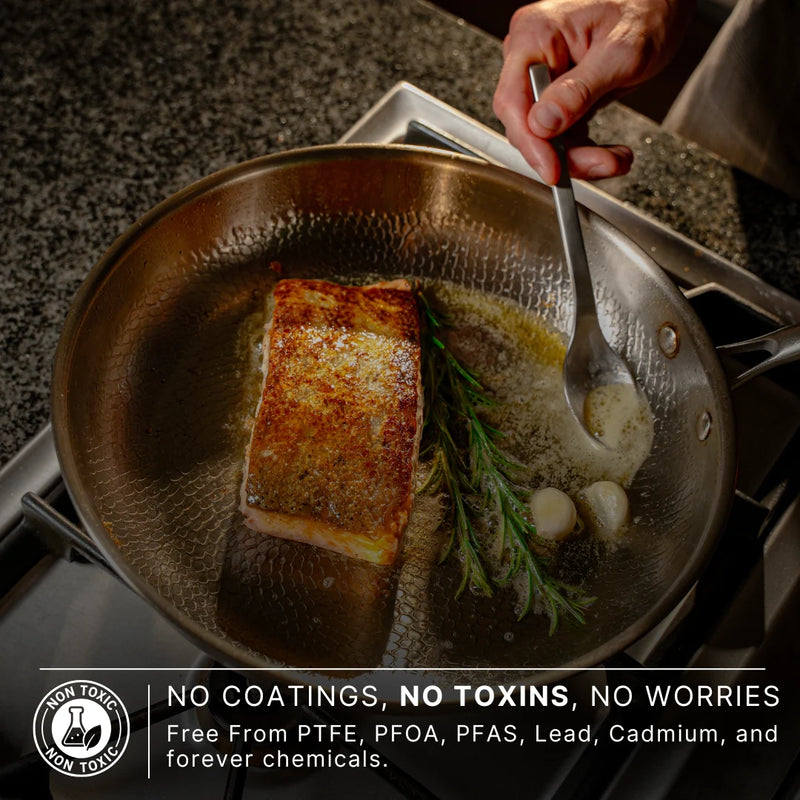
Cookware made without PFAS, PTFE, PFOA, lead, or cadmium offers an alternative for those looking to minimize exposure to these materials. Beyond safety considerations, uncoated cooking surfaces are often better suited to the intense heat needed for developing a proper steakhouse-quality sear.

Best Pan Materials for Cooking Steak Compared
Cast Iron
Cast iron has long been considered one of the best materials for cooking steak. Its exceptional heat retention allows it to stay hot even after a cold steak is added, which is why it’s great for developing a deep and even crust. It's also oven-safe and can last for decades with proper care.
Pros:
-
Outstanding heat retention
-
Excellent for high-temperature searing
-
Naturally develops a seasoned cooking surface over time
-
Extremely durable and long-lasting
Cons:
-
Heavy and quite difficult to handle
-
Requires regular seasoning and maintenance
-
Slower to heat up than other materials
-
Can react with acidic foods if seasoning is damaged
Titanium
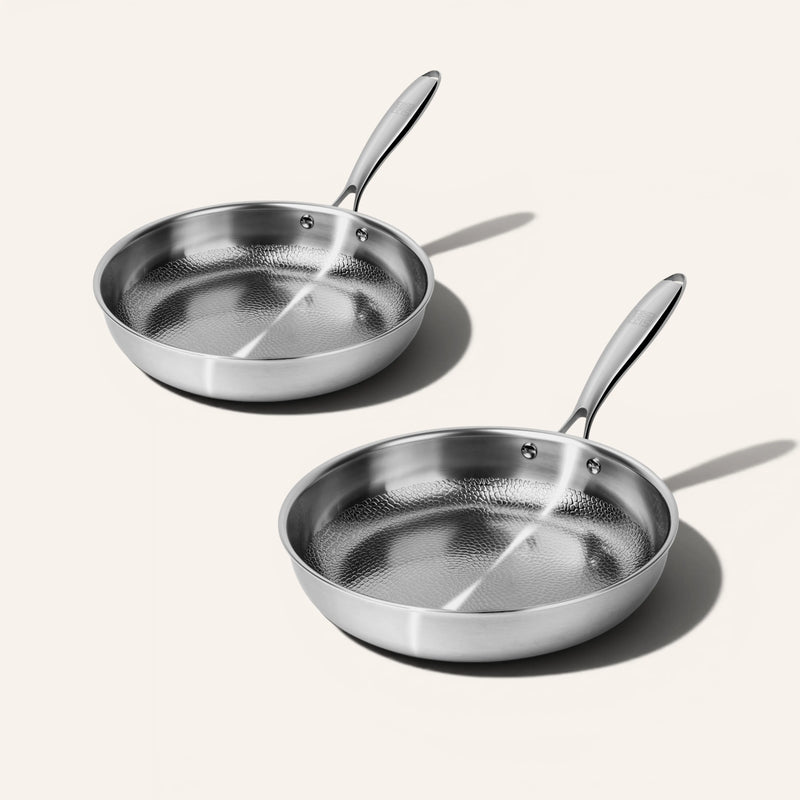
Titanium cookware can be an excellent choice for cooking steak, but its performance depends on more than just the cooking surface. High-quality, fully-clad titanium pans combine a titanium cooking surface with an aluminum core and a stainless steel exterior, allowing them to heat evenly while maintaining the durability and non-reactive properties titanium is known for. This construction offers the high-heat performance needed for searing.
Pros:
-
Excellent high-heat performance when built with a fully-clad construction
-
Naturally non-toxic
-
Aluminum core promotes fast, even heat distribution
-
Durable titanium cooking surface resists corrosion and everyday wear
-
Easier to clean than many traditional steak pans
-
Naturally non-reactive and free from synthetic non-stick coatings
-
Many models are safe for metal utensils, ovens, induction cooktops, and dishwashers
Cons:
-
Premium fully-clad titanium cookware typically costs more upfront
-
Performance varies significantly depending on the pan's construction, not just the titanium surface
Carbon Steel
Carbon steel offers many of the same cooking benefits as cast iron but in a lighter and more responsive pan. It's a favorite in many professional kitchens because it heats quickly, performs well over high heat, and develops a naturally seasoned surface with regular use.
Pros:
-
Excellent for high-heat searing
-
Lighter than cast iron
-
Heats up quickly and responds well to temperature changes
-
Develops a natural seasoning over time
Cons:
-
Requires seasoning and ongoing maintenance
-
Can rust if not dried and stored properly
-
Less forgiving for beginners
Stainless Steel
Stainless steel is a versatile choice that can produce an excellent steak when used correctly. High-quality multi-ply pans heat more evenly than single-layer stainless steel and are widely used for searing, browning, and making pan sauces. However, they require proper preheating and technique to prevent food from sticking.
Pros:
-
Excellent for searing, browning, and deglazing
-
Durable and resistant to rust and corrosion
-
High-quality multi-ply construction provides more even heating
-
Compatible with virtually all cooktops, including induction
Cons:
-
Food can stick if the pan isn't properly preheated
-
Burnt-on residue often requires soaking or scrubbing
-
Performance depends heavily on the quality of the pan's construction
-
Can develop discoloration or stains over time, especially after high-heat cooking
| Tip | Why It Matters |
| Preheat the Pan | A thoroughly heated pan creates a better sear, promotes even browning, and helps reduce sticking. |
| Pat the Steak Dry | Removing surface moisture helps the steak brown quickly instead of steaming. |
| Use a High Smoke Point Oil | Oils like avocado or grapeseed perform better at the high temperatures needed for searing. |
| Don’t Move the Steak Too Soon | Letting the steak cook undisturbed allows a flavorful crust to develop before flipping. |
| Let the Steak Rest Before Slicing | Resting the steak for 5–10 minutes helps the juices redistribute for a more tender and flavorful result. |
Tips for Cooking the Perfect Steak on the Right Pan
Even the best pan for cooking steak can't guarantee great results on its own. A few simple techniques can make the difference between a pale, unevenly cooked steak and one with a rich, flavorful crust and a juicy interior.
Preheat the Pan Properly
A hot pan is essential for achieving a good sear. Give your pan a few minutes to heat thoroughly before adding oil or the steak. Starting with a properly preheated surface helps create an even crust and reduces the chance of the meat sticking.
Pat the Steak Dry
Moisture is the enemy of browning. Before cooking, pat the steak dry with paper towels to remove excess surface moisture. A dry surface allows the steak to sear more quickly and develop a deeper, more even crust.
Use a High Smoke Point Oil
Choose an oil that can withstand high cooking temperatures, such as avocado oil, refined olive oil, grapeseed oil, or rice bran oil. If you're using a titanium pan with a natural cooking surface, adding a small amount of high smoke point oil also helps its non-stick performance.
Avoid Moving the Steak Too Soon
Once the steak is in the pan, resist the urge to move it around. Let it cook undisturbed until a crust forms naturally. When it's ready to flip, the steak will release more easily from the cooking surface.
Let the Steak Rest Before Slicing
After cooking, transfer the steak to a cutting board and let it rest for 5–10 minutes before slicing. This allows the juices to redistribute throughout the meat, helping keep every bite tender and flavorful.
Are Titanium Pans Good for Cooking Steak?
Yes, high-quality titanium pans can be an excellent choice for cooking steak, particularly when they're built with a fully-clad construction. Titanium is often associated with durability, but the pan's overall design is just as important. A fully-clad pan with an aluminum core and a titanium cooking surface combines fast, even heat distribution with the strength and corrosion resistance of titanium, making it well suited to high-heat cooking.
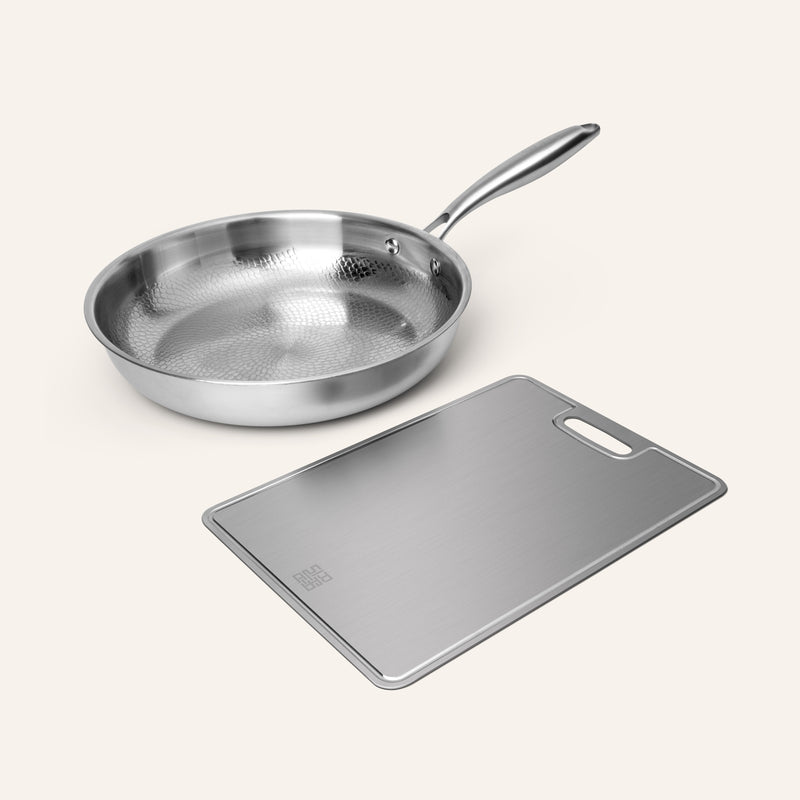
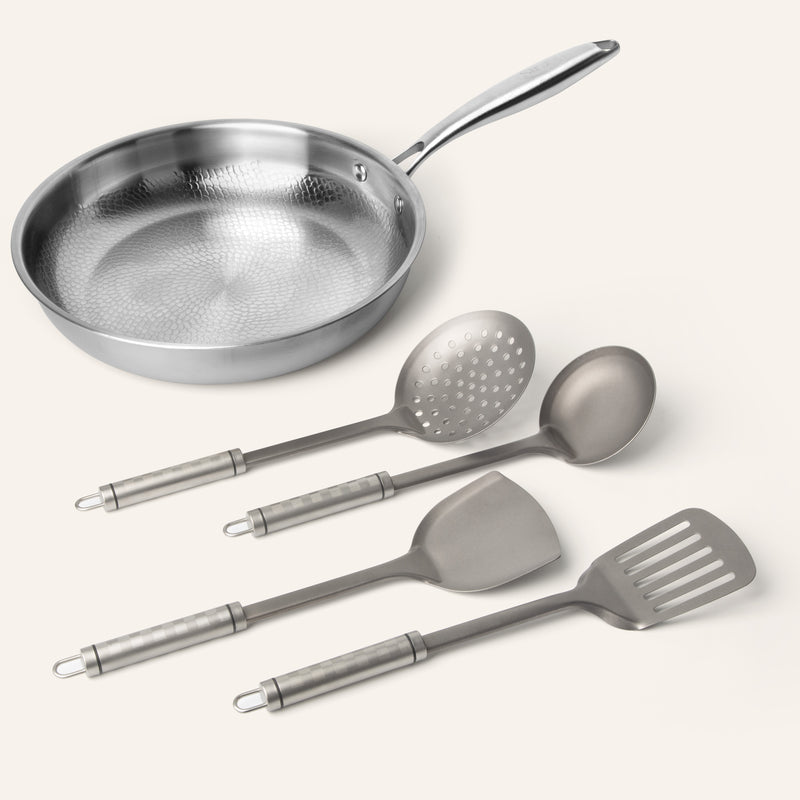
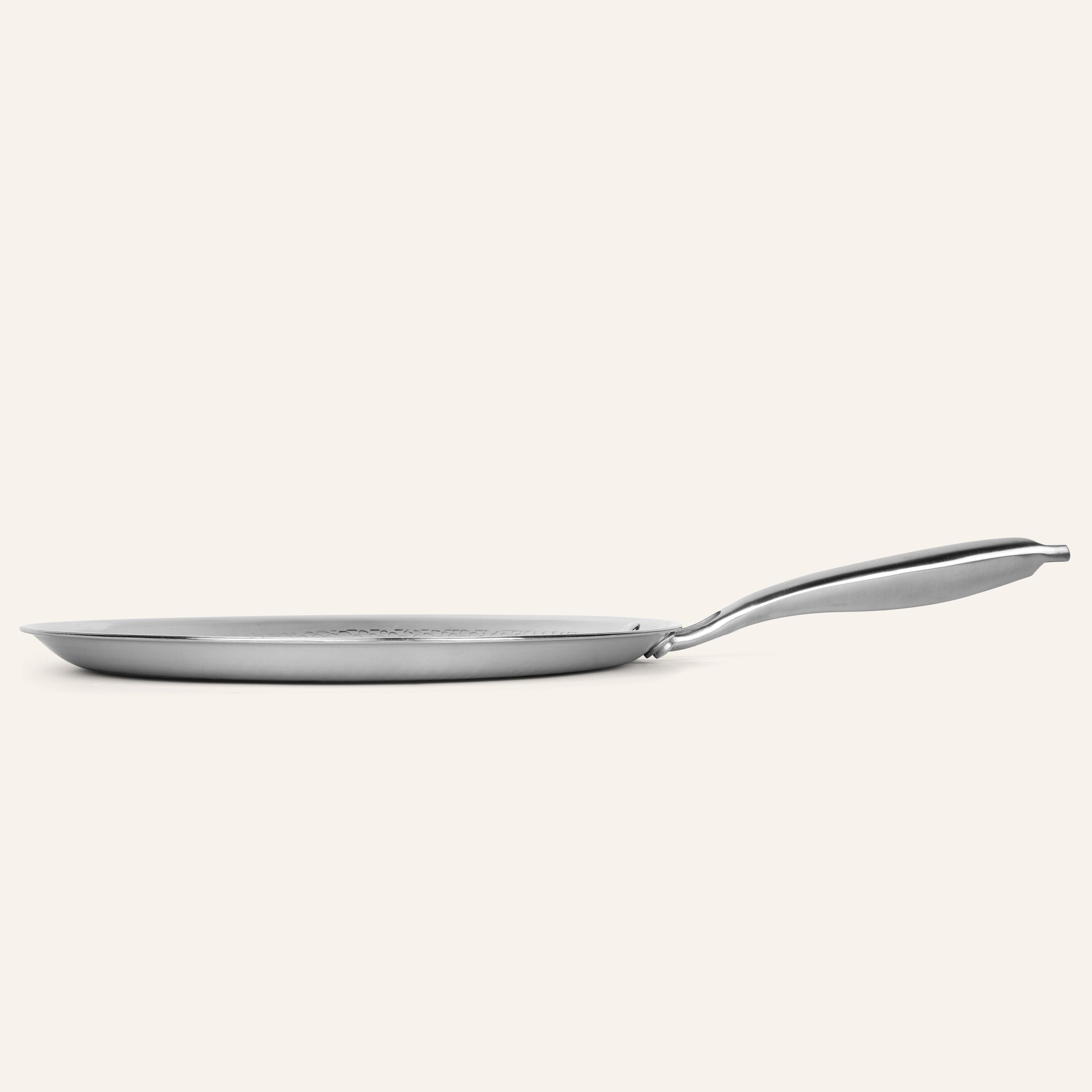
Unlike traditional non-stick cookware, titanium pans with an uncoated cooking surface don't rely on synthetic coatings to release food. Instead, when properly preheated and used with a small amount of high smoke point oil, they create the ideal conditions for developing a rich, flavorful sear while remaining easy to clean after cooking. Some titanium pans, like the Siraat Titanium Hammered Pan Pro, also feature a hammered cooking surface, which helps improve food release and provides a naturally low-stick cooking experience.
Another advantage is versatility. A well-made titanium pan can move from stovetop to oven, handle temperatures that would be too high for many conventional non-stick pans, and stand up to everyday use without scratching or wearing down as easily.
The Verdict: Choosing the Best Pan for Cooking Steak
The best pan for cooking steak is one that can handle high heat, retain it well, and distribute it evenly across the cooking surface. While cast iron, carbon steel, stainless steel, and titanium can all produce excellent results, the right choice ultimately depends on your cooking preferences and how much maintenance you're willing to take on.
If you're looking for a pan that combines high-heat performance with everyday versatility, a well-built, fully-clad titanium pan is a compelling option. It offers even heating, exceptional durability, and a cooking surface free from synthetic non-stick coatings, all while being easy to maintain and suitable for a wide range of cooking tasks beyond steak. Investing in quality cookware gives you the consistent performance needed to achieve a beautifully seared crust and delicious results every time.