




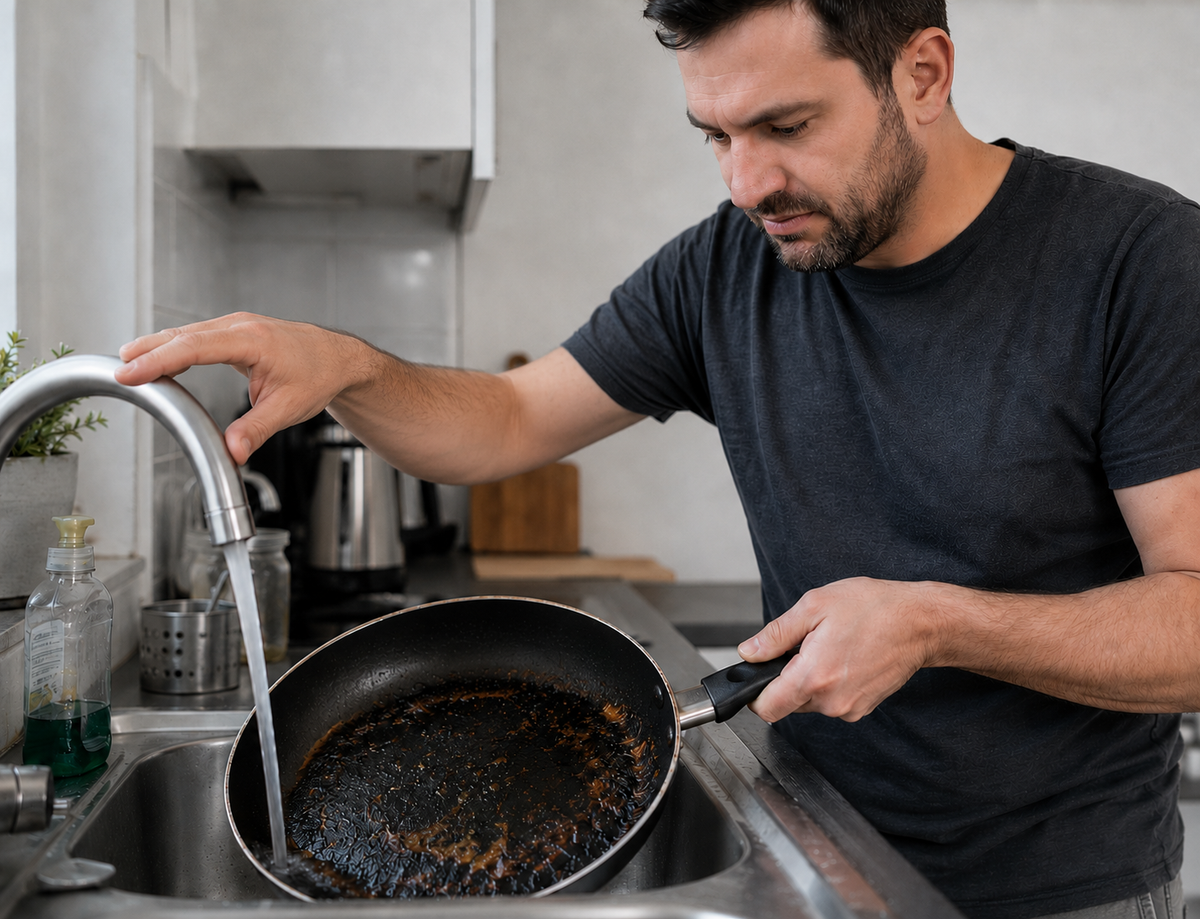
Sie können eine verbrannte Antihaftpfanne in der Regel reinigen, wenn das Problem verbrannte Speisen, Öl oder Fett sind, die an der Oberfläche haften. Der Schlüssel liegt darin, die Rückstände zu lösen, ohne die Antihaftbeschichtung zu zerkratzen oder zu beschädigen.
Lassen Sie die Pfanne zunächst vollständig abkühlen, weichen Sie sie dann in warmem Seifenwasser ein und reinigen Sie die Oberfläche vorsichtig mit einem weichen Schwamm. Bei hartnäckig eingebranntem Fett kann eine Backpulverpaste helfen, die Rückstände ohne starkes Scheuern zu lösen.
Allerdings kann das Reinigen eine beschädigte Beschichtung nicht reparieren. Wenn die Beschichtung der Pfanne abblättert, sich ablöst, tiefe Kratzer aufweist oder keine glatte Kochfläche mehr hat, ist es möglicherweise an der Zeit, sie zu ersetzen. In diesem Artikel erfahren Sie, wie Sie eine verbrannte Antihaftpfanne effektiv reinigen, was Sie bei der Reinigung nicht verwenden sollten und wie Sie entscheiden können, ob Sie Ihre Pfanne noch retten können – und wann es zu spät ist.
Kann man eine verbrannte Antihaftpfanne reinigen?
In den meisten Fällen ja, solange der Schaden auf Speisen, Öl oder Fett beschränkt ist, das auf der Oberfläche eingebrannt ist. Eine dunkle oder verfärbte Pfanne bedeutet nicht automatisch, dass das Kochgeschirr selbst ruiniert ist.
Der wichtige Unterschied liegt zwischen eingebrannten Rückständen und einer beschädigten Kochfläche. Eingebrannte Speisen und Öl lassen sich in der Regel durch sanftes Reinigen lösen und entfernen. Schäden an der Antihaftbeschichtung sind jedoch ein anderes Problem. Kratzer, Abplatzer, Abblättern oder Bereiche, in denen die Beschichtung abgenutzt ist, können nicht in ihren ursprünglichen Zustand zurückversetzt werden.
Auch der Grad der Verbrennung der Pfanne ist zu beachten. Eine dünne Schicht eingebrannten Öls lässt sich relativ leicht entfernen, aber mehrere Schichten karbonisierter Rückstände können mehr als einen Reinigungsgang erfordern. Der Versuch, hartnäckige Ablagerungen mit Gewalt zu entfernen, kann mehr Schaden anrichten, als die Rückstände für ein weiteres Einweichen zu belassen.
Bei traditionellem beschichtetem Antihaft-Kochgeschirr sollte das Ziel nicht sein, die Oberfläche um jeden Preis perfekt sauber zu machen. Es sollte darum gehen, die eingebrannten Rückstände zu entfernen, ohne die darunter liegende Beschichtung zu beeinträchtigen.
Wenn die Kochfläche noch glatt und intakt ist, kann die Pfanne nach der Reinigung perfekt verwendbar sein. Wenn die Oberfläche selbst verschlechtert ist, kann keine Reinigungsmethode sie wiederherstellen, und der Austausch der Pfanne ist die sicherere Wahl.
| Tun Sie dies | Vermeiden Sie dies |
|---|---|
| Lassen Sie die Pfanne vor der Reinigung vollständig abkühlen | Eine heiße Pfanne unter kaltes Wasser halten |
| Eingebrannte Stellen in warmem Seifenwasser einweichen | Die Oberfläche mit einem Messer oder Metallutensilien abkratzen |
| Einen weichen Schwamm oder ein nicht-abrasives Tuch verwenden | Stahlwolle oder abrasive Scheuermittel |
| Für hartnäckig eingebranntes Fett Backpulverpaste verwenden | Aggressive chemische Reiniger oder Bleichmittel |
| Einweichen oder sanftes Reinigen wiederholen, wenn Rückstände zurückbleiben | Stärkeres Schrubben, um hartnäckige Ablagerungen zu entfernen |
| Die Kochfläche nach der Reinigung überprüfen | Eine Pfanne mit abblätternder oder sich ablösender Beschichtung weiterhin verwenden |
Wie man eine verbrannte Antihaftpfanne sicher reinigt (Schritt für Schritt)
1. Pfanne vollständig abkühlen lassen
Lassen Sie die Pfanne vor der Reinigung auf Raumtemperatur abkühlen. Stellen Sie eine heiße Pfanne nicht unter kaltes, fließendes Wasser. Der plötzliche Temperaturwechsel kann einen Thermoschock verursachen, der die Pfanne verformen oder ihre Konstruktion beschädigen kann.
Sobald die Pfanne abgekühlt ist, entfernen Sie lose Speisereste mit einem Papiertuch oder Tuch. Es ist nicht nötig, in diesem Stadium festklebende Reste abzukratzen.
2. Die Pfanne in warmem Seifenwasser einweichen
Füllen Sie die Pfanne mit ausreichend warmem Wasser, um die verbrannten Stellen zu bedecken, und geben Sie eine kleine Menge mildes Spülmittel hinzu. Vermeiden Sie Bleichmittel oder andere aggressive chemische Reiniger, da diese zum Entfernen eingebrannter Speisereste nicht notwendig sind und die Antihaftbeschichtung zu stark angreifen könnten. Lassen Sie sie etwa 15 bis 30 Minuten einweichen.
Das warme Wasser hilft, die gehärteten Speisereste und Fette aufzuweichen, sodass sie leichter und ohne übermäßigen Druck entfernt werden können. Bei stärkeren Ablagerungen können Sie die Pfanne länger einweichen lassen und den Vorgang wiederholen. Es ist immer besser, die Einweichzeit zu verlängern oder zu wiederholen, anstatt abrasive Scheuermittel zu verwenden, da dies die Antihaftbeschichtung beschädigen kann.
3. Eingebrannte Rückstände vorsichtig entfernen
Nach dem Einweichen verwenden Sie einen weichen Schwamm oder ein nicht scheuerndes Tuch, um die aufgeweichten Rückstände zu lösen. Arbeiten Sie in kleinen Abschnitten und üben Sie sanften Druck aus, anstatt alles auf einmal abzukratzen. Eine stark verbrannte Antihaftpfanne braucht möglicherweise länger zum Reinigen, aber eine sanfte Reinigung ist wichtig, wenn Sie die Oberfläche erhalten möchten.
Bei hartnäckigen Stellen weichen Sie die Pfanne vor der Reinigung erneut ein. Ein Utensil aus Kunststoff oder Silikon kann auch helfen, aufgeweichte Speisen zu entfernen, falls nötig, aber vermeiden Sie alles Scharfe oder Metallische, das die Kochfläche zerkratzen könnte.
4. Backpulver für hartnäckig eingebranntes Fett verwenden
Wenn warmes Seifenwasser nicht ausreicht und hartnäckig eingebranntes Fett nach den ersten drei Schritten noch vorhanden ist, kann Backpulver helfen. Mischen Sie 3 Esslöffel Backpulver mit 1 Esslöffel Wasser in einer kleinen Schüssel. Rühren Sie sie zusammen, bis Sie eine streichfähige Paste erhalten. Tragen Sie sie auf die betroffenen Stellen auf und lassen Sie sie einige Minuten einwirken. Wischen Sie die Paste dann vorsichtig mit einem weichen, feuchten Schwamm ab.
Wie in den obigen Schritten erwähnt, schrubben Sie die Oberfläche nicht. Backpulver wird am besten als sanftes Reinigungsmittel und nicht als Ersatz für das Schrubben verwendet. Wenn die Rückstände nicht leicht abzulösen sind, wiederholen Sie den Vorgang, anstatt mehr Druck auszuüben.
5. Gründlich abspülen und trocknen
Sobald die eingebrannten Rückstände entfernt sind, spülen Sie die Pfanne gründlich mit sauberem Wasser ab, um Seifen- oder Backpulverrückstände zu entfernen. Trocknen Sie sie vollständig mit einem Geschirrtuch ab, bevor Sie sie wegräumen. Nehmen Sie sich einen Moment Zeit, um die Kochfläche im sauberen und trockenen Zustand zu überprüfen. Wenn sie glatt und intakt bleibt, kann die Pfanne in der Regel weiterhin verwendet werden. Wenn die Reinigung Abplatzer, Abblätterungen, tiefe Kratzer oder andere Schäden an der Oberfläche aufzeigt, wird eine weitere Reinigung sie nicht wiederherstellen.
Was man bei einer verbrannten Antihaftpfanne nicht verwenden sollte
Wenn eine Antihaftpfanne stark verbrannt ist, kann es verlockend sein, zu etwas Stärkerem zu greifen, um die Rückstände schnell zu entfernen. Einige Reinigungsmethoden können jedoch die Antihaft-Oberfläche zerkratzen oder schwächen, was zu einem schwerwiegenderen Problem führt als die eingebrannten Speisen selbst.
Hier sind einige der häufigsten Dinge, die man vermeiden sollte:
-
Stahlwolle oder Metallschrubber: Diese sind für die meisten Antihaftflächen zu abrasiv und können Kratzer in der Beschichtung hinterlassen.
-
Abrasive Scheuerschwämme: Auch wenn sie sich weicher anfühlen als Stahlwolle, können raue Scheuerschwämme die Kochfläche bei Druckausübung beschädigen.
-
Messer oder andere scharfe Werkzeuge: Das Abkratzen von eingebrannten Speisen mit einem Messer kann die Rückstände entfernen, aber es kann auch die darunter liegende Beschichtung einschneiden oder zerkratzen.
-
Aggressive chemische Reiniger: Backofenreiniger, Bleichmittel und andere starke Haushaltsreiniger sind zur Reinigung einer Antihaftpfanne nicht notwendig und können die Oberfläche beschädigen.
-
Übermäßiges Schrubben: Wenn die Rückstände nach dem Einweichen nicht abgehen, ist stärkeres Schrubben nicht unbedingt die Antwort. Wiederholen Sie stattdessen den Einweich- und Reinigungsvorgang.
Sie sollten auch vermeiden, eine leere Pfanne zu erhitzen, um die Rückstände abzubrennen. Obwohl hohe Hitze einige Speisereste lösen kann, kann sie das Kochgeschirr unnötigen Temperaturen aussetzen und die traditionelle Antihaftbeschichtung weiter beschädigen. Die meisten Antihaftbeschichtungen sind nicht für hohe Temperaturen oder das Erhitzen im leeren Zustand geeignet, da dies nicht nur die Pfanne beschädigen, sondern auch schädliche chemische Dämpfe in die Luft abgeben kann.
Eine einfache Regel: Wenn eine Reinigungsmethode unter normalen Umständen für die Antihaft-Oberfläche zu aggressiv wäre, ist sie keine gute Wahl, nur weil die Pfanne angebrannt ist. Beginnen Sie mit warmem Wasser, Spülmittel und sanfter Reinigung, und geben Sie hartnäckigen Rückständen mehr Zeit statt mehr Kraft.

Wann ist eine verbrannte Antihaftpfanne nicht mehr zu retten?
Anzeichen, dass Sie die Pfanne noch retten können
Ihre Antihaftpfanne ist möglicherweise noch verwendbar, wenn:
-
Die Kochfläche glatt ist: Es gibt keine rauen oder unebenen Stellen, an denen sich die Oberfläche verändert hat.
-
Die Beschichtung intakt ist: Sie können keine Bereiche sehen, in denen die Beschichtung abblättert, sich ablöst oder sich von der Pfanne löst.
-
Keine tiefen Kratzer vorhanden sind: Kleine Oberflächenspuren unterscheiden sich von tiefen Kratzern, die das darunter liegende Material freilegen.
-
Die Pfanne immer noch normal funktioniert: Speisen garen gleichmäßig und die Oberfläche löst Speisen immer noch wie erwartet.
-
Nur Verfärbungen zurückbleiben: Dunkle Flecken oder Verfärbungen, die nach der Reinigung zurückbleiben, sind nicht unbedingt ein Zeichen dafür, dass die Pfanne ersetzt werden muss.
Wenn die Pfanne diese Prüfungen besteht, gibt es normalerweise keinen Grund, sie zu ersetzen, nur weil sie einmal angebrannt ist. Beobachten Sie die Oberfläche im Laufe der Zeit und befolgen Sie weiterhin die Pflegehinweise des Kochgeschirrherstellers.
Anzeichen, dass Sie es ersetzen sollten
Reinigen kann physische Schäden an einer Antihaft-Kochfläche nicht rückgängig machen. Erwägen Sie einen Ersatz der Pfanne, wenn Sie Folgendes bemerken:
-
Abblättern oder Abplatzen: Teile der Beschichtung lösen sich sichtbar von der Oberfläche.
-
Tiefe Kratzer: Kratzer haben die Kochfläche durchdrungen oder das darunterliegende Material freigelegt.
-
Blasenbildung oder Aufwölbungen: Die Oberfläche hat erhabene Bereiche oder Blasen entwickelt, die vorher nicht vorhanden waren.
-
Weit verbreiteter Verlust der Antihaftoberfläche: Speisen kleben ständig an Stellen, die zuvor antihaftbeschichtet waren, selbst bei sachgemäßer Verwendung und Reinigung.
-
Eine verzogene oder instabile Pfanne: Der Boden ist nicht mehr flach, sodass die Pfanne ungleichmäßig auf der Kochfläche steht.
Wenn Sie tatsächliche Schäden an der Kochfläche feststellen, versuchen Sie nicht, diese mit aggressiveren Reinigungen zu reparieren. An diesem Punkt ist der Austausch der Pfanne eine bessere Option, als weiterhin Material von einer bereits beschädigten Oberfläche zu entfernen.
Wie man verhindert, dass eine Antihaftpfanne erneut anbrennt
Der einfachste Weg, eingebrannte Rückstände zu vermeiden, besteht darin, die Pfanne nicht zu überhitzen. Es ist immer am besten, die Anweisungen des Herstellers zu überprüfen, um den sicheren Temperaturbereich für Ihre Pfanne zu ermitteln. Bei traditionellem Antihaft-Kochgeschirr reicht in der Regel mittlere oder mittlere bis niedrige Hitze für die meisten alltäglichen Kochvorgänge aus. Vermeiden Sie es, eine leere Pfanne auf einer heißen Kochplatte stehen zu lassen, und erhitzen Sie sie nicht länger als nötig, bevor Sie Öl oder Lebensmittel hinzufügen.
Es hilft auch, die Pfanne bald nach dem Kochen zu reinigen, sobald sie abgekühlt ist. Kleine Mengen Öl oder Speisereste, die auf der Oberfläche verbleiben, können beim nächsten Erhitzen der Pfanne viel schwieriger zu entfernen sein. Ein schneller Abwasch mit warmem Seifenwasser reicht in der Regel aus, um zu verhindern, dass sich Rückstände im Laufe der Zeit ansammeln.

Gibt es dauerhaftere Alternativen zu Antihaftpfannen?
Wenn Sie den Komfort von Antihaft-Kochgeschirr mögen, aber etwas suchen, das höhere Hitze und den täglichen Gebrauch länger verträgt, könnte es sich lohnen, über traditionelle beschichtete Pfannen hinauszuschauen. Der Hauptunterschied liegt in der Kochfläche: Anstatt sich auf eine synthetische Beschichtung zu verlassen, die sich mit der Zeit abnutzen, zerkratzen oder ablösen kann, verwenden einige Kochgeschirre ein langlebiges Material als Kochfläche selbst.
Die durchschnittliche Lebensdauer einer traditionellen Antihaftpfanne beträgt etwa 1 bis 5 Jahre, obwohl dies je nach Qualität der Pfanne und ihrer Verwendung und Pflege erheblich variieren kann. Sobald sich die Beschichtung zu verschlechtern beginnt, kann die Pfanne nicht einfach durch Reinigung oder Wartung wiederhergestellt werden.
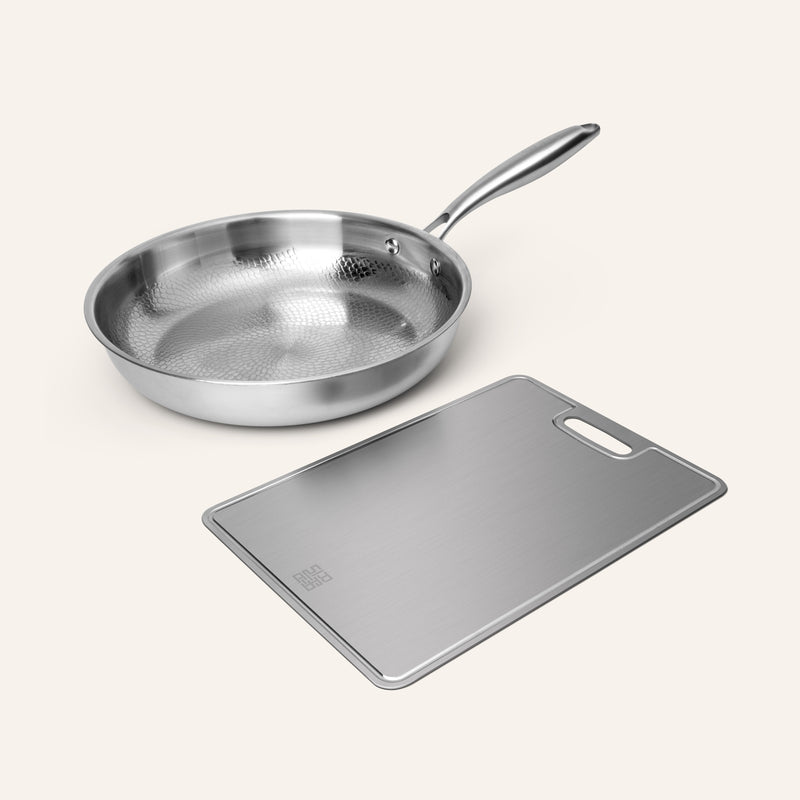
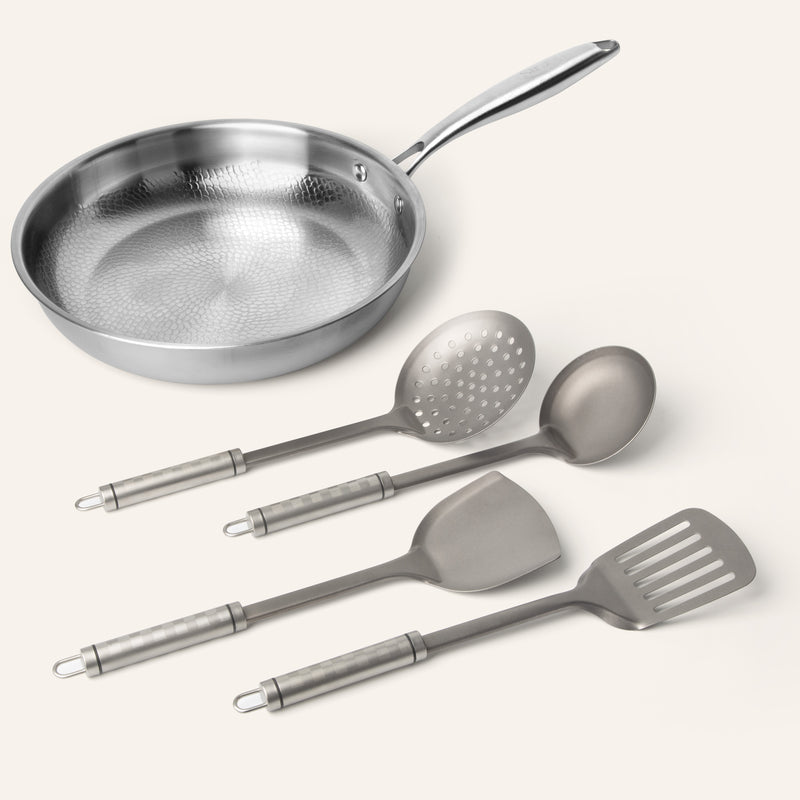
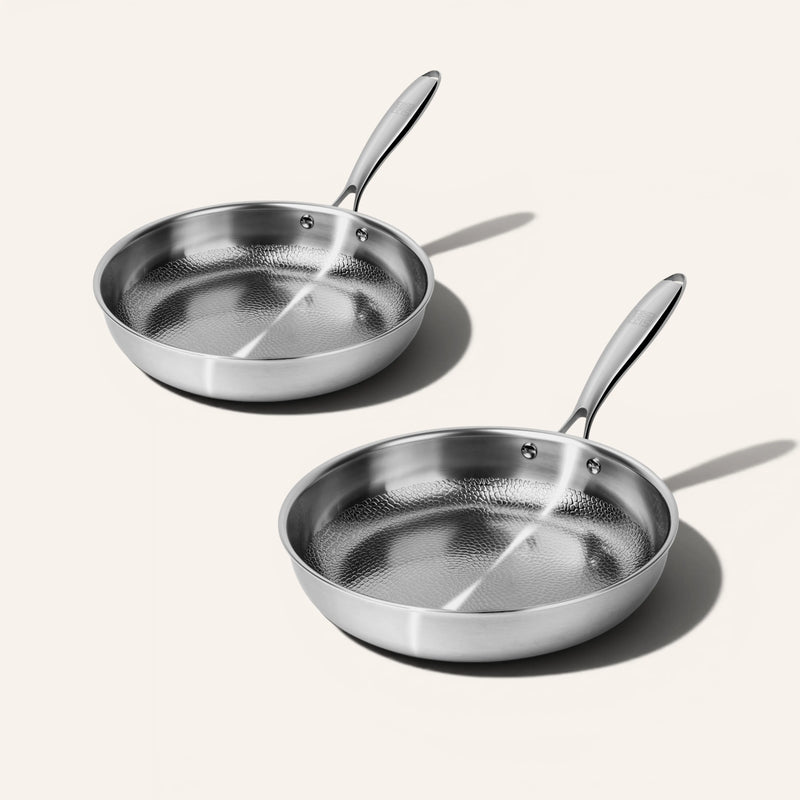
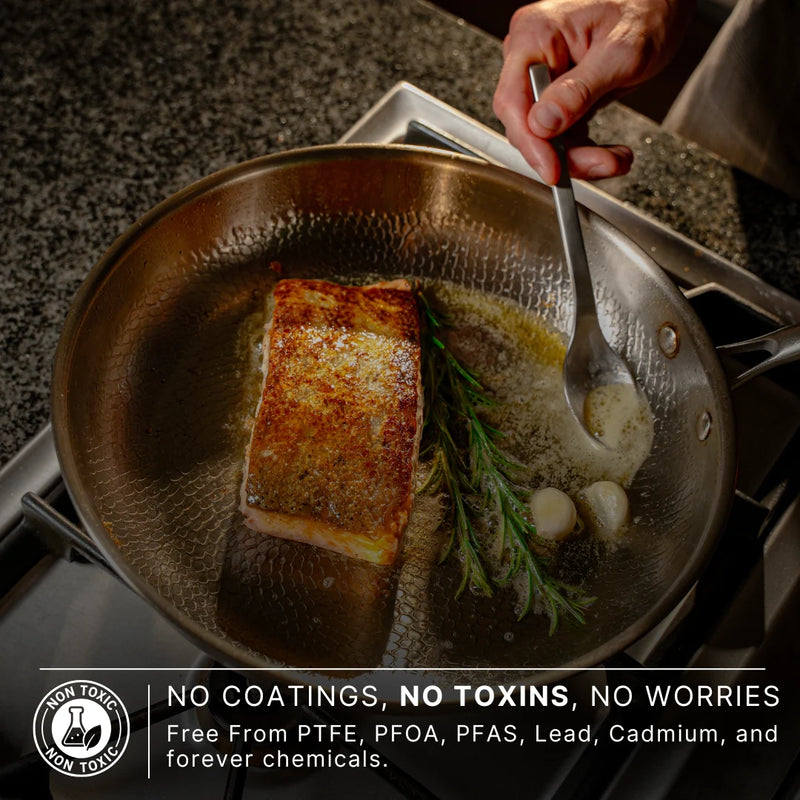
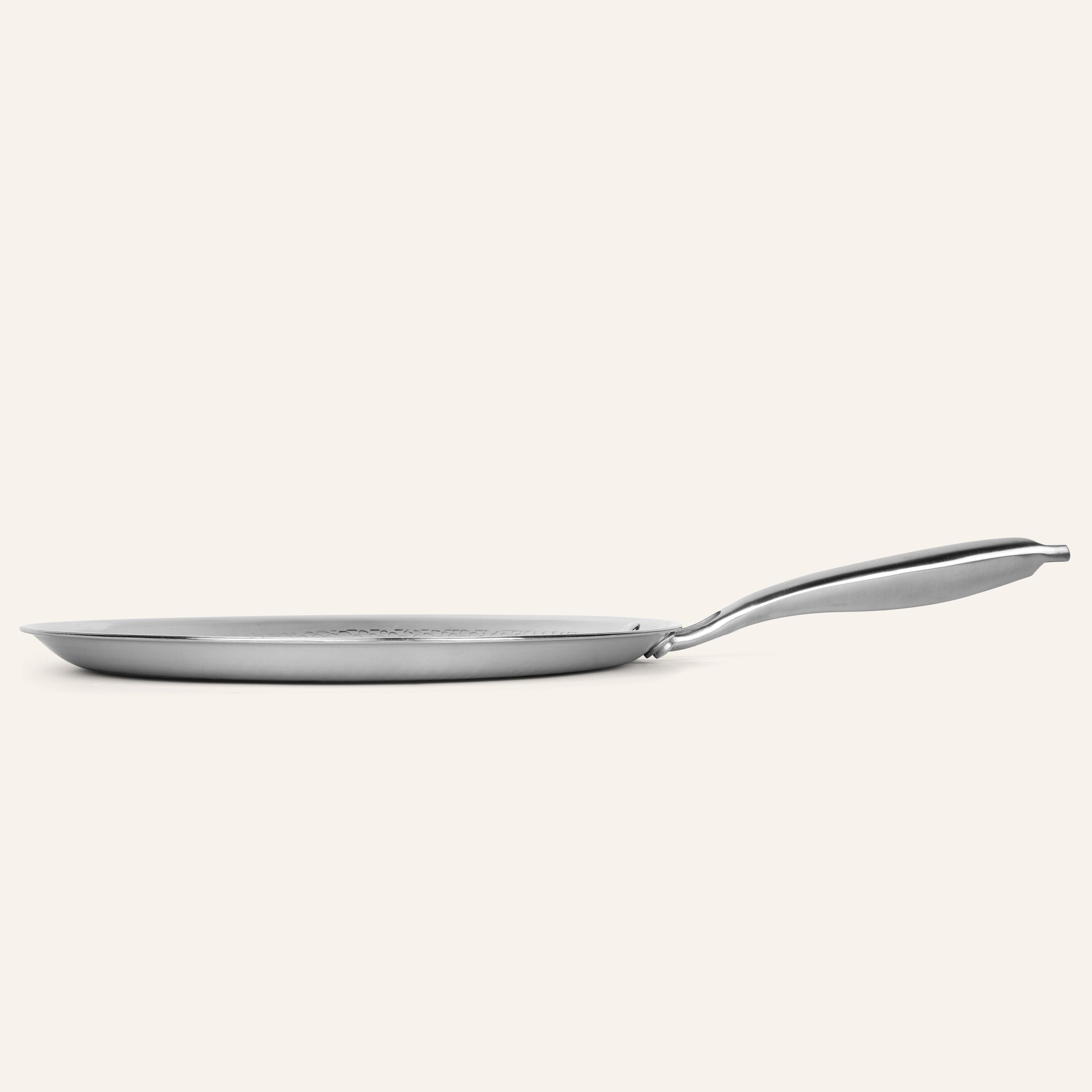
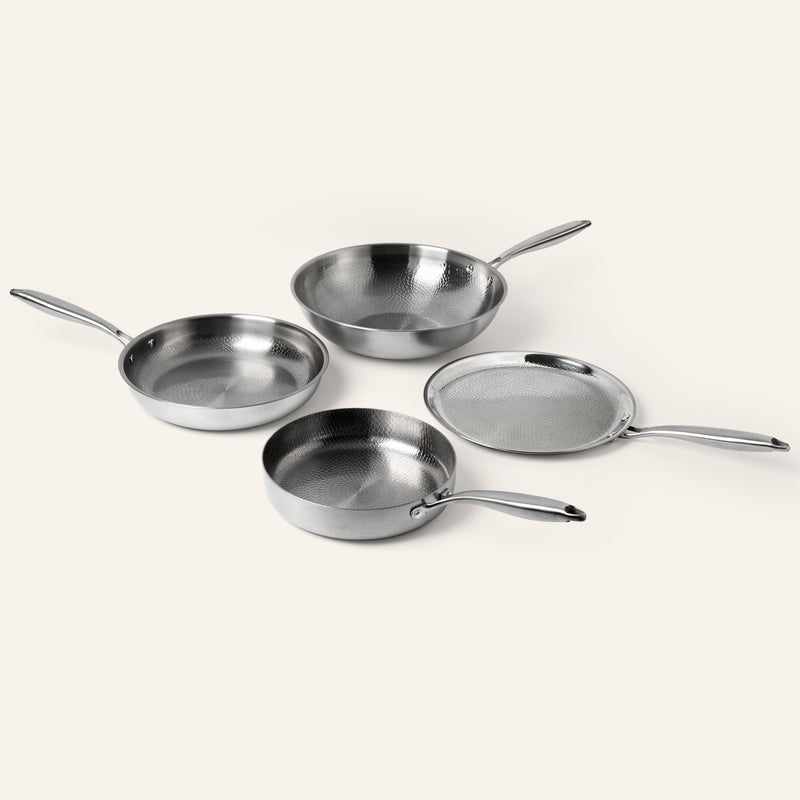
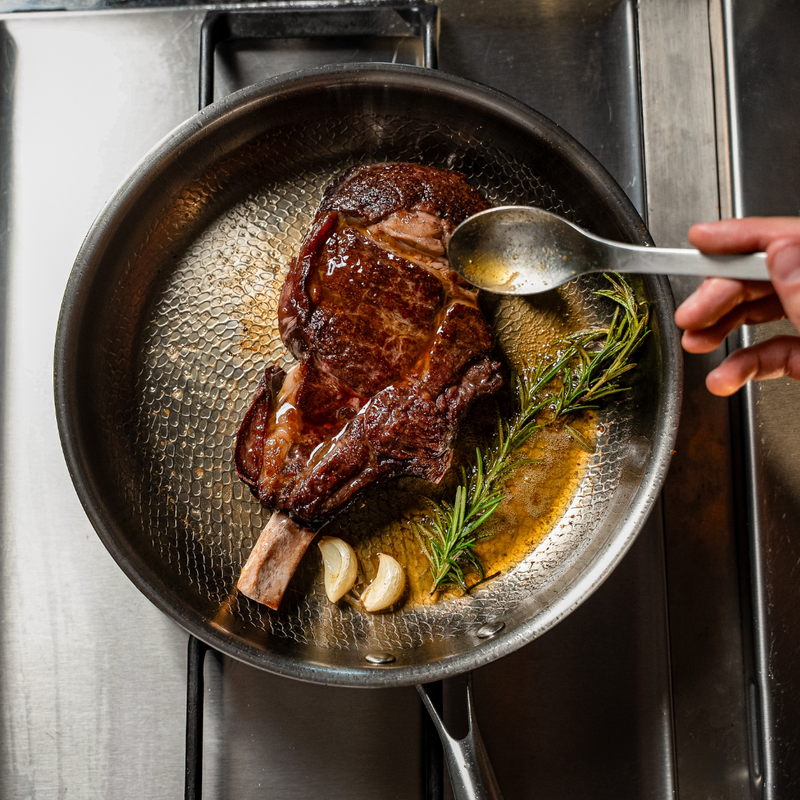
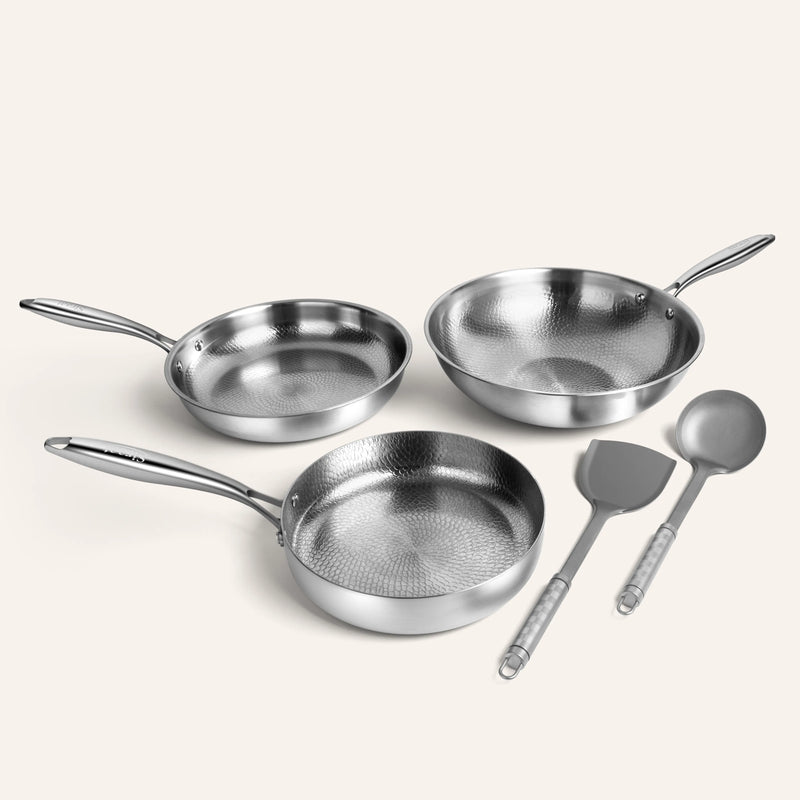
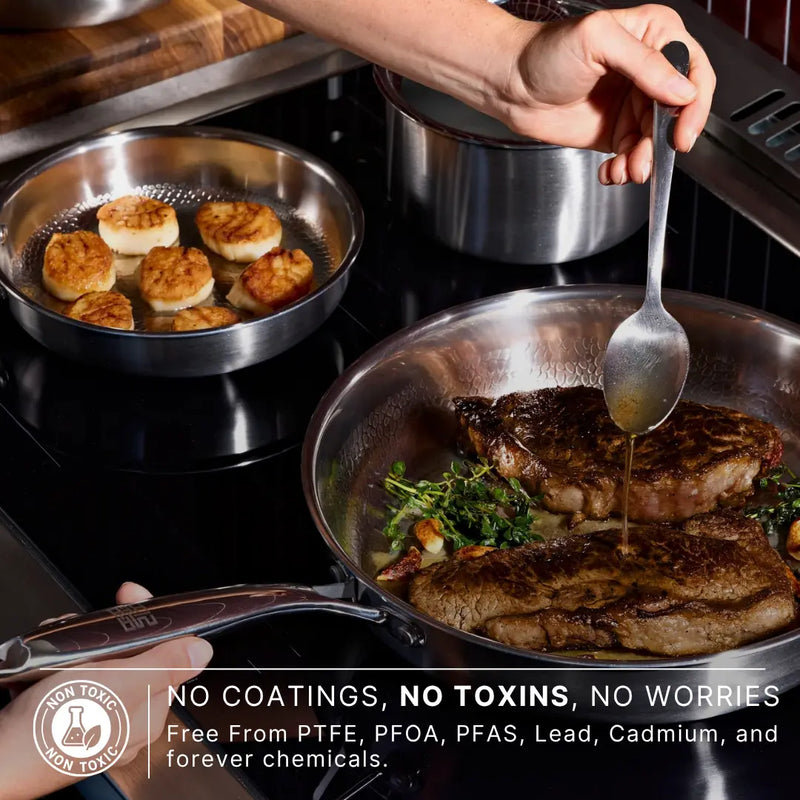
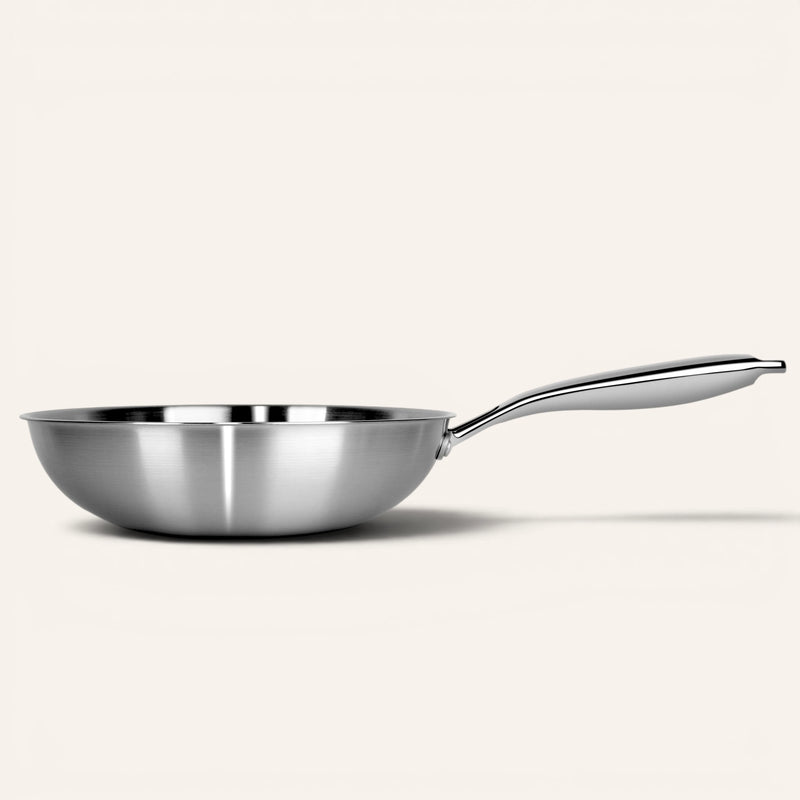
Eine Option ist vollummanteltes Titan-Kochgeschirr. Zum Beispiel verwendet Siraats Titanium Hammered Pan Pro eine gehämmerte Titan-Kochfläche anstelle einer herkömmlichen PTFE-Antihaftbeschichtung. Ihre vollummantelte dreischichtige Konstruktion kombiniert Edelstahl mit einem Aluminiumkern für die Wärmeverteilung und eine Titan-Kochfläche, die auf Langlebigkeit ausgelegt ist. Die Pfanne ist außerdem backofenfest bis 548 °C / 1000 °F und sicher mit Metallutensilien zu verwenden, was ihr mehr Flexibilität für das Kochen bei hoher Hitze verleiht als viele herkömmliche Antihaftpfannen.
Titan-Kochgeschirr ist normalerweise pflegeleicht, aber wie jede Pfanne kann es eingebrannte Speisereste oder Fett entwickeln, wenn es unbeaufsichtigt bleibt. Der Unterschied ist, dass die Kochfläche so konzipiert ist, dass sie einer anspruchsvolleren Nutzung standhält, ohne auf eine herkömmliche synthetische Antihaftbeschichtung angewiesen zu sein. Mit der richtigen Pflege kann dies eine haltbarere Alternative für das tägliche Kochen sein.

Our durable titanium hammered complete edition
Our #1 seller — a pure titanium cooking surface, no coatings.
Fazit: Reinigen vs. Ersetzen einer verbrannten Antihaftpfanne
Eine verbrannte Antihaftpfanne ist nicht automatisch ein verlorener Fall. Wenn Sie es mit eingebrannten Speisen, Öl oder Fett auf einer ansonsten glatten und intakten Oberfläche zu tun haben, reicht eine sanfte Reinigung oft aus, um die Pfanne wieder einsatzbereit zu machen.
Die eigentliche Frage ist, was unter den Rückständen passiert. Wenn die Beschichtung abblättert, sich ablöst, tiefe Kratzer aufweist oder sich anderweitig verschlechtert, wird die Reinigung den Schaden nicht beheben. In diesem Fall ist es sinnvoller, die Pfanne zu ersetzen, als immer aggressivere Reinigungsmethoden zu versuchen.
Und wenn Sie sich regelmäßig Sorgen um zerkratzte Beschichtungen machen oder alle paar Jahre Pfannen ersetzen müssen, könnte eine haltbarere Kochfläche eine Überlegung wert sein. Die Wahl von Kochgeschirr, das für den täglichen Gebrauch und höhere Hitze ausgelegt ist, kann weniger Aufwand in der Küche und eine Pfanne bedeuten, auf die Sie sich viel länger verlassen können.