








Food usually sticks to a frying pan when the pan isn't hot enough, the food is wet, or you try to move it before it's ready. But if you get those right, most foods will be released cleanly, whether you're cooking chicken, fish, vegetables, or eggs. The pan matters too, but technique does more of the work than most people expect.
In this guide, we'll cover how to cook in a frying pan without sticking: why food grips the surface, the steps that make the biggest difference, which oils work best, and how different pan materials behave, so you know what to expect from the one you own or planning to buy.
Why Does Food Stick to a Frying Pan?
When food heats up, its proteins bond with the metal surface of the pan. Even a pan that looks perfectly smooth has microscopic crevices, and the food settles into them before it sets. That's why eggs, fish, and chicken stick more than most vegetables, and why a pan that feels slick when you wash it can still grip food once it's hot.
There are three main things that make it worse: a pan that hasn't heated properly, moisture on the surface of the food, and moving the food before it has formed a crust. A cold pan gives proteins time to bond before the surface sears. Wet food cools the pan and creates steam, so the food sits in moisture instead of browning. And food that's flipped too early is still attached, so you tear it off rather than lift it.
The fix works with the same principle in reverse. Heat gives the food a chance to sear, and a thin layer of fat fills the gaps between food and metal. Once a crust forms, the food lets go of the pan on its own, which is why a properly cooked piece of chicken or fish often releases right when it's ready to flip.

How to Cook Without Food Sticking in a Frying Pan
The steps are the same for almost every food: heat the pan, add the fat, start with dry food, and give it time. Skipping any one of them is usually what makes food stick.
Preheat the Pan First
Place the pan on medium heat and give it two to three minutes before you add anything. Most sticking happens because the pan wasn't ready, not because the pan is bad.
Medium is usually enough for preheating. High heat just burns the outside of the food before the inside is cooked, and it can leave residue that makes the next meal stick as well. If your pan is thin or single-layer, check the manufacturer's heat guidance, since these can heat unevenly and develop hot spots.
Add Oil to a Hot Pan
Once the pan is hot, add a thin layer of oil and swirl it around so it covers the cooking surface. The oil is ready when it shimmers. If you're using butter, wait until it melts and turns foamy before the food goes in.
Oil added to a cold pan tends to pool in one spot or soak into the surface, and it doesn't create the thin, even layer you want. A teaspoon or two is usually enough. More oil won't prevent sticking; it'll only make the food greasy.
Pat Your Food Dry
Moisture is one of the biggest causes of sticking, but it's the easiest one to fix. Wet food releases water into the pan, which cools the surface and creates steam between the food and the metal. Instead of searing, the food sticks and sits in its own liquid.
Pat meat, fish, and washed vegetables dry with a paper towel before they go in. Marinated food needs the same treatment: lift it out of the marinade and dab off the excess so the surface can brown.
Don't Overcrowd the Pan
Too much food at once drops the pan's temperature and traps steam. The result is food that simmers rather than sears, and that is far more likely to stick. Leave a little space between pieces so moisture can escape and the pan stays hot.
If you're cooking for several people or meal prepping, work in batches. It takes a few minutes longer, but each batch browns properly and comes off the pan without tearing.
Leave the Food Alone Until It Releases
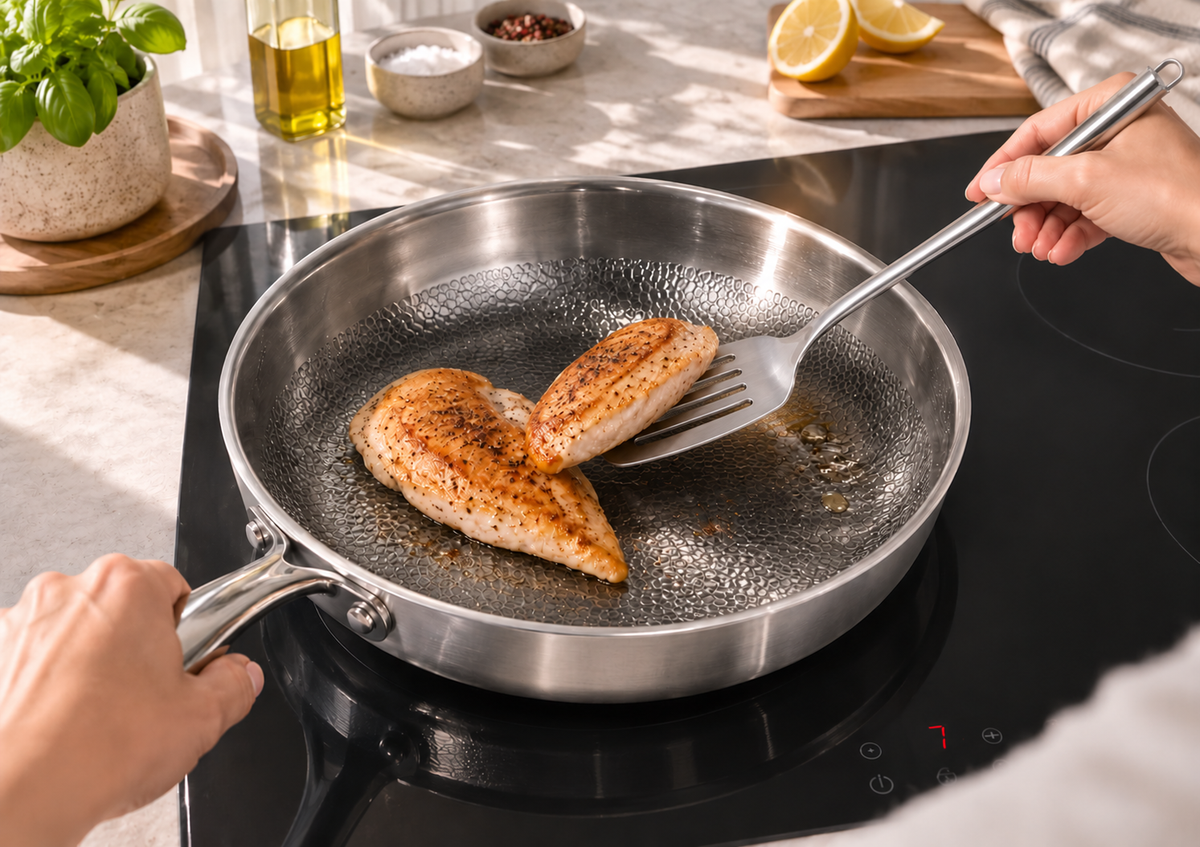
Once the food is in the pan, resist the urge to poke or move it. As it sears, a crust forms, and that crust is what lifts it off the surface. When the food is ready to turn, it releases easily. If it still grips the pan, give it another minute rather than forcing it.
A simple test is to nudge the food gently with a spatula or tilt the pan. If it slides or lifts without resistance, it's ready to turn. If it tugs or leaves a layer behind, the crust hasn't formed yet. Flip it once, then leave it alone again, because constant turning interrupts the searing and brings the sticking back. Thicker pieces, like chicken breasts or fish fillets, take longer to release than thin slices, so go by how the food behaves rather than by the clock.
Keep the Pan Clean So It Doesn't Start Sticking Again
If food begins to stick even when you follow every step above, it doesn’t necessarily mean your pan is damaged. More often it has a thin layer of cooked-on residue that's hard to see, and food grabs onto it. Oil heated past its smoke point can also leave a sticky film that builds up over time.
Let the pan cool before washing, then use dish soap and a soft sponge. For stubborn residue, rub on a paste of baking soda and water, then rinse. Stay away from abrasive pads, since scratches and rough spots give food more to grip. Check your pan's care instructions for anything specific to its material.

Which Oil Works Best for Cooking in a Frying Pan?
The right oil depends on how hot you're cooking. Every oil has a smoke point, the temperature at which it starts to break down and burn. Once it passes that point, it smells acrid, can taste bitter, and leaves a sticky film on the pan. For searing and other higher-heat cooking, choose an oil with a high smoke point, such as:
- avocado oil
- grapeseed oil
- refined olive oil
- canola oil
- sunflower oil
- rice bran oil
Butter and unrefined oils like extra virgin olive oil are better suited to lower heat. Butter is a good choice for omelets, gently cooked fish, and other dishes that don't need a hard sear, but it burns quickly if the pan gets too hot.
Whichever you choose, a thin, even layer is usually enough. Add it after the pan gets hot, swirl it to cover the surface, and wait for the shimmer. If the oil starts to smoke before the food goes in, the pan is too hot, so lower the heat for a moment and let it settle.
How Sticking Differs by Pan Type
The steps above work for most frying pans, but each material releases food in a different way, and that changes what you need to pay attention to. Knowing how your pan works makes it easier to fix the problem when food does stick.
Coated non-stick pans are the easiest at first, because the coating does most of the work. The trade-off is that it gradually wears, especially with high heat, abrasive cleaning, or metal utensils.
Stainless steel has no coating, so release depends almost entirely on technique. A properly preheated pan and a thin layer of oil make the difference, and good multi-ply pans heat more evenly than single-layer ones. Food that's added too early will grip, but once a crust forms it lets go. Stainless steel usually requires a bit of a learning curve to master it.
Cast iron and carbon steel rely on seasoning, a thin layer of baked-on oil that builds up with use and gives the surface a natural release. It works well as long as you keep it up, which means drying the pan after washing and re-seasoning when the surface looks dull or food starts to stick.
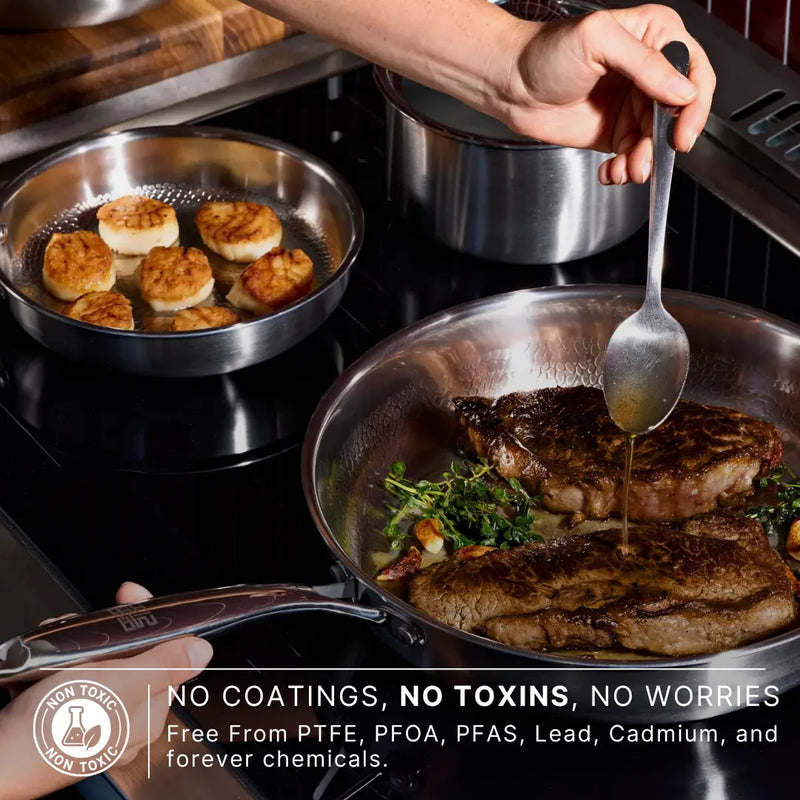
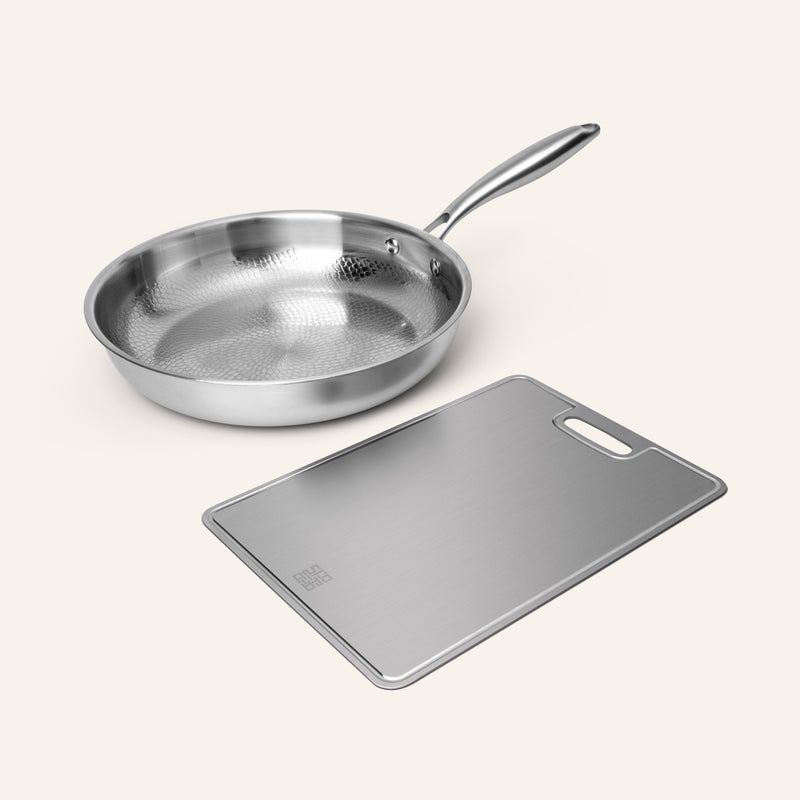
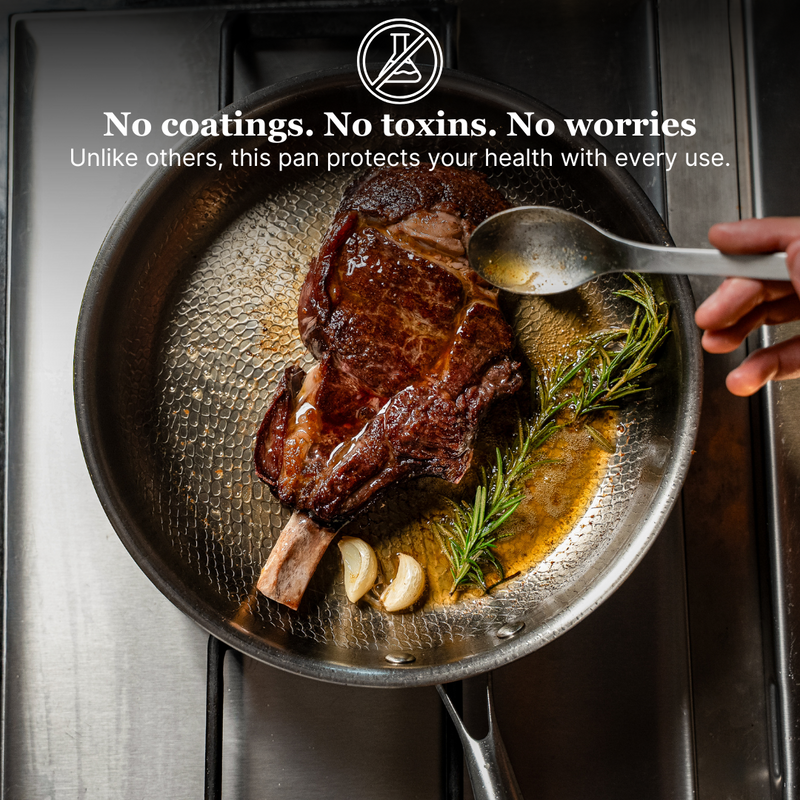
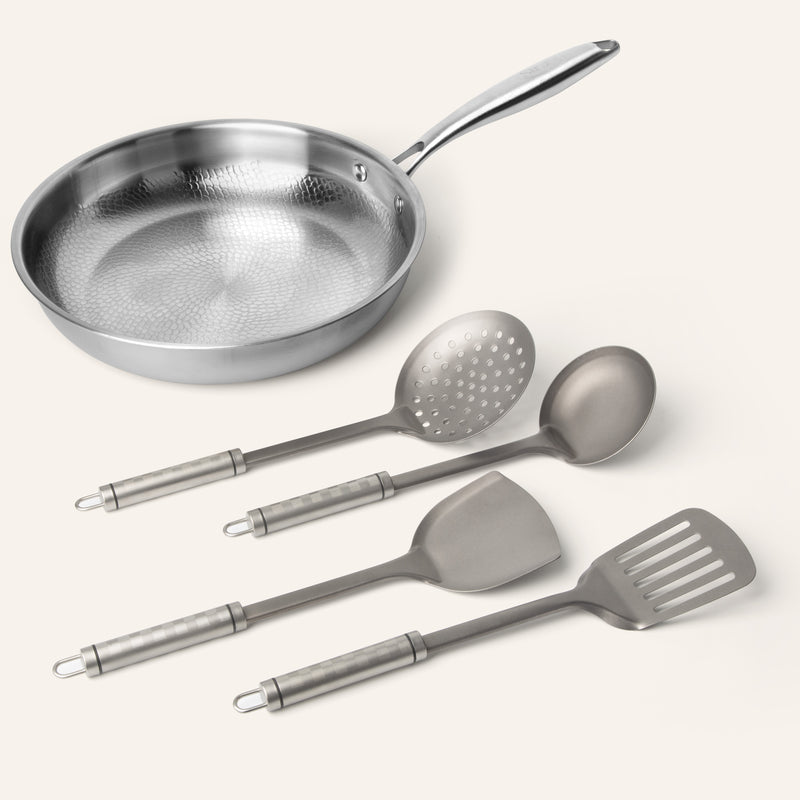
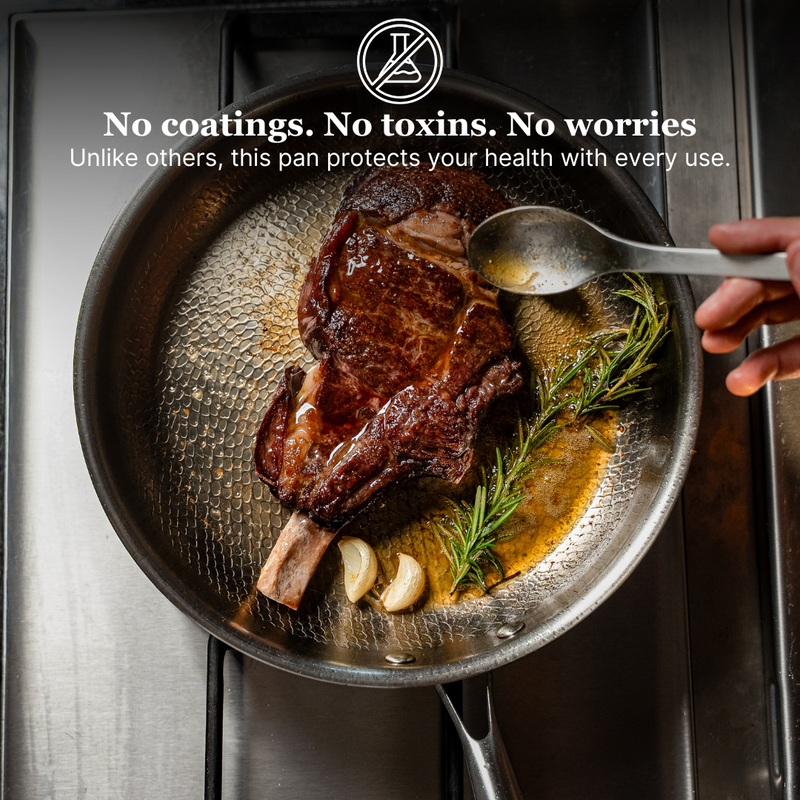
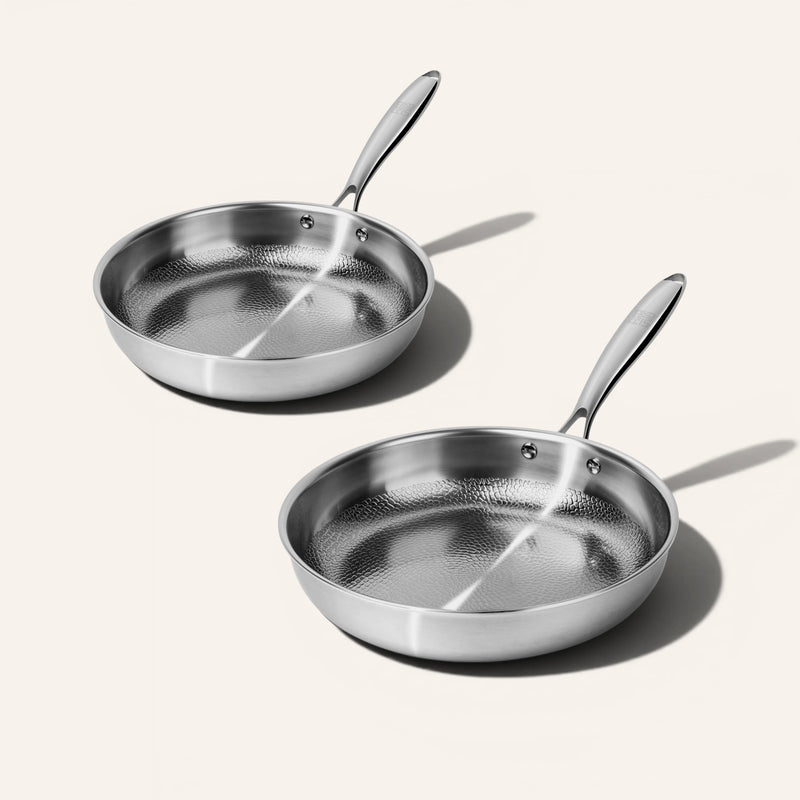
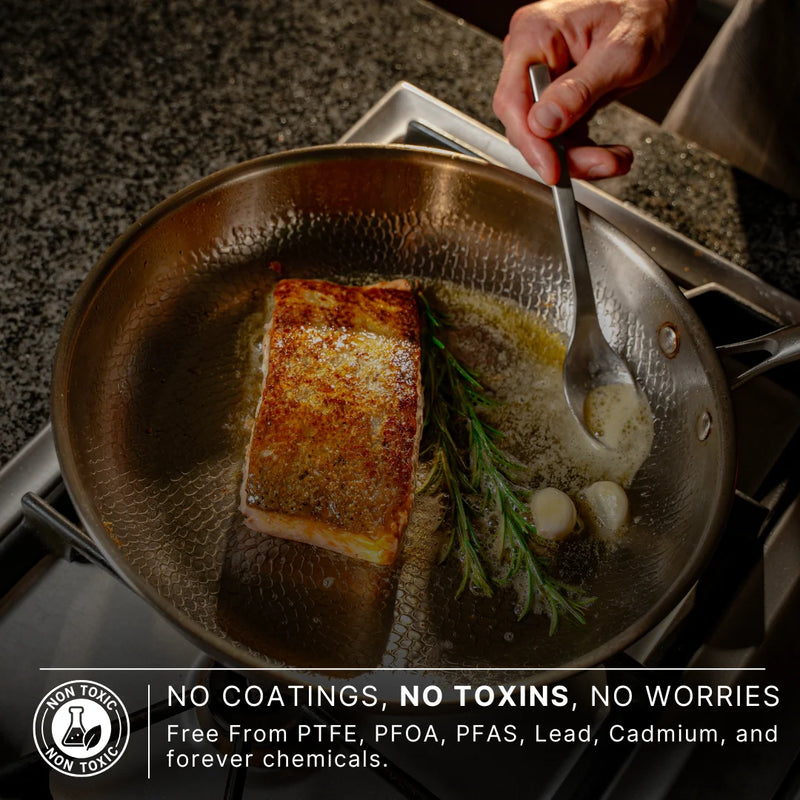
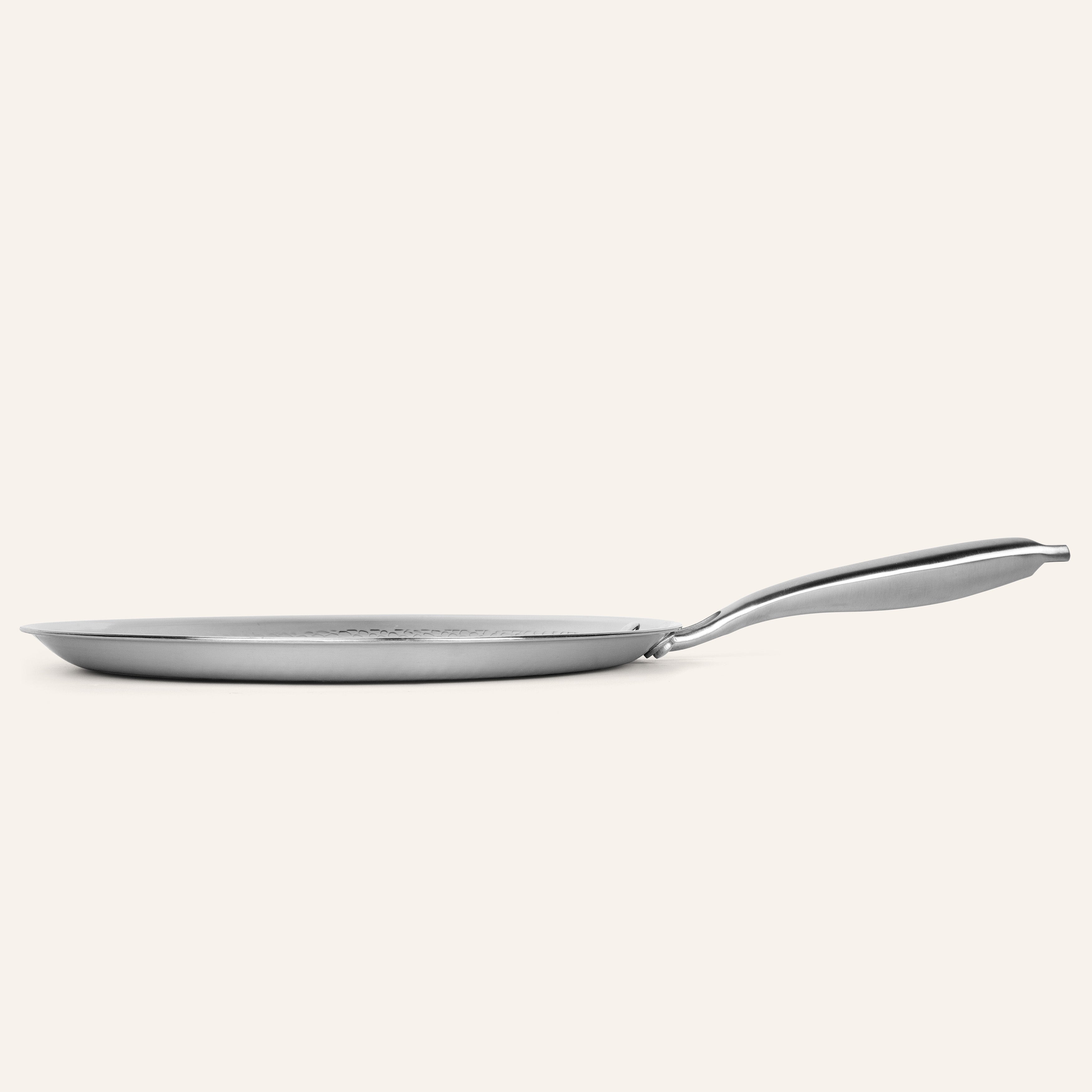
Solid titanium has no coating at all, so release comes from the surface texture, preheating, and a little oil. The Siraat Titanium Hammered Pan Pro is one example: a pure titanium cooking surface with a hammered pattern, made without PFAS, PTFE, or PFOA, which needs just a teaspoon of high smoke point oil and is safe for metal utensils.

#1 Ranked Frying Pan
Titanium Hammered Pan Pro
The Bottom Line: Frying Without Sticking Is Easy If You Follow a Few Steps
Learning how to cook without food sticking in a frying pan comes down to a short routine: heat the pan first, add oil once it's hot, start with dry food, and leave it alone until it releases. The pan material changes the details, such as seasoning, coatings, or surface texture, but the order of steps stays the same.
It can take a few tries to get a feel for the right heat, since it varies between pans and stoves. Once the order becomes a habit, food slides instead of tearing, cleanup gets easier, and the pan keeps working the way it should for years.