WAREHOUSE CLEARANCE 📦
 BUNDLES & SETS
 Titanium Hammered Pan Pro Mini
 Titanium Hammered Pizza Steel
 Titanium Hammered Pan Pro Standard
 Titanium Hammered Crêpe Pan Pro
 Titanium Hammered Pan Pro Small
 Titanium Hammered Wok Pan Pro
 Titanium Hammered Pan Pro Large
 Titanium Hammered Deep Pan Pro
 Titanium Hammered Roasting Pan
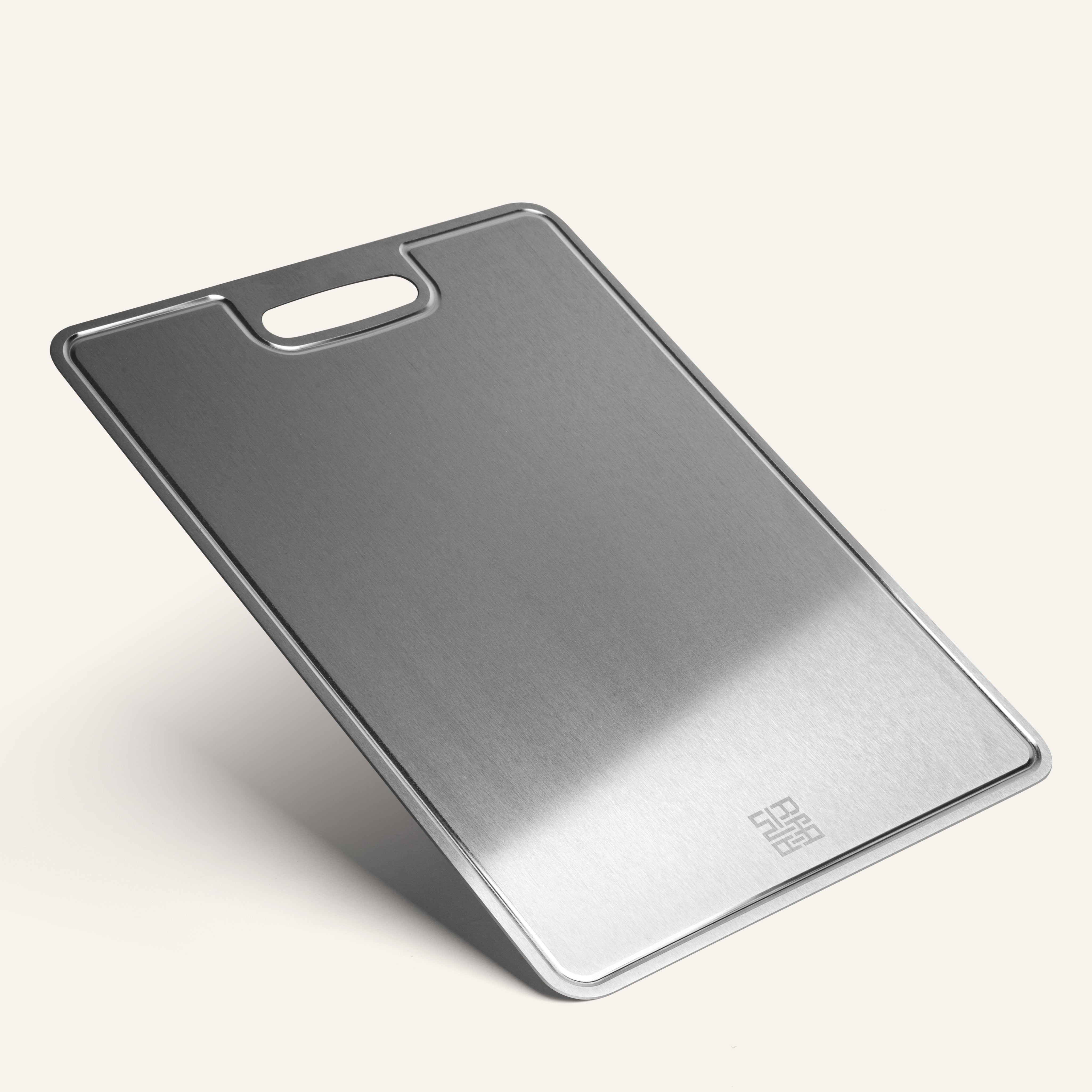
 Titanium Cutting Board (Anti-Microbial)
 Titanium Cutting Board Bundle
 Siraat Signature Apron (Azure)
 Siraat Signature Apron (Oak)
 Siraat Signature Apron (Moss)
 Siraat Signature Apron (Ember)
 Salt & Pepper Mill Set
 Salt Mill
 Pepper Mill
 Titanium Utensil Set Bundle
 Titanium Utensil
 Grill Press
 Pizza Wheel
 Rolling Knife Sharpener
 Magnetic Cherry Wood Trivet
 Stainless Steel Lid
 Cherry Wood Mini Trivet
 Titanium Ice Cubes
 Titanium Straws
 Non Slip Mat For Cutting Board
 Diatomite Mat Anthracite
 Titanium Water Bottle








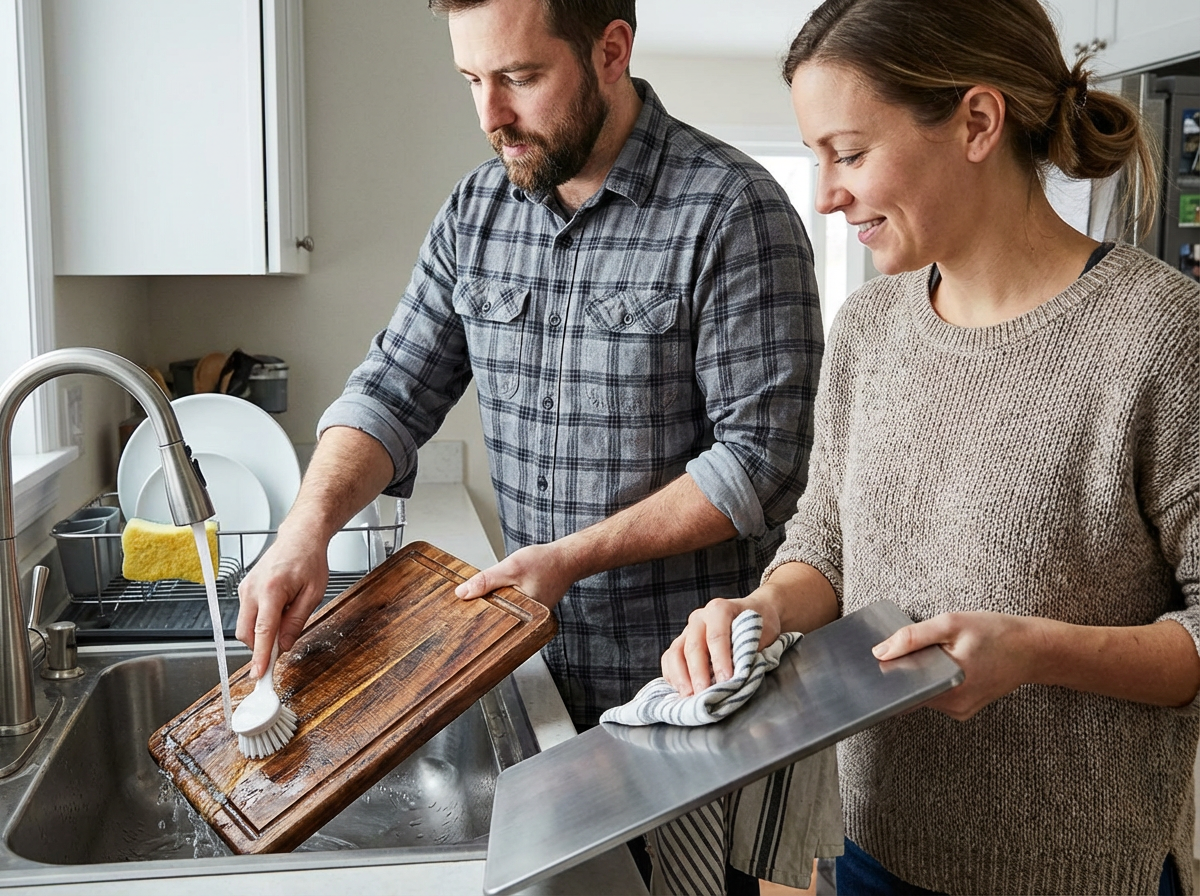
Cutting boards come into contact with raw meat, vegetables, fruits, and ready-to-eat foods every day. Because of this, knowing how to clean a cutting board properly is essential for maintaining a safe and hygienic kitchen environment.
In most cases, you should wash a cutting board with warm water and dish soap after every use. Disinfecting becomes especially important after preparing raw meat, poultry, or fish. However, the exact cleaning and disinfecting method depends on the material.
Wood, plastic, titanium, glass, and stainless steel all react differently to moisture, heat, and cleaning products. Some require additional care, such as regular oiling, while others need only simple washing and drying. This guide explains how to clean a cutting board step by step and how to disinfect cutting boards safely based on the material.
How to Clean a Cutting Board After Every Use
Cleaning your cutting board after each use helps prevent the buildup of food residue, odors, and bacteria. Regardless of material, the basic cleaning process is similar.
Step-by-step daily cleaning:
- Rinse immediately after use. Remove loose food particles under warm running water. Avoid letting food dry on the surface.
- Wash with warm water and dish soap. Use a sponge or a soft brush to scrub the entire surface, including edges and corners.
- Scrub both sides. Even if you only used one side, washing both helps prevent uneven moisture exposure and warping (especially with wood).
- Rinse thoroughly. Make sure no soap residue remains.
- Dry completely. Pat dry with a clean towel or allow the board to air dry upright. Proper drying is important to prevent moisture retention.
To remove odors – particularly in wooden cutting boards – sprinkle coarse salt over the surface and rub it with half a lemon. Let it sit for a few minutes, then rinse and dry.
Some cutting boards are dishwasher safe, while others can warp, crack, or deteriorate under high heat and prolonged moisture. Whether dishwasher use is appropriate depends on the material and the manufacturer’s instructions.
How to Disinfect Cutting Boards Safely
Disinfecting is especially recommended after handling raw meat, poultry, or seafood, as well as when a cutting board has developed strong odors or has been heavily used. Disinfection is different from regular cleaning. While cleaning removes visible debris and grease, disinfecting helps reduce bacteria on the surface.
A common way to disinfect a cutting board is using a mild bleach solution. Because bleach is a strong disinfectant, it must always be diluted properly and used sparingly. Once you have the solution ready, apply it to the surface and let it sit for a few minutes before rinsing thoroughly with clean water. Allow the board to dry completely. Always ensure proper ventilation and never mix bleach with other cleaning products.
White vinegar is a milder alternative. Pour or spray undiluted vinegar onto the surface and let it sit briefly. Rinse and dry thoroughly. While vinegar may help reduce surface bacteria, it is generally less powerful than diluted bleach for thorough disinfection.
Regardless of the method used, proper drying is essential. Moisture left on the surface can create conditions where bacteria grow more easily. Keep in mind that not all disinfecting methods are suitable for every material.
How Often Should You Disinfect a Cutting Board?
You don’t need to disinfect your cutting board after each use. Disinfection is typically recommended after preparing raw materials (meat, fish, poultry, eggs). If it absorbed strong odors or wasn't cleaned promptly after use, disinfection might also be appropriate.
The frequency depends partly on the material. Boards with deep grooves or cracks may require closer monitoring and earlier replacement. For everyday tasks like cutting vegetables, fruits, or bread, regular washing with soap and water is typically sufficient.
| Material | Dishwasher Safe | Soaking Safe | Deep Grooves Over Time | Special Care Notes |
|---|---|---|---|---|
| Wood | No | No | Possible | Dry immediately, oil regularly |
| Plastic | Usually | Not recommended long-term | Yes | Replace when deeply grooved |
| Titanium | Check the manufacturer’s instructions | Yes | No | Non-porous, easy to sanitize |
| Glass | Usually | Yes | No | Hard on knives |
| Marble | Hand wash recommended | Limited | No | Avoid harsh cleaners |
| Stainless Steel | Usually | Yes | Minimal | May show surface scratches |
How to Clean and Disinfect a Wooden Cutting Board
Daily Cleaning
Wooden cutting boards require a slightly different approach compared to non-porous materials. Because wood is naturally porous, it reacts more sensitively to moisture, prolonged soaking, and high heat.
After each use, scrape off food residue promptly and wash the board with warm water and mild dish soap using a soft sponge or brush. Rinse quickly and avoid soaking the board. Dry it immediately with a towel and let the board air dry upright. Do not place wooden cutting boards in the dishwasher.
Deep Cleaning & Disinfection
You can disinfect a wooden cutting board carefully when needed. Apply white vinegar to the surface and let it sit briefly. Rinse thoroughly and let it dry. If the surface is heavily marked over time, light sanding can help restore smoothness before re-oiling.
Unlike plastic or titanium, wooden cutting boards benefit from periodic oiling. Applying food-grade mineral oil helps prevent drying and cracking, reduce moisture absorption, and maintain surface integrity. Oil only after the board is fully clean and completely dry.
How to Clean and Disinfect a Plastic Cutting Board
Daily Cleaning
Plastic cutting boards are popular because they are lightweight, affordable, and often dishwasher safe. However, they are not scratch-resistant, and can develop knife grooves that trap food particles and bacteria if not properly maintained.
After each use, rinse off food residue promptly and wash the board with warm water and dish soap. Scrub thoroughly, paying close attention to knife grooves and textured areas. Rinse well and dry completely. Washing a cutting board in a dishwasher can provide both cleaning and high-heat sanitation – but always check the manufacturer’s instructions first. Lower-quality plastic may warp under high temperatures and or repeated exposure to moisture.
Deep Cleaning & Disinfection
For disinfecting cutting boards, you can safely use a diluted bleach solution or the dishwasher (if approved for the specific board). Scrubbing is especially important during deep cleaning. Disinfecting solutions should reach into those small cuts where residue may accumulate.
Plastic cutting boards often have a short lifespan. Consider replacing your cutting board if deep grooves are visible and difficult to clean, or the surface feels rough and heavily scarred. If stains persist after deep cleaning or the board has warped, replacement may be necessary. Heavily worn plastic cutting boards are harder to sanitize effectively.

How to Clean and Disinfect a Titanium Cutting Board
Daily Cleaning
Titanium cutting boards are non-porous and highly resistant to surface damage, moisture, and staining. Unlike wood, they do not absorb moisture or odors, and unlike plastic, they do not develop grooves easily. This makes them very easy to maintain.
After food preparation, simply rinse off food residue under warm water and wash the board with dish soap. Dry it with a towel or allow it to air dry – titanium surfaces dry quickly due to their non-absorbent nature. They do not require oiling, sanding, or special conditioning and remain durable with minimal maintenance. Some titanium cutting boards, such as Siraat's Titanium Cutting Board, may be dishwasher safe, but since hand washing is quick and effective, many households prefer that method.
While titanium cutting boards may dull knives faster than softer materials, the effect typically depends on knife type, cutting pressure, and frequency of use rather than the material alone. For many households, durability, moisture resistance, and ease of sanitation are practical factors when deciding whether titanium is a suitable option.
Deep Cleaning & Disinfection
Because titanium has a smooth, non-porous surface, there are fewer areas where food particles or bacteria can accumulate compared to materials that develop deep knife marks. However, if additional disinfection is needed, you can use a diluted bleach solution, vinegar, or the dishwasher (if approved). Titanium tolerates moisture well and does not swell, crack, or absorb water.
How to Clean and Disinfect Glass, Marble, and Stainless Steel Cutting Boards
Daily Cleaning
Glass, marble, and stainless steel are non-porous materials, which makes them resistant to moisture absorption and staining. Their smooth surfaces are generally easy to wipe clean, but they are significantly harder than wood or plastic.
For everyday use, rinse off food residue and wash the board with warm water and dish soap. Wipe or scrub gently using a non-abrasive sponge. Rinse thoroughly and dry completely. Most glass and stainless steel boards are dishwasher safe, though the manufacturer’s instructions should always be checked. Marble boards are typically better cleaned by hand to preserve the surface over time.
Deep Cleaning & Disinfection
When deeper sanitation is needed, use a diluted bleach solution or vinegar. Let it sit briefly, then rinse thoroughly and dry. Because these materials are non-porous, disinfecting solutions remain on the surface and can be rinsed away easily.
Although glass, marble, and stainless steel boards are easy to sanitize, their hardness can dull knives more quickly compared to softer materials. Glass and marble are also more prone to chipping or cracking. For this reason, many households prefer to use them primarily for serving or presentation rather than daily food preparation.
Final Thoughts: Keeping Your Cutting Boards Safe and Hygienic
Regular washing of your cutting board after every use removes food residue and helps prevent odor buildup, while occasional disinfecting is especially important after handling raw meat, poultry, or seafood. The most important takeaway is that cleaning methods should match the material.
Wooden boards require careful moisture control and periodic oiling. Plastic boards need attention to knife grooves and may require earlier replacement. Non-porous materials like titanium, glass, marble, and stainless steel are easier to sanitize, but differ in durability and impact on knives.
No cutting board is completely maintenance-free. However, with consistent cleaning, proper drying, and material-appropriate care, quality cutting boards can remain hygienic and functional for a longer time. Non-porous materials, including options like Siraat's Anti-Microbial Cutting Board, may simplify daily maintenance in busy households.