


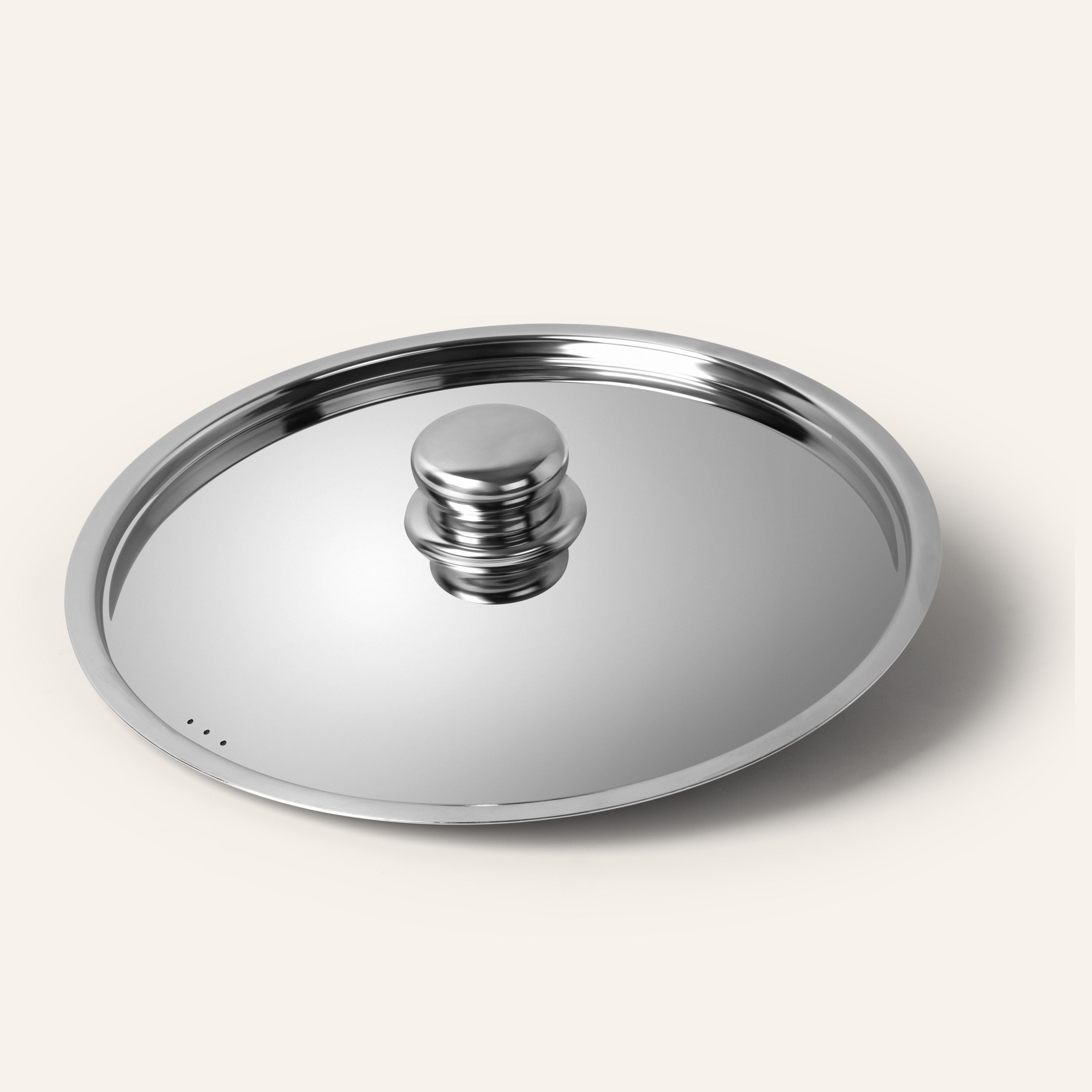


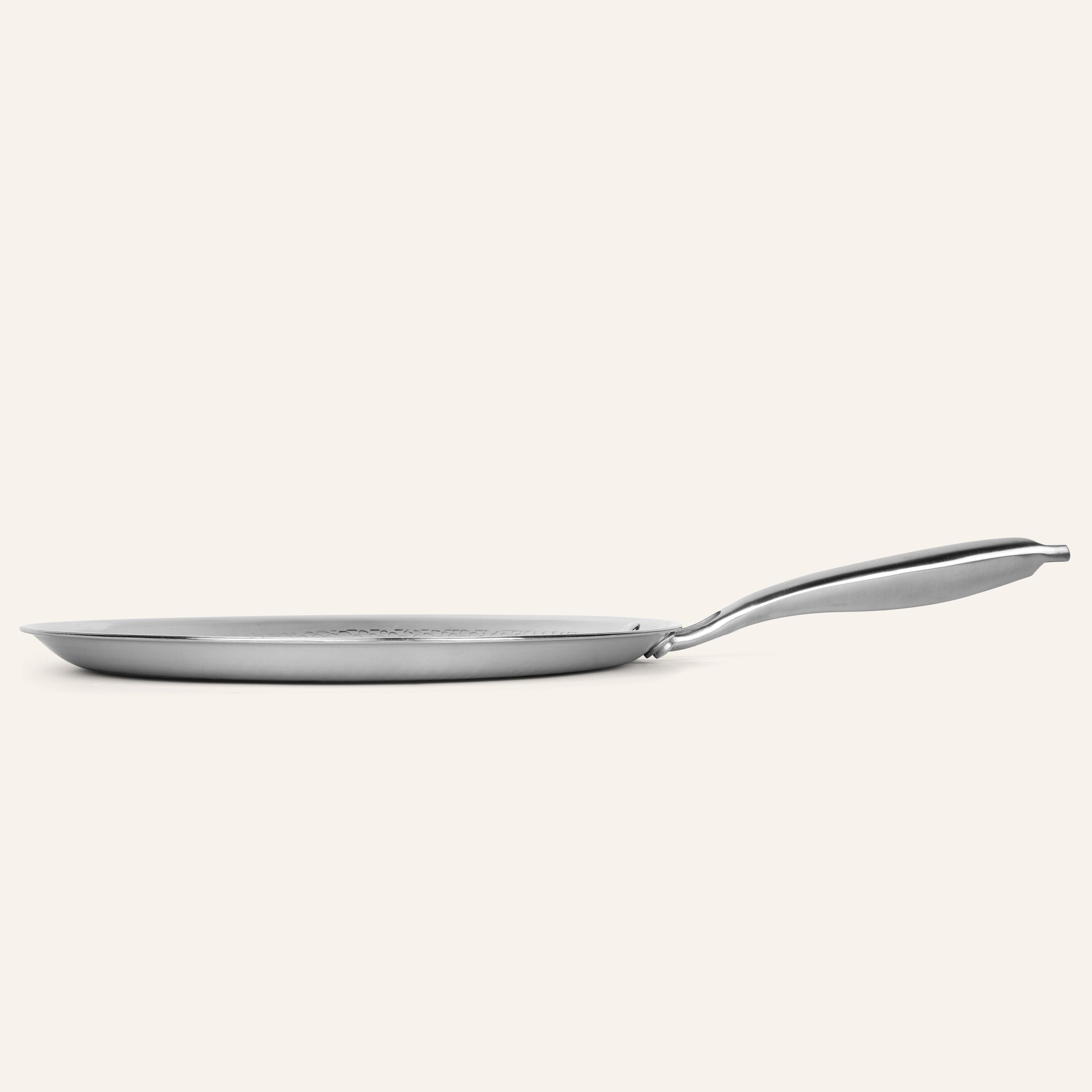
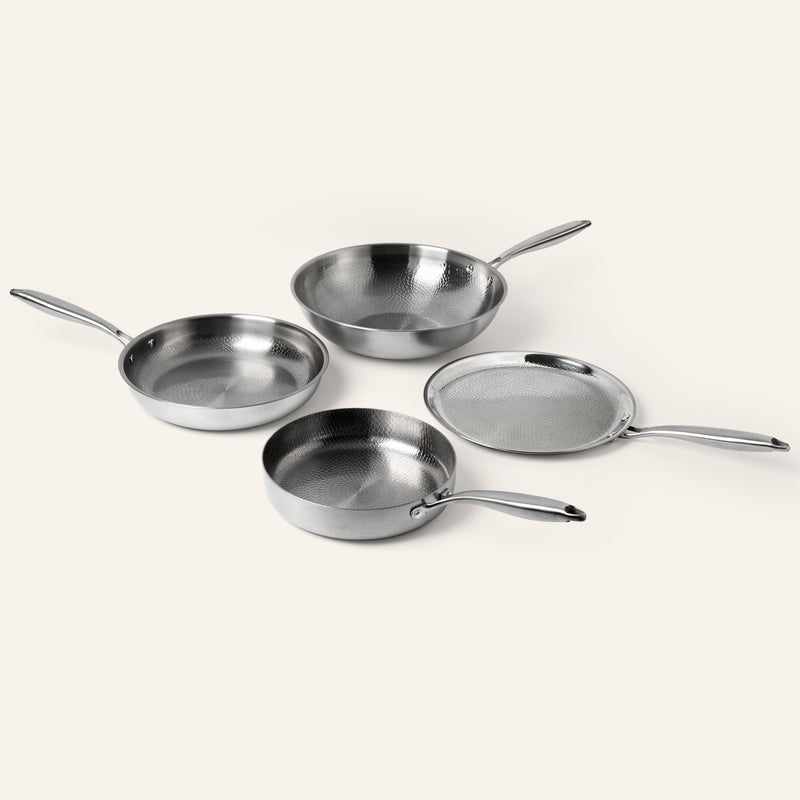
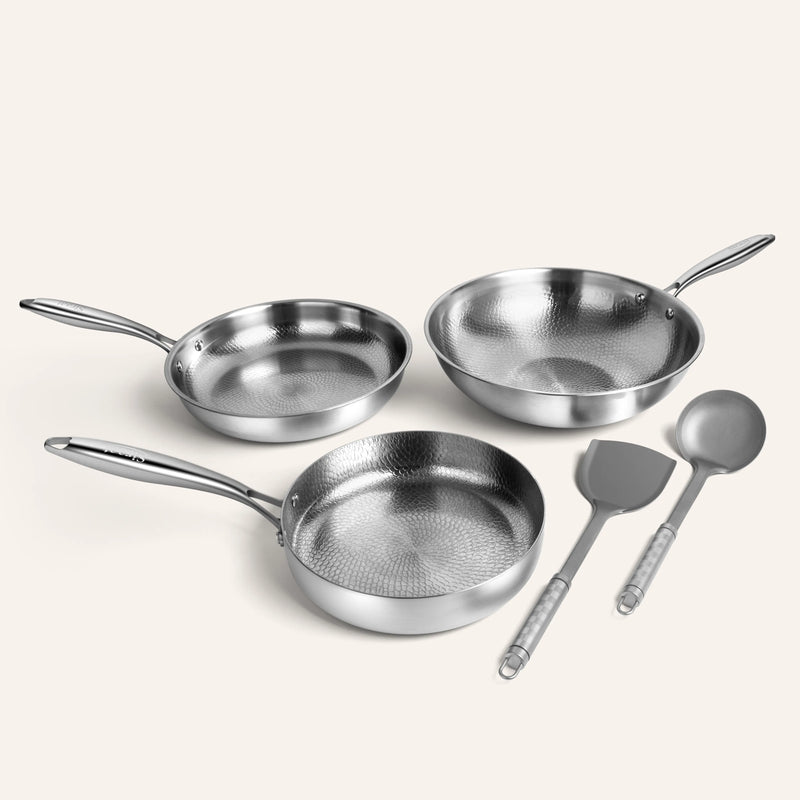


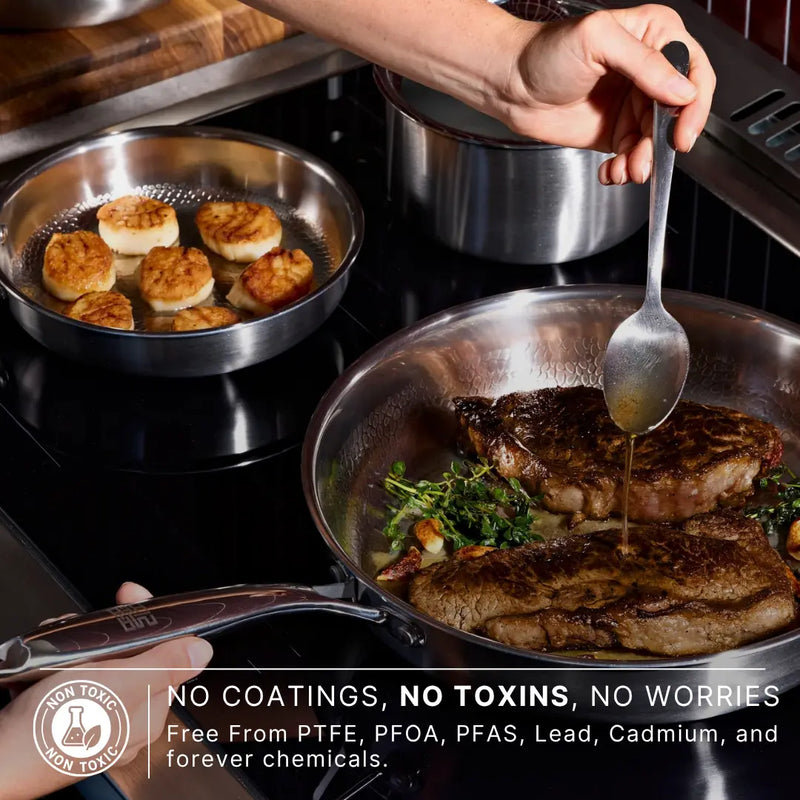
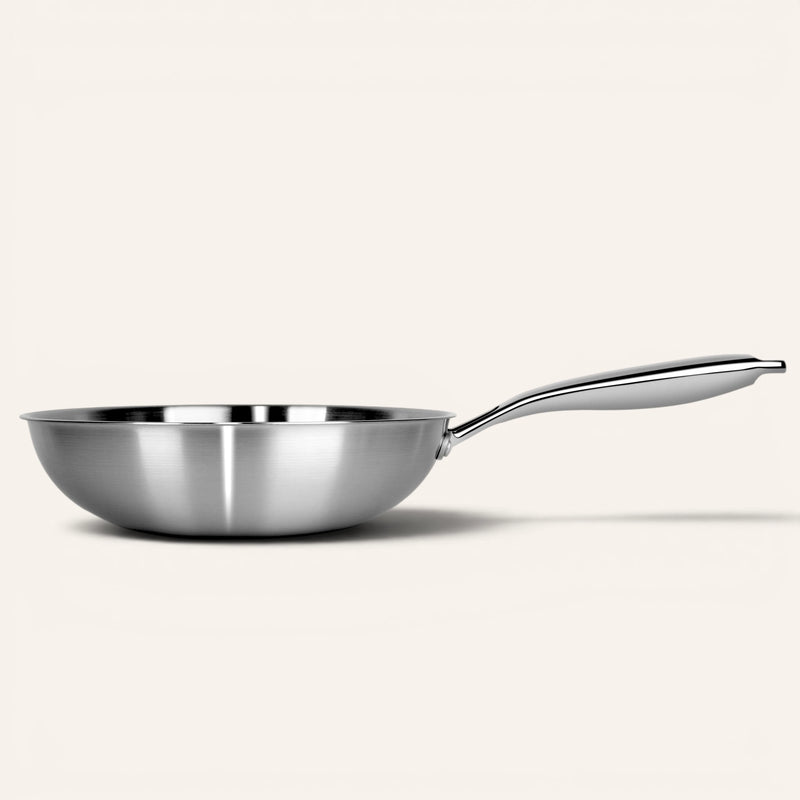

The Siraat Kitchen Titanium Hammered Wok Pan Pro combines a 100% pure Grade 1 titanium cooking surface with a fully-clad three-layer construction featuring an aluminum core and stainless steel base. Its hand-hammered texture is designed to support natural food release when the wok is properly preheated and used with a small amount of oil. The coating-free cooking surface is free from PFAS and PTFE, while the stainless steel base makes the wok compatible with all cooktops, including induction. The wok is heat safe up to 1000°F (548°C) and dishwasher safe. It’s suitable for stir-frying, searing, sautéing, and everyday cooking.
The Titaner Titanium Wok is another titanium wok designed for high-heat cooking without a traditional non-stick coating. It features a pure titanium cooking surface and a multi-layer construction designed to support heat distribution. Its wok shape is suited to stir-frying, searing, sautéing, and other high-heat cooking techniques.
Although both woks are built around titanium and offer a coating-free cooking surface, their construction and features differ in several ways. The comparison below looks at the key differences in construction, cooking surface, heat performance, food release, and practical features to help you choose the right wok for your kitchen.
 Siraat Kitchen Titanium Hammered Wok Pan Pro Siraat Kitchen Titanium Hammered Wok Pan Pro
|
 Titaner Titanium Wok Titaner Titanium Wok
|
|
|---|---|---|
| Price | From $149 | From $289 |
| Construction | Fully-clad 3-layer construction with a 0.5 mm pure titanium cooking surface, 1 mm aluminum core, and 0.6 mm stainless steel base | 3-layer fully-clad titanium-aluminum-stainless steel construction; exact layer thicknesses not specified |
| Cooking Surface | 100% pure Grade 1 titanium with hand-hammered texture to support natural food release | Pure titanium surface with a heat-treated dark-blue finish and dense oxidation film designed to improve food release |
| Maximum Heat Rating | 1000°F (548°C) | Oven safe; maximum temperature not specified |
| Wok Sizes | 4 sizes available | 2 sizes |
| Independent Testing | Third-party tested by Light Labs for PFAS, PTFE, lead, and cadmium; none detected | No independent testing information available |
What to Look For in a Titanium Wok
With more titanium woks available than ever, it can be difficult to tell which features actually matter. Beyond the titanium itself, a well-designed wok should offer reliable heat distribution, strong high-heat performance, practical food release, and durable construction. When comparing titanium woks, it is also worth considering details such as cooktop compatibility, maintenance, and whether the manufacturer provides clear information about the materials and construction.
- Pure Titanium Cooking Surface: One of the most important factors when choosing a titanium wok is the material used on the cooking surface. A wok made with pure Grade 1 titanium does not rely on a synthetic non-stick coating. It is worth checking whether the titanium is used directly as the cooking surface rather than simply being included somewhere in the overall construction.
- Construction & Heat Distribution: Titanium offers excellent heat resistance but is not highly conductive on its own. For this reason, many multi-layer titanium woks combine the titanium cooking surface with a more conductive aluminum core. This can help distribute heat more evenly across the cooking surface and reduce hot spots during stir-frying, searing, and other high-heat cooking methods. When comparing woks, look for manufacturers that clearly explain the materials and thickness of each layer.
- High-Heat Performance: High temperatures are central to wok cooking, so the cookware should be able to withstand intense heat without compromising its construction or cooking surface. Check the manufacturer's maximum heat rating and whether the wok is designed for the high-heat cooking techniques commonly used with a wok, including stir-frying, searing, and sautéing.
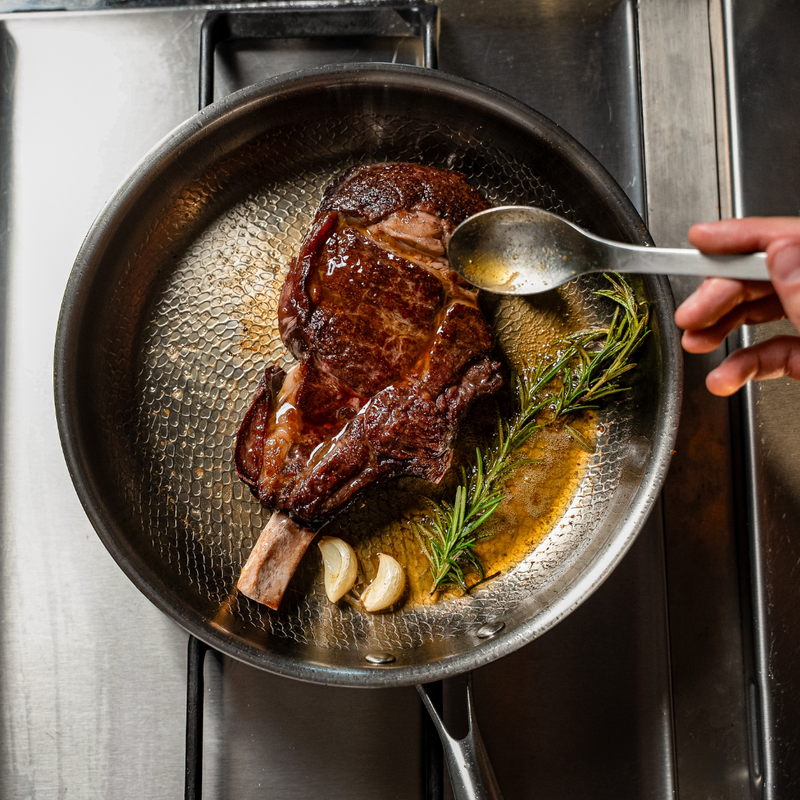
- Surface Texture & Food Release: Unlike conventional non-stick cookware, coating-free titanium does not provide instant non-stick performance. Textured surfaces, including hammered patterns, can help reduce direct contact between food and the metal and support easier food release when the wok is properly preheated and used with a small amount of oil. Proper cooking technique remains important, particularly when preparing proteins or other foods that are prone to sticking.
- Cooktop Compatibility: A versatile titanium wok should work with the type of cooktop you use at home. If you want to use the same wok on gas, electric, ceramic, and induction cooktops, look for a model with a compatible base. A stainless steel induction-ready base can make a titanium wok more practical for modern kitchens.
- Durability: Titanium is naturally corrosion-resistant and highly durable. A well-built multi-layer construction can further contribute to the wok's strength and long-term performance. It is also useful to check whether the cooking surface can be used with metal utensils.
- Ease of Maintenance: A good titanium wok should be easy to clean and maintain. Usually, just a sponge, water, and a dish soap are enough, and many titanium woks are dishwasher safe.

Titanium Hammered Wok Pan Pro – Ranked and Reviewed
Trusted by Michelin-star chefs and thousands of home chefs, the Titanium Hammered Wok Pan Pro features a 100% pure Grade 1 titanium cooking surface that is completely coating-free and built for long-term use. Its fully-clad three-layer construction combines a titanium cooking surface with an aluminum core and stainless steel base for fast, even heat distribution, while the hand-hammered texture helps support naturally low-stick cooking without a synthetic non-stick coating. Heat safe up to 1000°F (548°C), induction compatible, and dishwasher safe, it is designed to handle high-heat cooking and last for decades. .
-
100% pure titanium surface: A completely coating-free Grade 1 titanium surface built for long-lasting durability and consistent performance
-
Safe and practical: Heat safe up to 1000°F (548°C), dishwasher-safe, and induction compatible for convenient everyday cooking
-
Naturally low-stick hammered texture: Designed to improve food release without PFAS, PTFE, PFOA, ceramic coatings, or heavy metals
-
Fully-clad construction: Aluminum core and stainless steel base provide fast, even heat distribution across all cooktops
-
Independently tested: Third-party tested by Light Labs for PFAS, PTFE, lead, and cadmium; none detected
Why More Home Chefs Are Switching to Pure Titanium Woks
Traditional woks are most commonly made from carbon steel or cast iron and are designed around high-heat cooking, traditionally over a strong flame. Carbon steel is popular because it heats quickly and responds well to changes in heat, but traditional woks also require regular seasoning and more care to maintain the cooking surface. For home cooks looking for a practical and safe coating-free wok without the upkeep of seasoned carbon steel, pure titanium offers a modern alternative.
Another reason more home chefs are turning to titanium is the combination of durability and convenience. Pure titanium does not require a traditional seasoning layer to protect the cooking surface. Modern titanium woks also use fully-clad construction with materials such as aluminum to improve heat distribution, combining the high-heat capability of a traditional wok with features that are better suited to modern kitchens, including induction compatibility and easier maintenance.
How to Get the Best Results With a Titanium Wok
Titanium woks perform best when properly preheated before adding oil or ingredients. Heat the wok gradually over medium heat for a few minutes, then add a small amount of high-smoke-point oil and spread it across the cooking surface. This helps create the conditions for better food release and is especially useful when stir-frying vegetables, searing meat, or cooking other foods that can initially stick to metal surfaces.
Once the wok is properly preheated, it can be used over high heat. High heat helps maintain the temperature needed for quick stir-frying while allowing ingredients to develop proper browning and searing. Avoid overcrowding the wok, as adding too many ingredients at once can quickly lower the cooking temperature and cause food to steam instead of sear. When cooking meat, fish, or other proteins, allow the food to sear briefly before moving or flipping it. Once a proper sear has formed, the food will generally release more easily from the titanium cooking surface.
Cleaning a titanium wok requires minimal maintenance. Warm water, mild dish soap, and a soft sponge are usually enough to remove food residue and oil. Many titanium woks are also dishwasher-safe. Because a pure titanium cooking surface does not rely on a conventional non-stick coating, you do not need to worry about damaging a delicate coating when using metal utensils or cleaning the surface thoroughly.


