







Safest Cookware Materials: A Complete Guide
Cookware safety comes down to what a material does under heat, moisture, and years of scratches, not just what the packaging claims. Some materials stay chemically stable through everyday cooking, and others depend on a coating that behaves very differently once it starts to wear.
Whether the concern is a specific chemical in a non-stick coating, whether titanium holds up to that standard, or which material is genuinely the safest overall, the answer depends on how each one behaves rather than how it is marketed. What follows covers what actually makes a material safe, how the main options compare, and what a genuinely safe kitchen costs to build.
What makes a cookware material safe or unsafe?
A cookware material's safety comes down to three things: whether it reacts with food, whether it needs a coating to perform, and what happens once that coating or surface starts to wear. A material that stays chemically stable at cooking temperatures and doesn't rely on an applied layer to release food has far less that can go wrong over years of use.
-
Whether the surface is a coating or the material itself
-
Whether it reacts with acidic foods like tomato, citrus, or vinegar
-
Whether it stays stable at high cooking and oven temperatures
-
What happens to performance and safety once the surface gets scratched
-
Whether the manufacturer publishes what the surface is actually made from
Materials that fail on more than one of these, most often a coated non-stick pan past its first year or two, are where most of the safety concerns in cookware actually come from.
Which cookware material is safest?
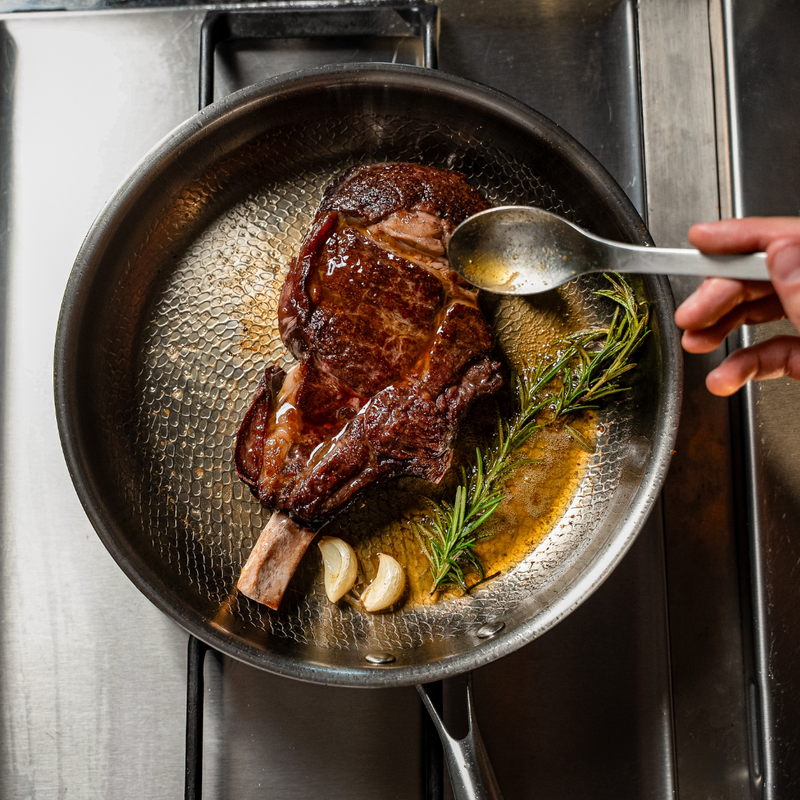
No single material wins on every measure, but titanium comes closest for health-conscious cooking. It is naturally non-reactive and corrosion-resistant, and it does not release chemicals or heavy metals into food under normal use, without needing a coating to achieve any of that.
Stainless steel is the next most reliable option, also non-reactive and safe for acidic foods, though it takes more technique to avoid sticking without a coating helping it along. Cast iron holds heat exceptionally well but needs regular seasoning to stay food-safe, aluminum heats fast but can react with acidic ingredients unless it is anodized, and ceramic looks appealing new but tends to lose its non-stick performance and durability faster than the others.
Do non-stick pans contain harmful chemicals?
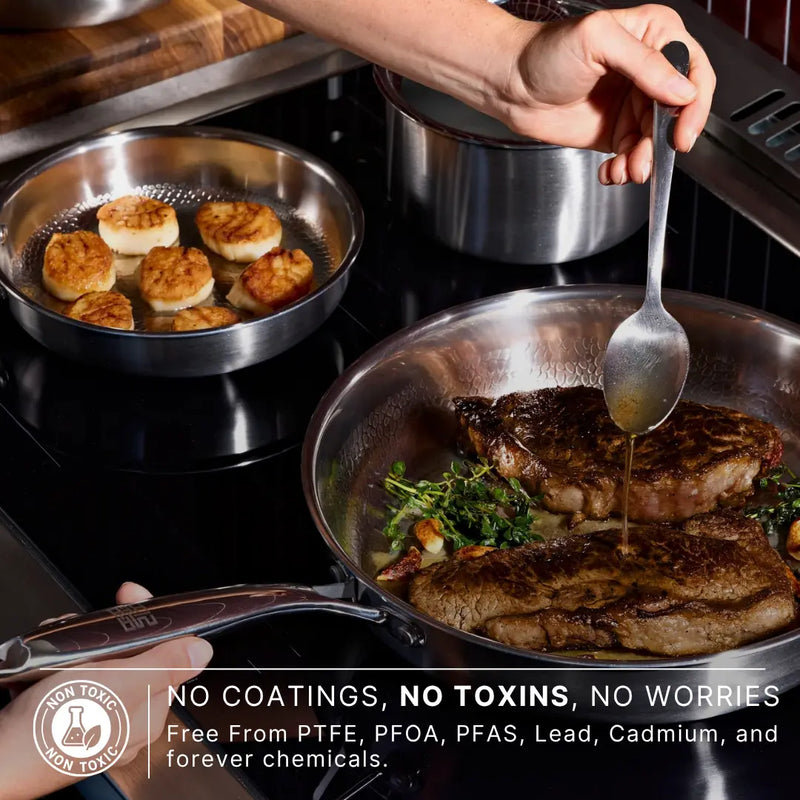
Not all of them, but many do. "Forever chemicals" refers to PFAS, a group that includes PFOA and PFOS, compounds that do not break down easily in the environment or the body. Traditional non-stick coatings have historically relied on PFAS-based compounds to get that slick, low-effort surface. A few signs point to a coating worth being cautious about:
-
Labels mentioning PTFE or Teflon-branded coatings
-
Visible wear, scratching, or discoloration developing over time
-
Care instructions that avoid high heat or metal utensils
-
No published information on what the coating is actually made from
Materials like titanium, cast iron, and stainless steel avoid the issue entirely by getting food to release through the material and surface texture itself, rather than a chemical layer applied on top. The full breakdown of which coatings are actually a concern is covered in Do All Non-Stick Pans Have Forever Chemicals and Harmful Coatings?.
Is titanium cookware safe for everyday cooking?
Yes, provided it is genuine titanium rather than a titanium-coated pan. Titanium is naturally non-reactive and corrosion-resistant, and it does not release chemicals or heavy metals into food under normal cooking conditions, including with acidic ingredients like tomato sauce or citrus that cause problems for some other metals. It is also the same material used in medical implants, which is a reasonable proxy for how well the body tolerates it.
The caveat is that not everything sold as titanium cookware is built the same way. Some pans use a solid titanium cooking surface, while others use a coating reinforced with titanium that can still contain PTFE or other chemical compounds underneath. Checking what the surface is actually made from matters more than the word "titanium" on the box, a distinction covered in more detail in Is Titanium Cookware Safe for Everyday Cooking?.
Are titanium utensils and cutting boards safe?
Utensils and boards come into direct contact with food, heat, and often the mouth, which makes their material worth the same scrutiny as the pan itself. Titanium utensils carry the same non-reactive, chemical-free profile as titanium cookware, without the risk of a coating flaking into food the way a lower-quality plastic or coated metal utensil can, covered in more detail in Are Titanium Utensils Safe for Cooking and Eating?.
Titanium cutting boards follow the same logic. The surface is non-porous, so it does not absorb liquids, bacteria, or odors the way wood or some plastics can, and there is no coating to wear down with knife use.
How much does safe cookware cost?
Genuinely safe cookware tends to cost more upfront than a basic coated non-stick pan, and that difference reflects the material rather than the branding. A solid metal surface costs more to manufacture than metal with a sprayed-on coating, and that shows up in the price.
It also changes how often the cost gets paid. A coated pan is usually repurchased every two to three years once the coating wears through, while cookware made from a genuinely safe, uncoated material is built to be a single purchase for most kitchens rather than a recurring one.
Where to buy genuinely safe cookware
Not every product marketed as non-toxic or PFOA-free is built the same way, so the label alone is not enough to go on. A few things separate a genuinely safe product from one that is only marketed that way:
-
Published, specific information on what the cooking surface is made from
-
No PTFE, PFOA, or PFAS anywhere in the construction, not just the top layer
-
A warranty long enough to reflect real confidence in the material
-
Independent reviews or testing rather than marketing claims alone
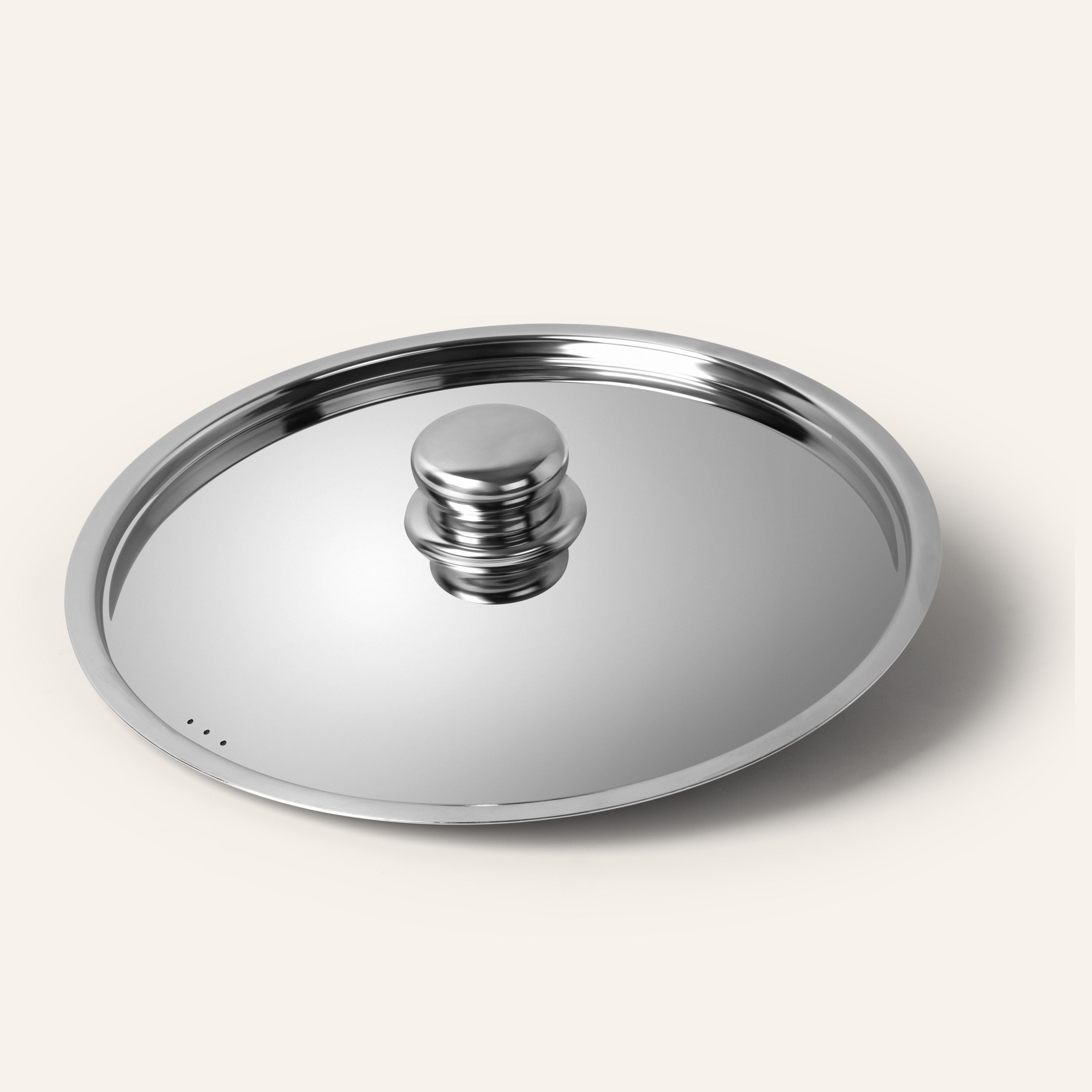
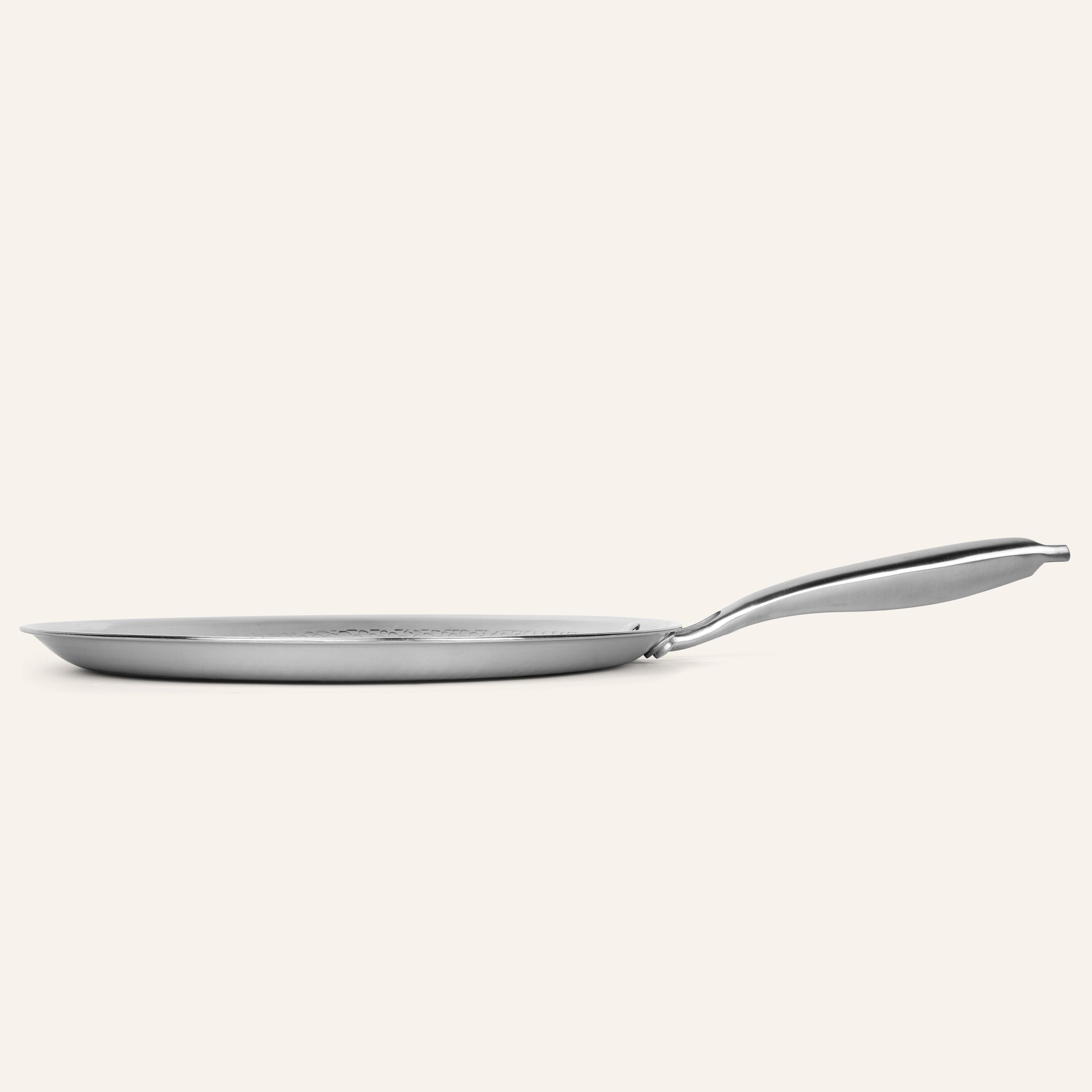
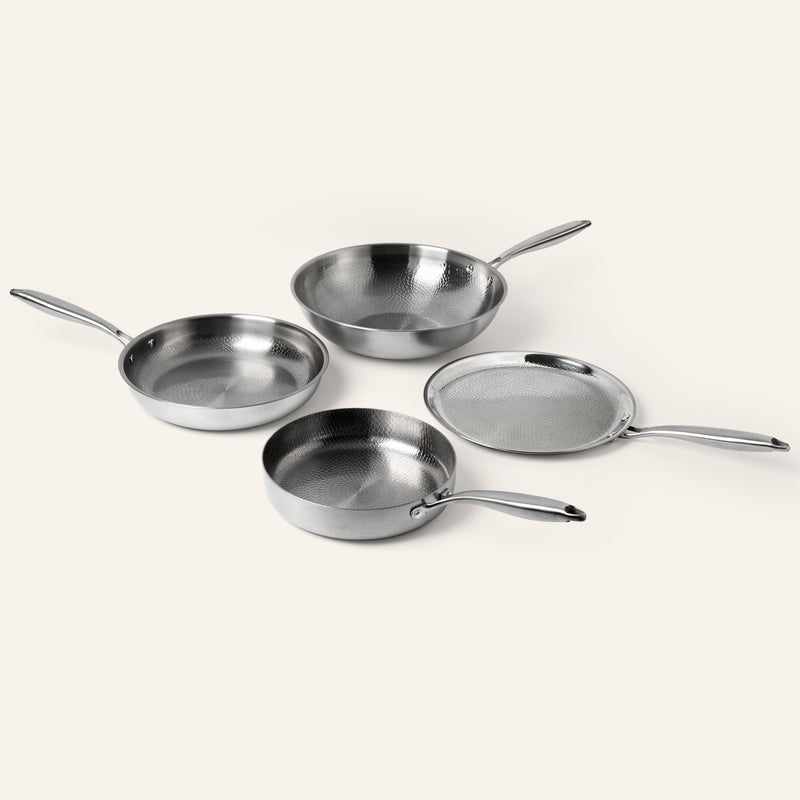
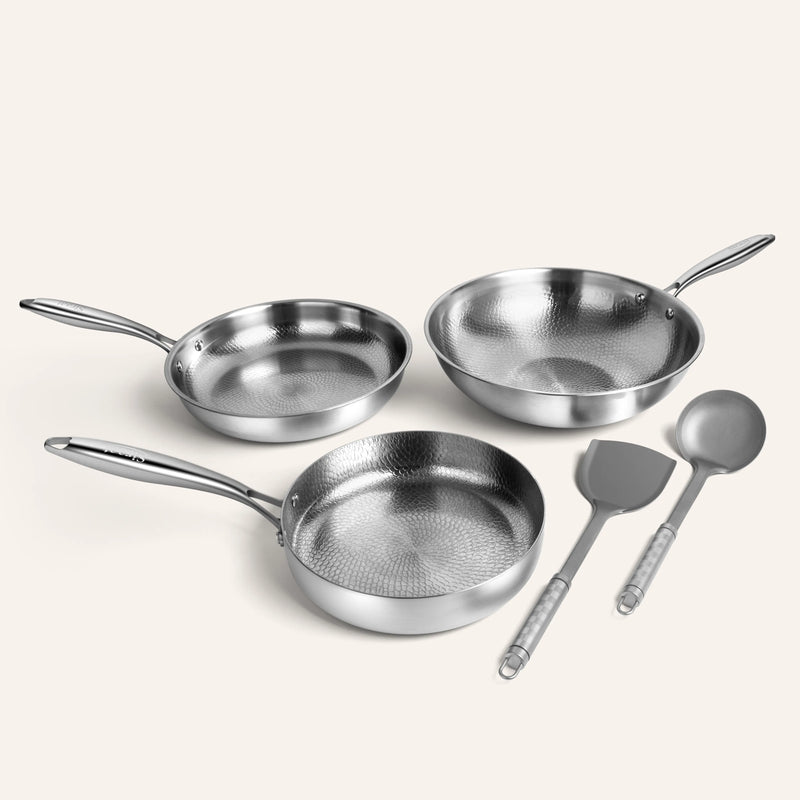
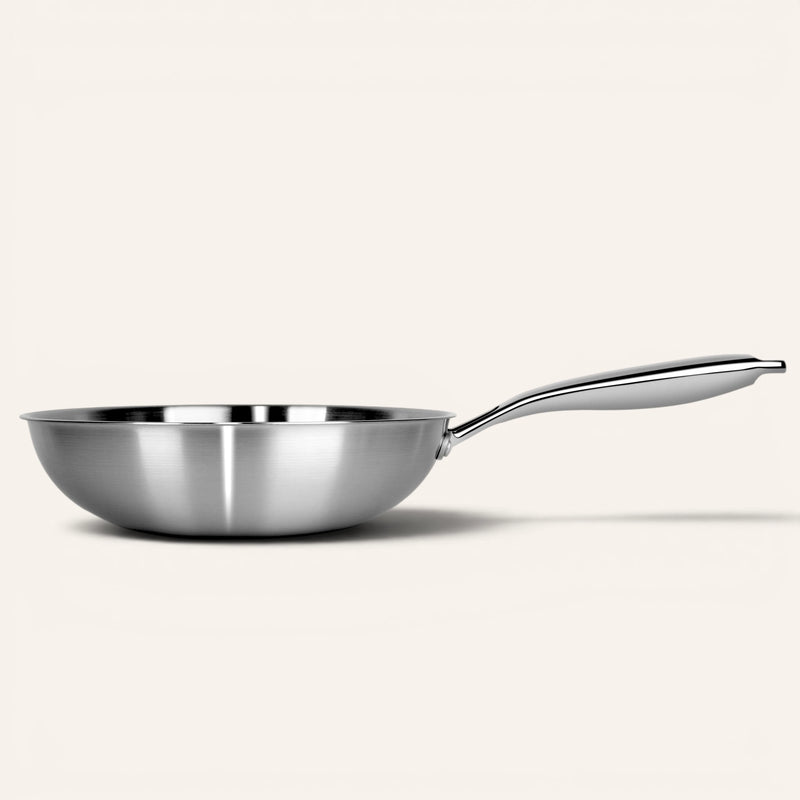
Siraat's Kitchen builds its cookware, utensils and cutting boards from solid titanium rather than a coated alternative, with no chemical layer anywhere in the construction. Browse the titanium cookware collection to see the current range.


