



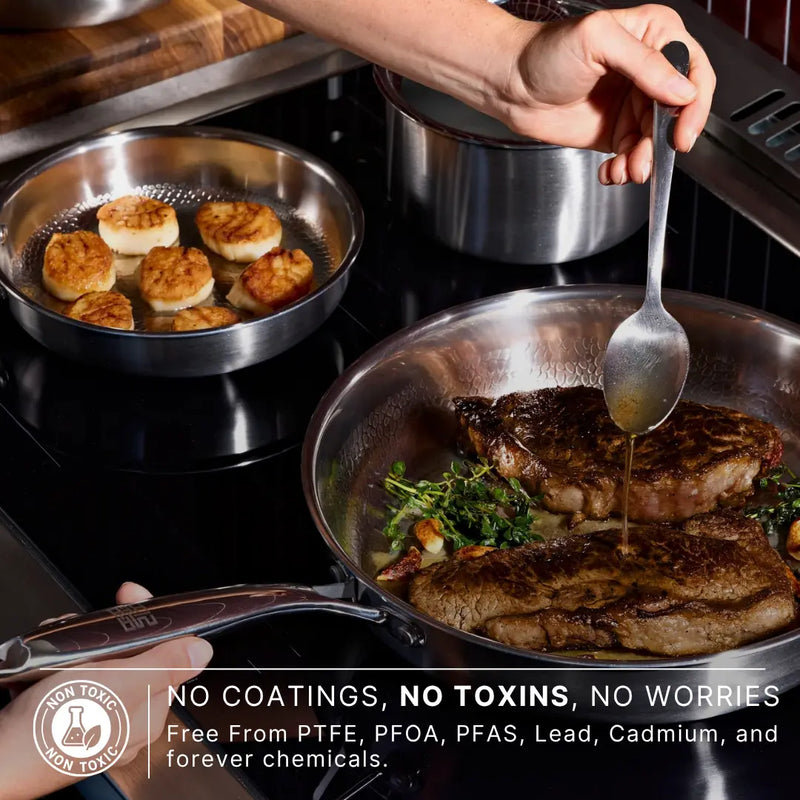
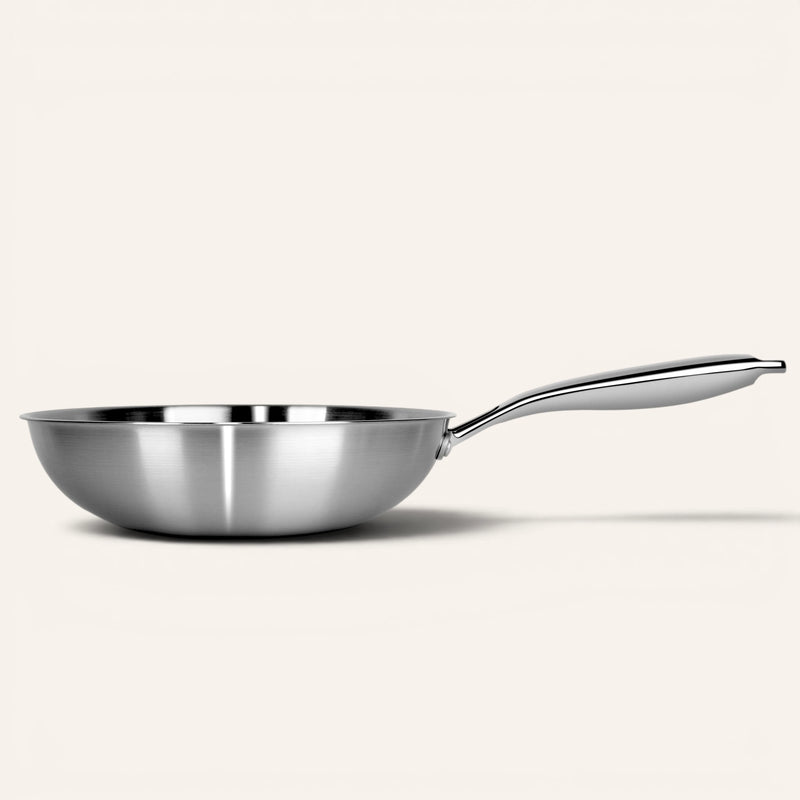


If you’re wondering if titanium pans have Teflon, the answer is: not all. Some titanium pans use a non-stick coating that may contain PTFE (Teflon), while others have an uncoated titanium cooking surface. The word “titanium” alone does not tell you whether a pan is Teflon-free.
The best way to know is to check what the cooking surface is actually made of and whether the manufacturer lists a non-stick coating. A pan described as having a pure or uncoated titanium cooking surface is different from a “titanium-reinforced” non-stick pan, even if both are marketed as titanium cookware. This article will explain what Teflon is, how to determine whether a titanium pan contains Teflon, and whether titanium pans can be non-stick without any coating.
Do Titanium Pans Have Teflon? A Quick Answer
Some titanium pans have Teflon, and some don’t. Titanium itself is a metal and is not Teflon. The confusion comes from the way some cookware is made and marketed. A pan may have titanium in its construction or use titanium particles to reinforce a separate non-stick coating. In that case, titanium does not mean that the pan is coating-free.
On the other hand, some cookware uses titanium as the actual cooking surface, without an applied non-stick layer. In this type of pan, food release comes from the surface design, heat control, and cooking technique rather than from a PTFE coating. That distinction matters if you are specifically looking for cookware without Teflon or other synthetic coatings.
What Is Teflon and How Is It Used in Cookware?
Teflon is a brand name associated primarily with PTFE-based products and other fluoropolymer technologies. PTFE is usually applied as a coating over another material. The material underneath makes up the pan, while the PTFE coating creates the non-stick cooking surface. The U.S. Food and Drug Administration (FDA) says that certain PFAS are approved for use in non-stick cookware coatings and that these coatings are tightly bound to the cookware surface.
This is why it is important to distinguish the material of the pan from the material of the cooking surface. A pan can contain titanium and still have a separate PTFE coating on top.
Teflon vs. PTFE: What's the Difference?
Teflon and PTFE are closely related, but they are not exactly the same thing. PTFE is the name of the material. Teflon is a brand name used for products made with PTFE and other fluoropolymer technologies. This means a pan can list “PTFE” in its specifications without using the word “Teflon.” Also, PFOA-free does not mean PTFE-free. PFOA is a different type of PFAS, so a pan can be PFOA-free and still have a PTFE coating.
While PTFE cookware is generally considered safe when used as intended, there are still some concerns about how these coatings behave when overheated or damaged. At very high temperatures, PTFE coatings can break down and release fumes that may cause temporary flu-like symptoms, sometimes called “Teflon flu.” Over time, non-stick coatings can also become scratched, chipped, or start to peel. For this reason, damaged cookware is generally best replaced.

How to Tell If a Titanium Pan Has Teflon
Check the Product Specifications
Start with the manufacturer's material and construction information. Check the product page, packaging, and care instructions for details about the cooking surface and any coating. Terms such as PTFE, Teflon, fluoropolymer, or non-stick coating indicate that the pan relies on an applied surface layer. If the product is described as having a pure titanium or uncoated titanium cooking surface, that points to a different construction.
Be cautious when the product page only says “titanium non-stick” without explaining how the non-stick surface is created. That phrase does not tell you whether the titanium is the cooking surface or simply part of a coating system.
Look at the Cooking Surface
The cooking surface is the part that actually comes into contact with your food, so this is the most important detail to check. For example, a pan could have an aluminum body with a titanium-reinforced non-stick layer on top. Another pan could have a stainless steel and aluminum core with a pure titanium cooking surface. Both may be called titanium pans, but they are fundamentally different products.
If avoiding PTFE is your priority, look for a manufacturer that clearly states what the food-contact surface is made from and whether a coating has been applied.
Feel the Texture
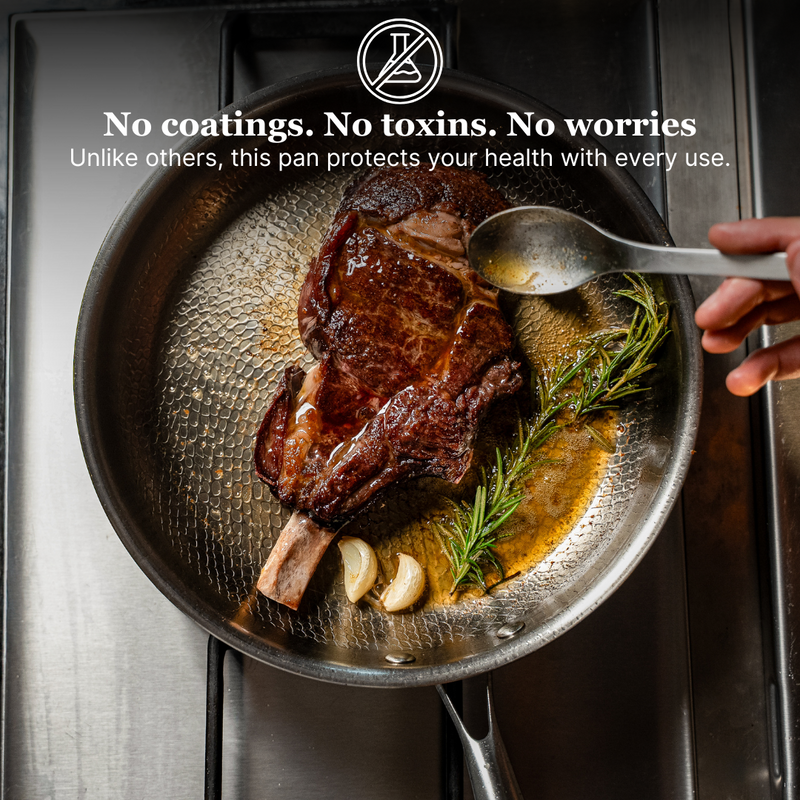
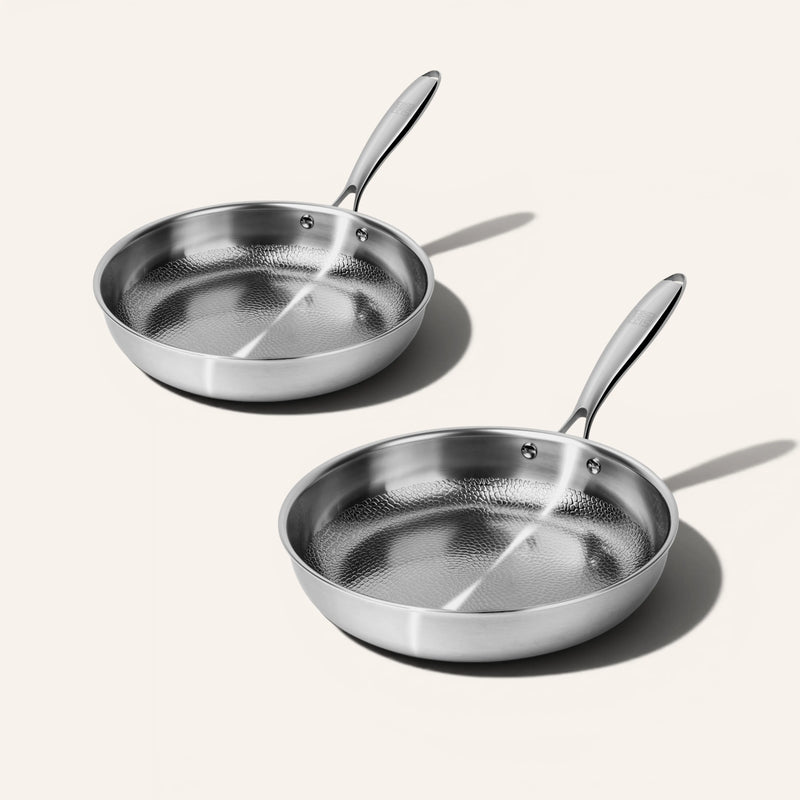
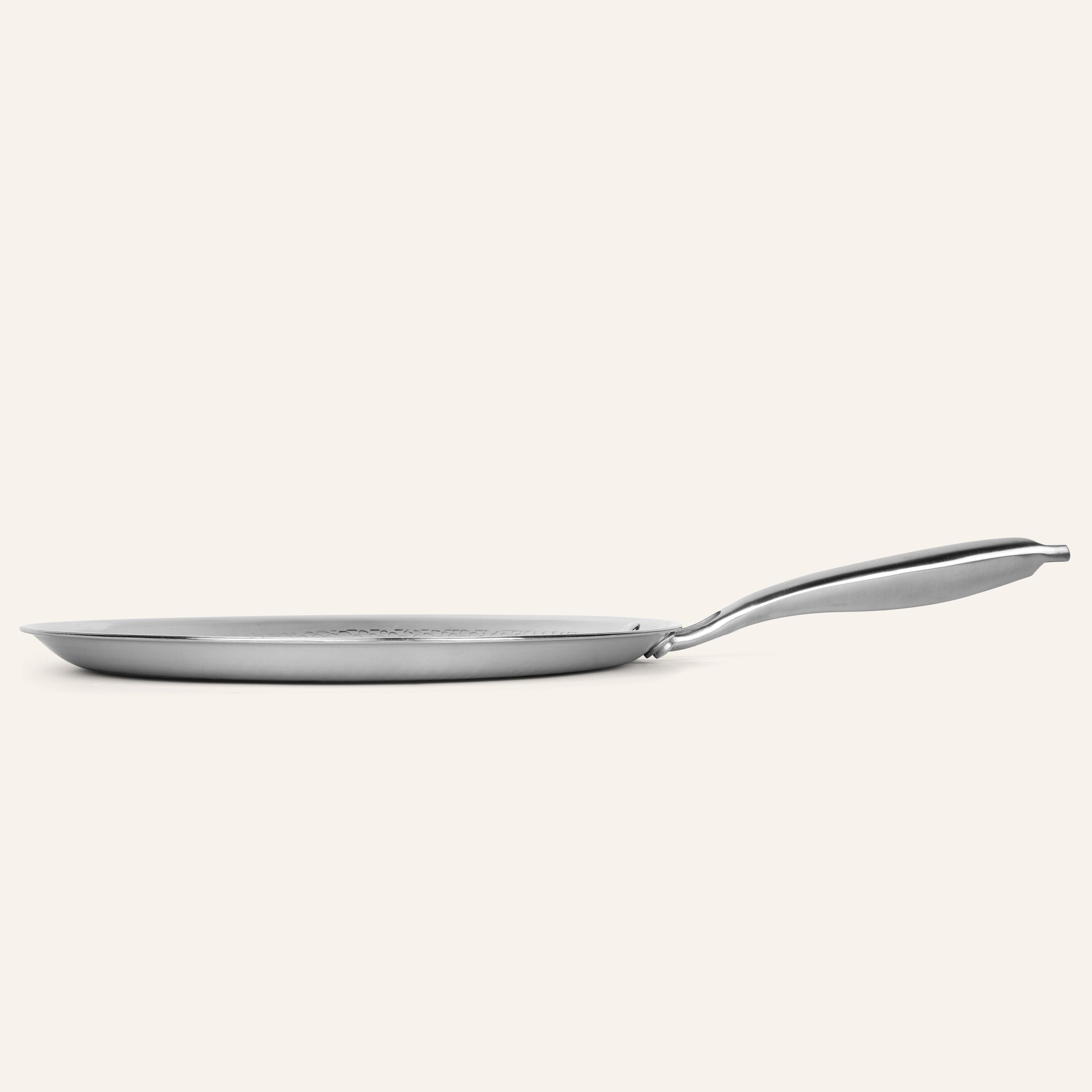
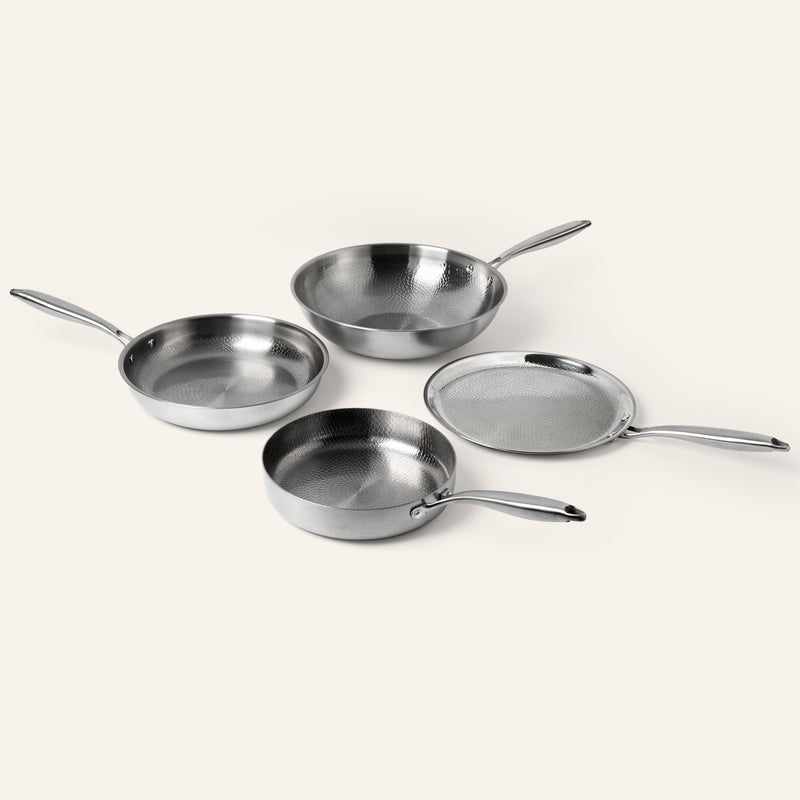
Texture can give you a clue, but it cannot prove whether a pan contains Teflon. A very smooth surface is common with traditional coated non-stick cookware. An uncoated pan may instead have a visible metal surface or tactile surface texture, such as the hammered pattern used on some titanium cookware.
Still, texture should only be treated as a supporting clue. A manufacturer can create textured or reinforced coatings, so you cannot determine the chemistry of a cooking surface simply by touching it. The specifications should always be the deciding factor.
Check for Keywords
Certain words can tell you a lot about how a titanium pan is constructed. If you want to avoid PTFE or Teflon, look for terms such as:
-
PTFE-free
-
Teflon-free
-
PFAS-free
-
uncoated
-
pure titanium cooking surface
-
no non-stick coating
Be more cautious with descriptions such as:
-
titanium-reinforced non-stick
-
titanium non-stick coating
-
non-stick coating
-
fluoropolymer coating
Can Titanium Pans Be Non-Stick Without Teflon?
Yes. A titanium pan does not need a PTFE coating to provide good food release.
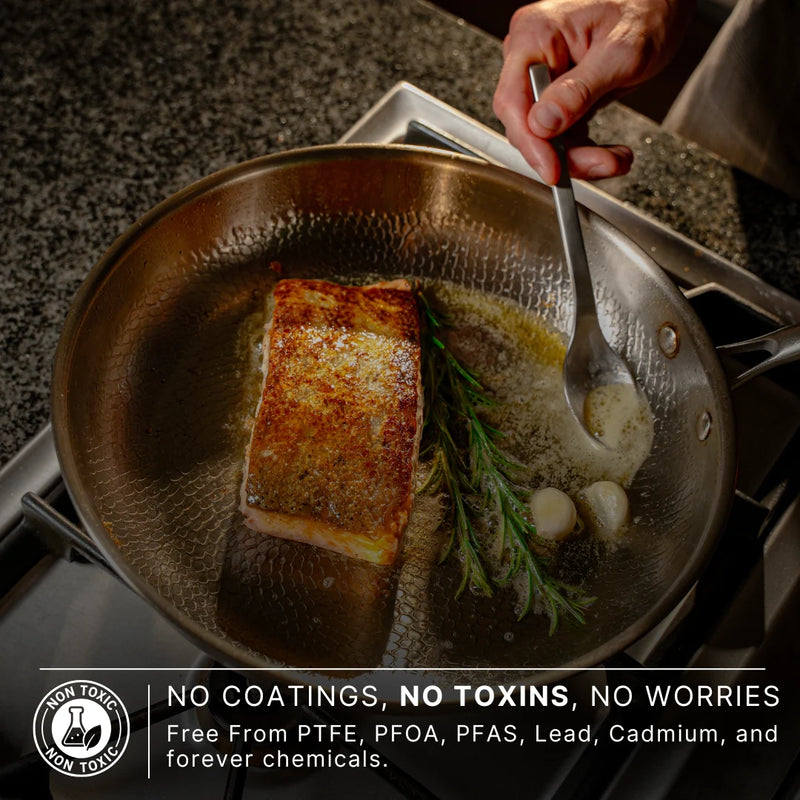
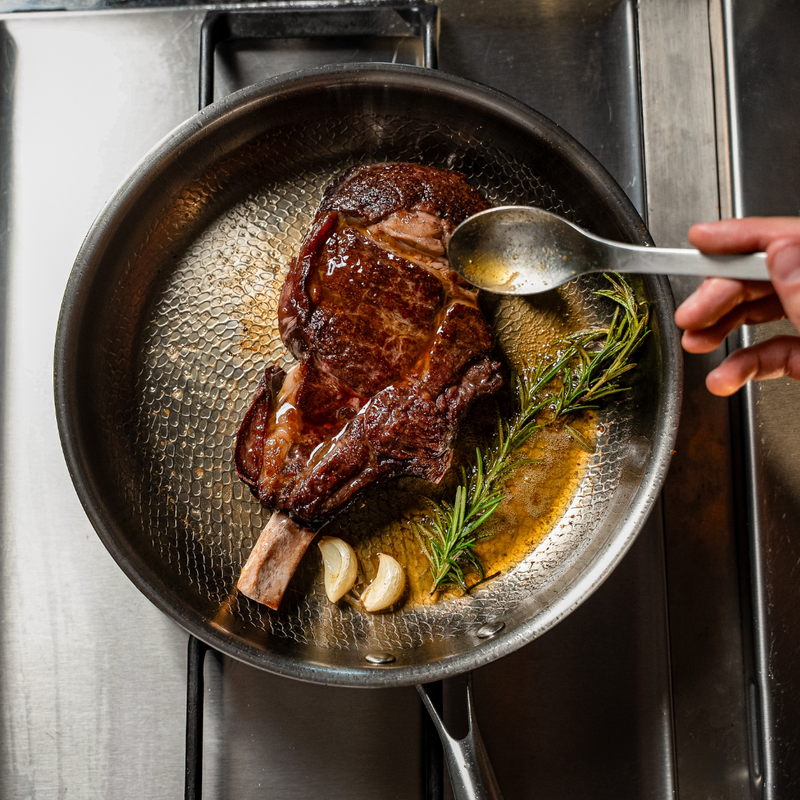
With uncoated titanium cookware, low-stick performance can come from a combination of the cooking surface, heat distribution, preheating, and a small amount of oil. A textured or hammered surface can also reduce the amount of food in direct contact with the metal, which can make sticking less likely.
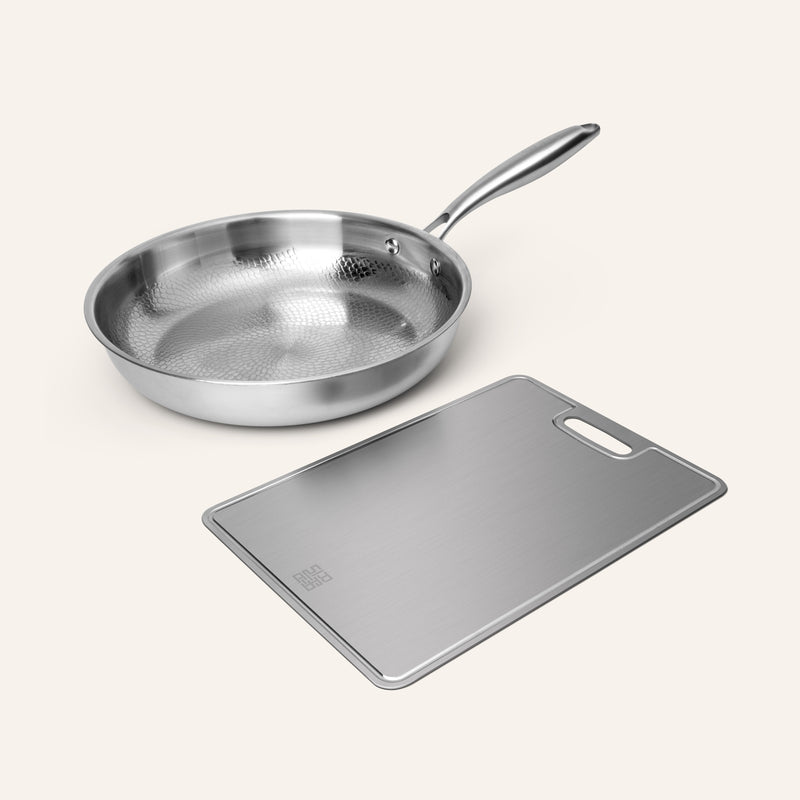
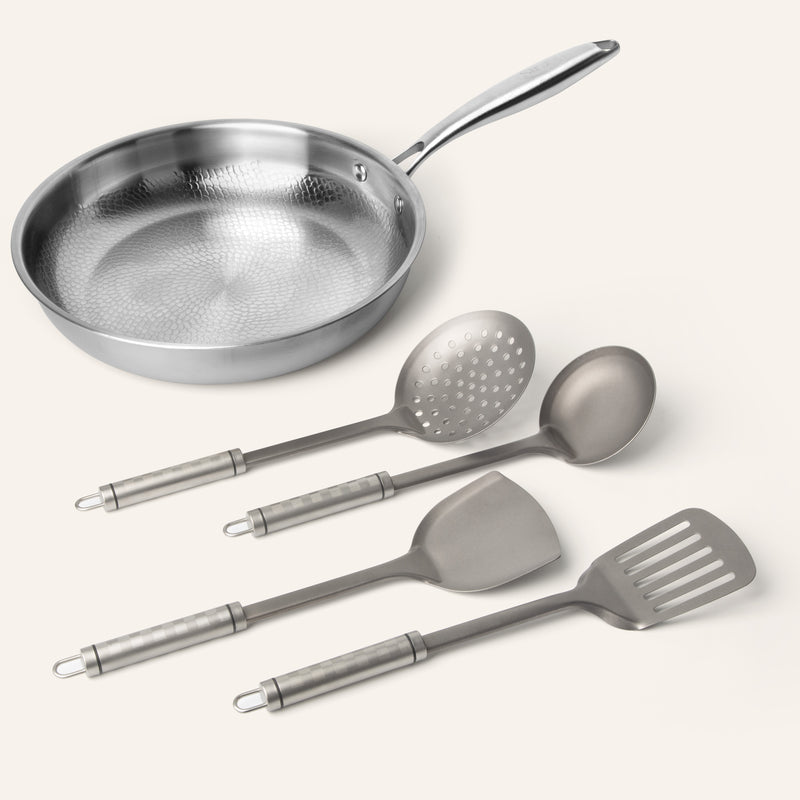
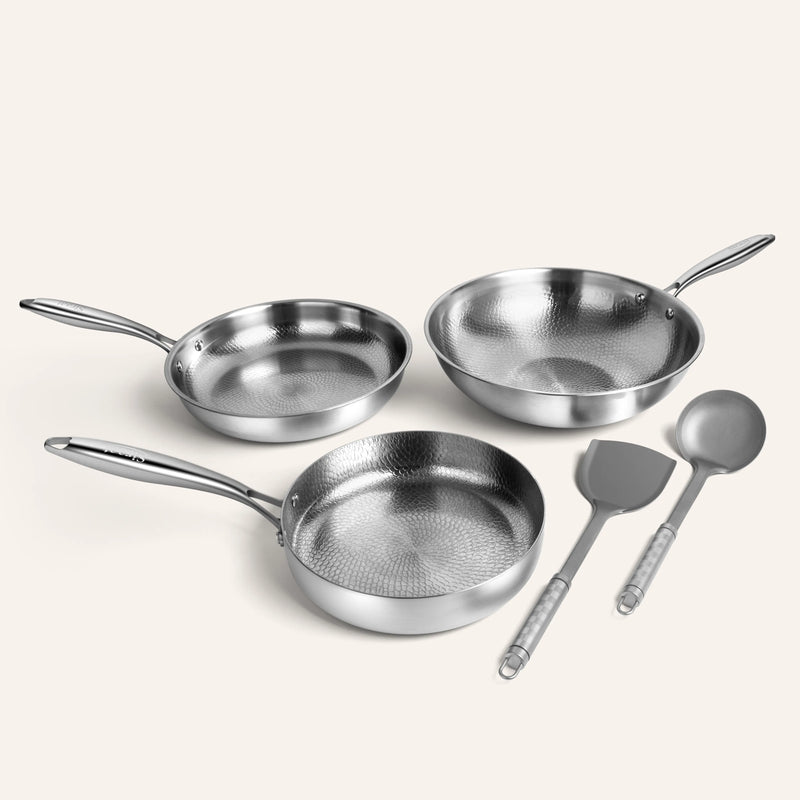
This does not mean an uncoated titanium pan behaves exactly like a traditional PTFE non-stick pan. PTFE is specifically designed to provide a very slippery cooking surface, so coated cookware can be more forgiving when cooking with little or no oil. However, a hammered surface, like the one Siraat Titanium Hammered Pan Pro has, combined with proper preheating and cooking technique can make an uncoated titanium pan naturally low-stick and suitable for higher cooking temperatures.

Our durable titanium cookware collection
Pure titanium cookware, toxin-free, ultra-light, and naturally non-stick. Designed for everyday use, built for a lifetime
The Bottom Line: So, Do Titanium Pans Have Teflon?
Titanium pans can have Teflon, but not all of them do. Some titanium cookware uses a PTFE-based or other non-stick coating, while others have an uncoated titanium cooking surface.
If you want to know whether a particular titanium pan contains Teflon, don’t rely on the word “titanium” in the product name. Check the cooking surface and look for information about coatings. Terms such as PTFE-free, PFAS-free, and uncoated can help you understand what you are buying.
In the end, the construction of the pan tells you much more than the label on the front of the box. If avoiding Teflon is important to you, choose cookware where the manufacturer clearly explains what the cooking surface is made of and what, if any, coating has been applied.