




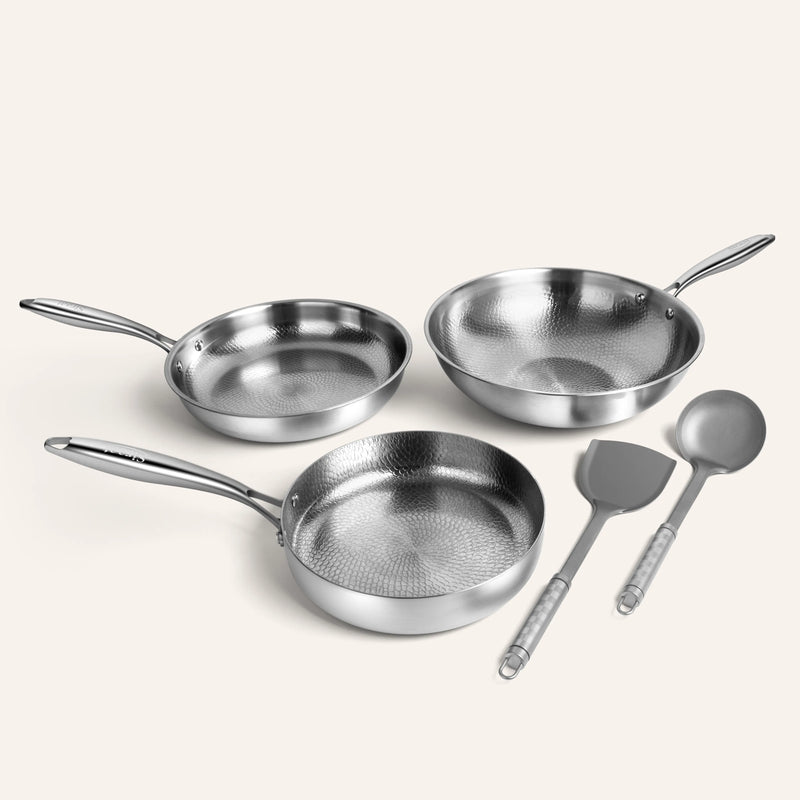


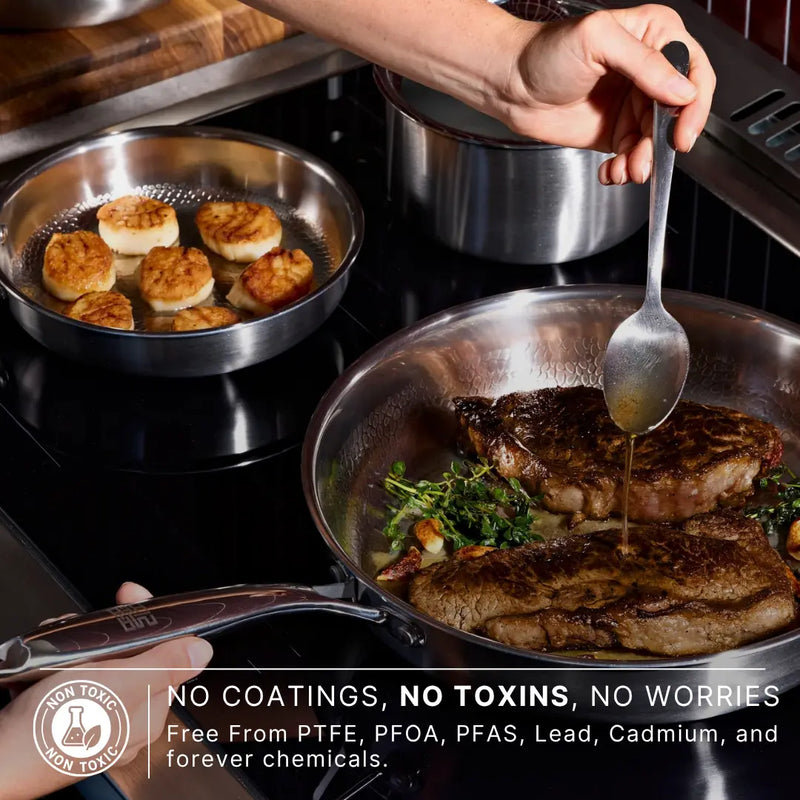
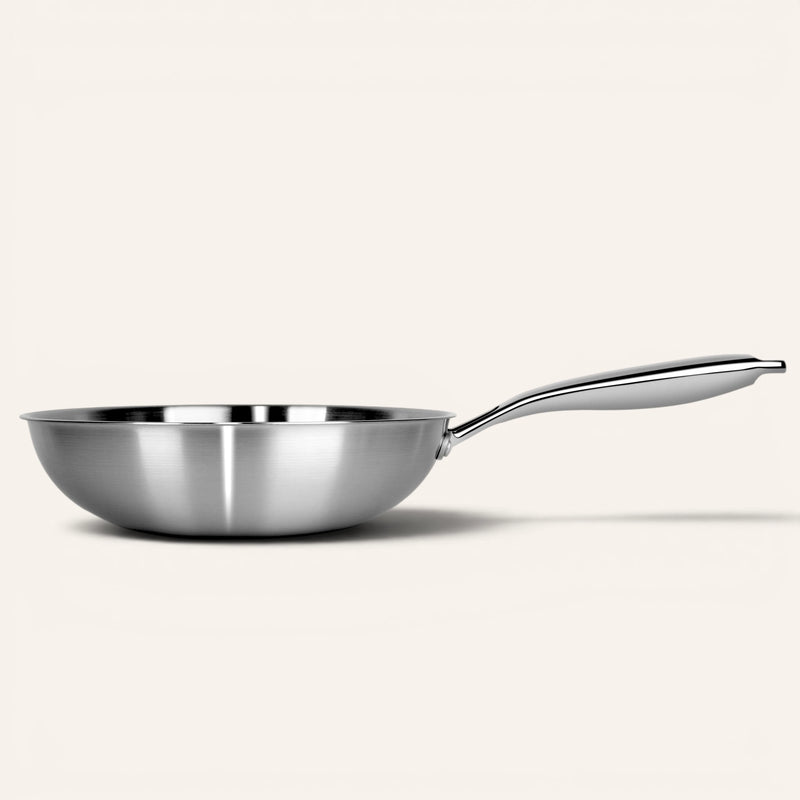


Titanium pans don't behave exactly like a coated non-stick pan or a heavy stainless pan, and the difference shows up most the first time someone cooks with one. Knowing what causes that difference ...
Every cookware material makes trade-offs somewhere, whether that shows up in how it heats, how much upkeep it needs, or how it holds up after a few years of regular use. Titanium is no exception; i...
Titanium cookware is built differently from a standard non-stick pan, and it holds up differently too. There is no soft coating to scrape off or replace every year, and the surface is far more resi...
Cookware safety comes down to what a material does under heat, moisture, and years of scratches, not just what the packaging claims. Some materials stay chemically stable through everyday cooking, ...
The safest cooking pans are generally made from stable, non-reactive materials and have a durable cooking surface that can withstand regular use and heat. Titanium, stainless steel, cast iron, carb...
Titanium utensils are lightweight, strong, heat-resistant, corrosion-resistant, and easy to clean. They also do not absorb odors or flavors. These qualities make titanium a practical choice for eve...
If you’re wondering if titanium pans have Teflon, the answer is: not all. Some titanium pans use a non-stick coating that may contain PTFE (Teflon), while others have an uncoated titanium cooking s...
Yes, titanium cutting boards are safe to use every day, especially when they are made from pure titanium and properly cleaned after use. Their non-porous surface does not absorb food liquids, odors...

