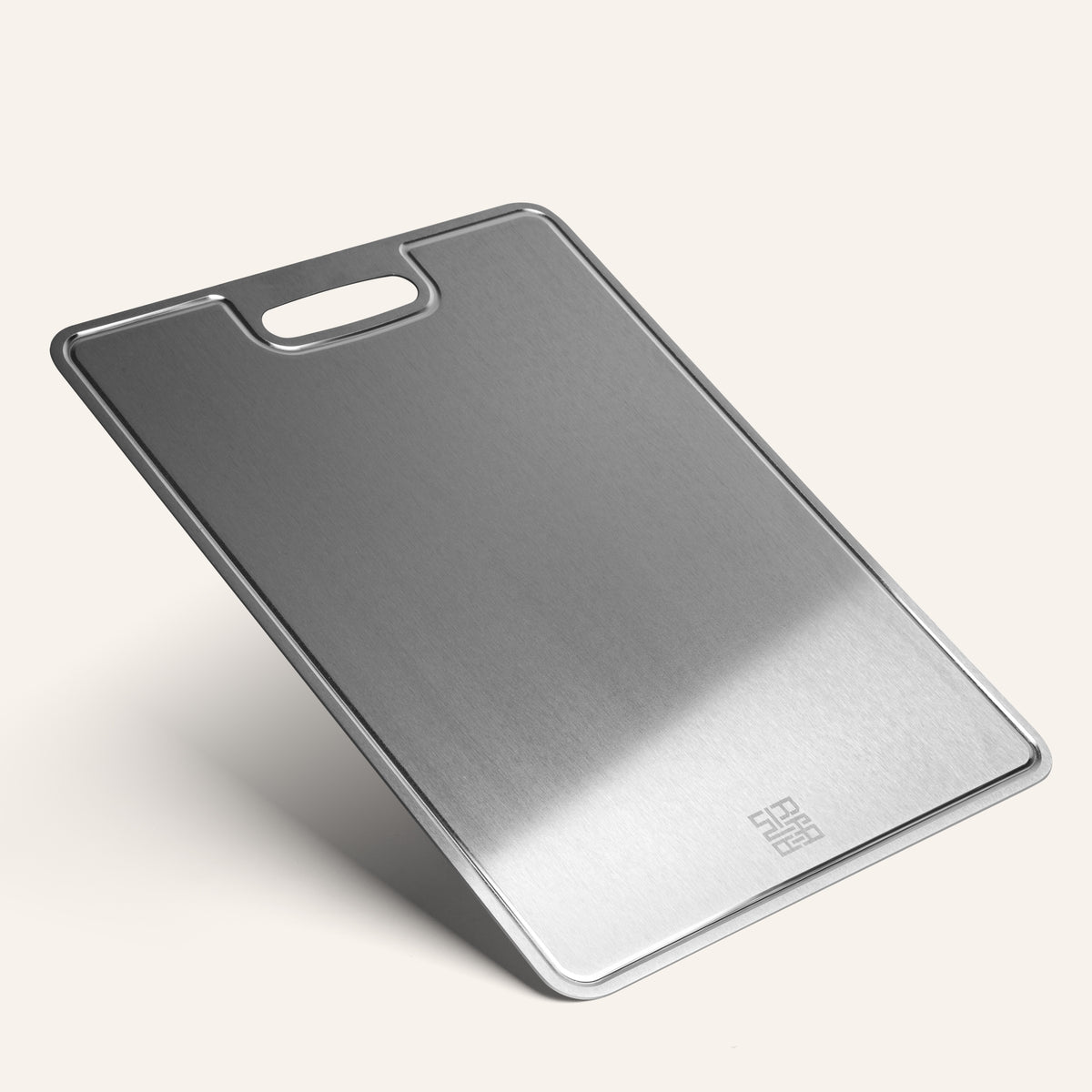
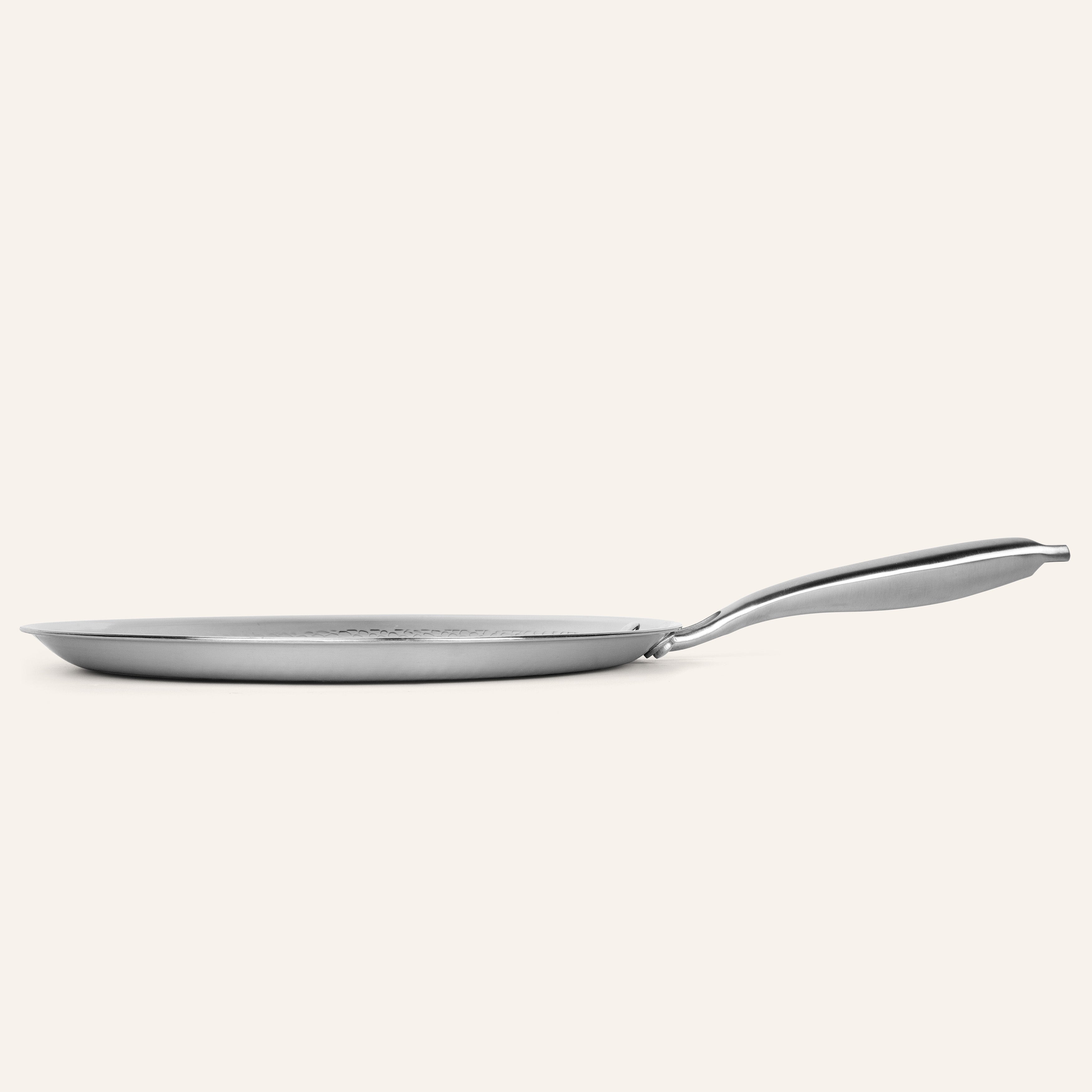
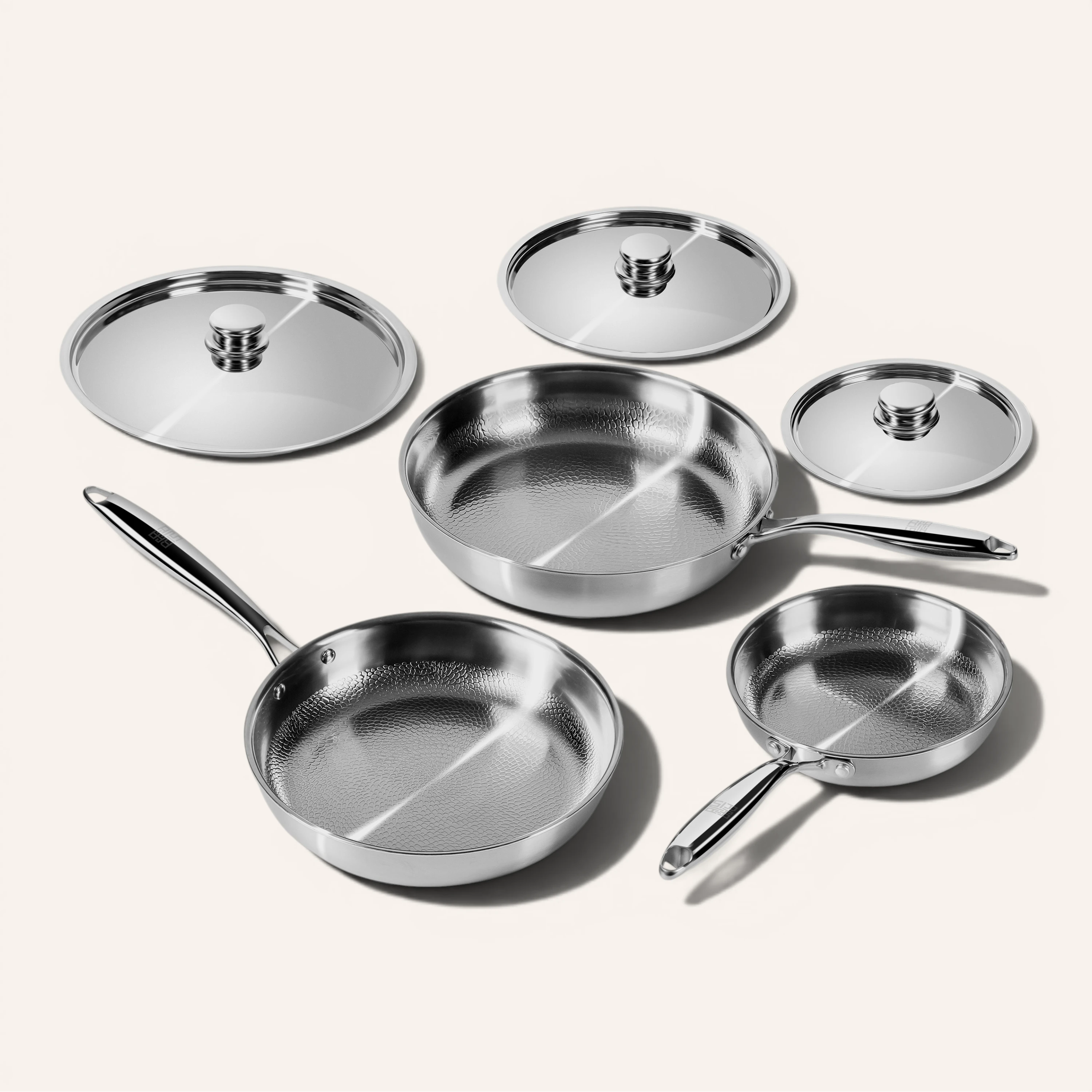
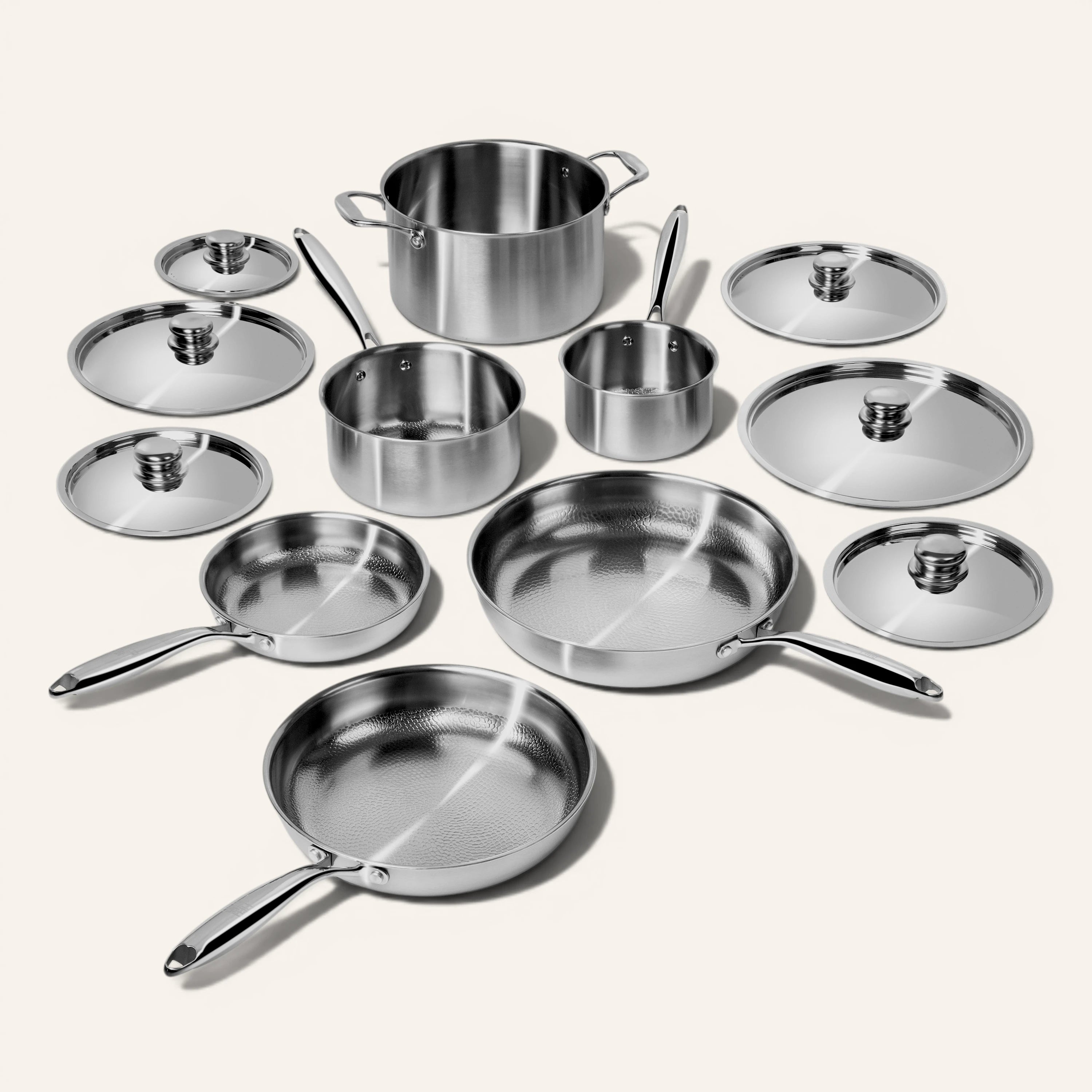
On the shelf, both materials look like solid, long-lasting upgrades from non-stick. Once you start cooking, though, titanium vs stainless steel pans behave differently in food release, heat performance, safety, and long-term care, the four areas that shape everyday use.
Food Release
Clean food release is where the gap between titanium and stainless steel pans shows most clearly. A hand-hammered titanium microtexture reduces how much of the food touches the surface, so a short preheat and about a teaspoon of oil is enough for eggs, fish, and pancakes to release cleanly. Stainless steel's smooth surface lets proteins bond readily when the pan isn't hot enough, so clean release depends on preheating until a drop of water glides across the surface, adding enough fat, and waiting for food to let go, which makes titanium the more forgiving pan for everyday cooking.
Heat Performance
Clad titanium pans heat quickly and evenly, and the surface stays steady once preheated, giving reliable results from gentle sautéing to high-heat searing. Stainless steel is also valued for heat control and retention, though that depends on good clad construction, and thinner, lower-quality pans can develop hot spots. Because both rely on an aluminum or copper core for even heating, the layer specs tell you the most about heat performance in titanium vs stainless steel pans.
Safety and Reactivity
Acidic ingredients such as tomatoes, wine, citrus, and vinegar reveal the clearest safety difference between the two materials. Titanium is biologically inert, which is why it is trusted in medical and surgical equipment, so it won't react with these foods or leach metals into them. Stainless steel is generally safe, but as an alloy it can release trace nickel and chromium into acidic dishes, and research in the Journal of Agricultural and Food Chemistry found the highest levels in sauces simmered for hours in new pans. Those amounts fall within safe limits for most people, yet cooks with metal sensitivities, or anyone wanting the cleanest possible cooking surface choose pure titanium.
Durability and Care
Long-term durability favors titanium, which resists corrosion, warping, and surface wear and, with no coating to break down, keeps its finish and performance through decades of daily use. Cleanup usually takes nothing more than warm water, mild dish soap, and a sponge. Stainless steel is also long-lasting, though durability depends heavily on grade and construction, and many pans develop rainbow heat discoloration or stuck-on residue that needs soaking, scrubbing, or a specialist cleaner.
Pros and Cons of Titanium vs Stainless Steel Pans
Weighing the pros and cons side by side makes it easier to see where each pan earns its place. Titanium and stainless steel pans share durability and high-heat capability, so the deciding points come down to food release, safety, upkeep, skill level, and price.
Titanium Pan Pros
- Low-stick food release without any chemical coating
- Heats quickly and evenly, from delicate eggs to seared steaks
- Inert, non-reactive surface that doesn't leach metals or alter flavors
- Highly resistant to corrosion, rust, and warping
- Quick, low-maintenance cleanup with soap and a sponge
- Easy to cook with from day one, with no need to master heat control
- Built to last for decades of daily use
Titanium Pan Cons
- Higher upfront price than most stainless steel pans
- Fewer brands and models to choose from
- Still needs a little oil, so it won't behave exactly like PTFE non-stick
Stainless Steel Pan Pros
- Excellent for browning, deglazing, and fond-based pan sauces
- Precise heat control and retention in quality clad pans
- Available at almost every price point
- Widely trusted in professional kitchens
Stainless Steel Pan Cons
- Food sticks without careful preheating and enough fat
- Can release trace nickel and chromium into acidic foods
- Maintenance-heavy, with frequent scrubbing and heat discoloration
- Quality varies widely, and thinner pans may warp or heat unevenly
For cooks who value easy release, a non-reactive surface, and simple cleanup, the balance tips toward titanium, while stainless steel suits experienced cooks who enjoy hands-on technique and pan sauces built on fond. Seeing the pros and cons of titanium vs stainless steel pans together shows why titanium has become the more practical everyday option for many households.