BUNDLES & SETS
 Titanium Hammered Pan Pro Mini
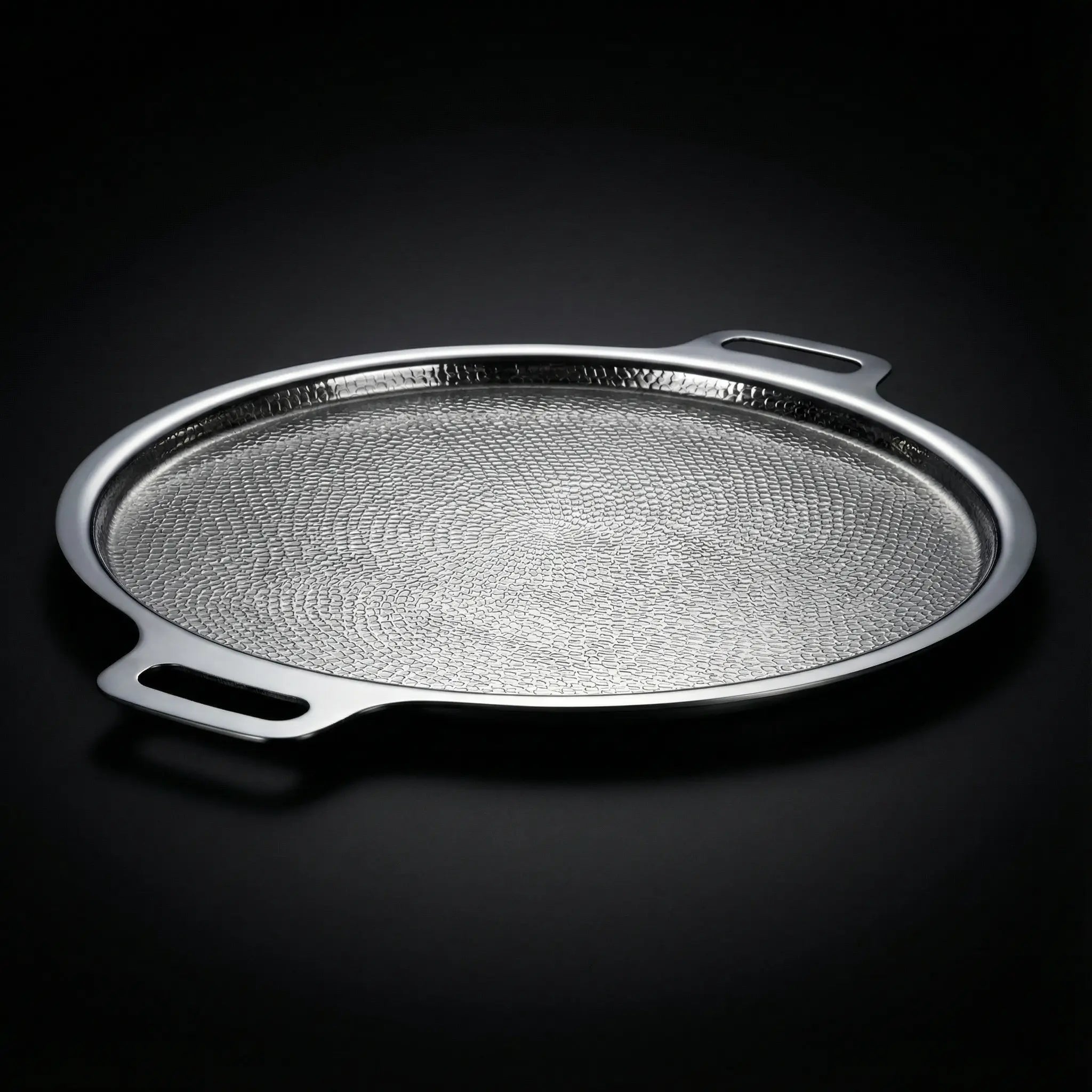
 Titanium Hammered Pizza Steel
 Titanium Hammered Pan Pro Standard
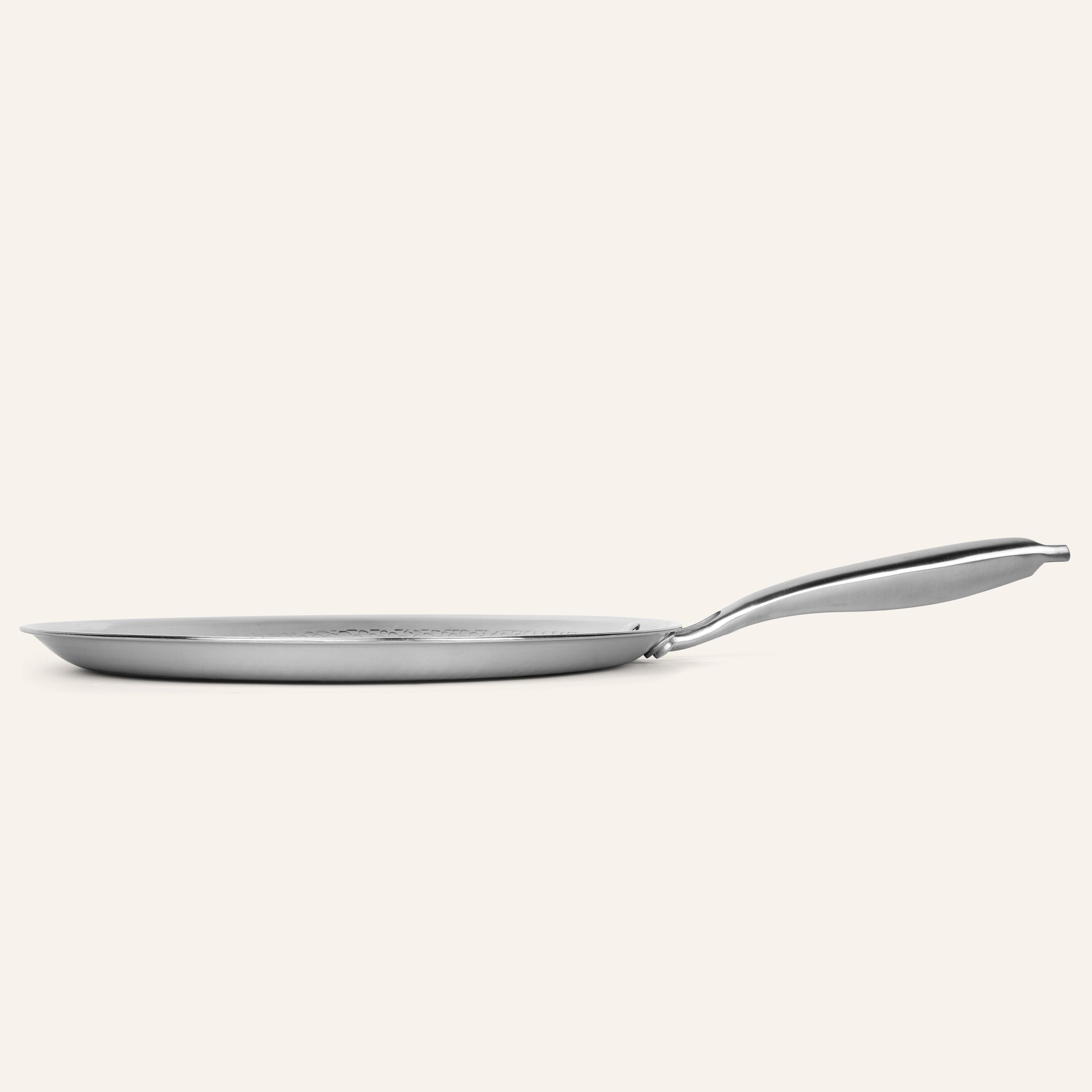
 Titanium Hammered Crêpe Pan Pro
 Titanium Hammered Pan Pro Small
 Titanium Hammered Wok Pan Pro
 Titanium Hammered Pan Pro Large
 Titanium Hammered Deep Pan Pro
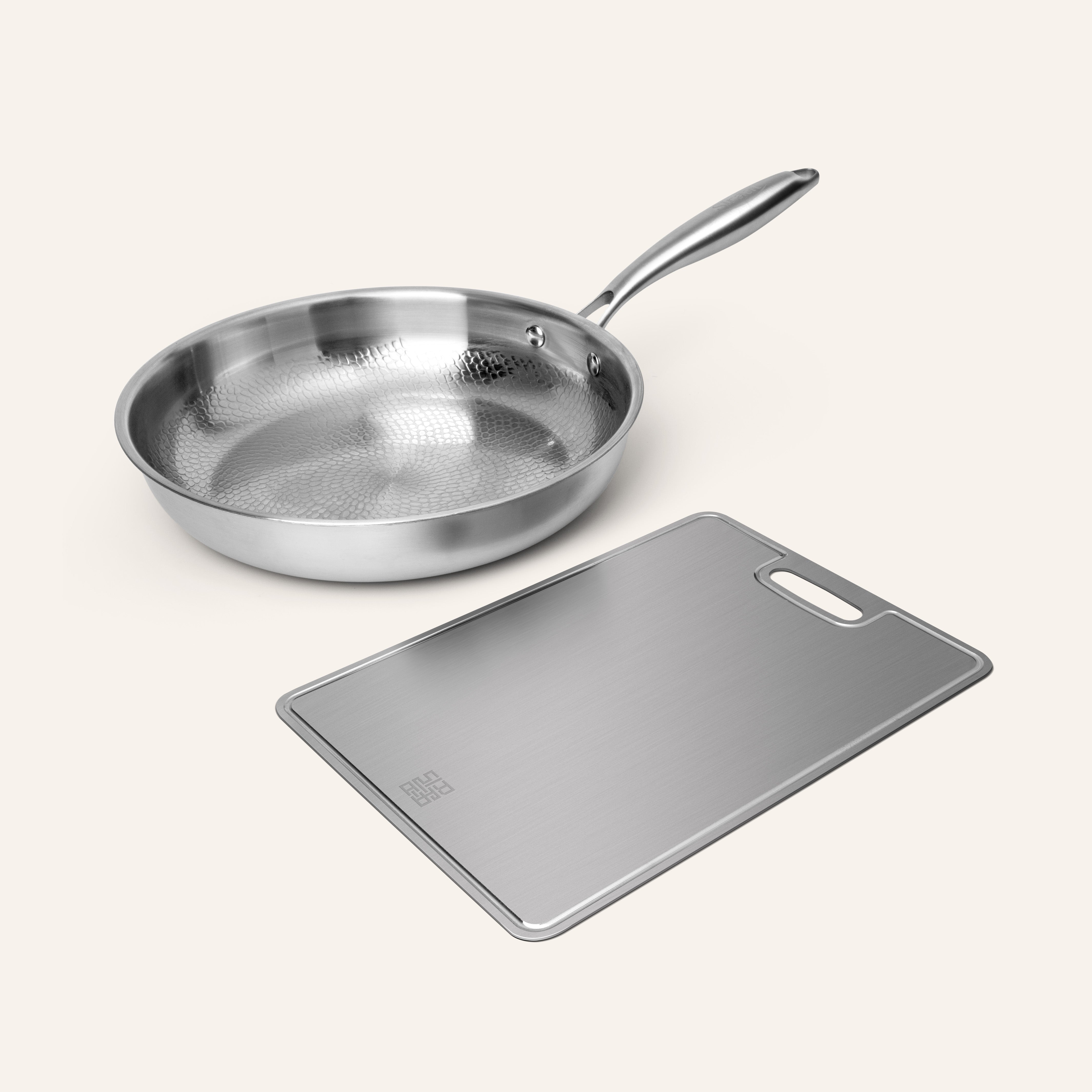
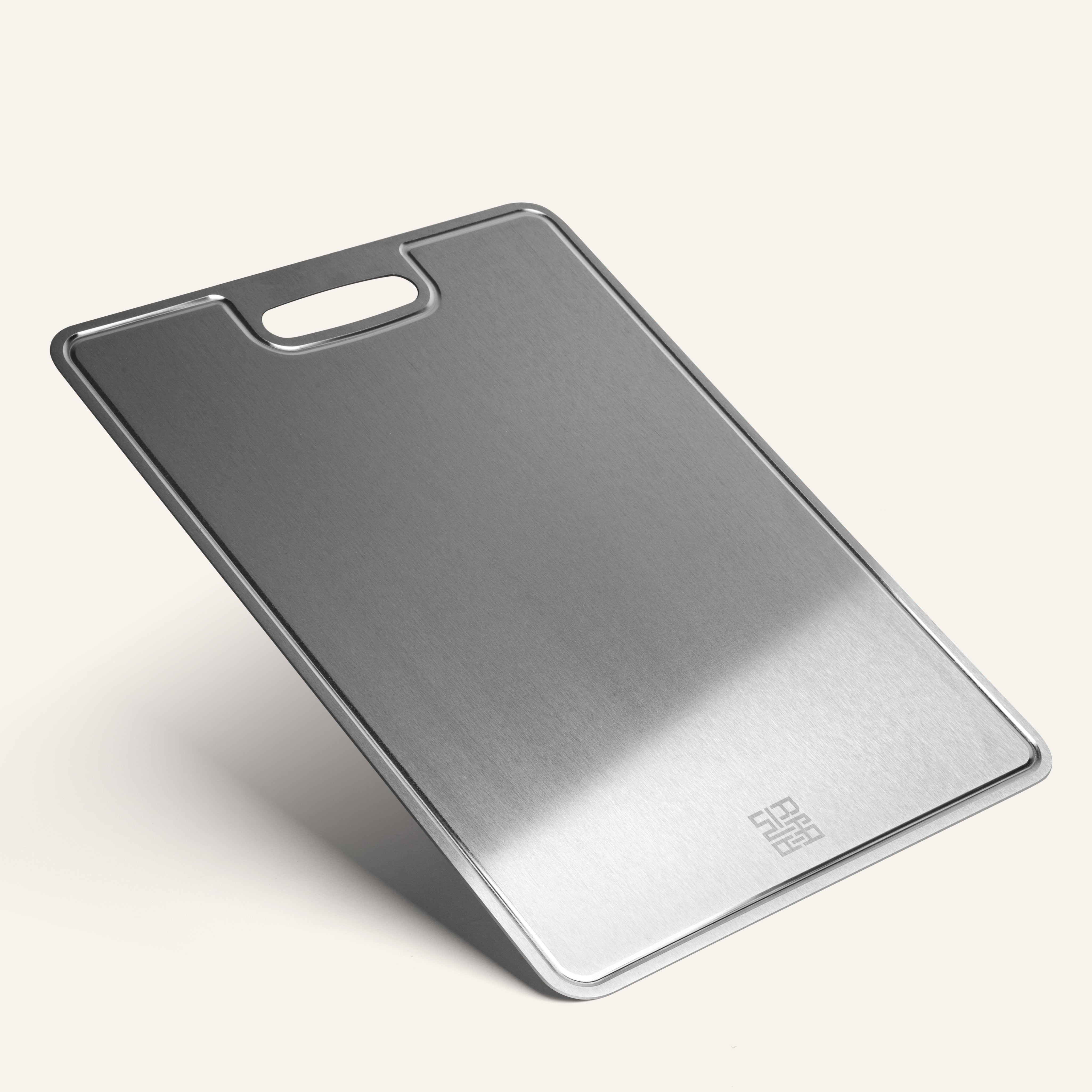
 Titanium Cutting Board (Anti-Microbial)
 Titanium Cutting Board Bundle
 Siraat Signature Apron (Azure)
 Siraat Signature Apron (Oak)
 Siraat Signature Apron (Moss)
 Siraat Signature Apron (Ember)
 Salt & Pepper Mill Set
 Salt Mill
 Pepper Mill
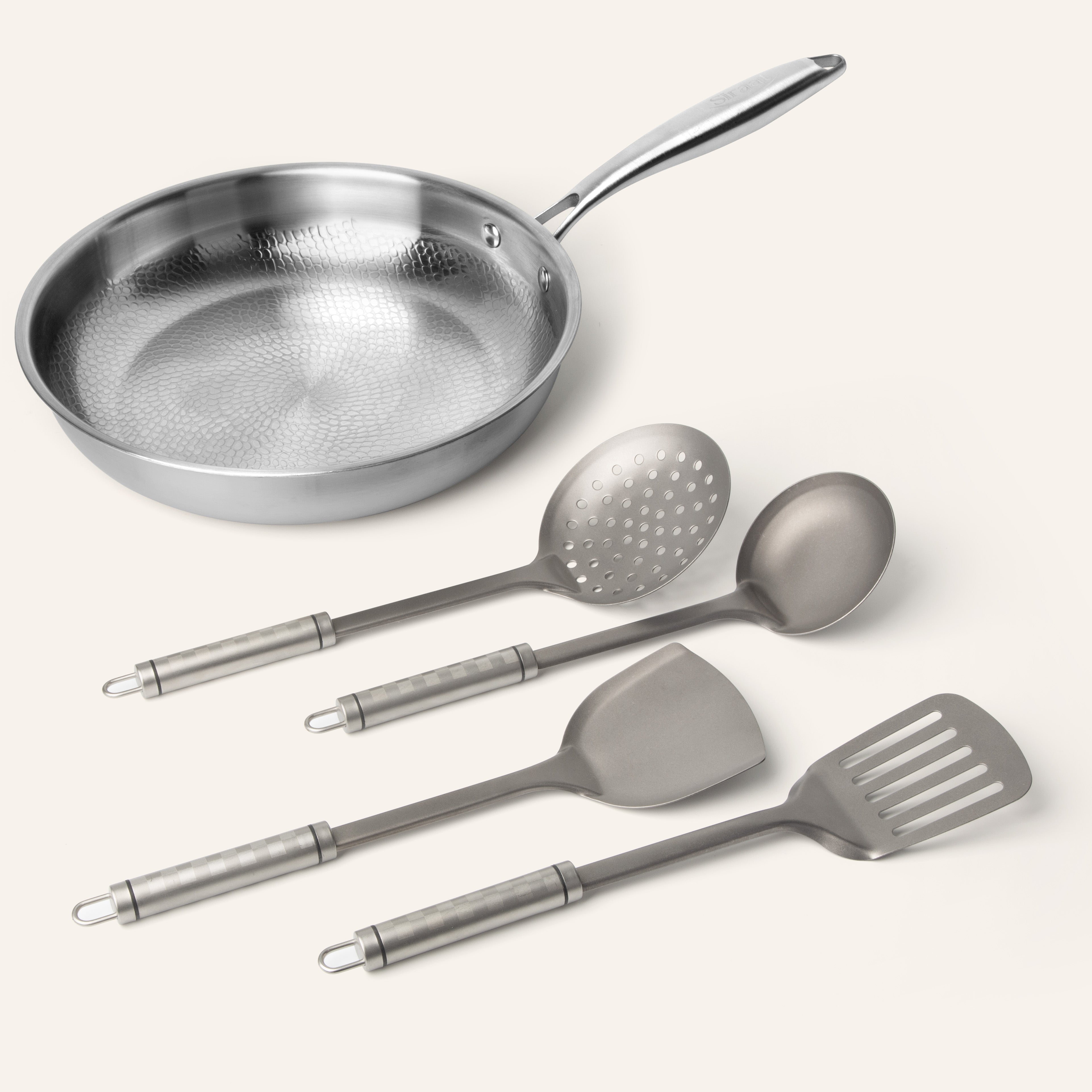
 Titanium Utensil Set Bundle
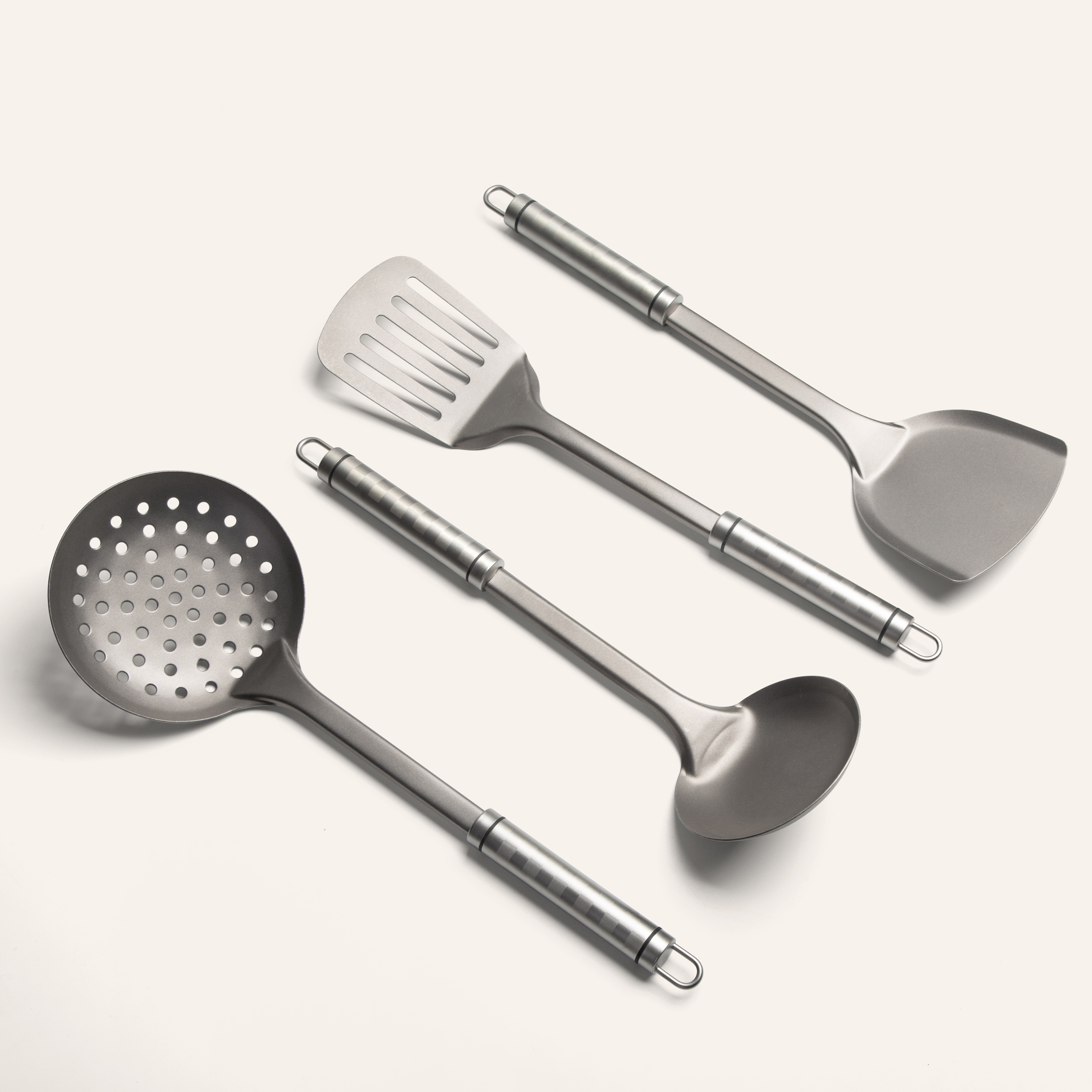
 Titanium Utensil
 Grill Press
 Pizza Wheel
 Rolling Knife Sharpener
 Magnetic Cherry Wood Trivet
 Stainless Steel Lid
 Cherry Wood Mini Trivet
 Titanium Ice Cubes
 Titanium Straws
 Non Slip Mat For Cutting Board
 Diatomite Mat Anthracite
 Titanium Water Bottle







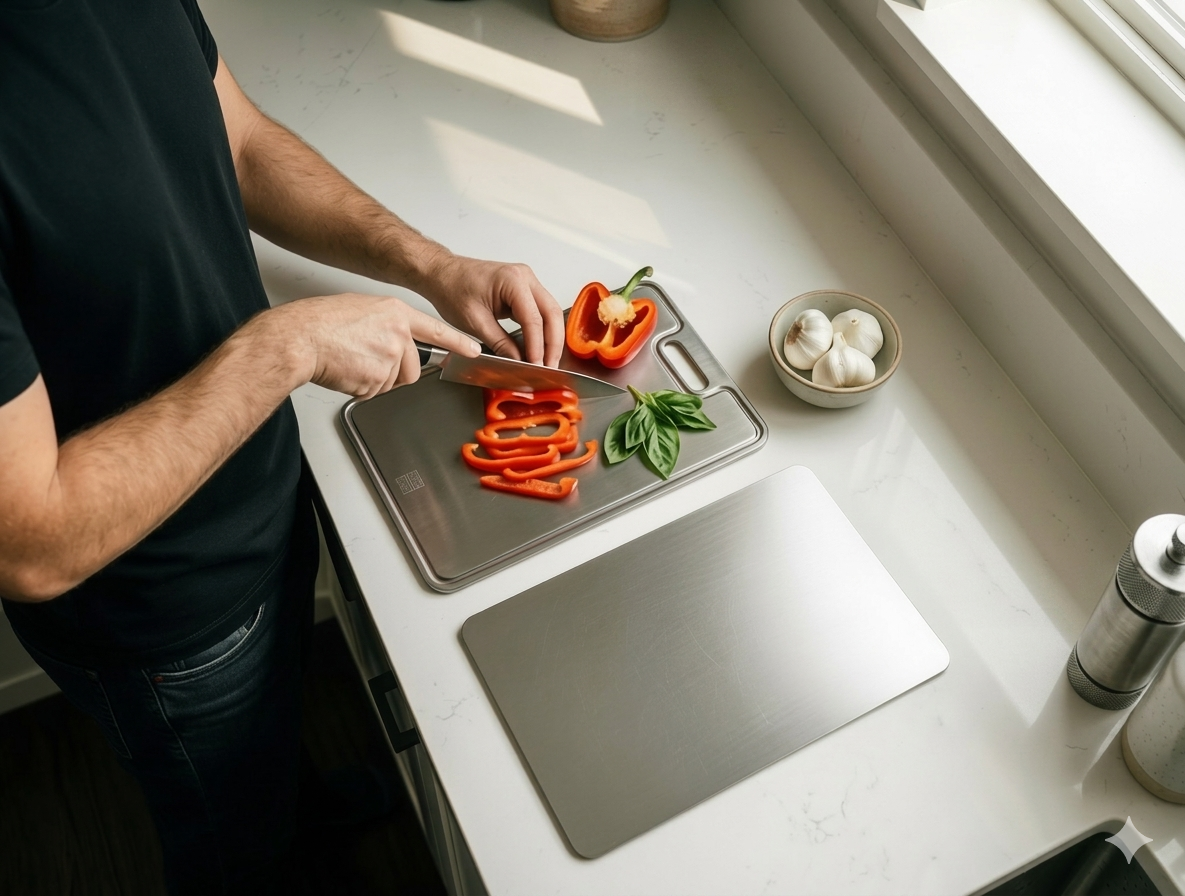
As more home cooks look for durable, hygienic, and non-toxic kitchen tools, metal cutting boards have become increasingly popular in modern kitchens. Among the most talked-about options are titanium and stainless steel cutting boards: two non-porous materials known for their strength, low-maintenance care, and long-lasting performance.
But which is better: a titanium or stainless steel cutting board?
Titanium cutting boards are often preferred for their lightweight and premium feel, corrosion resistance, and everyday usability, while stainless steel cutting boards remain a practical and generally more affordable entry into metal cutting boards.
In this guide, we’ll compare titanium vs. stainless steel cutting boards based on knife impact, hygiene, maintenance, surface feel, and overall usability to help you choose the best fit for your kitchen and cooking style.
Titanium vs. Stainless Steel Cutting Boards: Key Differences
Material Hardness and Knife Wear
Because both materials are significantly harder than traditional cutting board surfaces, neither provides a truly knife-friendly cutting surface. However, they interact with blade edges somewhat differently.
Stainless steel cutting boards create a very rigid cutting surface, so repeated chopping may wear down knife edges faster over time. Titanium boards are also firmer than wood or plastic cutting boards, but they may feel slightly less rigid during everyday chopping compared to stainless steel. Regular knife maintenance is recommended when using either material.
Weight and Ease of Use
The weight of a cutting board has an impact on how easily you can prep, wash, and store it. This is where the two metals differ.
Titanium is nearly 45% lighter than stainless steel. That lighter feel can make a noticeable difference during everyday cooking, especially in smaller kitchens or fast-paced meal prep routines. Premium models, such as the Siraat’s Titanium Cutting Board (Anti-Microbial), are engineered specifically to maximize this advantage, offering a light feel without sacrificing strength.
Stainless steel cutting boards usually feel heavier and more industrial. Some cooks prefer that extra weight because it creates a more solid prep surface, while others may find it less convenient for daily handling and cleaning.
Surface Texture and Grip
Surface texture plays a major role in how comfortable a cutting board feels during prep work. Titanium cutting boards are scratch resistant and often feature a clean, modern surface designed for everyday home cooking. Depending on the design, some models also include non-slip features or textured elements to improve stability during prep.
Stainless steel cutting boards can sometimes feel slicker or noisier during chopping, especially without rubber feet or grip supports underneath. They also tend to show scratches and fingerprints more visibly over time.
Whichever cutting board you end up choosing, you can always improve the grip and increase safety while prepping by placing a non-slip mat for cutting boards underneath.
Hygiene and Maintenance
Both titanium and stainless steel cutting boards are non-porous, which means they do not absorb moisture, odors, or food residue like some traditional cutting board materials. This makes them easy to clean and especially useful for preparing raw meat, seafood, and poultry. For health-conscious households, both materials offer a hygienic and low-maintenance cutting surface that supports safer food prep routines.
Titanium cutting boards also tend to resist visible wear, corrosion, and staining slightly better over time, while stainless steel surfaces may show fingerprints or scratches more easily with regular use.
| Feature | Titanium Cutting Boards | Stainless Steel Cutting Boards |
|---|---|---|
| Knife Impact | Hard cutting surface that may affect knife edges over time, although it often feels slightly less harsh and quieter than stainless steel. | Very rigid cutting surface that tends to feel louder and harsher during chopping and may dull knife edges faster over time. |
| Weight and Ease of Use | Lightweight and easier to lift, clean, carry, and store. | Heavier and more industrial-feeling, offering a very solid prep surface. |
| Surface Texture and Grip | Often designed for better everyday handling and countertop stability during food prep. | Can feel slicker and louder during chopping, particularly on smoother surfaces or without grip supports underneath. |
| Hygiene & Maintenance | Non-porous, corrosion-resistant, and highly resistant to stains, odors, and food acids. | Non-porous and easy to clean, but more likely to show fingerprints, water spots, and scratches over time. |
Pros and Cons of Titanium vs. Stainless Steel Cutting Boards
Both titanium and stainless steel cutting boards offer excellent durability, hygiene, and resistance to moisture compared to traditional cutting board materials. Still, each material comes with trade-offs.
Pros & Cons of Titanium Cutting Boards
Pros:
-
Lightweight yet strong – significantly lighter than other metal alternatives, making it easy to handle, lift, wash, and store without sacrificing durability.
-
Non-toxic and non-reactive – 100% non-toxic and non-reactive to food acids (like citrus or tomatoes); it will not leach metals or alter food flavors.
-
Maximum hygiene – non-porous surface that does not absorb moisture, bacteria, or stubborn food odors.
-
Corrosion-resistant and rust-proof – designed to withstand moisture, food acids, and everyday kitchen use without warping or degrading over time.
-
Low maintenance – requires no oiling, sanding, or specialized care; just a simple wipe or rinse with warm soapy water to stay perfectly clean. Most titanium cutting boards can be washed in a dishwasher.
-
Modern, minimalist design – clean and sleek appearance that looks great on contemporary countertops and fits seamlessly into functional kitchen designs.
Cons:
-
Higher upfront cost – the price reflects the material’s extreme purity, strength, and longevity, which may not suit every budget despite its long-term value.
-
Firmer surface than wood – because it is a solid metal surface, it requires mindful knife use and regular sharpening.
-
Quality variations on the market – some cheaper alternatives use a thin titanium coating over a different base metal rather than solid high-grade titanium, which can affect long-term performance.
Pros & Cons of Stainless Steel Cutting Boards
Pros:
-
Generally more affordable – they offer the hygienic and non-porous benefits of metal cutting boards at a more accessible upfront price point.
-
Hygienic and easy to clean – the non-porous surface does not absorb moisture, odors, or food residue, making everyday cleaning simple and efficient.
-
Non-toxic and non-reactive – 100% non-toxic and non-reactive to food acids (like citrus or tomatoes); it will not leach metals or alter food flavors.
-
Solid feel – the added weight creates a stable and substantial prep surface during everyday cooking.
Cons:
-
Heavier and more difficult to handle – the industrial weight can make it tiring to lift with one hand, maneuver in small sinks, or move around the kitchen quickly.
-
Prone to micro-scratches and stains – the steel surface scratches slightly more visibly under knife blades, and it easily shows water spots and fingerprints.
-
Harder and louder during food prep – the rigid steel surface can feel louder during chopping and may contribute to faster knife edge wear over time.
-
Quality variations on the market – lower-quality stainless steel boards may show scratches, water spots, or signs of wear more quickly with regular use.

Our Durable Non-Toxic Cutting Boards
100% pure titanium. Antibacterial, scratch-proof, toxin-free. Built to last, for chefs who demand the best
Best Use Cases: Which One Is Better for You?
Titanium Cutting Board: The Ultimate Premium and Versatile Option
If you prioritize durability, hygiene, lightweight handling, and long-term practicality, titanium cutting boards are an excellent choice. Their non-porous and non-toxic surface makes them especially appealing for health-conscious households, while their corrosion resistance supports reliable daily use with minimal maintenance.
Best for:
-
Everyday food preparation and family cooking.
-
Health-conscious households seeking non-toxic, hygienic, and easy-to-clean kitchen tools.
-
Home cooks looking for a lightweight yet incredibly durable cutting surface.
-
Modern kitchens focused on low-maintenance tools that won't rust or absorb moisture.
-
Users who value premium materials and effortless everyday usability.
Stainless Steel Cutting Board: The Practical and More Affordable Entry Into Metal Cutting Boards
Stainless steel cutting boards are best suited for cooks who want a durable, hygienic, and practical metal cutting surface at a more accessible price point. Their solid construction feel makes them particularly useful for heavy prep work and high-volume cooking environments. However, they may feel heavier than titanium cutting boards.
Best for:
-
Cooks looking for a generally more budget-friendly entry into hygienic and non-porous metal cutting boards.
-
People who prefer a solid, substantial weight under their knife.
-
Health-conscious kitchens seeking a non-absorbent alternative to plastic or wood (provided it is made from premium, high-grade steel).
Final Verdict: Choosing Between Titanium and Stainless Steel Cutting Boards
Moving from plastic or wood to a metal cutting board is a major step toward a cleaner, more hygienic kitchen. While both materials eliminate the risk of microplastics and food absorption, they suit different styles of cooking.
If you want a solid weight or are looking for a more affordable metal cutting board, stainless steel is usually a practical step up. However, for most home kitchens, titanium delivers a more balanced everyday cooking experience. It offers the hygiene and durability benefits of metal cutting boards in a lighter, more refined format that feels better suited to modern, health-conscious home kitchens.