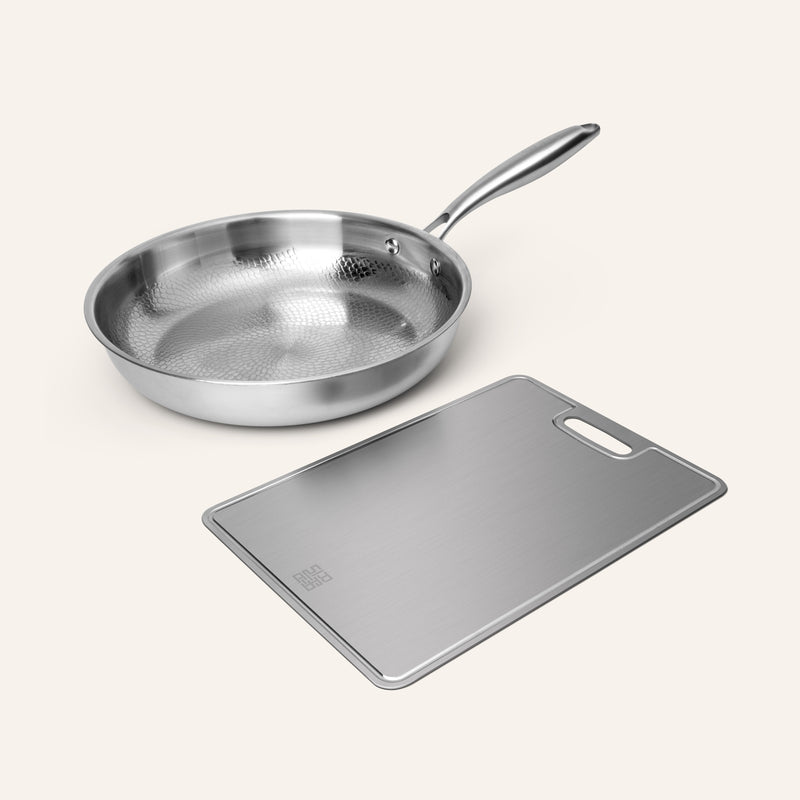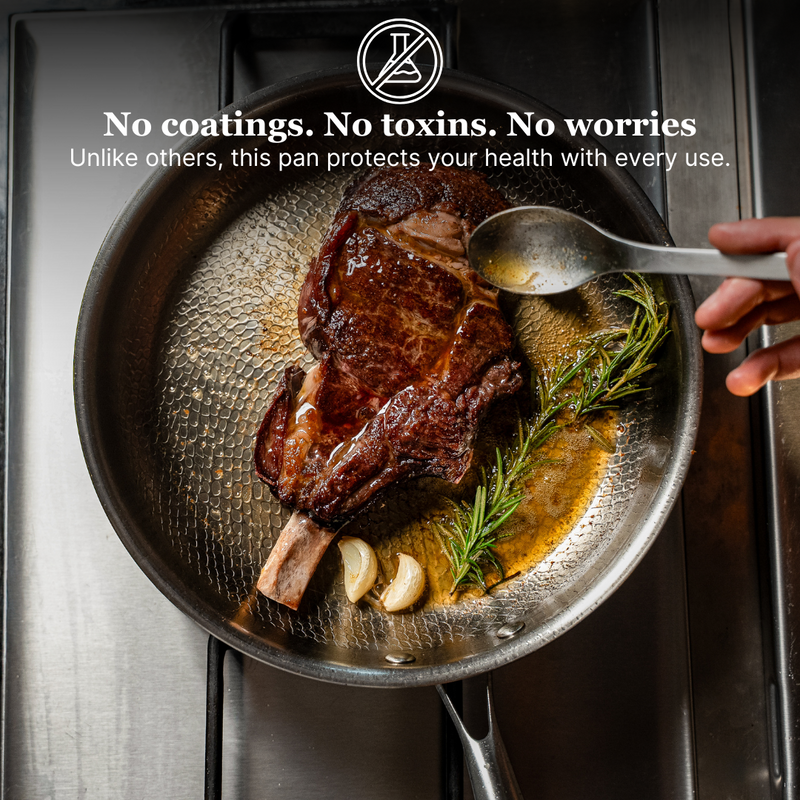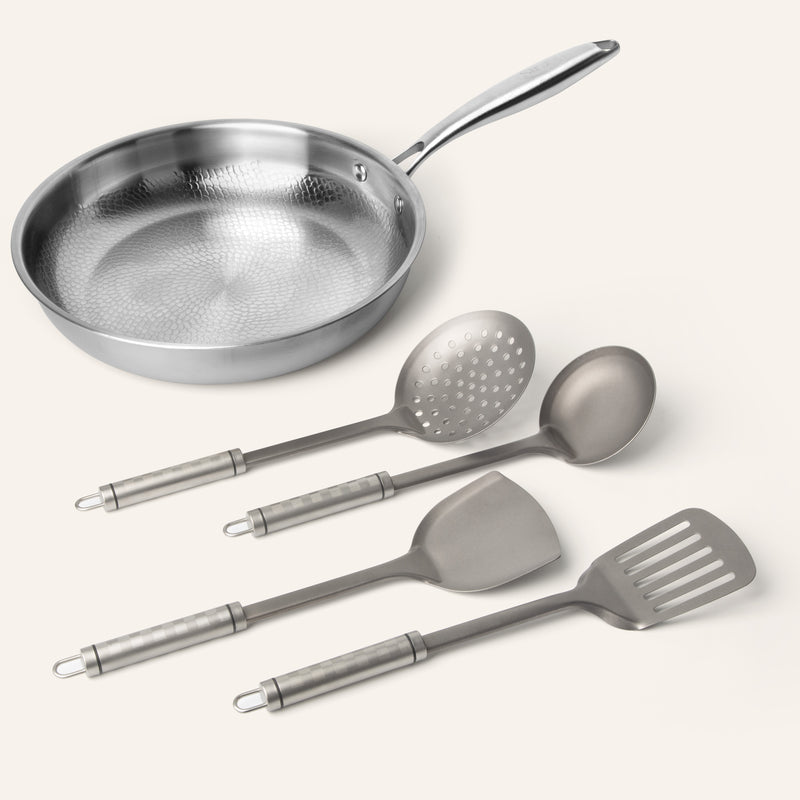


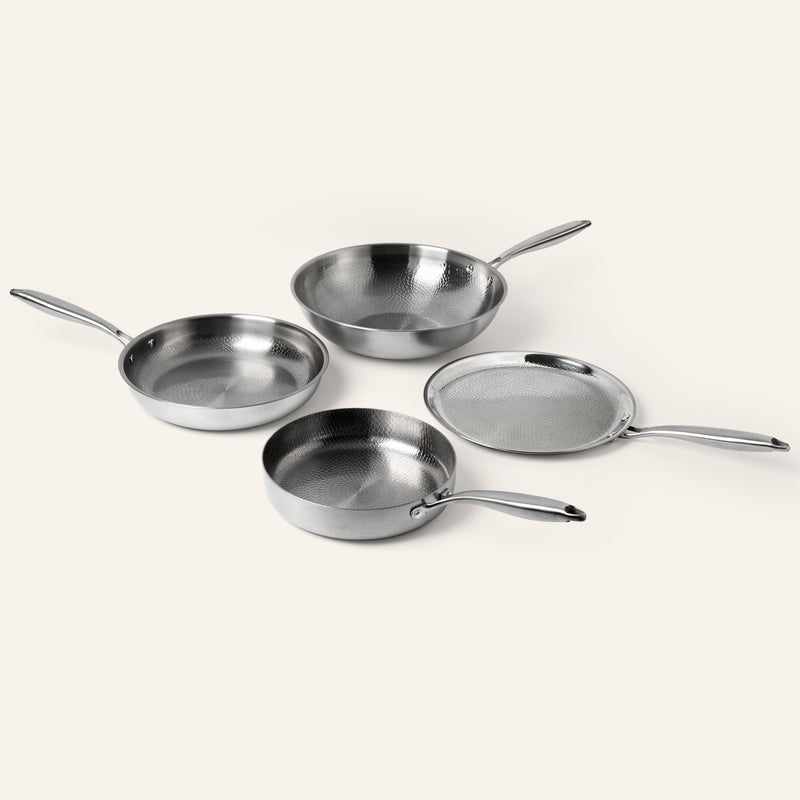
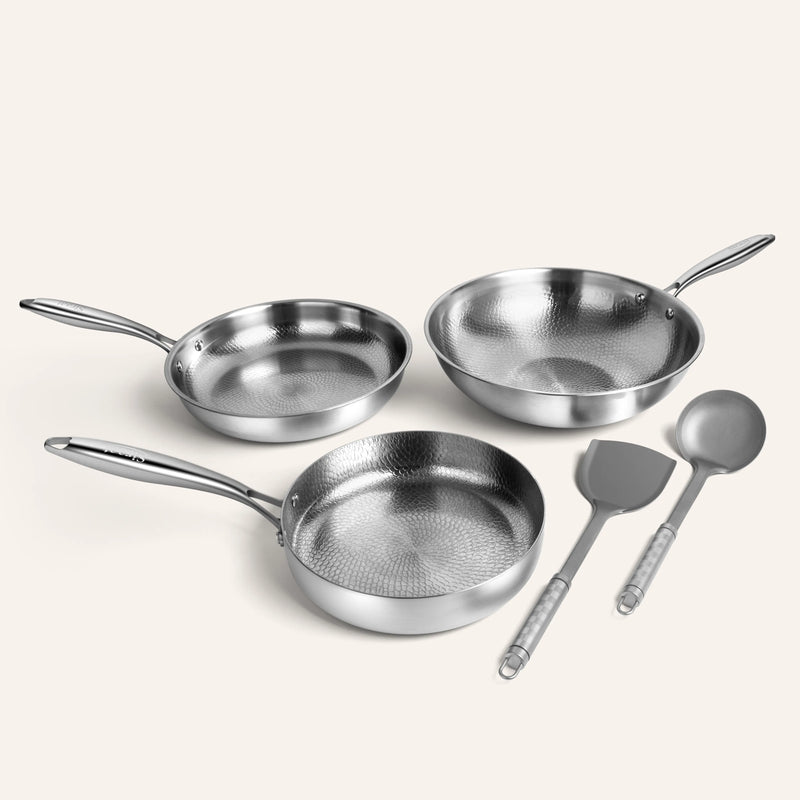




Induction cooktops are increasingly popular in both home and professional kitchens. Unlike gas or traditional electric stoves, induction cooktops generate heat using electromagnetic energy. For cookware to be compatible, it has to have a special magnetic base or be naturally magnetic.
Titanium cookware is often praised for its durability, non-toxicity, and versatility – but whether it works on an induction cooktop depends on how it’s made. In this guide, we’ll explain how to know if a titanium pan is induction-compatible, what to look for, and which stove types titanium cookware works best with.
Do Titanium Pans Work on Induction Cooktops?
Yes, titanium pans can work on induction cooktops – but only if they’re designed with an induction-compatible base. Induction cooktops rely on electromagnetic energy, which requires cookware with a magnetic bottom to generate heat. Pure titanium on its own is not magnetic, which means it won’t automatically heat up on an induction stove.
That said, modern titanium cookware is often engineered for compatibility across different stove types, including induction. High-quality titanium pans typically have a layered or a bonded base, most commonly with a magnetic stainless steel or an encapsulated ferromagnetic core, allowing the pan to interact with the induction field. This design ensures even heat distribution while preserving non-reactive, durable, and non-toxic properties titanium is known for.
How to Tell If Titanium Cookware Is Induction Compatible
Look for the Induction Symbol
The easiest way to check if a titanium pan works on induction stoves is to look for an induction symbol. Induction-compatible cookware usually features the symbol – typically a small coil or a spiral – on the bottom of the pan or its packaging. If a titanium pan has this symbol, it means the base includes a layer of magnetic material designed specifically for induction cooking.
Try the Magnet Test
If you already own a titanium pan, but you’re not sure if it will work on an induction cooktop, you can also try the magnet test. Simply place a magnet against the bottom of the pan. If the magnet sticks firmly, your pan is likely induction compatible. If it doesn’t stick or it falls off easily, the pan most likely won’t work on an induction cooktop. This test works because of the magnetic layer needed to generate heat on an induction stove.
Check the Manufacturer’s Information
When in doubt, the most reliable source is the manufacturer’s description, manual, or product specifications. Brands usually list which stove types their cookware works on, including whether the pan has an induction-compatible base.
Test It on Your Induction Cooktop
If you already have access to an induction cooktop, a practical test can confirm compatibility. Place the pan on the stove and turn on the low heat setting. If the cooktop recognizes your pan and begins heating, your titanium pan is induction compatible. If the cooktop shows an error or doesn’t activate, the pan is not made for induction cooking.
| Cookware Material | Induction Compatible | Maintenance | Ease of Use | Long-Term Durability |
|---|---|---|---|---|
| Titanium (induction-ready) | Yes | Low | Easy | Very high |
| Cast Iron | Yes | High | Heavy to handle | Very high |
| Stainless Steel | Depends on base | Moderate | Technique needed | High |
| Carbon Steel | Yes | High | Technique needed | High |
What Type of Pans Work on Induction Cooktops – and Where Does Titanium Fit In?
Cast Iron Cookware
Cast iron is usually naturally magnetic, which makes it fully compatible with induction cooktops. It retains heat well, making it suitable for slow cooking and searing. That said, cast iron pans are heavy, require regular seasoning and proper maintenance to avoid rust, surface damage, and loss of performance, which makes them a bit harder to handle for everyday cooking. They can also scratch glass induction surfaces if not used carefully.
Stainless Steel Cookware
Many stainless steel pans work on induction, but only if they have a magnetic base. High-quality stainless steel cookware can last a long time and is versatile. However, its use requires experience and a proper cooking technique to perform well and prevent sticking.
Carbon Steel Cookware
Another induction-compatible option is carbon steel cookware. The material has magnetic properties, heats up quickly and is commonly used in professional kitchens. Carbon steel also requires regular seasoning and maintenance, and its performance depends heavily on proper care.
Titanium Cookware
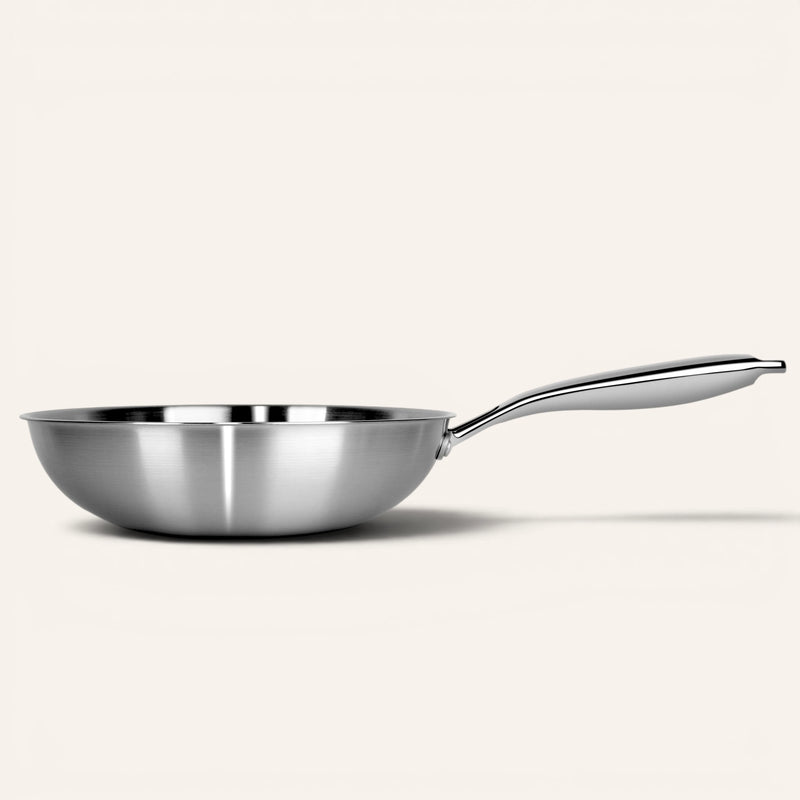
While titanium itself is not inherently magnetic, induction-compatible titanium cookware is specifically engineered with a magnetic base, making it fully compatible with induction cooktops. High-quality titanium cookware combines the strength, durability, and non-reactive properties of titanium with induction functionality.
For cooks looking for cookware that works across different stove types, titanium pans stand out as a practical and modern choice. When designed for induction, they offer a versatile solution suitable for everyday use.

What Other Stove Types Is Titanium Cookware Compatible With?
One of the biggest advantages of titanium cookware is its versatility. It can be used across multiple stove types, making it a practical long-term investment for kitchens.
Gas Stoves
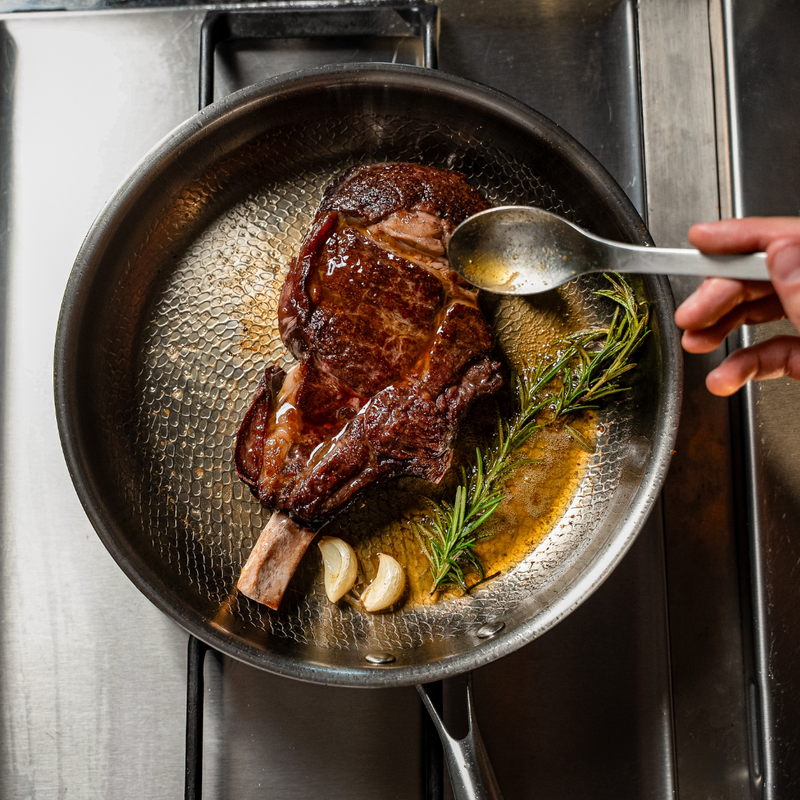
Titanium cookware works exceptionally well on gas stoves. Its ability to heat evenly pairs very well with gas stoves’ instant heat control. Titanium pans are easy to maneuver on open flames and can handle high heat without warping. This makes them suitable for everyday cooking, as well as more demanding techniques like searing or sautéing.
Ceramic/Glass Cooktops
Titanium pans are also well suited for ceramic and glass cooktops. Their smooth, flat base sits evenly on the surface, allowing for stable heat transfer and good cooking results. As long as your pan is designed for flat-surface cooking, titanium performs reliably and with minimal risk of scratching when handled properly.
Electric Coil Cooktops
Electric coil cooktops rely on direct contact between the pan and the heating element. Titanium cookware works well in this environment, making it suitable for traditional electric stoves as well as outdoor cooking setups. Overall, titanium cookware stands out for its broad compatibility, making it a reliable choice for households that use different stove types or plan to upgrade their cooking setup over time.
Final Thoughts: Are Titanium Pans a Good Choice for Induction and Other Stove Types?
Titanium pans work reliably on induction cooktops – as long as they are designed with an induction-compatible magnetic base. High-quality titanium cookware performs well also on gas, ceramic, glass, and electric stovetops.
For cooks who want cookware that works consistently across different cooktops, titanium cookware is a solid option. It combines versatility and long-term durability, making it a practical choice for both current kitchens and future upgrades.