BUNDLES & SETS
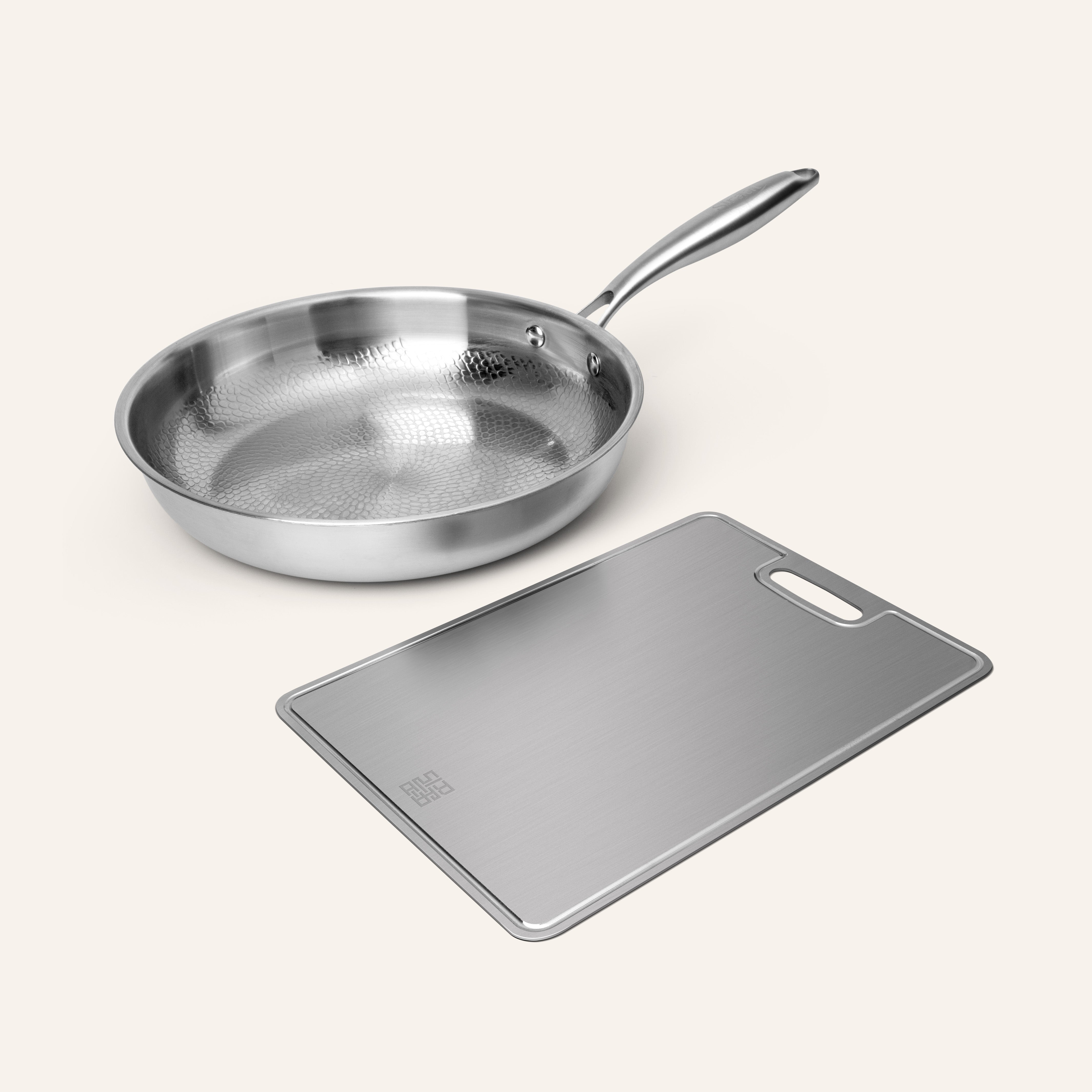
 Titanium Hammered Pan Pro Mini
 Titanium Hammered Pizza Steel
 Titanium Hammered Pan Pro Standard
 Titanium Hammered Crêpe Pan Pro
 Titanium Hammered Pan Pro Small
 Titanium Hammered Wok Pan Pro
 Titanium Hammered Pan Pro Large
 Titanium Hammered Deep Pan Pro
 Titanium Cutting Board (Anti-Microbial)
 Titanium Cutting Board Bundle
 Siraat Signature Apron (Azure)
 Siraat Signature Apron (Oak)
 Siraat Signature Apron (Moss)
 Siraat Signature Apron (Ember)
 Salt & Pepper Mill Set
 Salt Mill
 Pepper Mill
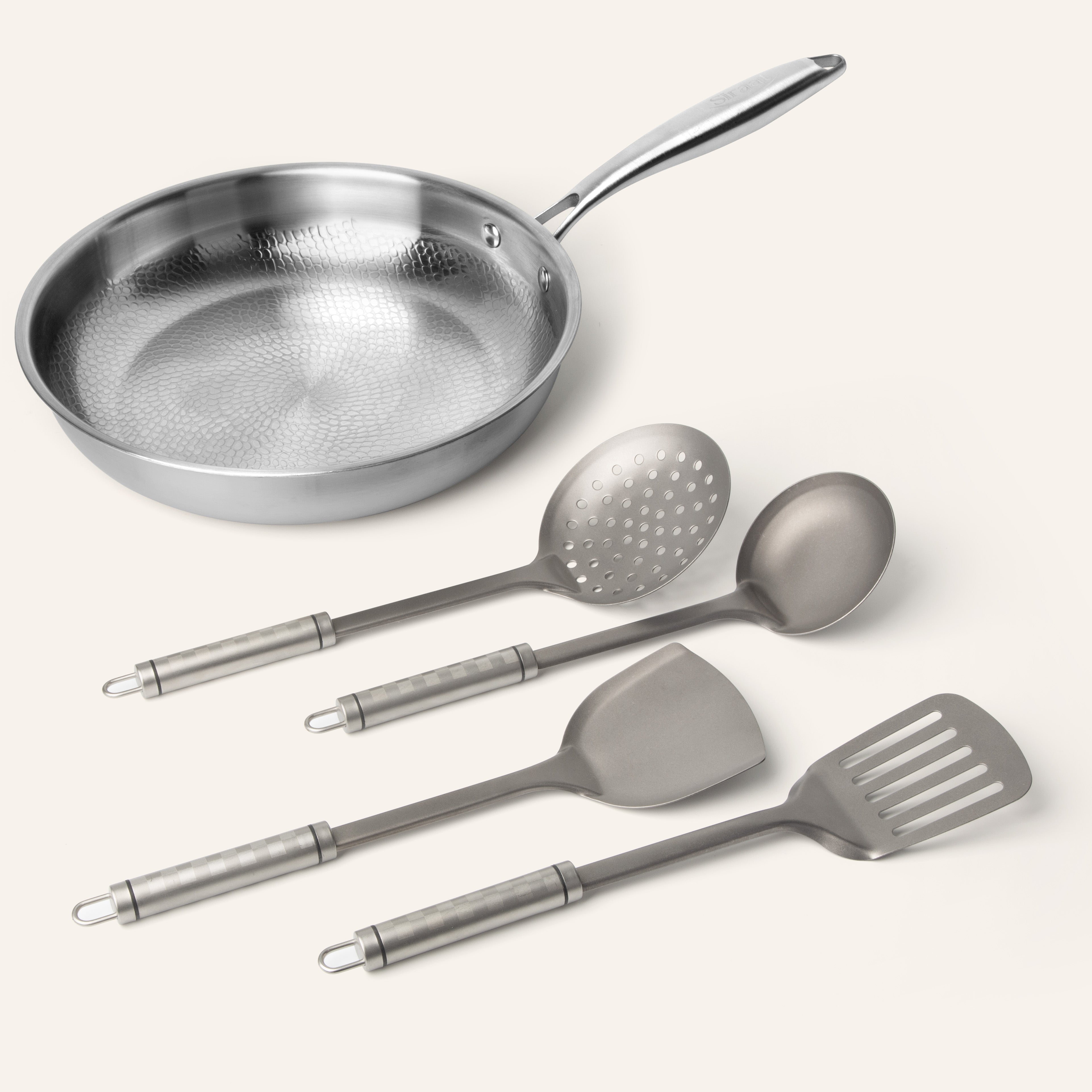
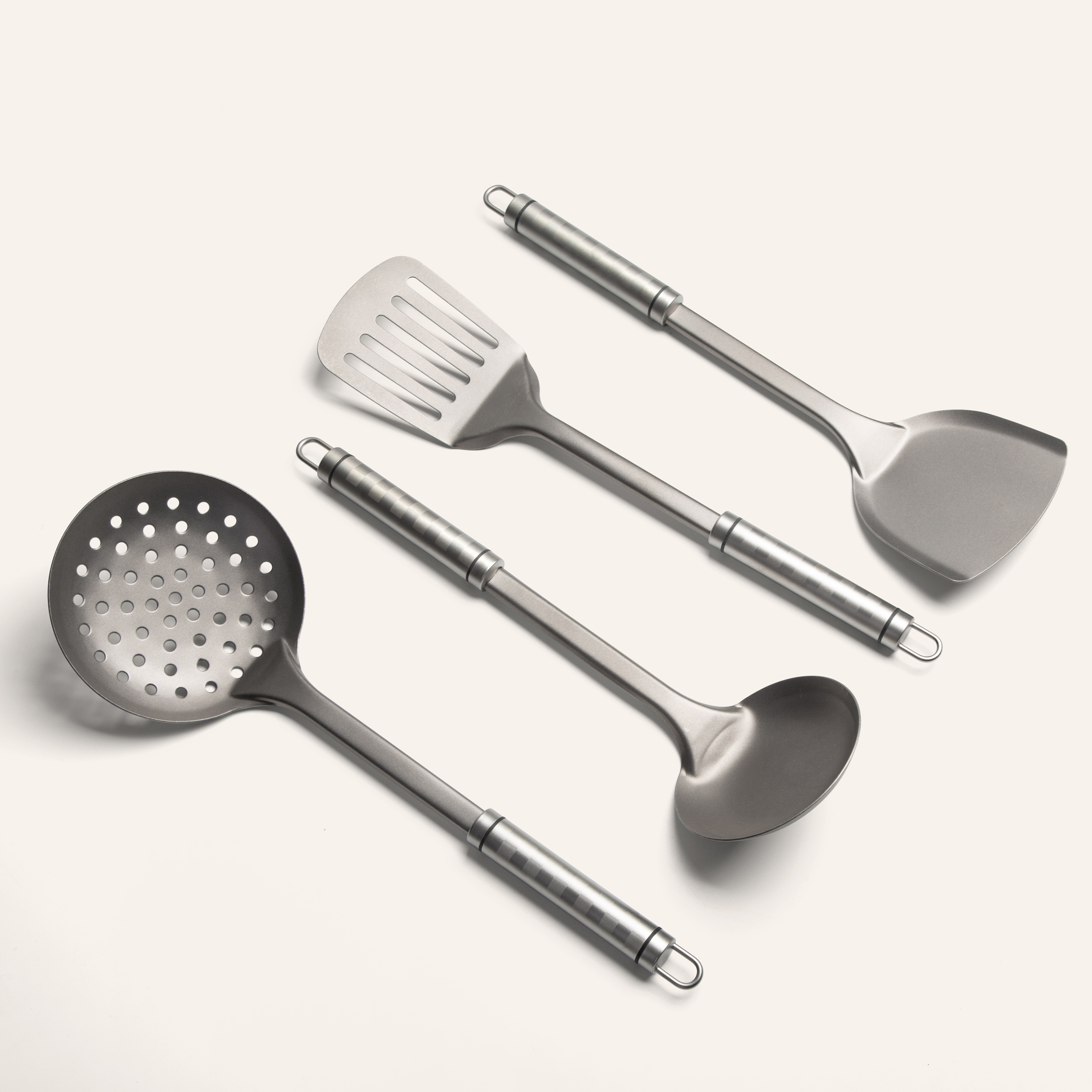
 Titanium Utensil Set Bundle
 Grill Press
 Pizza Wheel
 Rolling Knife Sharpener
 Magnetic Cherry Wood Trivet
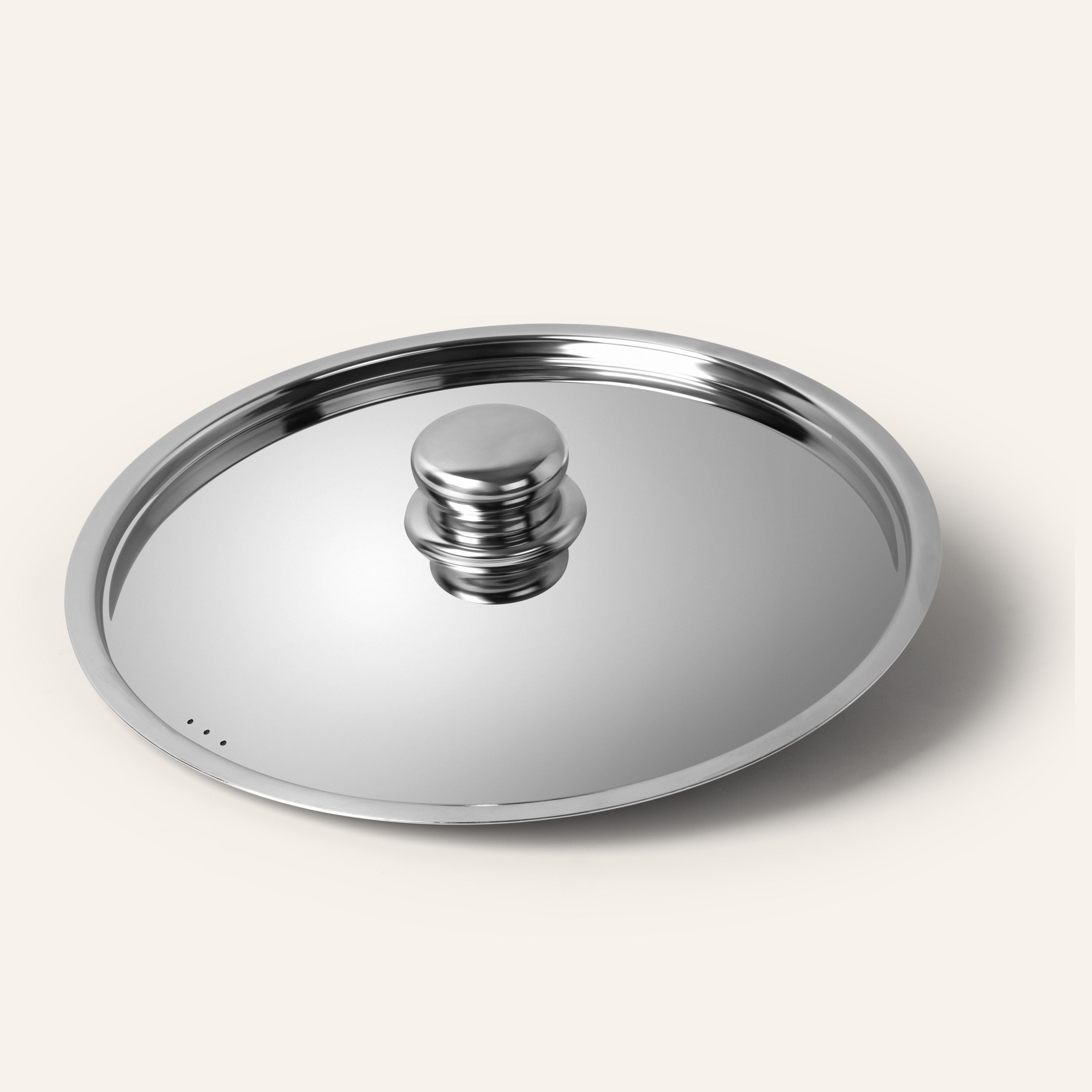
 Stainless Steel Lid
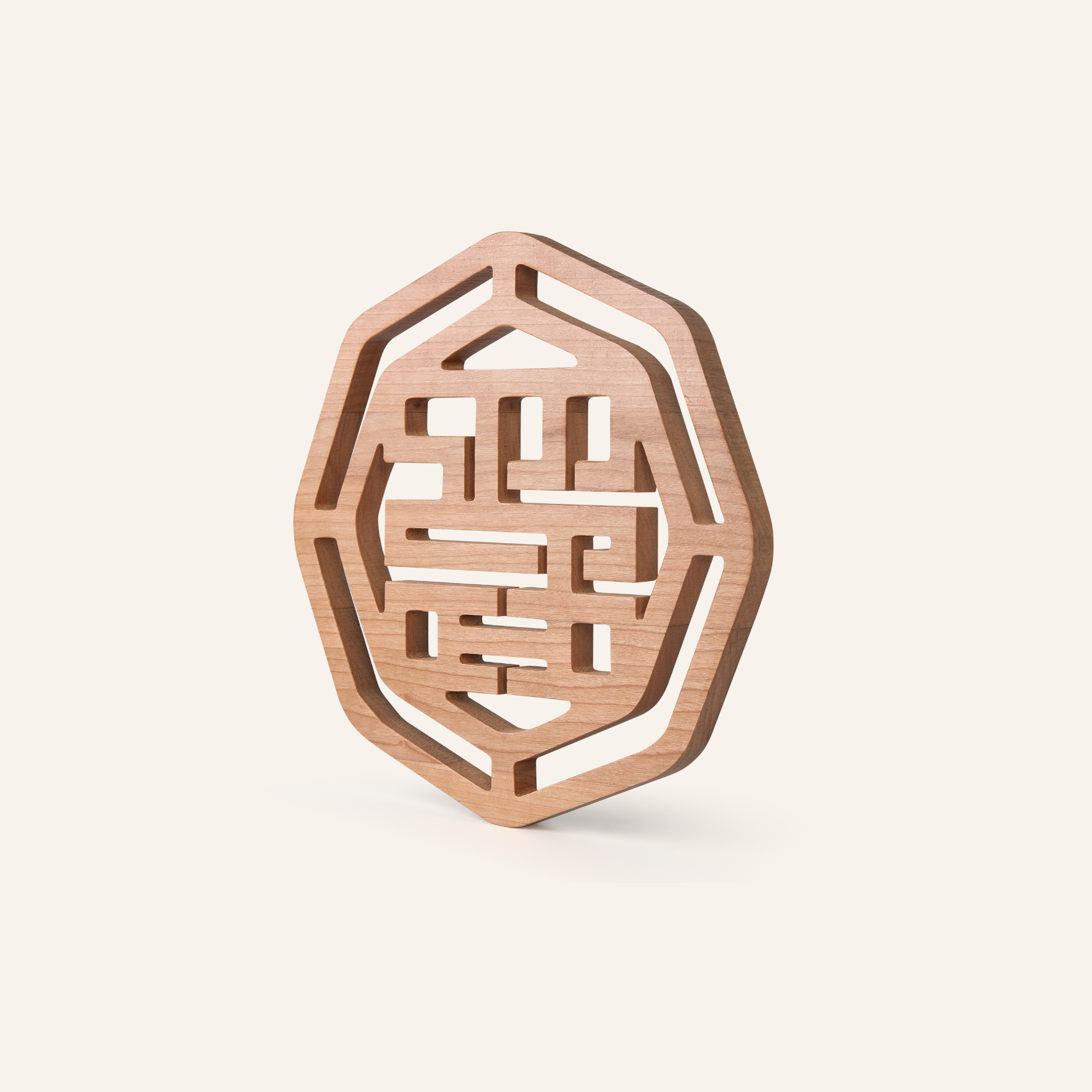
 Cherry Wood Trivet
 Cherry Wood Mini Trivet
 Titanium Ice Cubes
 Titanium Straws
 Non Slip Mat For Cutting Board
 Diatomite Mat Anthracite
 Titanium Water Bottle


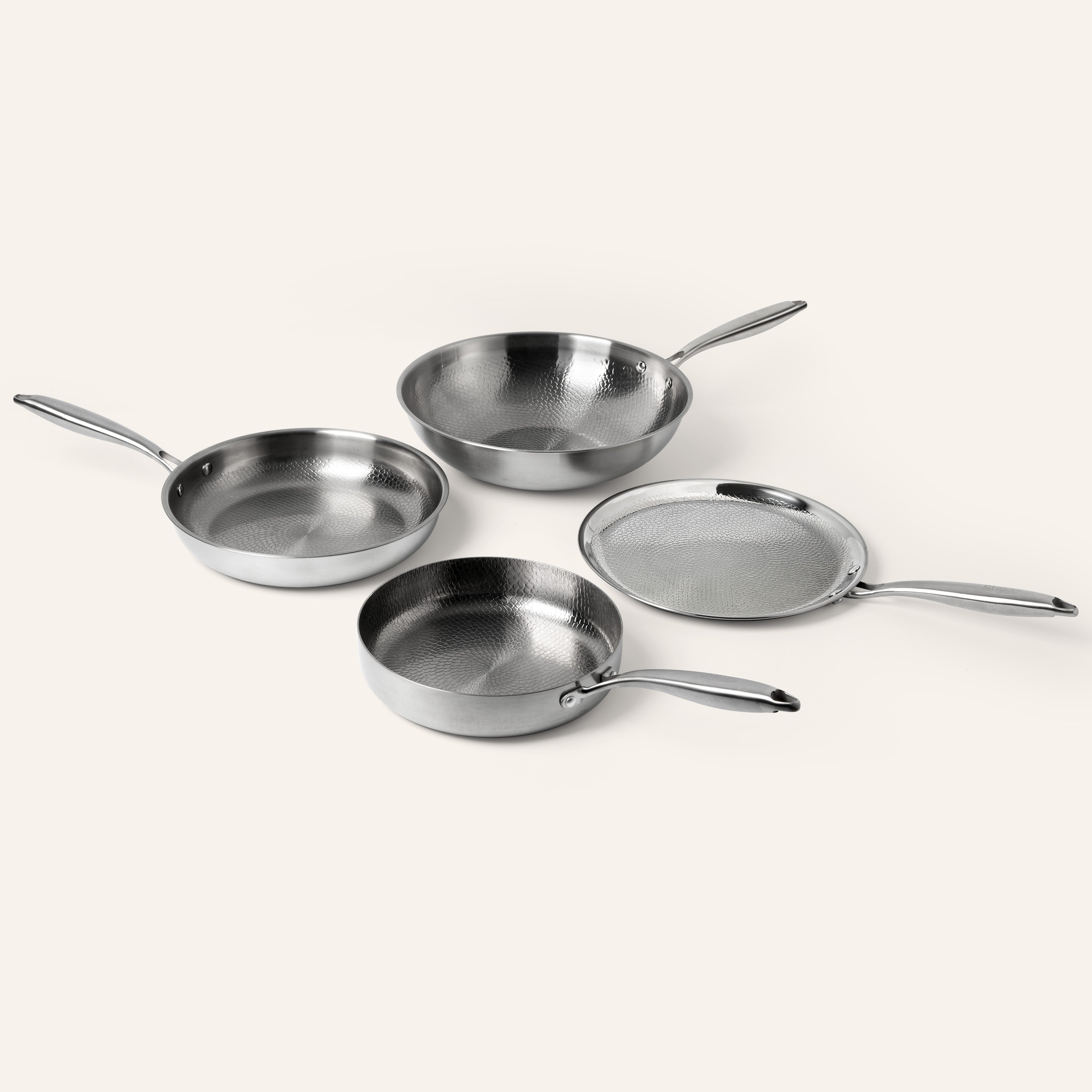
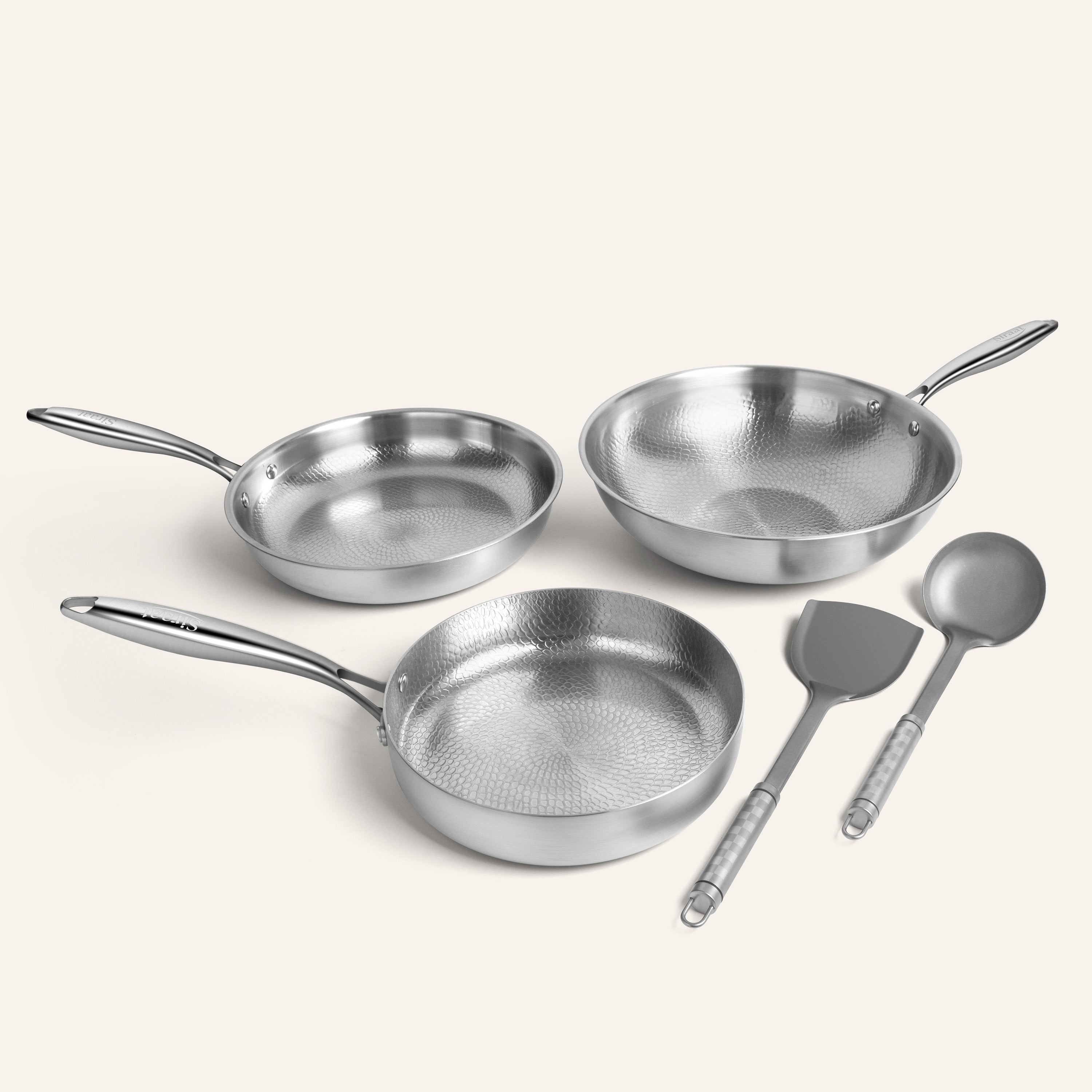


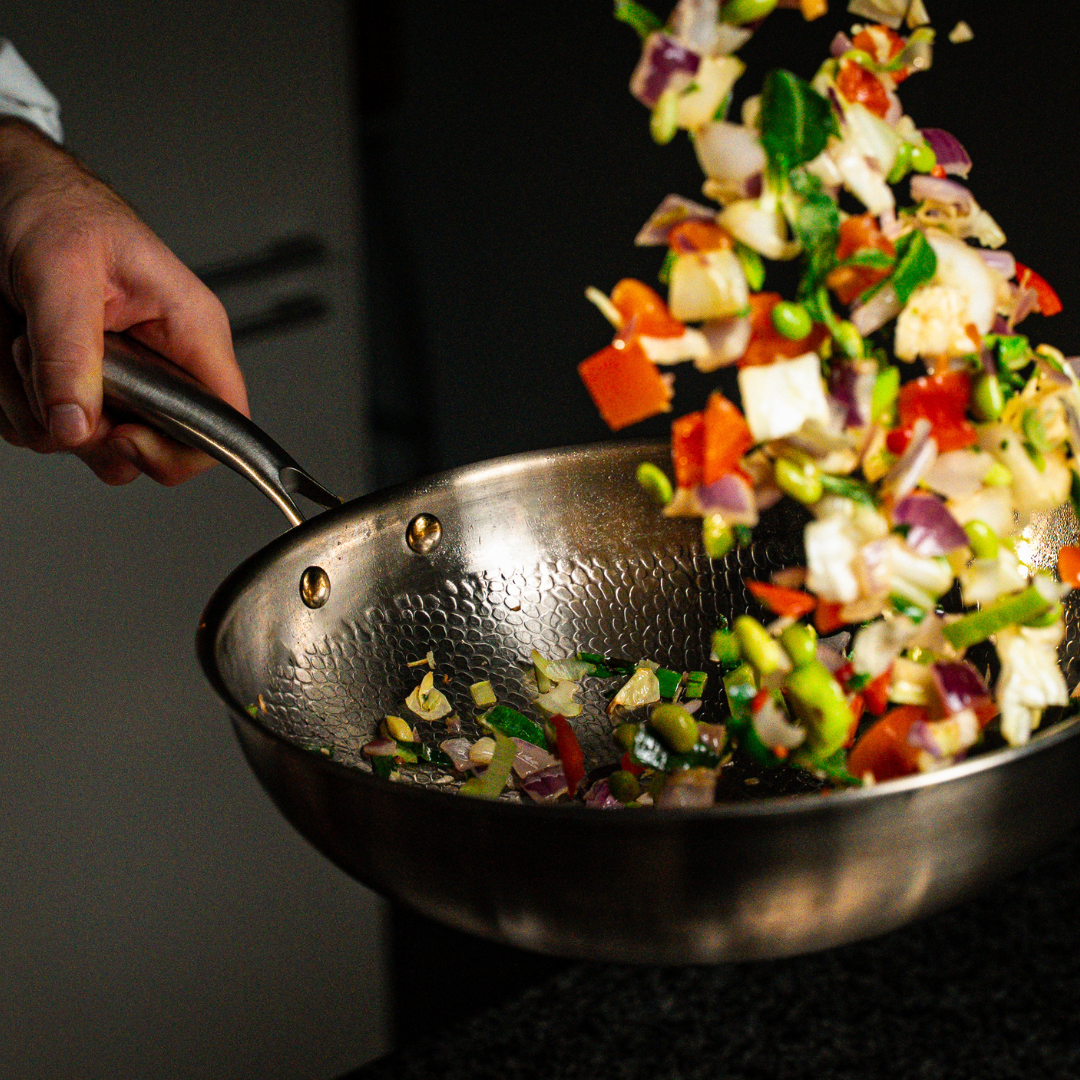

Titanium cookware and cutting boards can absolutely be worth the investment – but the answer depends on several factors, especially build quality and how they’re used. Many titanium pots, pans, and cutting boards are marketed as premium, long-lasting alternatives to traditional kitchen materials. But with higher upfront costs compared to coated non-stick or ceramic options, many home cooks ask if titanium cookware is really worth it. This guide breaks down what makes titanium kitchen tools different from alternatives – and whether they justify the investment for daily cooking.
What Makes Titanium Cookware & Cutting Boards Different From Other Options?
Material Properties and Construction
Titanium is valued for its exceptional strength, corrosion resistance, and chemical stability. Thanks to these properties, titanium cookware is highly durable and maintains strong structural integrity over time. Because titanium itself is non-reactive, it doesn’t interact with acidic or salty foods and does not rely on fragile surface layers for safety.
The same core advantages apply to titanium cutting boards and utensils – the material is stable, non-reactive, and highly resistant to corrosion and moisture damage. Because performance comes from the material itself rather than a delicate coating, titanium kitchen tools are generally highly scratch-resistant and built to withstand long-term wear in everyday use.
No Reliance on Synthetic Non-Stick Coatings
Many traditional non-stick pans depend on synthetic coatings for their food-release properties. These coatings can wear over time due to heat, frequent use, cleaning, and utensil contact. As the coating degrades, food release performance declines and the cooking surface may become less consistent.
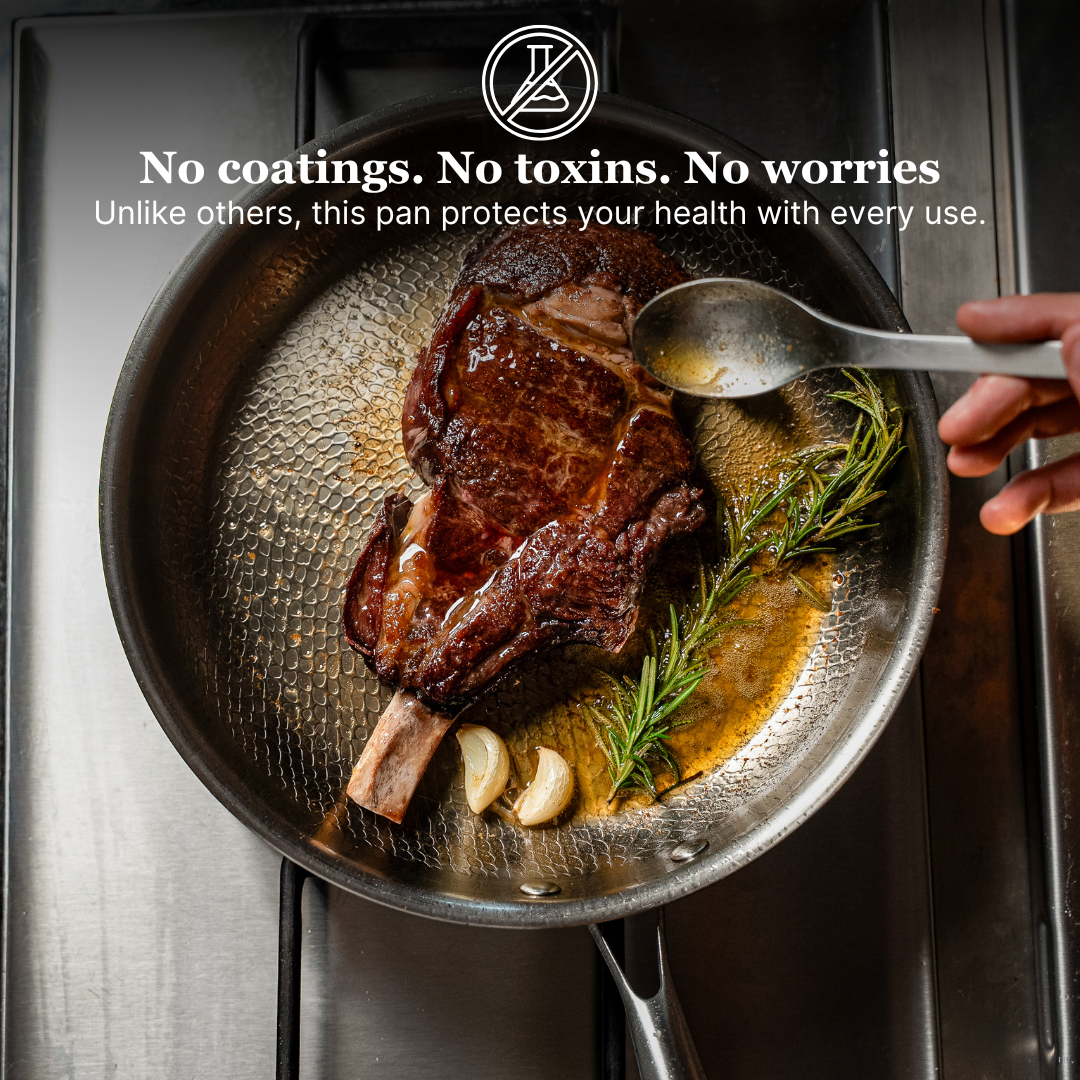
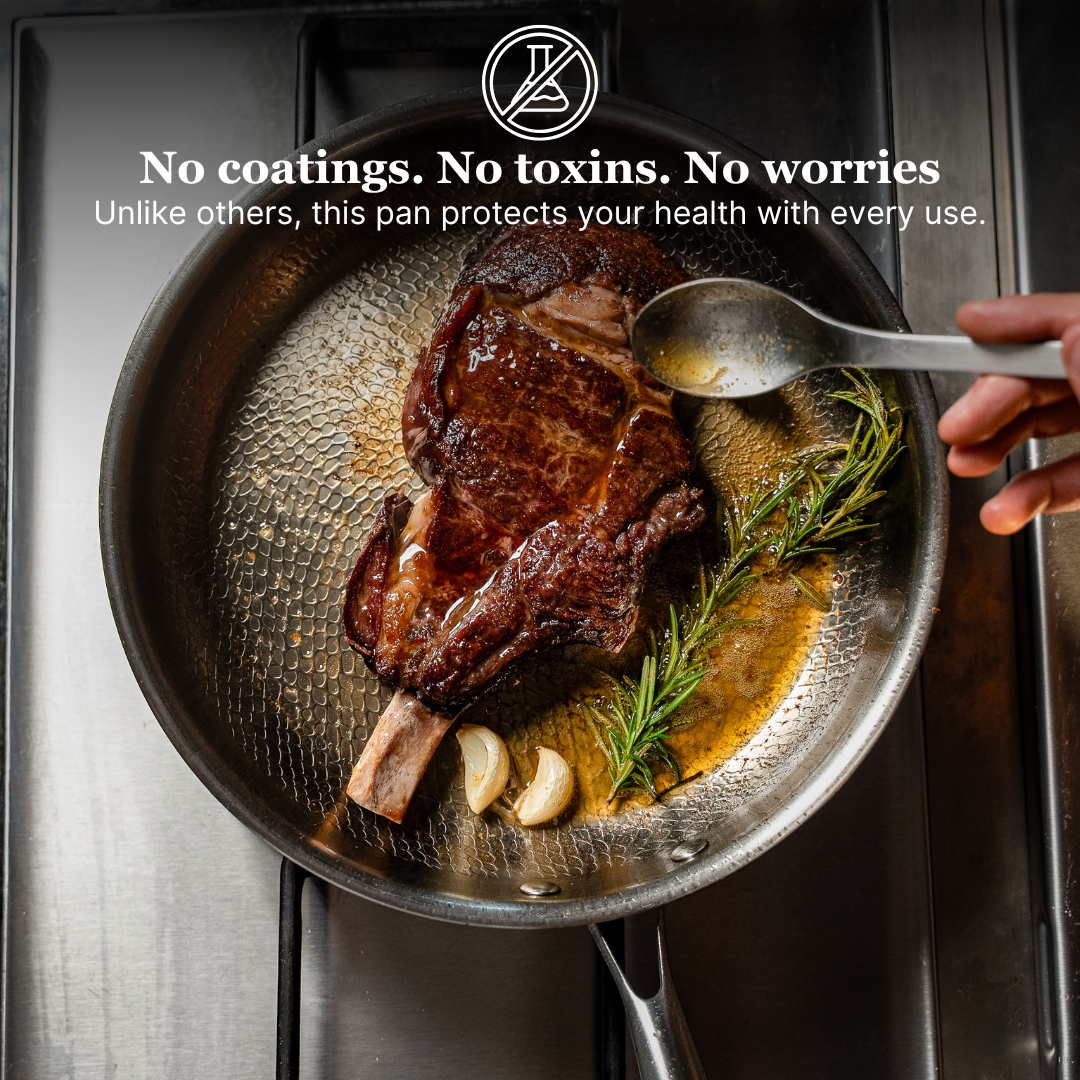
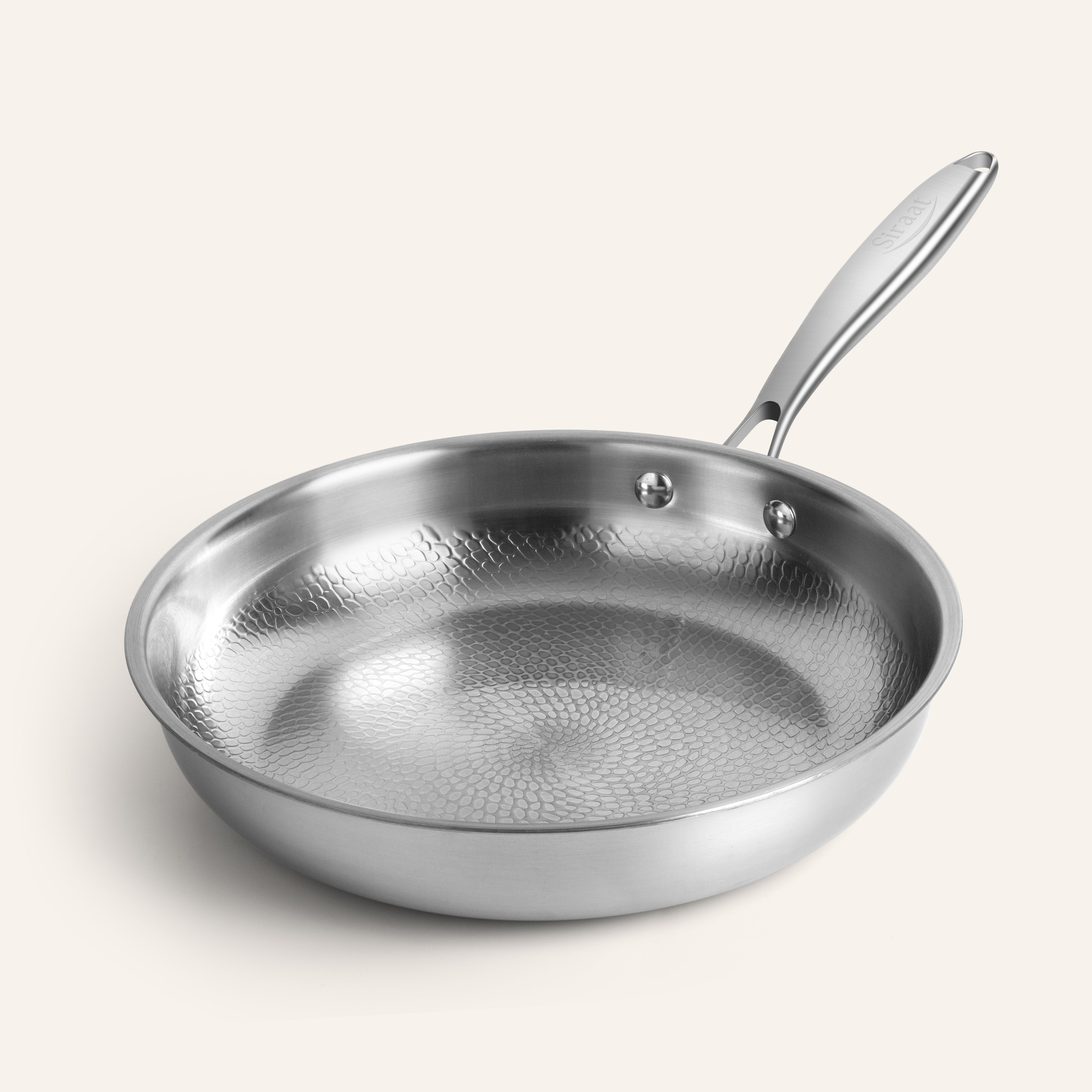
But titanium cookware – especially hammered-surface designs – does not rely on a synthetic non-stick layer to function well. Instead, its low-stick behavior comes from material stability and surface engineering. The same principle applies to titanium cutting boards – there is no applied surface coating that can peel or chip, even with repeated use, knife contact, and washing.
Designed for Long-Term Use
Longevity is one of the main reasons titanium is used in kitchen tools. The material tolerates frequent heating and cooling cycles and repeated washing much better than many coated or moisture-sensitive kitchen materials.
For everyday home cooks, this means performance tends to remain consistent over time, and titanium cookware and cutting boards don’t need to be replaced as often as coated pans or soft-materials cutting boards. This is a major reason why titanium products are often seen as a long-term value investment.

The Key Benefits of Titanium Cookware & Cutting Boards
Durability for Daily Use
Titanium is a highly durable material that can withstand even everyday cooking for decades – and with proper care, even a lifetime. It’s well suited for kitchens where pots and pans are used frequently and exposed to varied cooking conditions. Many cooks value this durability because it means fewer replacements and more consistent long-term performance.
Non-Reactive & Non-Toxic Surface
Since titanium is chemically stable, it’s also non-reactive with acidic, salty, or alkaline foods. Health-conscious cooks appreciate that titanium cookware and cutting boards do not release unwanted substances into food during normal use. Since solid titanium tools do not rely on synthetic non-stick coatings, they are not dependent on coating-based chemicals for food release. Titanium kitchenware also doesn’t absorb or transfer flavors and odors between foods, which is especially appreciated by individuals with sensitive taste or dietary preferences.
In addition, solid titanium cutting boards are non-porous, meaning they do not absorb moisture, food residues, or odors. This makes them easier to keep hygienic and reduces the risk of bacteria buildup compared to porous materials like wood or plastic.
Naturally Low-Stick Performance
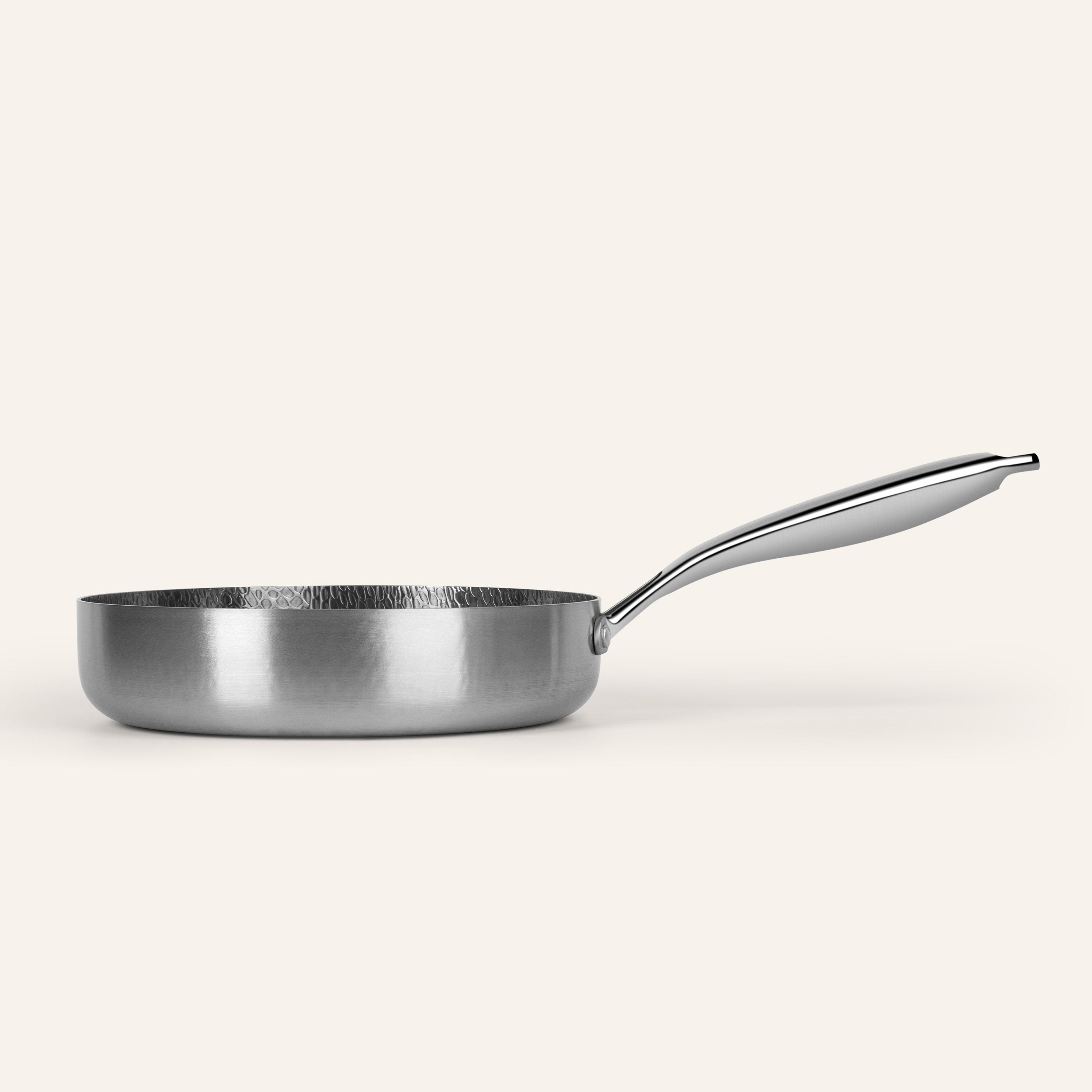
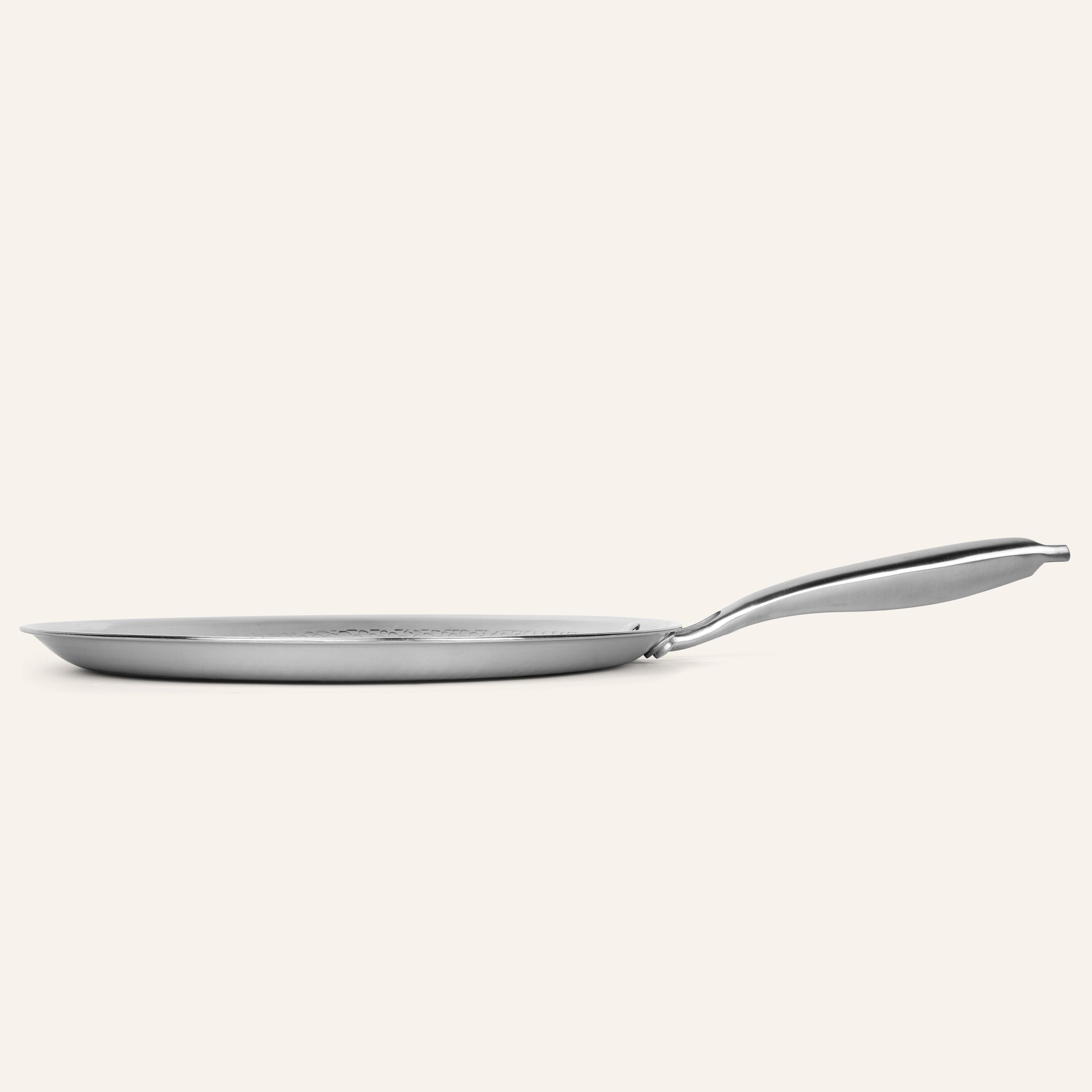
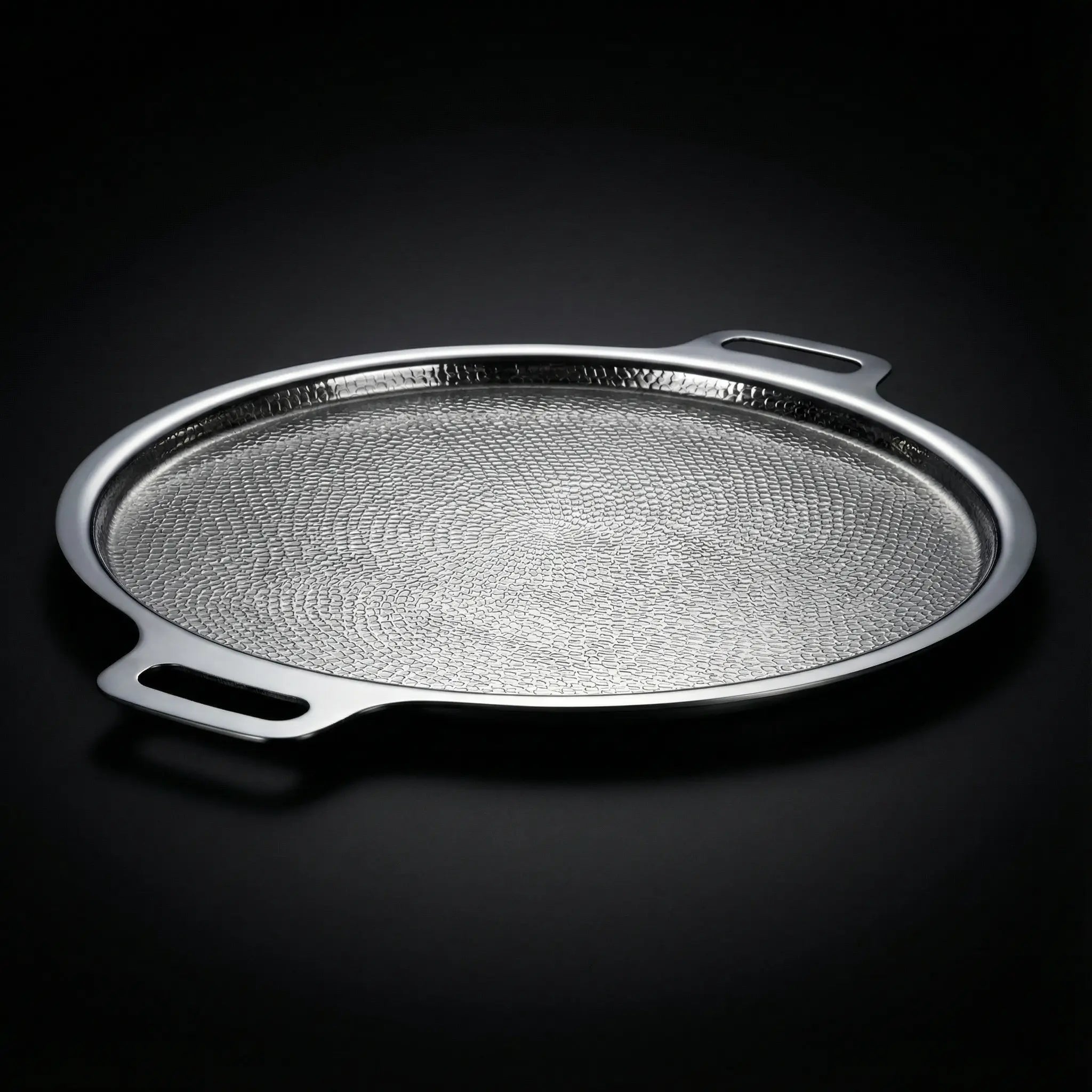
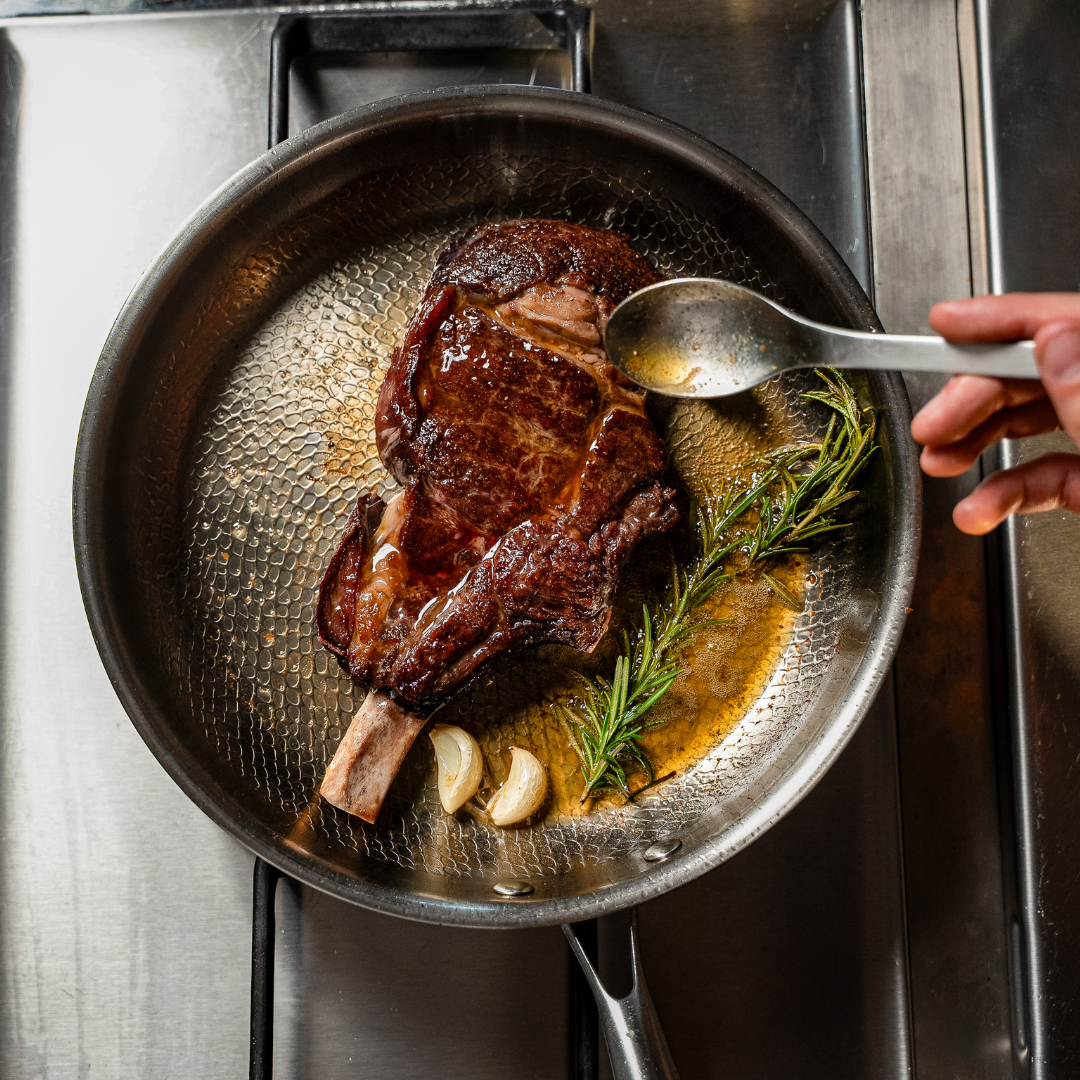
Titanium cookware can provide naturally low-stick performance without relying on a synthetic coating, especially when it features a hammered or textured surface. This type of surface engineering reduces direct contact between food and the pan, helping improve food release during normal cooking.
Versatility Across Cooking Methods & Stove Types
Titanium pots and pans are typically compatible with most gas and electric cooktops, and many models are designed to work with induction as well. They tolerate both moderate and high-heat cooking methods, making them suitable for sautéing, simmering, searing, and everyday meal preparation without requiring specialized handling. The same flexibility applies to prep tools – titanium cutting boards can be used with all food types without concern about staining, moisture damage, or odor retention.
Lower Replacement Frequency
When considering whether titanium cookware is worth the investment, many people focus on how often it will need to be replaced. While lower-cost pans and boards tend to perform very well initially, they often wear down and require frequent replacement. On the other hand, titanium cookware and cutting boards are designed to last a long time. They can remain functional for much longer than kitchenware made from other materials. This makes them especially practical for kitchens that cook daily rather than occasionally.
Easy Maintenance & Cleaning
Titanium kitchenware is well known for being easy to maintain. It’s particularly suitable for kitchens that cook daily, as cleaning typically requires only warm water and mild dish soap. Because the surface is non-porous and non-reactive, it doesn’t retain food particles, odors or flavors, which keeps cleanup simple. Many titanium cookware pieces and cutting boards are also dishwasher safe, making maintenance even more convenient.
Even occasional deep cleaning is usually less time-consuming than with cookware made from other materials. In most cases, soaking the kitchenware for a short time and gently rinsing it afterwards is enough. When needed, a paste made from baking soda and water can be used to remove light stains or oil residue without affecting the surface.
Potential Drawbacks to Consider Before Buying
Higher Upfront Cost
The cost of high-quality titanium cookware and cutting boards can sometimes cause hesitation. Titanium kitchenware may not suit all budgets, particularly for those looking for a short-term solution or who prefer replacing cookware for aesthetic or trend-driven reasons. However, for cooks who prioritize long-term use, the higher upfront cost can be justified. The combination of durable materials and solid construction supports consistent performance over many years and reduces the need for regular replacement.
Not All Titanium Cookware Is Built The Same
Titanium cookware can vary significantly in construction and overall quality. Some products are made from solid titanium components, while others use titanium as part of a multi-layer design combined with materials such as aluminum or stainless steel to improve heat distribution and cooktop compatibility. There are also products marketed as “titanium” that contain only minimal amounts of the material.
To achieve the best results, it’s important to choose cookware either made primarily from titanium or intentionally combined with layers made from other materials that add convenience while maintaining the durability. Titanium cutting boards, on the other hand, should be made from solid titanium, allowing them to fully leverage the material’s non-porous, non-reactive, and highly durable properties.
Effect on Knife Sharpness
While titanium cutting boards are durable, non-porous, and non-toxic, their hardness can introduce a trade-off when it comes to knife use. Compared to softer materials, titanium surfaces may cause knives to dull more quickly over time. While the board itself remains unaffected by moisture, corrosion, and scratching, cooks might need to sharpen their knives more often.
However, in durability-focused kitchens, travel setups, and food prep environments where sanitation and cleanliness are a priority, titanium cutting boards may be a suitable choice – especially when paired with high-quality knives that are sharpened regularly.

Explore our titanium cutting boards now
Designed for cooks who prioritize durability, food safety, and long-term value
Are Titanium Cookware & Cutting Boards Worth the Investment?
For many households, the answer is yes – particularly when long-term value, food safety, and durability matter more than upfront cost. Fewer replacements, consistent cooking results over time, reduced concern about surface degradation, and non-toxic properties are some of the main reasons that make the decision easier for many cooks.
The same logic applies when evaluating whether titanium cutting boards are worth it. While they come at a higher initial cost and may require more frequent knife sharpening, their non-porous, corrosion-resistant surface makes them highly hygienic and extremely durable. For users who value longevity, cleanliness, and resistance to moisture and odors, titanium cutting boards can be a worthwhile long-term choice.
Ultimately, titanium cookware and cutting boards tend to offer the most value to health-conscious households that use their kitchen tools frequently and want reliable performance without everyday maintenance concerns.
Final Verdict: Titanium Cookware As a Strong Choice For Everyday Cooking
Titanium cookware is a smart and practical upgrade for many cooks. While it’s not a one-size-fits-all solution, titanium cookware and cutting boards can offer advantages for households that prioritize durability, food safety, and long-term value. For those who cook regularly and want reliable performance without relying on synthetic coatings or frequent replacements, titanium can be a worthwhile investment that delivers consistent results over time.