







How to Care for Titanium Cookware
Titanium cookware is built differently from a standard non-stick pan, and it holds up differently too. There is no soft coating to scrape off or replace every year, and the surface is far more resistant to the kind of everyday wear that shortens the life of cheaper pans.
That durability still depends on how the cookware is treated day to day. Cleaning it the wrong way, running it through cycles it was not built for, or ignoring a scratch when it first appears can all cut years off a pan that should otherwise outlast most kitchens. What follows covers cleaning, dishwasher use, scratch prevention, and what to do when a pan needs restoring, so the cookware keeps performing the way it did on day one.
How to clean titanium cookware?
Warm water, a mild dish soap, and a soft sponge handle almost everything a titanium pan sees day to day. Food residue lifts easily once the pan has cooled, and there is rarely a need for anything stronger.
For stuck-on food, soaking the pan for ten to fifteen minutes loosens most of it without scrubbing. Baking soda mixed into a paste works on tougher marks and will not damage the surface the way steel wool or abrasive cleaners can.
How to Clean Titanium Cookware Properly covers a more detailed cleaning routine, including how to handle burnt-on residue without damaging the surface.
Is titanium cookware dishwasher safe?
Most titanium cookware can survive an occasional trip through the dishwasher, but it is not the best way to clean it regularly. Dishwasher detergent is harsher than hand soap, and the tumbling against other items in the rack adds wear that hand washing avoids.
Titanium cutting boards handle the dishwasher better than pans do. The material is non-porous and resistant to moisture, corrosion, and heat, so it does not absorb liquids or warp the way wood and some composite boards can. Pans are still better off hand-washed as the default, with the dishwasher reserved for the occasional deep clean rather than everyday use.
How often should you care for titanium cookware?
Care routines work best when they match how the cookware actually gets used, not a one-size-fits-all schedule. A pan in daily rotation benefits from a light oil wipe after most washes and a scratch check every few weeks, catching small issues before they become bigger ones.
Cookware used less often needs less maintenance day-to-day, but benefits from a proper clean and a light seasoning before it goes back into storage for any length of time, rather than being put away straight after the last use.
Whichever routine fits, consistency matters more than intensity. A pan cleaned gently every time it is used will outlast one that gets an occasional deep clean between long stretches of harsher handling.
How to prevent scratches and restore a worn pan?
Most damage comes down to a handful of everyday habits: metal utensils, abrasive scrubbers, cutting directly on the cooking surface instead of a board, and stacking pans without any protection between them, covered in more detail below under storage. A few small swaps prevent nearly all of it:
-
Nylon, silicone, or wooden utensils only
-
A soft sponge or cloth, never steel wool or scouring pads
-
Cutting directly on a board, not on the cooking surface
-
Letting the pan cool before washing to avoid warping
A pan that is already scratched or has lost some of its non-stick feel is not necessarily done. Re-seasoning with a light layer of oil restores a meaningful amount of performance in most cases, and it is worth trying before assuming a pan needs replacing. How to Restore a Non-Stick Pan (And When You Should Replace It) covers the point where restoring stops making sense and replacing does.
How to store titanium cookware?
How pans and boards are stored matters almost as much as how they are cleaned. Stacking pans directly on top of each other is one of the most common causes of surface scratches, since the base of one pan drags across the cooking surface of the one underneath every time it is added or removed.
A thin liner or towel between stacked pans solves most of it, and hanging racks or vertical dividers avoid the problem entirely for anyone with the cabinet space. Titanium cutting boards do best stored upright rather than flat, which keeps air moving around both sides and avoids trapping moisture against the surface. Good storage comes down to a few habits:
-
A liner or towel between any stacked pans
-
Hanging storage or vertical dividers where space allows
-
Boards stored upright rather than flat or stacked
-
A dry cabinet or rack, away from direct moisture
-
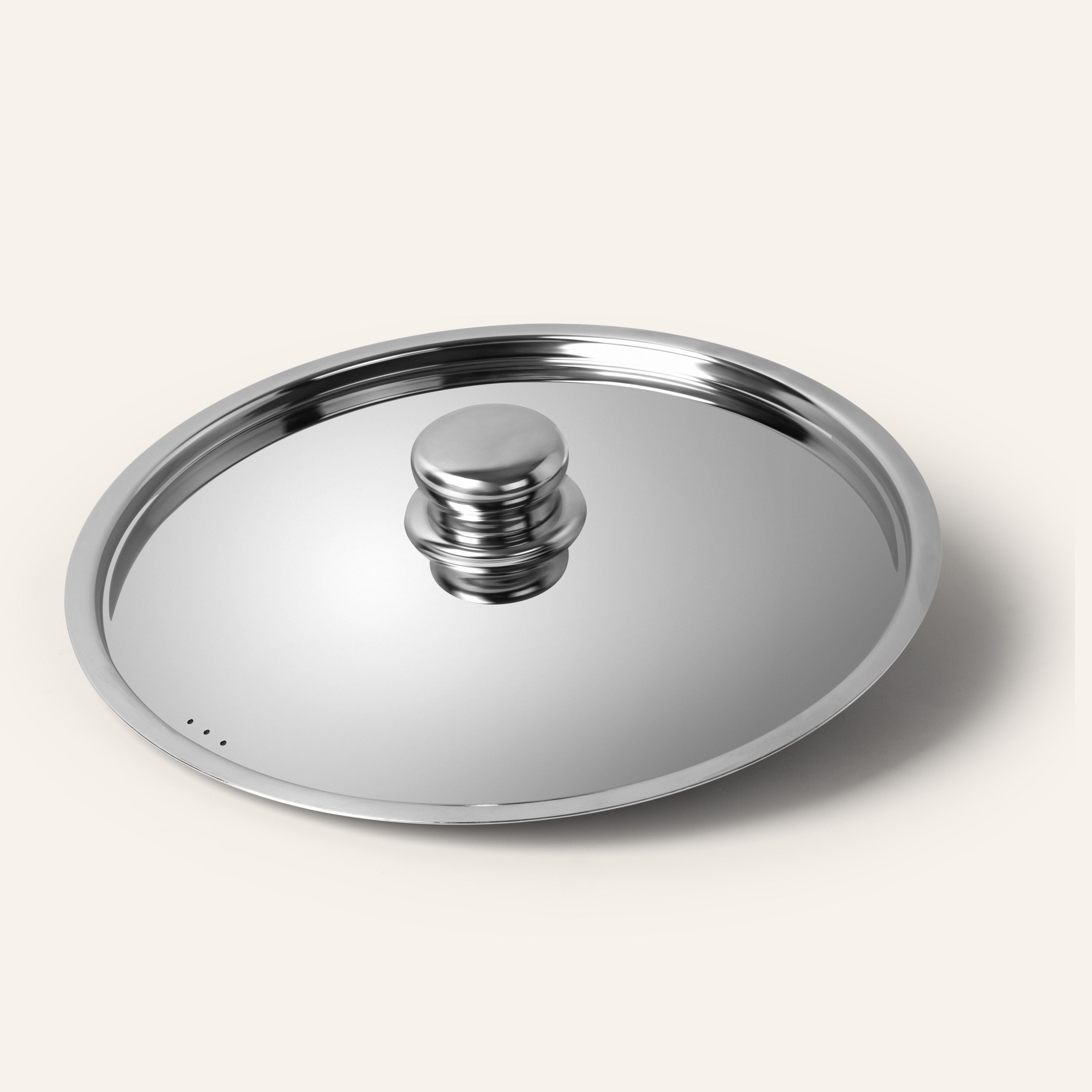
Lids stored separately rather than left resting on the cooking surface
None of this takes extra time. It just needs to become part of where the cookware lives between uses, rather than something addressed only after a scratch already shows up.
How much does titanium cookware cost?
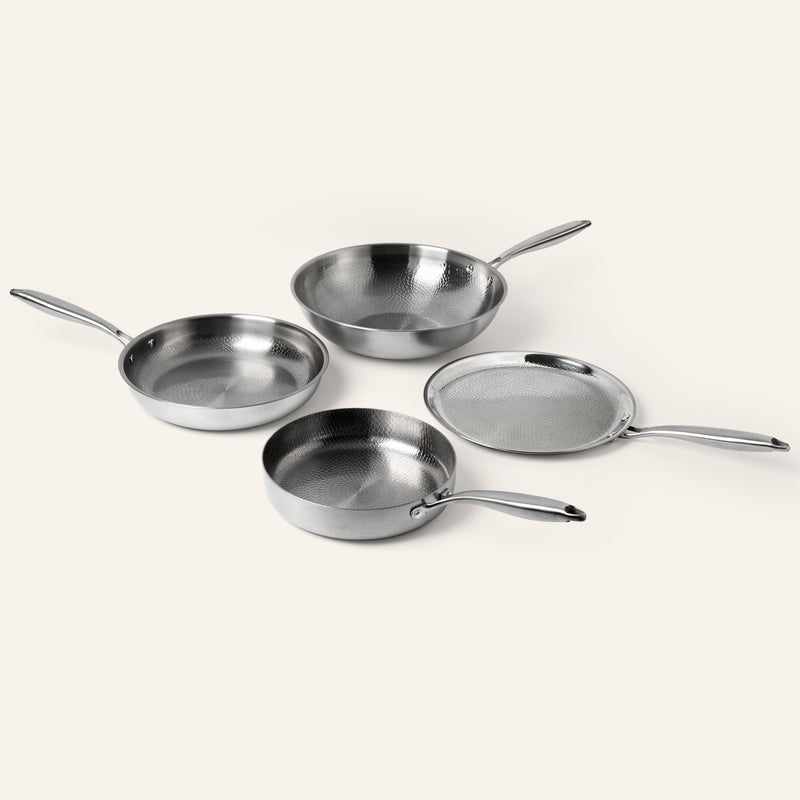
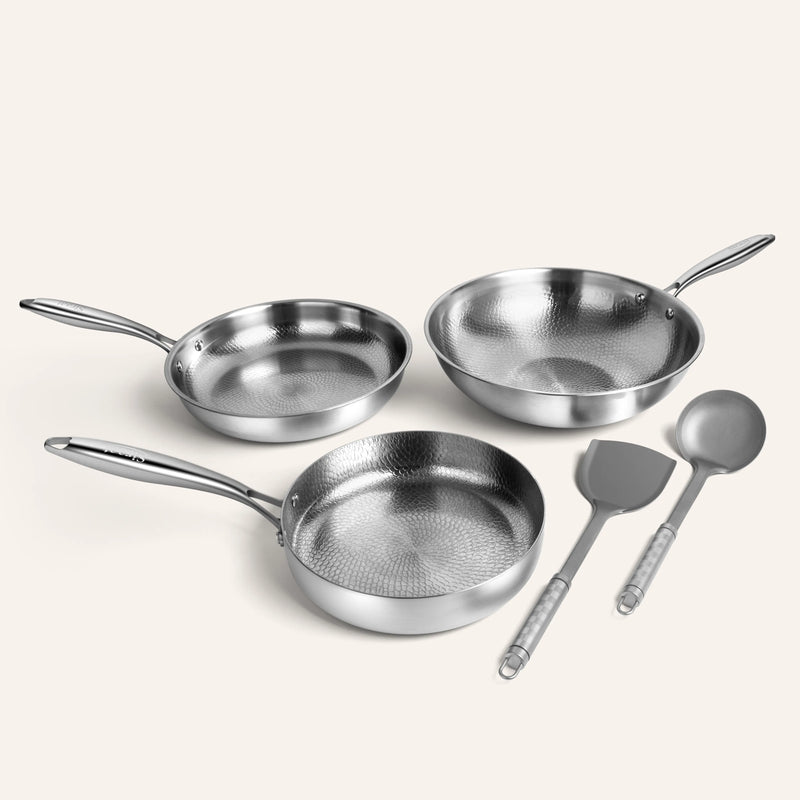
What you pay depends mainly on what you are buying. A single pan costs less than a full set, cutting boards are priced separately from cookware, and a complete hammered set with lids sits at the higher end of the range.
Titanium costs more upfront than a basic non-stick pan, and that difference is tied directly to what it replaces. A standard non-stick pan is usually replaced every two to three years once the coating wears through, while a titanium pan backed by a lifetime warranty is built to be one purchase rather than a recurring one, provided it is cared for the way this guide covers.
Buying a set or a bundle rather than individual pieces typically works out cheaper per item than building a full kitchen one pan at a time.
Where to buy titanium cookware built to last
Not all cookware sold as titanium is built the same way, and how it is made affects how well it holds up to the care routine above. Look for cookware that is upfront about its construction, backed by a warranty that reflects real confidence in the surface, and free of the coatings that wear out and need replacing.
-
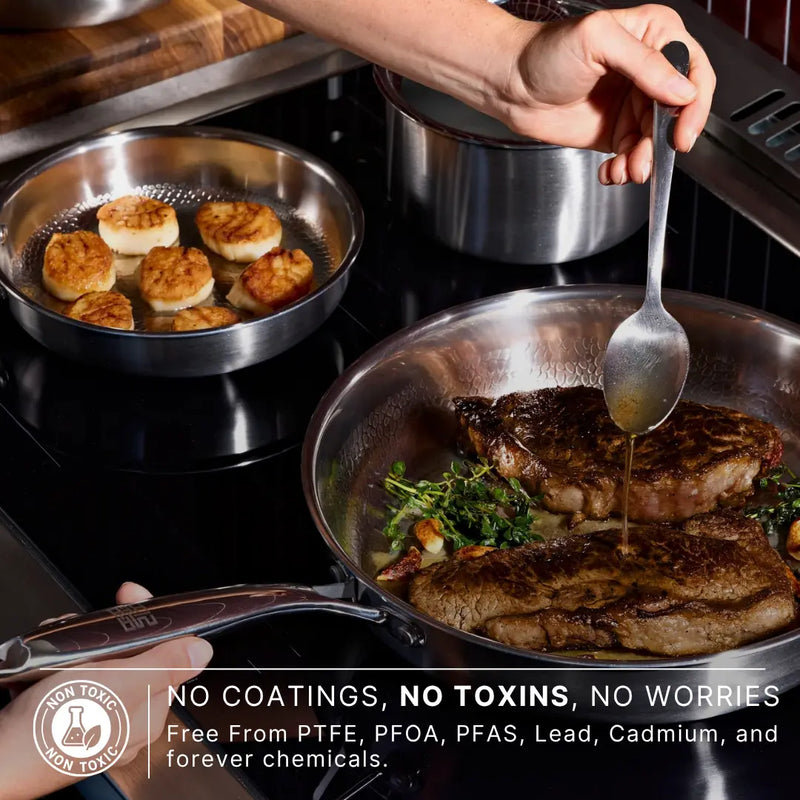
A clearly stated PFAS-free, non-toxic surface
-
A warranty long enough to reflect genuine durability
-
Manufacturer care guidance rather than generic instructions
-
A surface designed to be seasoned and restored rather than replaced
-
Reviews that speak to durability after months or years of use, not just the first few weeks
Siraat's Kitchen builds its titanium cookware around exactly this: a chemical-free surface backed by a lifetime warranty, designed to be cared for and restored rather than replaced every couple of years. Browse the titanium cookware collection to see the current range.


