







Titanium vs Other Cookware: Everything You Need to Know
Every cookware material makes trade-offs somewhere, whether that shows up in how it heats, how much upkeep it needs, or how it holds up after a few years of regular use. Titanium is no exception; it just makes different trade-offs than stainless steel, ceramic, or cast iron do.
Knowing what those trade-offs actually are matters more than picking whichever material is trending. What follows breaks down how titanium compares to the three most common alternatives, on the specific points where they actually differ, and what a good piece of cookware costs, whichever material ends up in the kitchen.
What actually differs between cookware materials?
A handful of factors separate one cookware material from another, and they matter more than the material's name on the box:
-
How quickly and evenly it conducts heat
-
Whether it reacts with acidic foods like tomato or citrus
-
How much upkeep it needs to keep performing well
-
How it holds up to scratches, warping, and years of use
-
How much it weighs in daily use
No material wins on all five. The comparisons below focus on where titanium and each alternative actually pull apart on these points, rather than repeating a generic pros-and-cons list.
What's different between titanium and stainless steel cookware?
The biggest difference is what happens to each material over time rather than what either does on day one. Both are non-reactive enough for most cooking, but titanium is one of the more inert options available and does not leach metals into food, while stainless steel can release trace amounts of nickel or chromium, particularly in lower-quality pieces or with acidic dishes.
Cooking style differs too. Titanium heats evenly and holds temperature with comparatively little oil, which suits everyday cooking without much technique required. Stainless steel offers precise heat control for a cook who wants it, but it takes more practice to stop food sticking, and it generally needs more scrubbing and soaking to look and perform its best.
Titanium also tends to outlast stainless steel with less careful handling involved, resisting corrosion and warping over the years rather than needing the more attentive care stainless steel benefits from. The full comparison is covered in Titanium vs Stainless Steel Cookware: Pros, Cons and Best Use Cases.
Why does titanium outperform ceramic cookware over time?
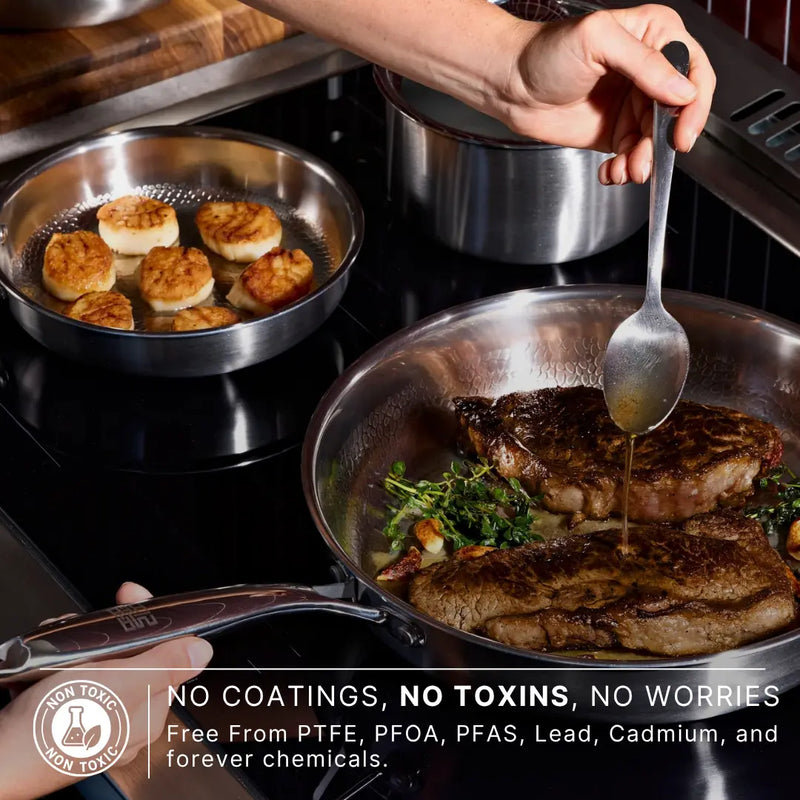
Both titanium and ceramic get marketed on similar terms, non-stick and non-reactive, with none of the concerns tied to older coated pans. The difference shows up after a year or two of regular use rather than in the first few meals.
Ceramic cookware relies on a coating, and repeated heating, cooling and utensil contact cause that coating to crack, chip and wear. Once it starts to degrade, the non-stick performance that sold the pan in the first place declines with it, and most ceramic cookware needs replacing within a few years. Titanium doesn't carry that weak point, since a solid titanium surface has no coating to degrade in the first place. It stays chemically stable through repeated use and higher heat, so performance on day one and performance five years later look much the same.
That gap in longevity is the real story here, and it's covered in more depth in Titanium vs Ceramic Cookware: Which Is Better for Healthy Cooking?.
How does titanium compare to cast iron for everyday cooking?
Cast iron and titanium end up on opposite sides of a heat trade-off. Cast iron retains heat exceptionally well, which makes it excellent for searing and long, slow cooking once it's hot, but it heats up slowly and unevenly to start with. Titanium responds to heat much faster and more evenly across the surface, which suits quicker, everyday cooking better than a pan that needs several minutes to fully heat through.
Maintenance is where the two differ most. Cast iron needs regular seasoning to stay food-safe and non-stick, along with careful drying to avoid rust, which adds a genuine ongoing chore that titanium doesn't require. Cast iron is also considerably heavier, which matters for anyone cooking one-handed or lifting a full pan often.
Cast iron still has an edge for a narrow set of techniques that specifically call for retained heat, like a long sear that needs to hold its temperature. For the everyday cooking most kitchens actually do, titanium's faster response and lower maintenance make it the more practical choice. A wider breakdown of how the main cookware metals stack up is covered in What Is the Best Metal for Cookware?
How much does titanium cookware cost compared to other materials?
Titanium usually costs more upfront than a basic stainless steel or ceramic pan, and roughly in line with or above quality cast iron, depending on the piece. That gap narrows considerably once it's measured against how long each material actually lasts rather than the sticker price alone.
Ceramic is the material most likely to need replacing within a few years as its coating wears, which turns a lower upfront cost into a recurring one. Stainless steel and cast iron both last a long time with proper care, but that care takes more time and attention than titanium needs to reach the same result. A titanium pan backed by a lifetime warranty is built to be bought once, which changes the real cost comparison more than the shelf price does.
Where to buy titanium cookware over the alternatives
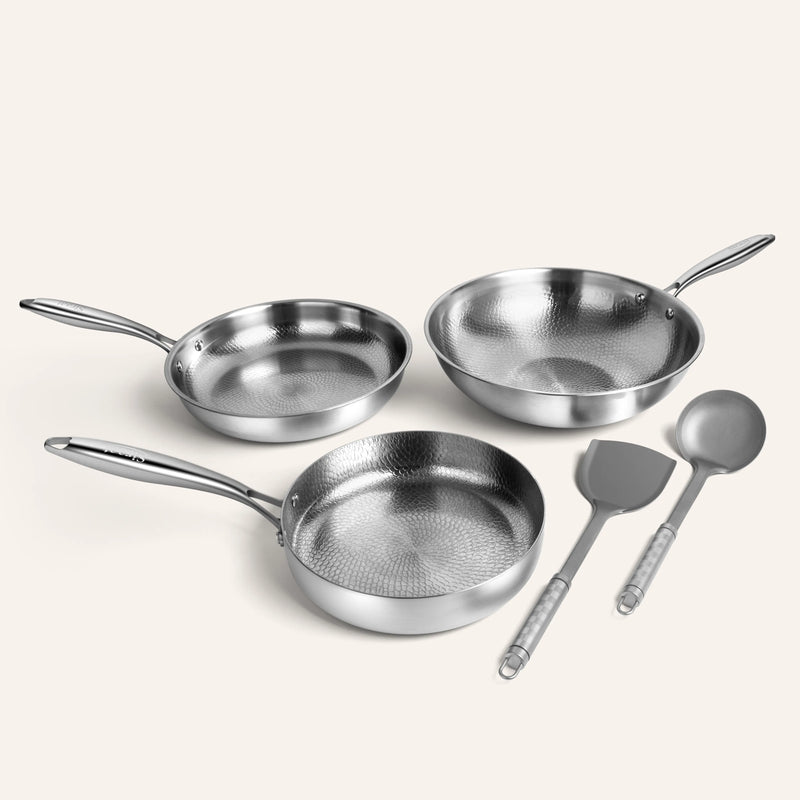
Choosing titanium over stainless steel, ceramic or cast iron only pays off if the titanium cookware itself is genuinely well made, since quality varies as much within the category as it does between materials.
A few things worth checking before buying:
-
A solid titanium cooking surface rather than a titanium-reinforced coating
-
Manufacturer information on heat performance and care requirements
-
A warranty that reflects real confidence in how long the pan should last
-
Reviews that speak to performance after months or years, not just the first few uses
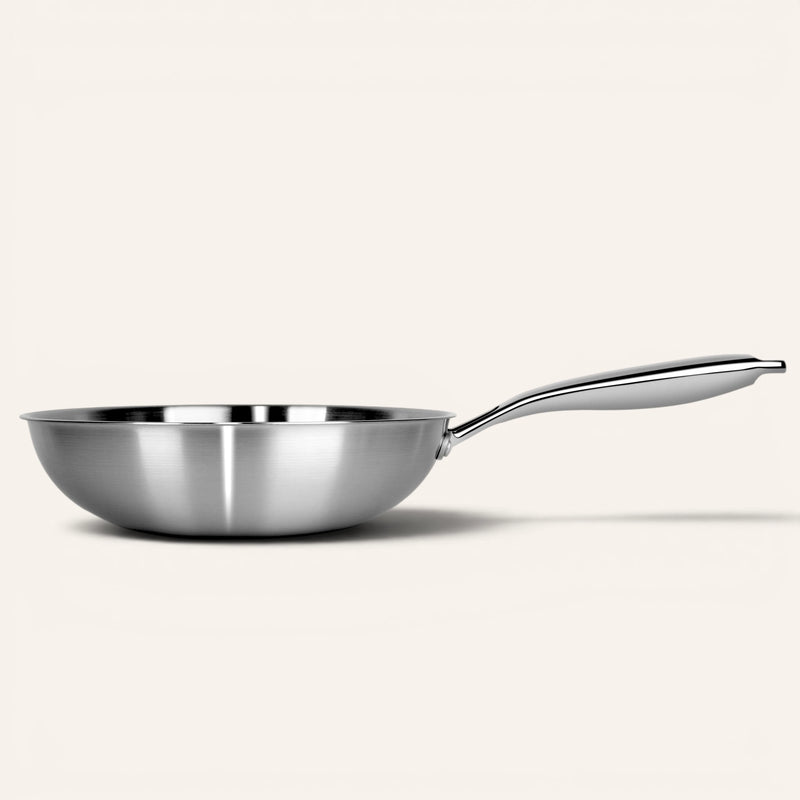
Siraat's Kitchen builds its cookware from solid titanium rather than a coated alternative, backed by a lifetime warranty that reflects how the material is meant to perform over years, not just out of the box. Browse the titanium cookware collection to see the current range.


