







How to Cook With Titanium Pans
Titanium pans don't behave exactly like a coated non-stick pan or a heavy stainless pan, and the difference shows up most the first time someone cooks with one. Knowing what causes that difference makes it much easier to get food release, heat management, and pan choice right from the start.
Whether the question is why food sometimes sticks without a coating, how much heat the pan can actually take, or which foods it suits best, the answers all come down to how titanium behaves on the stove and in the oven. What follows covers technique, heat, food pairing, and what a good pan costs.
Why is titanium cookware better for cooking?
The advantage isn't a stronger non-stick coating, it's not needing one in the same way. A solid titanium cooking surface doesn't rely on a coating that gradually wears down, so performance holds up over years of everyday use rather than fading after a season or two the way a standard non-stick pan does.
It also means titanium pans tolerate things that would ruin a coated pan: metal utensils, higher stovetop heat, and the occasional scrub with something more abrasive than a soft sponge. Not every pan sold as "titanium" performs the same way, since some use a coating reinforced with titanium rather than a solid titanium surface, which is a large part of why performance varies so much between brands.
How to cook without food sticking in a titanium pan?
Food sticks in a titanium pan almost always for the same handful of reasons: the pan wasn't preheated properly, the heat was too high or too low for what's cooking, there wasn't enough fat, or residue from a previous meal was still on the surface. Fixing it comes down to a few habits:
-
Preheat the pan for a minute or two before adding anything
-
Use medium to medium-low heat for most foods, especially eggs
-
Add a small amount of butter, ghee, or oil rather than cooking dry
-
Skip aerosol cooking sprays, which leave a sticky residue over time
-
Clean the pan thoroughly between uses so residue doesn't build up
Get preheating and fat right, and a titanium pan releases food close to as easily as a coated non-stick pan, without a coating that eventually wears out. The specifics for eggs, one of the most sticking-prone foods in any pan, are covered in Why Are Eggs Sticking to Your Non-Stick Pan?.
Can titanium pans handle high-heat cooking?
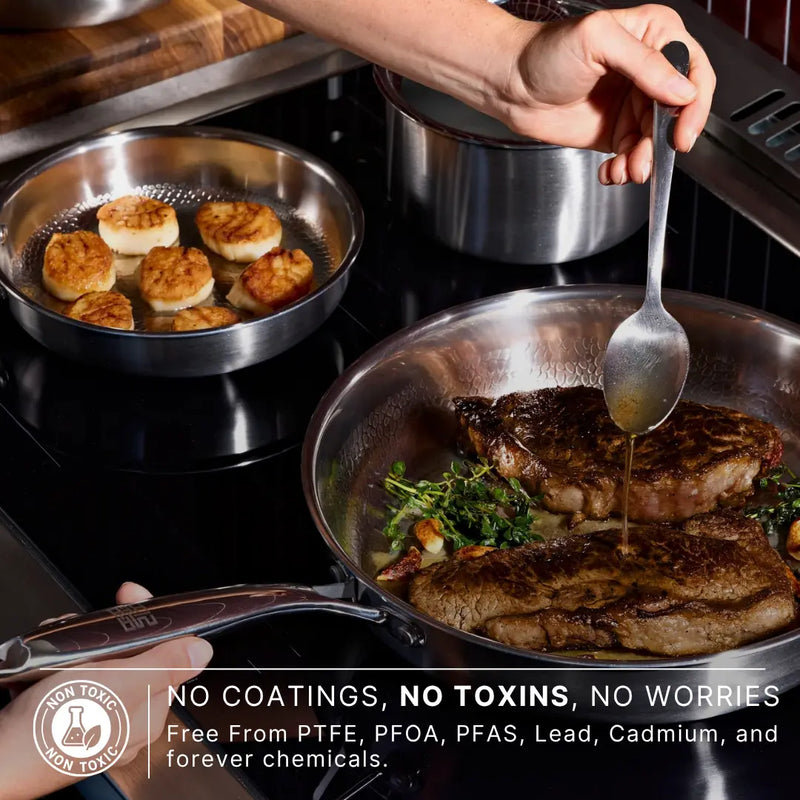
Yes, and it's one of the clearest advantages over a coated pan. Standard non-stick coatings are usually kept to low and medium heat to protect the coating, which limits searing and other high-heat techniques. Titanium doesn't have that constraint, since there's no coating that can scorch or break down.
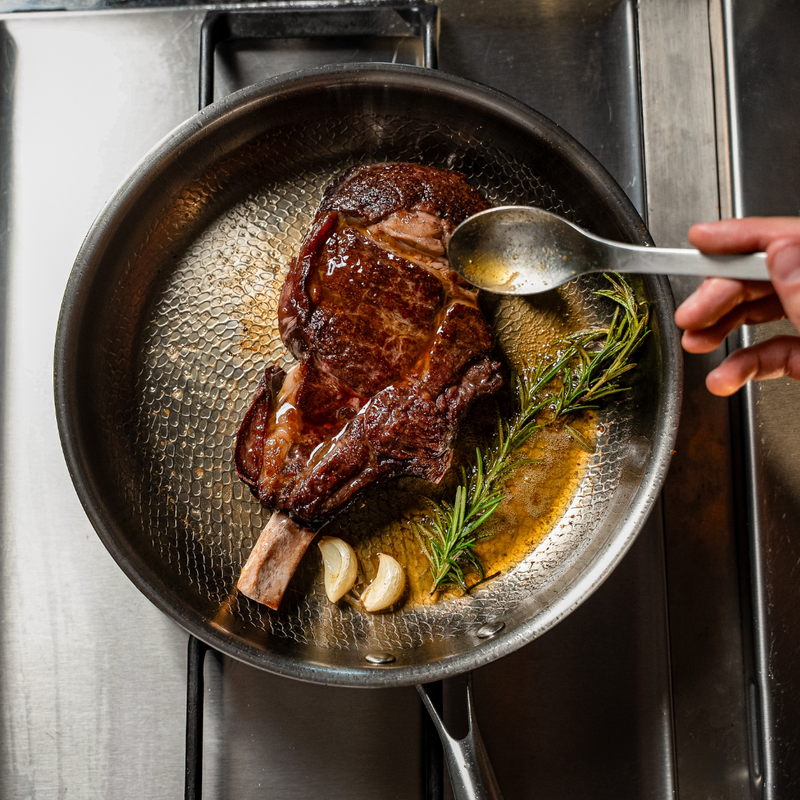
That makes it a better match for searing steaks, browning meat before a braise, or any technique that needs the pan properly hot before food goes in. High heat still needs to be used deliberately, though. A titanium pan left empty on high heat for too long can scorch food the moment it's added, so building up to the right temperature matters more than it does with a lower-heat coated pan.
Is titanium cookware oven safe?
Titanium cookware handles oven heat far better than standard non-stick pans. Quality titanium pans are built to tolerate temperatures up to 548°C (1000°F), well beyond what a home oven, pizza oven, or grill produces, which makes finishing a seared dish in the oven straightforward.
The fully metal construction is what makes this possible. Standard non-stick pans are usually rated for around 175°C to 230°C (350°F to 450°F), and their handles, often plastic or silicone, tend to fail before the coated surface does. Titanium pans don't carry that weak point, since the handle and body are made of the same heat-tolerant material. The wider rules for oven safety across cookware types are covered in Can You Put Non-Stick Pans in the Oven Safely?.
What foods cook best in a titanium pan?
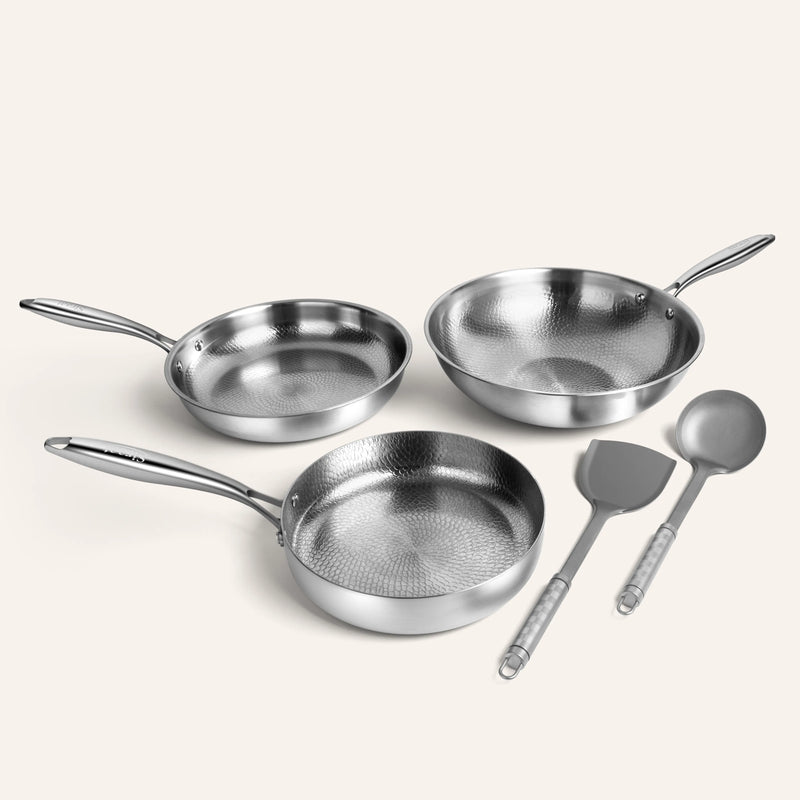
A titanium frying pan suits foods that need full, steady contact with the surface: eggs, pancakes, steaks, burgers, fish, and sautéed vegetables all benefit from the even heat and browning a flat pan provides.
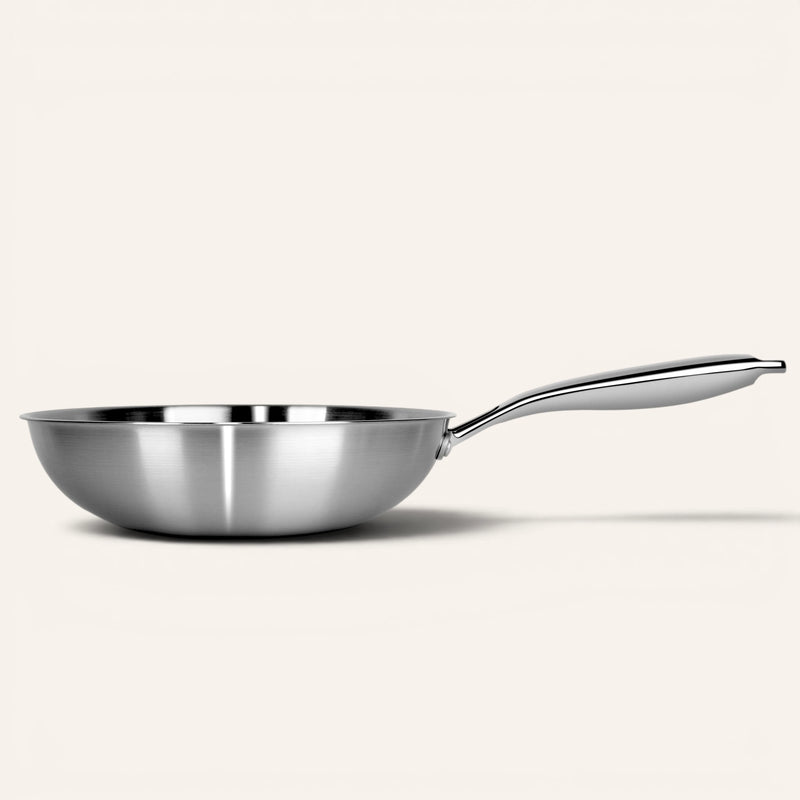
A titanium wok is built for a different job. Its sloped sides concentrate heat at the center and let ingredients move between hotter and cooler zones, which suits stir-fries, fried rice, noodle dishes, and anything cooked in larger batches over high heat. The full breakdown of when to reach for each is covered in Wok vs. Frying Pan: What's the Difference and Which Is Better?.
How much does a good titanium pan cost?
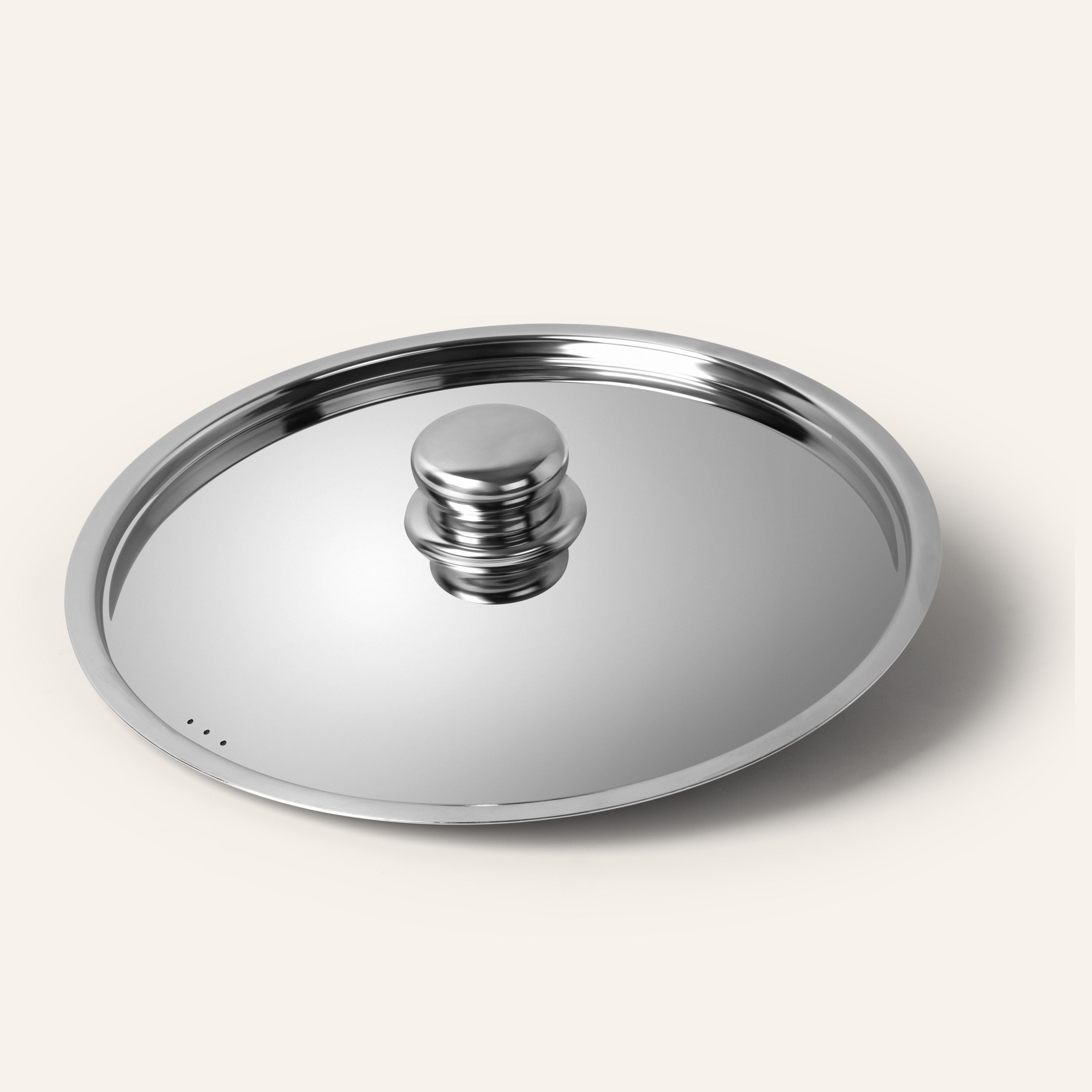
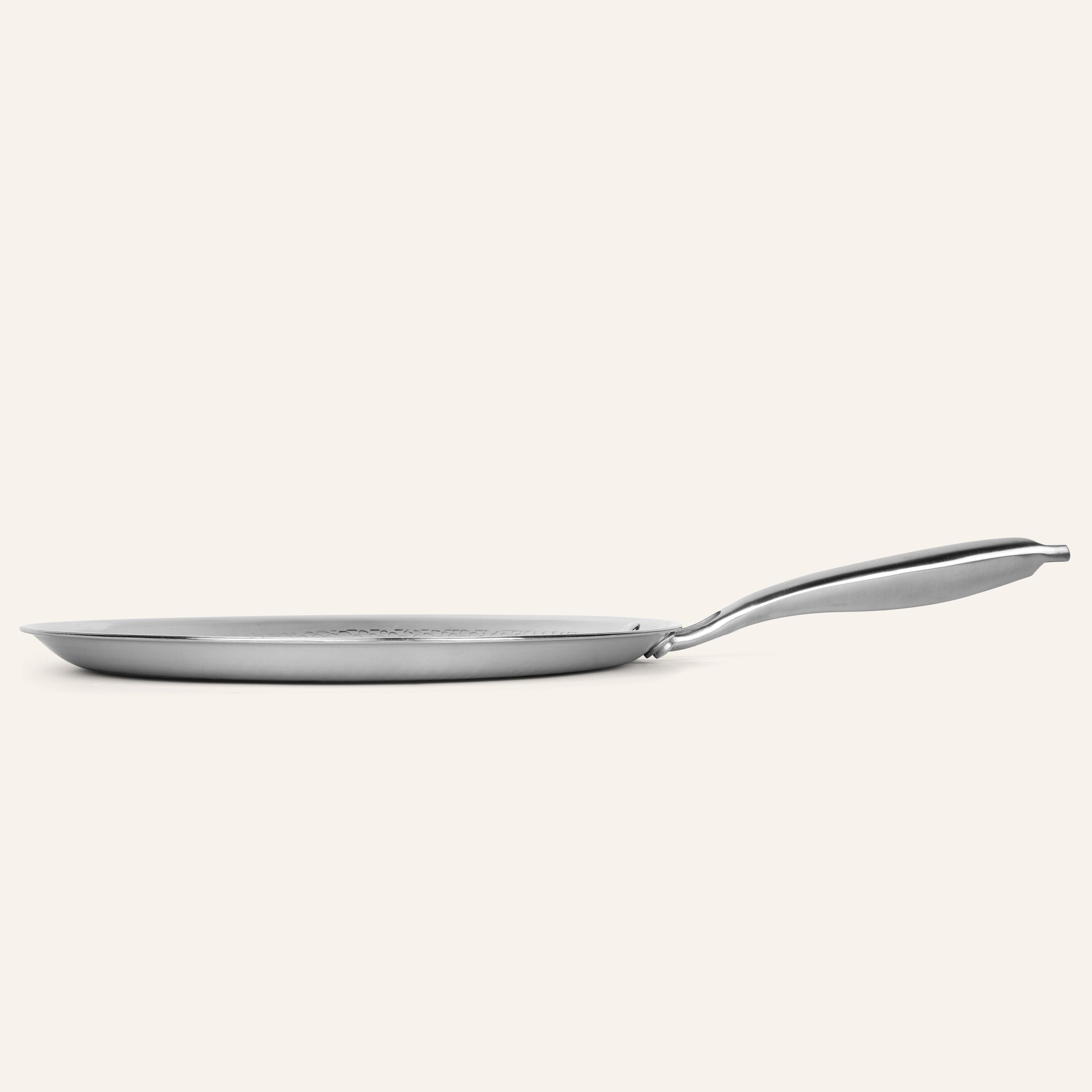
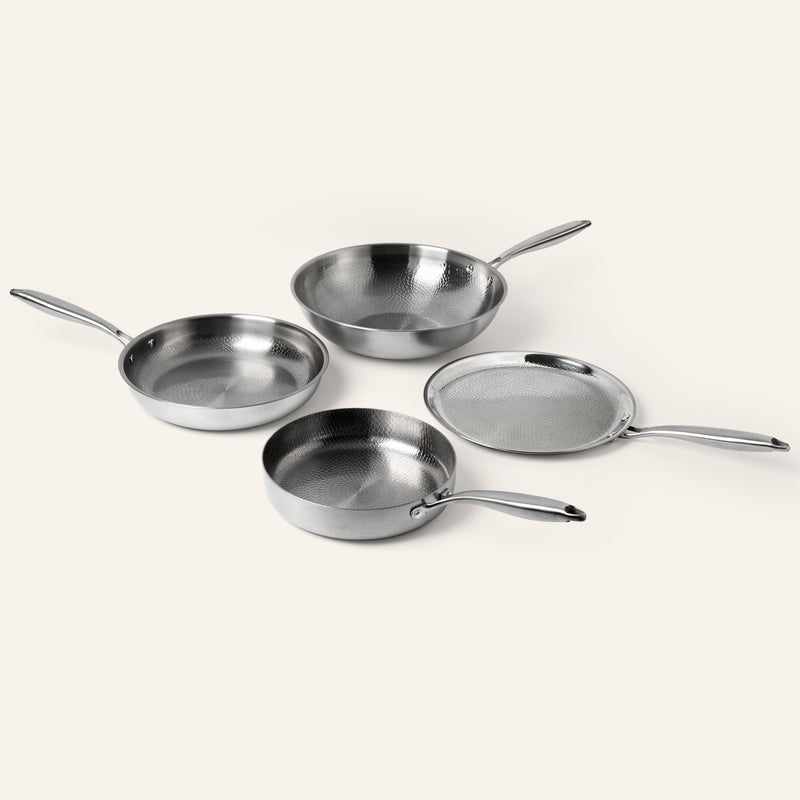
What you pay depends mainly on size and whether it's sold as a single pan or part of a set. A basic frying pan sits at the lower end of the range, specialty shapes like a wok or crêpe pan cost more individually, and a full hammered set with lids covers the highest end.
The upfront cost is higher than a basic non-stick pan, but it buys a pan that doesn't need replacing every couple of years once a coating wears through. A titanium pan backed by a lifetime warranty is built to be a one-time purchase for most home kitchens rather than a recurring one.
Where to buy the right titanium pan for how you cook
The right pan depends more on what actually gets cooked most often than on brand or price alone. A single all-purpose frying pan covers most everyday meals, while a wok, crêpe pan, or larger set makes more sense for a kitchen that cooks a wider range of dishes. Beyond shape, a few things separate a well-built pan from one just trading on the material's reputation:
-
A solid titanium surface rather than a titanium-reinforced coating
-
Clearly stated heat ratings for both stovetop and oven use
-
A warranty that reflects genuine confidence in the surface
-
The right pan shape for what gets cooked most often
Siraat's Kitchen builds its pans around a solid titanium surface rather than a coating, rated for both high stovetop heat and full oven use, and backed by a lifetime warranty. Browse the titanium cookware collection to find the shape that matches how the kitchen actually gets used.


