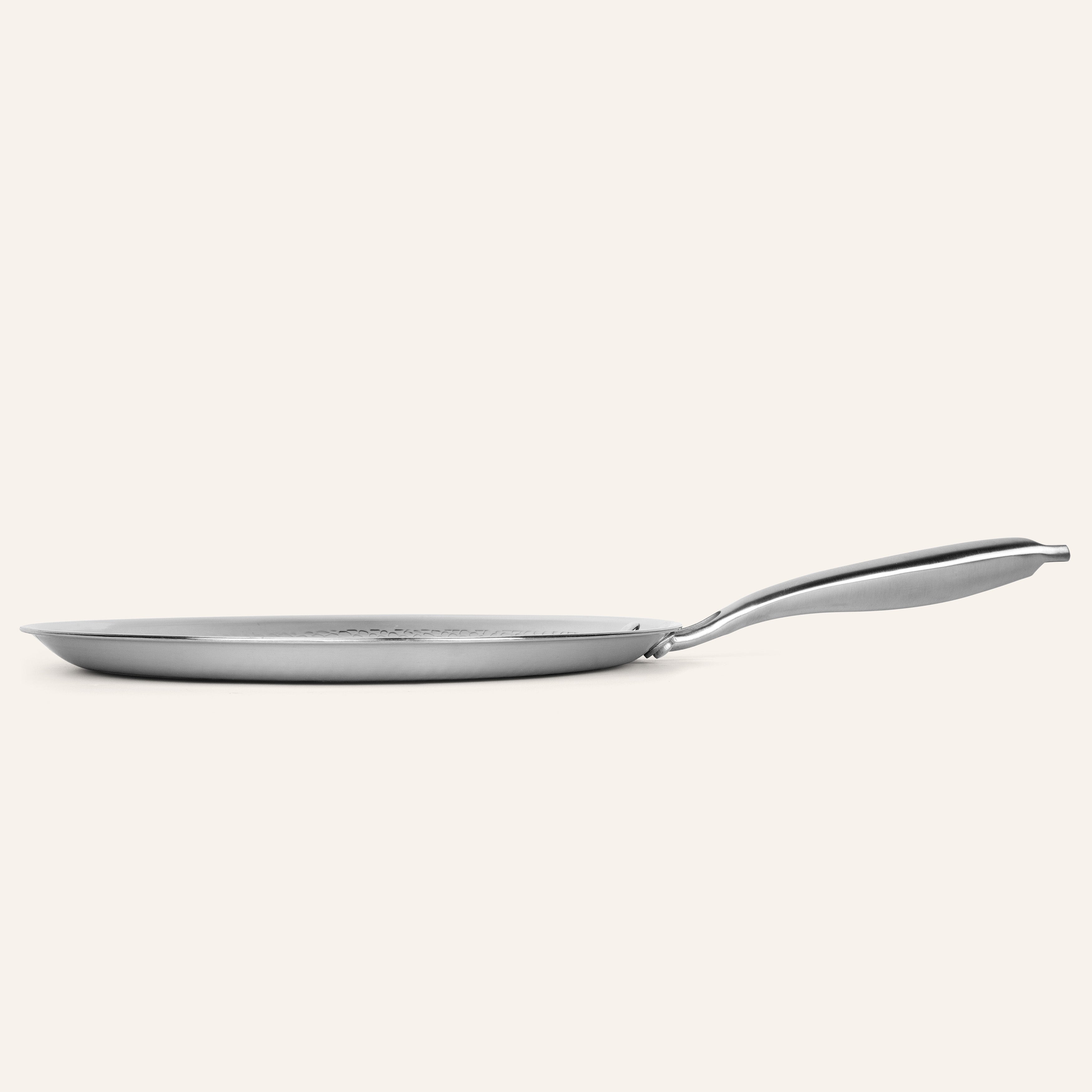
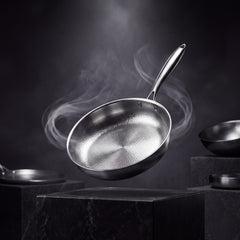
The best non-stick skillet makes everyday cooking easier, especially for foods like eggs, pancakes, and fish that tend to stick. A skillet – or a frying pan – is a shallow, flat-bottomed pan with flared sides and a long handle. What separates one skillet from another is how it creates its non-stick surface, and that choice shapes its heat limits, its care rules, and how long it works the way it should.
Traditional skillets use PTFE coatings, while newer options include ceramic-coated pans, hybrids that pair stainless steel ridges with a ceramic coating, and coating-free surfaces such as titanium. A coating can wear down with use, whereas a coating-free pan depends on its surface texture, preheating, and a little oil, so it asks for a slightly different technique, but tends to last longer.
Not every non-stick skillet is built the same way, and the amount of detail brands publish varies too. In this guide, we compare five skillets on food release, durability, heat limits, cooktop compatibility, and everyday care, and each pick says what the surface is made of and where the trade-offs are.
What Makes a Good Non-Stick Skillet?
A good non-stick skillet releases food cleanly with a modest amount of fat, heats evenly, and keeps doing both after months of regular use. The cooking surface, heat limits, construction, and care requirements decide how well a pan meets that standard.
Surface type comes first. Classic non-stick pans use a PTFE coating, ceramic pans use a mineral-based coating, and hybrids often combine raised stainless steel ridges with a ceramic coating in the valleys. Coating-free options such as textured titanium rely on the surface pattern and a little oil instead. Coated surfaces depend on a layer that can wear, and a traditional non-stick coatings likely last only two to three years.
Heat limits vary widely. Oven ratings among the pans in this guide range from 400°F (204°C) to 1000°F (548°C), and some pans’ care guides advise low to medium heat only. A higher limit matters if you sear, finish dishes in the oven, or tend to cook on high heat.
Construction and cooktop compatibility affect everyday use. An aluminum core spreads heat more evenly, while a magnetic stainless steel layer is what makes a pan work on induction.
Care rules also matter. Dishwasher safety, metal utensil tolerance, and whether the pan needs oil or seasoning all change how much upkeep the surface demands. When comparing skillets, look past first-week food release to what the maker says about heat, utensils, and cleaning. Prices are accurate at the time of writing, so always double-check current pricing.