Passer au contenu
🔥 Limited timeBlack Friday SaleBlack Friday prices are live: save 70% on all of our productsShop the sale

Shop by category

LIMITED EDITION ● NEW IN Damascus Knives 8 knives · from $99 Shop →

More

Pays

Panier

Your cart is empty

Shop by category

Why Siraat

  • 75-Year Warranty
  • Free Shipping
  • 30-Day Returns

Titanium vs Stainless Steel Pans: Pros, Cons and Best Use Cases

All comparisons are based on product specifications, independent lab testing, and verified customer reviews. ㅤ ㅤ

Plenty of home cooks replacing worn non-stick cookware end up choosing between two uncoated materials, titanium and stainless steel. Both promise a pan that lasts for years without peeling or flaking, and both can handle high heat, oven finishing, and metal utensils. The real differences show up in everyday cooking, where food release, safety, maintenance, and the skill each pan demands set titanium vs stainless steel pans apart.

Stainless steel has been a professional kitchen staple for decades, valued for its toughness, heat control, and ability to build a deep sear. Titanium cookware is newer to most kitchens, but it’s quickly becoming a favorite for its low-stick cooking without a coating, an inert surface that won’t react with acidic foods, and cleanup that rarely needs more than soap and a sponge. Not every pan sold as titanium has a titanium cooking surface, as many are PTFE or ceramic non-stick pans reinforced with titanium, so this comparison focuses on pure, uncoated titanium.

Below, you’ll find a side-by-side table, the key differences between titanium and stainless steel pans, the pros and cons of each, the everyday cooking where each pan performs best, and how they compare on long-term value.

Pure Titanium Pan
Stainless Steel Pan
Stainless Steel Pan
Cooking surfaceTitanium, often with a hand-hammered microtextureStainless steel alloy of iron, chromium, and usually nickel (commonly 18/8)
CoatingsNoneNone
Food releaseLow-stick with a short preheat and a little oilFood tends to stick without careful preheating and enough fat
Safety and reactivityInert, does not leach metals, even with acidic foodsGenerally safe, but can release trace nickel and chromium with acidic foods
Heat performanceHeats quickly and evenly, with premium pans heat safe up to 1000°F (548°C)Clad designs offer precise control and retention
Corrosion and appearanceHighly corrosion-resistant, keeps its finishDurable, though heat discoloration is common and thin pans may warp
CleaningWarm soapy water and a sponge in most casesOften needs soaking, scrubbing, or specialist cleaners
Ease of useEasy to cook with from day 1Takes practice to prevent sticking
Best forEveryday cooking, from delicate eggs and fish to seared steaks and chickenBrowning, deglazing, and fond-based pan sauces

What Are the Differences Between Titanium and Stainless Steel Pans?

On the shelf, both materials look like solid, long-lasting upgrades from non-stick. Once you start cooking, though, titanium vs stainless steel pans behave differently in food release, heat performance, safety, and long-term care, the four areas that shape everyday use.

Food Release

Clean food release is where the gap between titanium and stainless steel pans shows most clearly. A hand-hammered titanium microtexture reduces how much of the food touches the surface, so a short preheat and about a teaspoon of oil is enough for eggs, fish, and pancakes to release cleanly. Stainless steel's smooth surface lets proteins bond readily when the pan isn't hot enough, so clean release depends on preheating until a drop of water glides across the surface, adding enough fat, and waiting for food to let go, which makes titanium the more forgiving pan for everyday cooking.

Heat Performance

Clad titanium pans heat quickly and evenly, and the surface stays steady once preheated, giving reliable results from gentle sautéing to high-heat searing. Stainless steel is also valued for heat control and retention, though that depends on good clad construction, and thinner, lower-quality pans can develop hot spots. Because both rely on an aluminum or copper core for even heating, the layer specs tell you the most about heat performance in titanium vs stainless steel pans.

Safety and Reactivity

Acidic ingredients such as tomatoes, wine, citrus, and vinegar reveal the clearest safety difference between the two materials. Titanium is biologically inert, which is why it is trusted in medical and surgical equipment, so it won't react with these foods or leach metals into them. Stainless steel is generally safe, but as an alloy it can release trace nickel and chromium into acidic dishes, and research in the Journal of Agricultural and Food Chemistry found the highest levels in sauces simmered for hours in new pans. Those amounts fall within safe limits for most people, yet cooks with metal sensitivities, or anyone wanting the cleanest possible cooking surface choose pure titanium.

Durability and Care

Long-term durability favors titanium, which resists corrosion, warping, and surface wear and, with no coating to break down, keeps its finish and performance through decades of daily use. Cleanup usually takes nothing more than warm water, mild dish soap, and a sponge. Stainless steel is also long-lasting, though durability depends heavily on grade and construction, and many pans develop rainbow heat discoloration or stuck-on residue that needs soaking, scrubbing, or a specialist cleaner.

Pros and Cons of Titanium vs Stainless Steel Pans

Weighing the pros and cons side by side makes it easier to see where each pan earns its place. Titanium and stainless steel pans share durability and high-heat capability, so the deciding points come down to food release, safety, upkeep, skill level, and price.

Titanium Pan Pros

  • Low-stick food release without any chemical coating
  • Heats quickly and evenly, from delicate eggs to seared steaks
  • Inert, non-reactive surface that doesn't leach metals or alter flavors
  • Highly resistant to corrosion, rust, and warping
  • Quick, low-maintenance cleanup with soap and a sponge
  • Easy to cook with from day one, with no need to master heat control
  • Built to last for decades of daily use

Titanium Pan Cons

  • Higher upfront price than most stainless steel pans
  • Fewer brands and models to choose from
  • Still needs a little oil, so it won't behave exactly like PTFE non-stick

Stainless Steel Pan Pros

  • Excellent for browning, deglazing, and fond-based pan sauces
  • Precise heat control and retention in quality clad pans
  • Available at almost every price point
  • Widely trusted in professional kitchens

Stainless Steel Pan Cons

  • Food sticks without careful preheating and enough fat
  • Can release trace nickel and chromium into acidic foods
  • Maintenance-heavy, with frequent scrubbing and heat discoloration
  • Quality varies widely, and thinner pans may warp or heat unevenly

For cooks who value easy release, a non-reactive surface, and simple cleanup, the balance tips toward titanium, while stainless steel suits experienced cooks who enjoy hands-on technique and pan sauces built on fond. Seeing the pros and cons of titanium vs stainless steel pans together shows why titanium has become the more practical everyday option for many households.

Is a Titanium or Stainless Steel Pan Better for Everyday Cooking?

For most home cooks, a titanium pan is the better everyday choice. Breakfast eggs, flaky fish, pancakes, sautéed vegetables, and quick weeknight meals all release more easily from a hammered titanium surface, so there is less scraping, less wasted food, and less time spent managing the heat. That makes titanium especially well suited to family kitchens, health-conscious households avoiding chemical coatings, and anyone who wants dependable results without adjusting their technique for every dish.

Stainless steel still has a place for certain cooks. Its tendency to grip food creates the browned bits, or fond, that form the base of rich pan sauces, and experienced cooks often enjoy the control it gives when searing steak or chicken thighs before deglazing with stock or wine. It also suits kitchens working to a tighter initial budget, provided the pan is well made.

Choosing between a titanium or stainless steel pan for everyday cooking usually comes down to habits. Cooks who want reliable release, simple cleanup, and a non-reactive surface will reach for titanium most days, while technique-focused cooks who build sauces from fond may keep a stainless steel pan alongside it.

#1

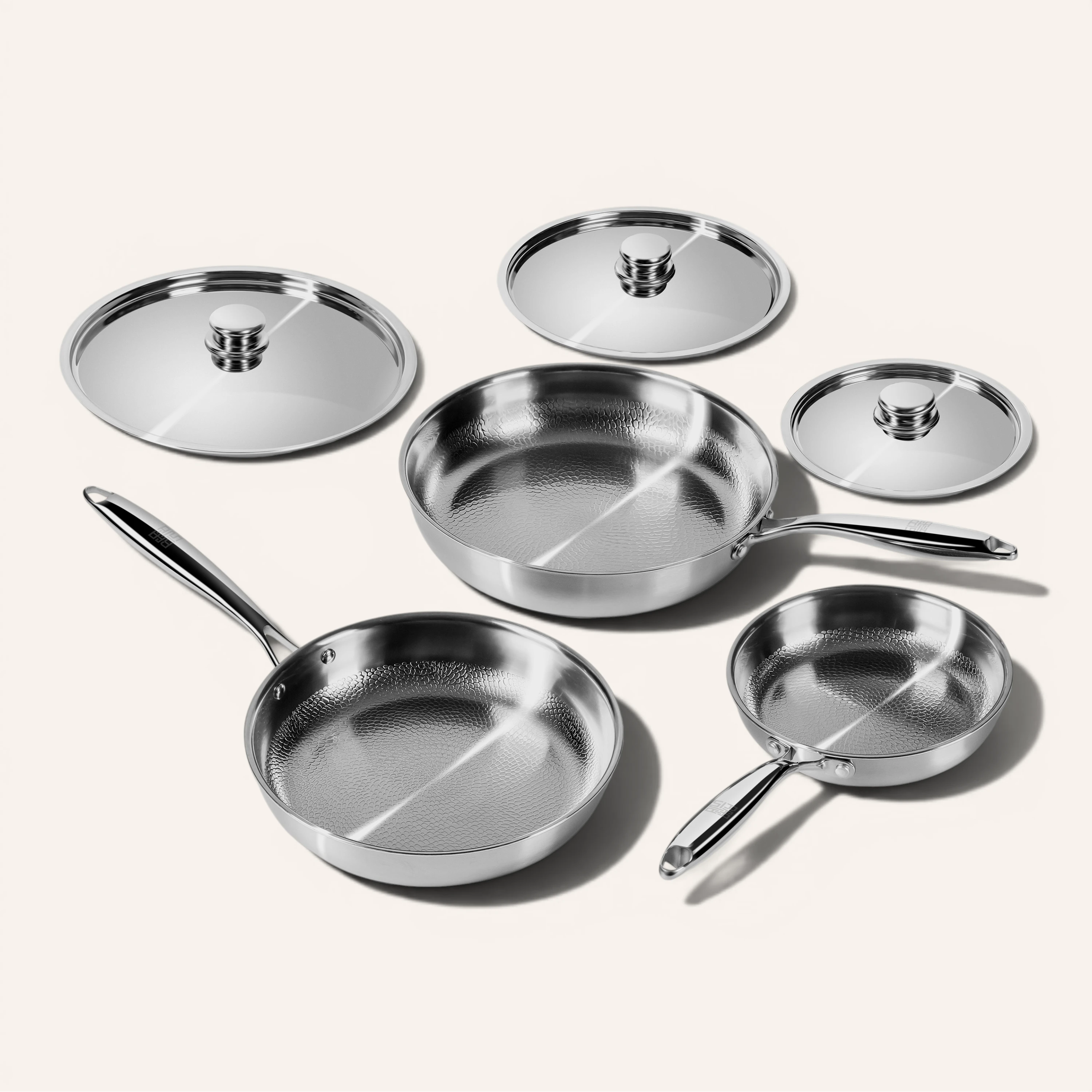
For cooks who want the toughness of stainless steel without the sticking or the scrubbing, the Siraat Titanium Hammered Pan Pro delivers easy, coating-free cooking every day. Its 0.5 mm pure Grade 1 titanium cooking surface is hand-hammered into a microtexture that helps eggs, fish, and vegetables release with just a teaspoon of oil. Underneath, a fully-clad three-layer build pairs a 1 mm aluminum core with a 0.6 mm stainless steel base for fast, even heating on every cooktop, including induction. Third-party tested by Light Labs with no PFAS, PTFE, lead, or cadmium detected, heat safe up to 1000°F (548°C), and backed by a 75-year warranty, it is built for decades of everyday cooking.

What Sets It Apart

  • 100% pure titanium – A coating-free Grade 1 titanium cooking surface that never peels, flakes, or reacts with food
  • Naturally low-stick – The hand-hammered texture improves food release without PFAS, PTFE, PFOA, or ceramic coatings
  • Fully-clad construction – An aluminum core and stainless steel base deliver fast, even heat across gas, electric, ceramic, and induction
  • Independently tested – Light Labs testing found no PFAS, PTFE, lead, or cadmium
  • Ergonomic stay-cool handle – Triple-riveted for a secure grip during high-heat cooking
  • 75-year warranty – Long-term coverage for a pan designed to last

Long-Term Value of Titanium vs Stainless Steel Pans

Upfront price tells only part of the story when comparing the value of titanium vs stainless steel pans. Stainless steel is available at almost any budget, but quality varies widely, and cheaper pans that warp, heat unevenly, or discolor often get replaced sooner than expected. Titanium pans usually cost more at the start, but a pure titanium surface has no coating to wear out and resists corrosion, so the cost spreads across many years of daily use rather than a few.

Warranty coverage is one of the best signals of long-term value. Some premium titanium pans now carry warranties measured in decades, which offers protection against manufacturing defects far beyond what most cookware provides. It is worth checking exactly what each warranty covers and for how long before buying.

Construction and transparency matter just as much. Pans that clearly state a pure titanium cooking surface, list each layer and its thickness, and publish independent testing results give buyers a far better picture of how the pan will perform and hold up over time. Weighing price, warranty, and published specifications together is the most reliable way to judge which pan will deliver better value in your kitchen.

Is titanium cookware safe to cook with?
Yes. Pure titanium is non-toxic, corrosion-resistant, and biologically inert, which is why it is also used in medical and aerospace applications. Choosing a pan with an uncoated titanium cooking surface and published independent testing gives the most confidence about what touches your food.
Do titanium pans need seasoning?
No seasoning is needed to protect a titanium pan, since titanium resists rust and corrosion naturally. Preheating the pan and adding a small amount of high smoke point oil before cooking is enough to support good food release.
Can titanium pans go in the oven?
Most titanium pans with metal handles are oven-safe, and some are rated well beyond typical home oven temperatures. Check the manufacturer's maximum temperature and avoid pans with plastic or wooden handle parts if you plan to finish dishes in the oven.
Which stainless steel grade is best for cookware?
Grades labeled 18/10 or 18/8 contain chromium and nickel for strong corrosion resistance and are the most common for cooking surfaces. Grade 18/0 contains almost no nickel and is magnetic, which is why it is often used for induction-compatible bases.
Does a titanium pan work on induction?
Titanium on its own is not magnetic, so a titanium pan needs a magnetic stainless steel base to work on induction. Many clad titanium pans include one, so check the product details for induction compatibility before buying.