Skip to content
🔥 Limited timeBlack Friday SaleBlack Friday prices are live: save 70% on all of our productsShop the sale

Shop by category

LIMITED EDITION ● NEW IN Damascus Knives 8 knives · from $99 Shop →

More

Country

Cart

Your cart is empty

Shop by category

Why Siraat

  • 75-Year Warranty
  • Free Shipping
  • 30-Day Returns

Titanium vs Stainless Steel Woks: Pros, Cons and Best Use Cases

All comparisons are based on product specifications, independent lab testing, and verified customer reviews. ㅤ ㅤ

Stir-frying puts a wok's surface to the test, with high heat, fast tossing, and sticky sauces that expose every weakness. Home cooks moving away from coated woks often narrow the choice to two uncoated materials, titanium and stainless steel, and both handle high heat, metal spatulas, and years of use without peeling or flaking. The real differences appear once the ingredients hit the wok, where food release, safety, upkeep, and the skill each wok demands set titanium vs stainless steel woks apart.

Stainless steel woks are durable, widely available, and easy to find at a modest price, which has long made them a familiar first choice. Titanium woks are newer to most kitchens, but they're quickly becoming a favorite for low-stick tossing without a coating, an inert surface that won't react with soy, vinegar, or citrus, and cleanup that rarely needs more than soap and a sponge. Not every wok sold as titanium has a titanium cooking surface, as many are PTFE or ceramic non-stick woks reinforced with titanium, so this comparison focuses on pure, uncoated titanium.

The sections ahead cover a side-by-side table, the key differences between titanium and stainless steel woks, the pros and cons of each, which wok performs better for stir-frying, and how each one works on gas, electric, and induction stoves.

Pure Titanium Wok
Stainless Steel Wok
Stainless Steel Wok
Cooking surfaceTitanium, often with a hand-hammered microtextureStainless steel alloy of iron, chromium, and usually nickel
CoatingsNoneNone
Food release when stir-fryingRice, noodles, and eggs keep moving with a little oilStarchy foods tend to stick without plenty of heat and oil
Safety and reactivityInert, does not leach metals, even with acidic saucesGenerally safe, but can release trace nickel and chromium with acidic sauces
Heat responseHeats quickly and evenly up the walls, with premium woks heat safe up to 1000°F (548°C)Clad designs hold heat well
SeasoningNot requiredNot required
Corrosion and appearanceHighly corrosion-resistant, keeps its finishDurable, though heat discoloration is common and thin woks may warp
CleaningWarm soapy water and a sponge, even after sticky glazesStuck-on starch and sauce often need soaking or scrubbing
Ease of useEasy to toss and clean from day oneTakes practice to stop food sticking
Stove compatibilityWorks on induction with a magnetic stainless steel baseInduction depends on the steel grade or base
Best forStir-fries, fried rice, noodles, eggs, and seared meatsSteaming, braising, and soups

What Are the Differences Between Titanium and Stainless Steel Woks?

In the store, both woks look like tough, long-lasting tools that will never need replacing. Over a hot burner, though, titanium vs stainless steel woks behave differently in stir-fry performance, heat response, safety, upkeep, and handling, the five areas that matter most when cooking fast at high heat.

Stir-Fry Performance

Fast, high-heat tossing is where titanium and stainless steel woks part ways. A hand-hammered titanium microtexture reduces how much food touches the surface, so rice, noodles, and eggs keep sliding across the wok with just a little oil, and sauces coat the ingredients rather than the pan. Stainless steel grips starchy and protein-rich foods readily, so clean tossing depends on a very hot wok, plenty of oil, and well-timed movement, which makes titanium the more forgiving wok for everyday stir-fries.

Heat Response

Clad titanium woks heat quickly and evenly from the base up the walls, and they recover fast after cold ingredients go in, keeping vegetables crisp and meat seared rather than stewed. Stainless steel woks can hold heat well too, though that depends on good clad construction, and thinner single-ply woks often run hot in the center and cool up the sides. Since both rely on an aluminum core for even heating, the layer specs tell you the most about heat response in a titanium or stainless steel wok.

Safety and Reactivity

Many wok sauces lean acidic, built on soy sauce, rice vinegar, citrus, or tamarind, which makes the cooking surface matter more than it might seem. Titanium is biologically inert, which is why it is trusted in medical and surgical equipment, so it won't react with these ingredients or leach metals into food. Stainless steel is generally safe, but as an alloy it can release trace nickel and chromium into acidic dishes, with research in the Journal of Agricultural and Food Chemistry finding the highest levels in new cookware during long cooking. Those amounts fall within safe limits for most people, yet cooks with metal sensitivities, or anyone wanting the cleanest possible cooking surface, choose pure titanium.

Seasoning and Maintenance

Skipping the seasoning routine is a big draw of both materials, since neither needs the oil-baked layer that carbon steel woks rely on to prevent rust. Titanium goes further, resisting corrosion and keeping its finish, while caramelized glazes and starchy residue usually rinse off with warm water, mild dish soap, and a sponge. Stainless steel woks tend to collect stuck-on sauce and develop rainbow heat discoloration, so they often need soaking, firm scrubbing, or a specialist cleaner.

Handling

Steady handling matters when a wok is lifted and shaken dozens of times per dish. Titanium resists warping, so the base stays flat and stable on the burner through years of high-heat cooking, while thinner stainless steel woks can warp and start to rock. Beyond material, look for a long, securely attached handle that stays cool on the burner and a deep, sloped bowl that keeps ingredients from flying over the rim.

Pros and Cons of Titanium vs Stainless Steel Woks

Laying out the pros and cons makes the trade-offs between titanium and stainless steel woks easier to judge. Both share durability and high-heat capability, so the deciding points come down to food release during stir-frying, safety, cleanup, skill level, and price.

Titanium Wok Pros

  • Low-stick tossing without any chemical coating
  • Heats quickly and evenly up the walls for fast, crisp stir-fries
  • Inert surface that doesn't react with soy, vinegar, or citrus-based sauces
  • No seasoning needed and highly resistant to corrosion and warping
  • Sticky glazes rinse off with soap and a sponge
  • Easy to cook with from day one, even for wok beginners
  • Built to last for decades of high-heat cooking

Titanium Wok Cons

  • Higher upfront price than most stainless steel woks
  • Fewer brands and sizes to choose from
  • Still needs a little oil, so it won't behave exactly like PTFE non-stick

Stainless Steel Wok Pros

  • Handles steaming, braising, and soups well
  • No seasoning needed
  • Available at almost every price point
  • Durable in well-made, clad designs

Stainless Steel Wok Cons

  • Rice, noodles, and eggs stick without plenty of heat and oil
  • Can release trace nickel and chromium into acidic sauces
  • Stuck-on residue and heat discoloration often need heavy scrubbing
  • Thinner woks may warp or heat unevenly

For cooks who stir-fry often, the balance tips toward titanium, with easier tossing, a non-reactive surface, and faster cleanup, while a stainless steel wok suits kitchens that mostly steam, braise, or simmer soups. Seeing the pros and cons of titanium vs stainless steel woks together shows why titanium has become the more practical choice for everyday stir-frying.

Is a Titanium or Stainless Steel Wok Better for Stir-Frying?

Stir-frying favors a titanium wok for most home cooks, because fried rice, lo mein, egg dishes, and glazed proteins all depend on food sliding freely as it is tossed. A hammered titanium surface keeps ingredients moving with far less oil and effort, so there are fewer torn noodles, less rice stuck to the walls, and sauces that coat the food instead of the wok. That makes titanium well suited to busy households, health-conscious cooks avoiding coatings, and anyone still building their wok skills.

Stainless steel woks still suit certain cooking styles. They handle steaming dumplings, braising, and simmering soups well, since sticking matters less there, and experienced cooks can stir-fry in them by preheating until very hot and adding oil just before the ingredients. They also suit kitchens working to a tighter initial budget, provided the wok is well made.

Picking a titanium or stainless steel wok for stir-frying comes down to how often you cook this way. Cooks who stir-fry several times a week will notice the easier release and quicker cleanup of titanium most, while those who mainly steam and braise may be content with stainless steel.

#1

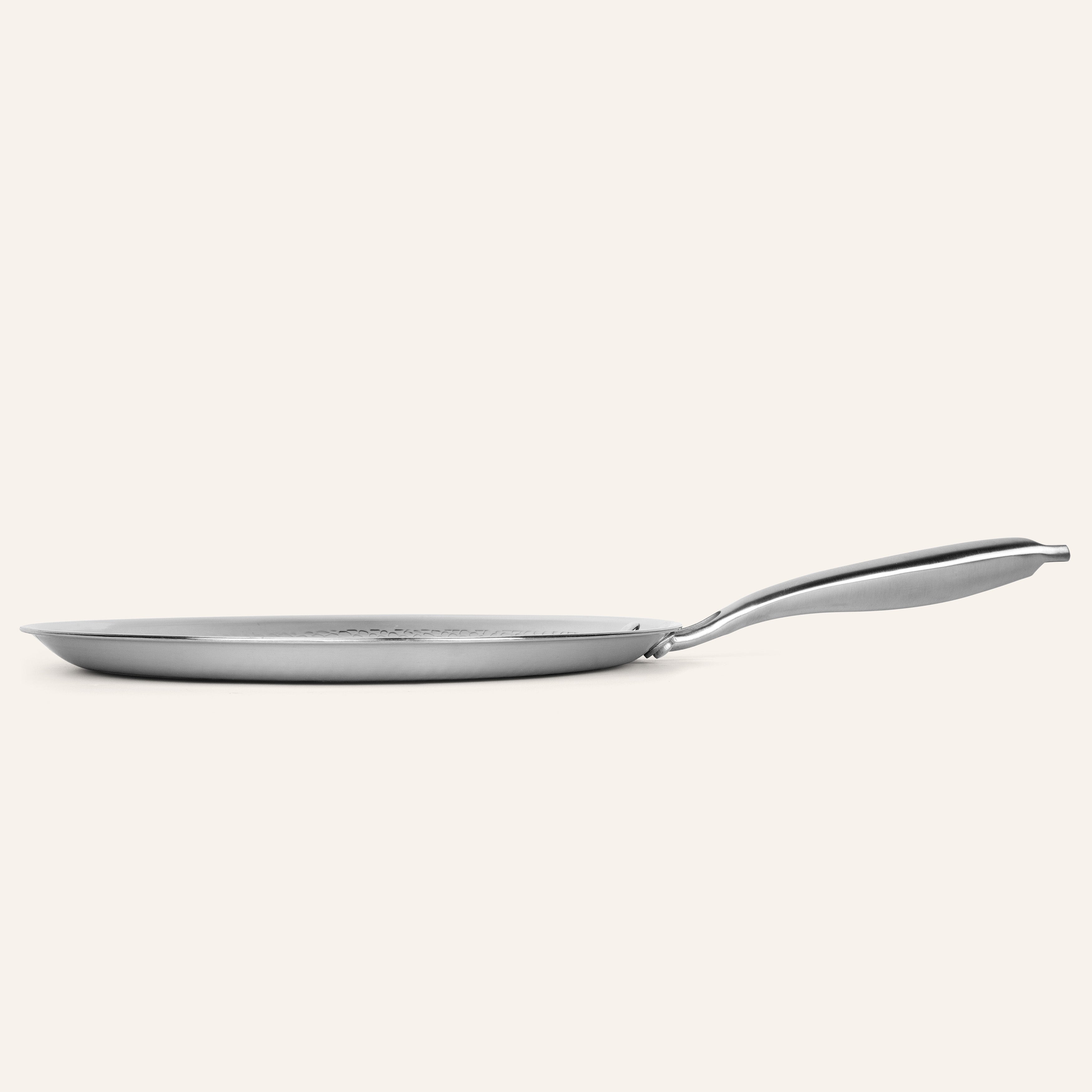
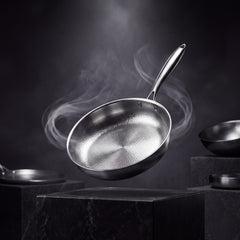
For cooks who want restaurant-style stir-fries without rice and noodles welding to the pan, the Siraat Titanium Hammered Wok Pan Pro makes fast, high-heat cooking easier every day. Its 0.5 mm pure titanium cooking surface features a hand-hammered microtexture that keeps ingredients moving with just a teaspoon of oil. A fully-clad three-layer build pairs a 1 mm aluminum core with a 0.6 mm stainless steel base for fast, even heat on gas, electric, ceramic, and induction stoves. Available in 10.2, 11, and 11.8 inch sizes, third-party tested by Light Labs with no PFAS, PTFE, lead, or cadmium detected, heat safe up to 1000°F (548°C), and backed by a 75-year warranty, it is built for years of everyday stir-frying.
What Sets It Apart

  • 100% pure titanium – A coating-free titanium cooking surface that never peels, flakes, or reacts with sauces
  • Naturally low-stick – The hand-hammered texture helps rice, noodles, and eggs release without PFAS, PTFE, or PFOA
  • Fully-clad construction – An aluminum core and stainless steel base spread heat evenly across every cooktop, including induction
  • No seasoning required – Titanium resists rust and corrosion, so the wok is ready to cook from day one
  • Stay-cool handle – An ergonomic, securely riveted handle for tossing at high heat
  • 75-year warranty – Long-term coverage for a wok designed to last

Titanium vs Stainless Steel Woks on All Cooktops

Matching a wok to your stove matters as much as the material. Traditional round-bottom woks are designed for gas burners and usually need a wok ring for stability, while flat-bottom woks sit securely on electric, ceramic, and induction cooktops and work well on gas too. For most home kitchens, a flat-bottom titanium or stainless steel wok is the most versatile choice.

Induction adds one more requirement, since the base must be magnetic. Titanium is not magnetic on its own, so titanium woks pair their cooking surface with a magnetic stainless steel base, giving them induction compatibility without losing the benefits of the titanium surface. Stainless steel woks vary by grade, and some common grades are only weakly magnetic, so check the product details for induction compatibility before buying.

Home stoves also produce less heat than restaurant wok burners, which makes fast, even heating across the base and walls especially important. Clad titanium woks recover heat quickly after ingredients go in and, in premium designs, tolerate far higher temperatures than any home burner reaches, helping you get a good sear and keep vegetables crisp on any stove.

Is a titanium wok better than carbon steel?
Carbon steel woks are lightweight and heat quickly, but they need seasoning and regular oiling to prevent rust and build release. A titanium wok offers easy release without seasoning and resists corrosion, which suits cooks who want less ongoing maintenance.
Can you get wok hei from a titanium wok?
Titanium woks deliver wok hei, the smoky “breath of the wok” flavor, because it comes from very high heat and fast tossing, both of which a titanium wok handles with ease. The hammered surface keeps ingredients moving freely at high heat, and preheating thoroughly and cooking in small batches gets you close to restaurant results on a home stove.
What size wok is best for a family of four?
A wok around 12 inches across suits most families of four, giving enough room to toss ingredients without crowding. Smaller woks around 10 to 11 inches work well for one or two people and are easier to handle.
Are metal utensils safe in a titanium wok?
Yes, metal spatulas, ladles, and tongs are safe on an uncoated titanium surface, since there is no coating to scratch. That makes a titanium wok well suited to the vigorous scraping and tossing stir-frying involves.
Can you deep-fry in a titanium wok?
Yes, the deep, sloped shape of a wok makes it efficient for deep-frying with less oil than a straight-sided pot. Fill it no more than about a third full, use a thermometer, and keep the wok stable on the burner.