Skip to content
🔥 Limited timeBlack Friday SaleBlack Friday prices are live: save 70% on all of our productsShop the sale

Shop by category

LIMITED EDITION ● NEW IN Damascus Knives 8 knives · from $99 Shop →

More

Country

Cart

Your cart is empty

Shop by category

Why Siraat

  • 75-Year Warranty
  • Free Shipping
  • 30-Day Returns

Titanium Hammered Pan Pro vs. PureGlide Pro Titanium Fry Pan

All comparisons are based on product specifications, independent lab testing, and verified customer reviews. ㅤ ㅤ

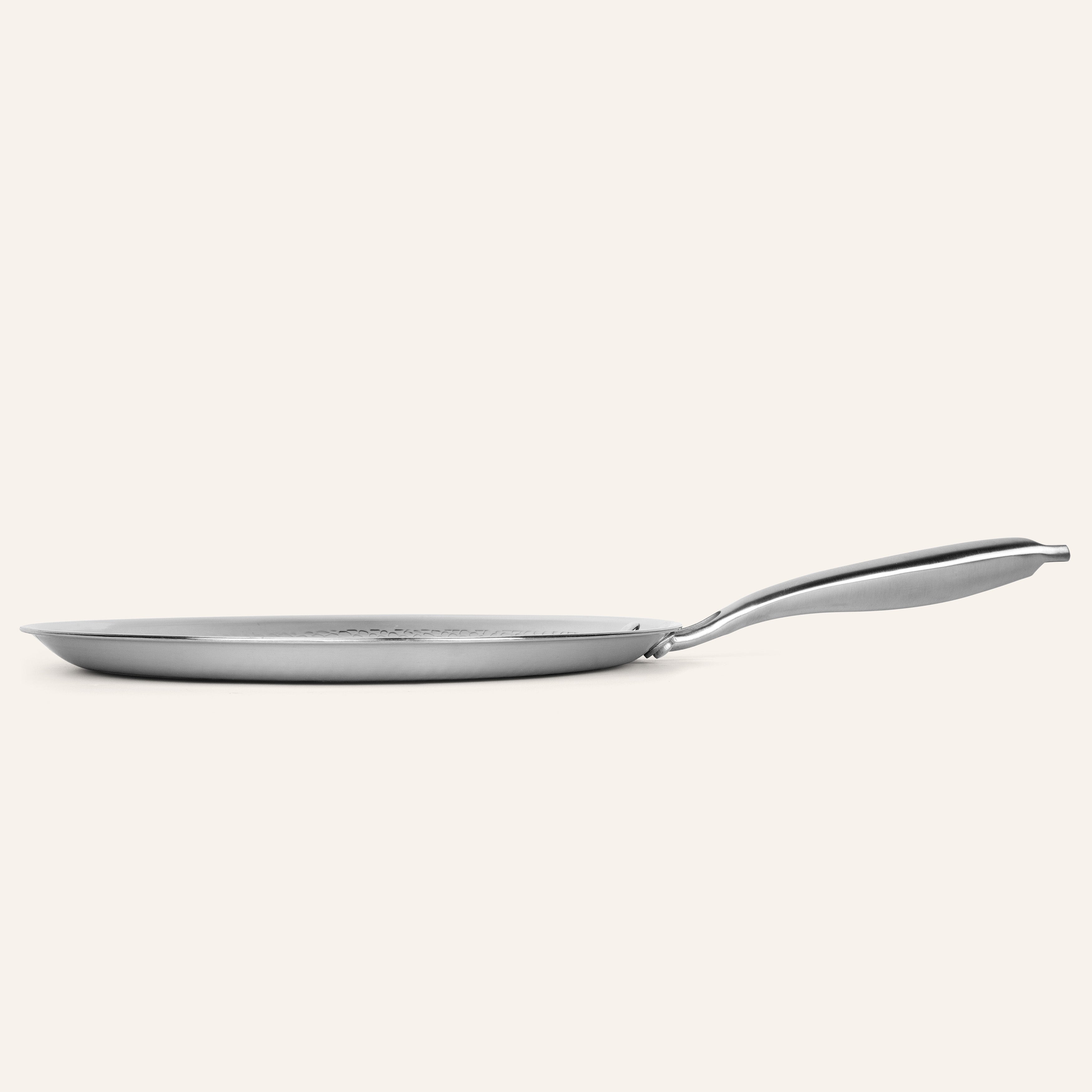
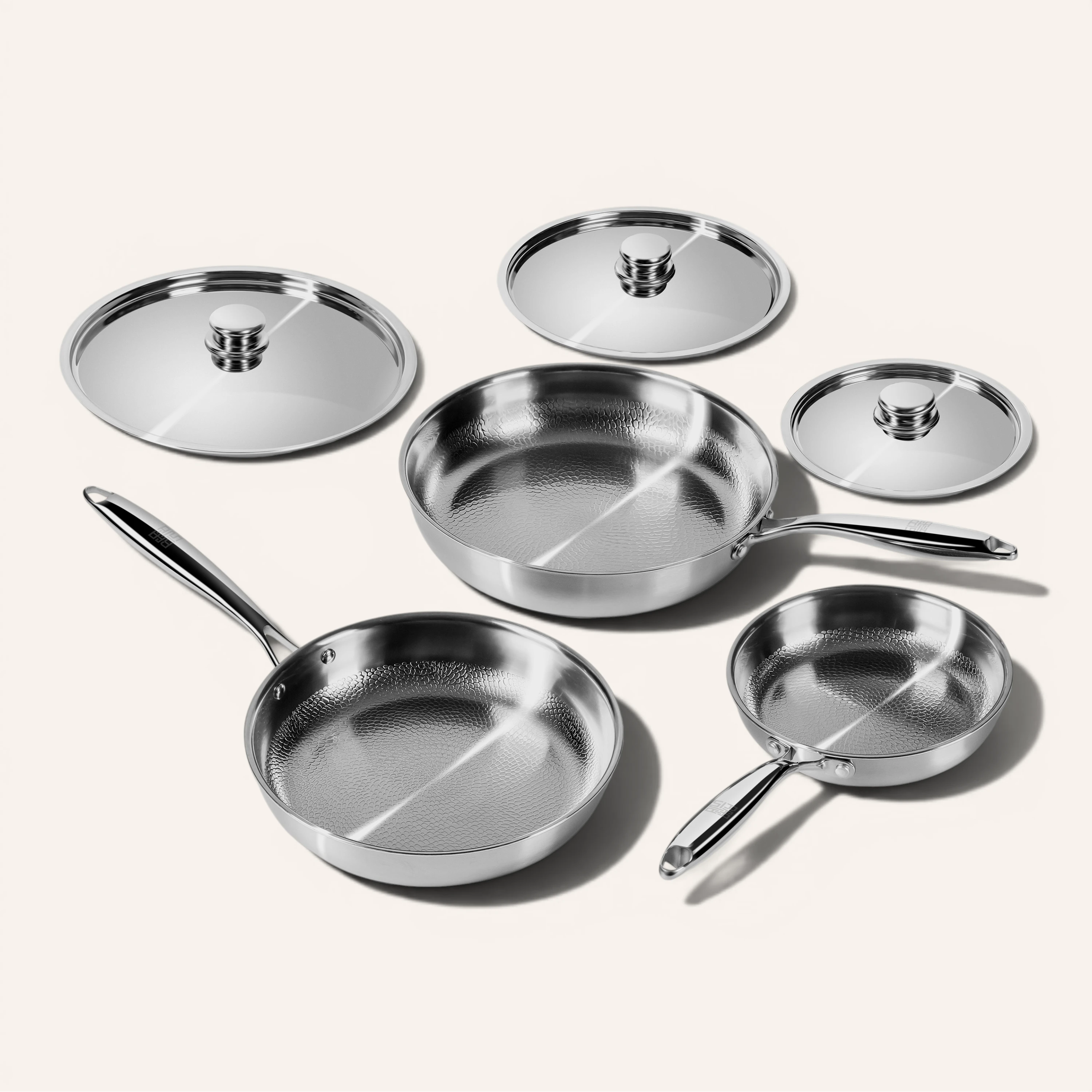
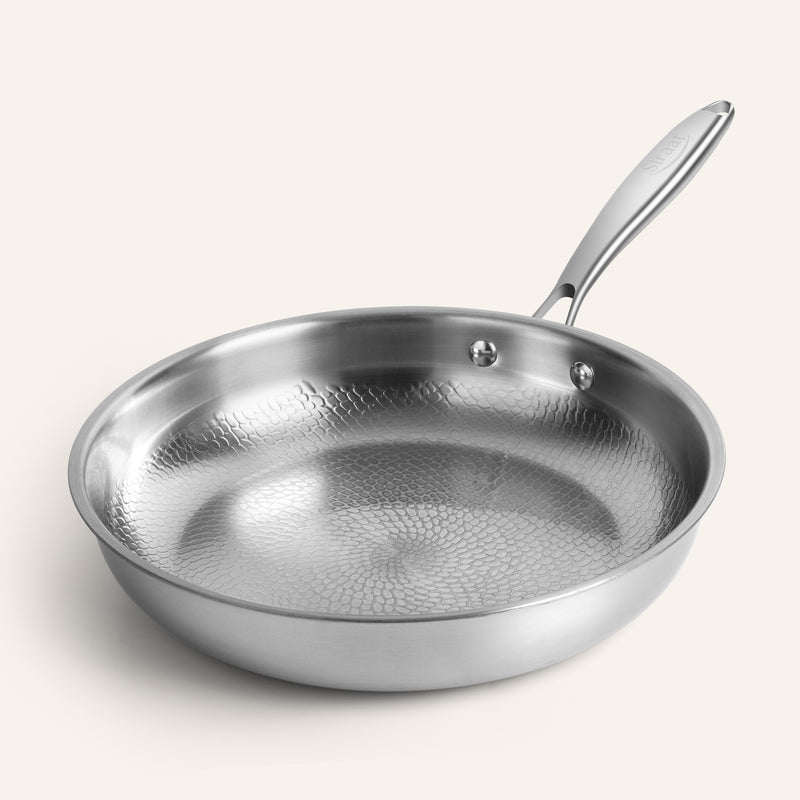
The Siraat Titanium Hammered Pan Pro is designed for high-heat cooking with a 0.5 mm pure titanium cooking surface and a distinctive hand-hammered texture. Its cooking surface is made from pure titanium, with no applied non-stick coating. Its fully-clad three-layer construction combines the titanium surface with a 1 mm aluminum core and a 0.6 mm stainless steel base, helping promote fast, even heat distribution. Compatible with all cooktops, including induction, it is heat safe up to 1000°F (548°C), dishwasher safe, and suitable for metal utensils.

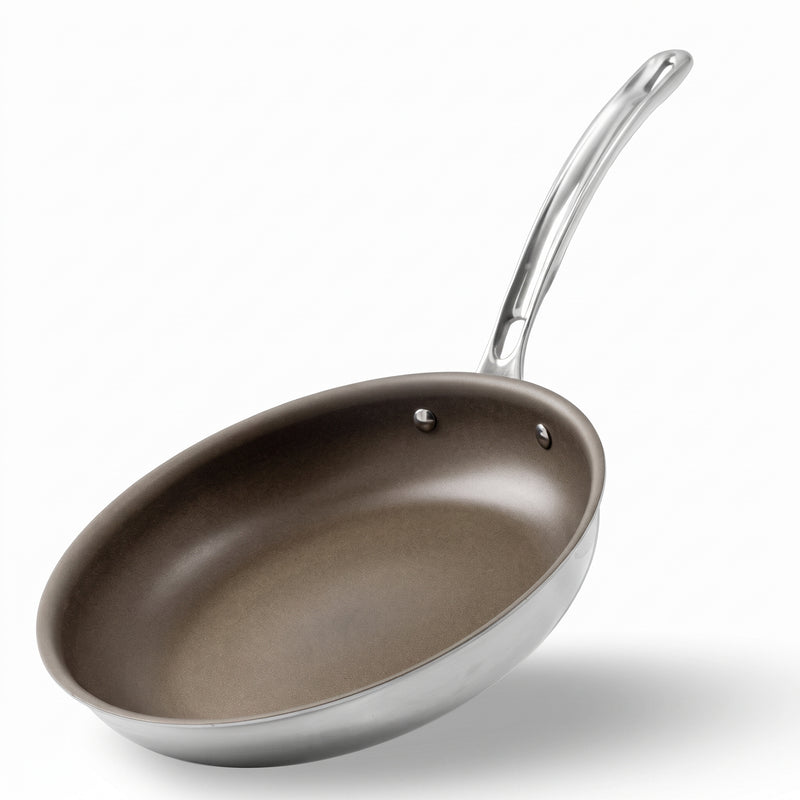
The Viking PureGlide Pro Titanium Fry Pan has a three-ply construction combining a titanium cooking surface, an aluminum core, and a stainless steel exterior. The pan is designed for everyday frying, browning, and searing, and is compatible with gas, electric, halogen, ceramic, and induction cooktops. It is oven and broiler safe up to 600°F (315°C), suitable for metal utensils, and requires hand washing.

Although both pans use titanium-based cooking surfaces and multi-layer construction, they differ in heat resistance and care requirements. These differences can influence which pan is the better fit for your kitchen.

Siraat Titanium Hammered Pan Pro
Viking PureGlide Pro Titanium Fry Pan
Price at the Time of WritingFrom $149From $90.99
ConstructionFully-clad 3-layer construction with 1 mm aluminum core and 0.6 mm stainless steel base3-ply construction with a titanium cooking surface, aluminum core, and stainless steel exterior
Cooking Surface0.5 mm pure titanium with a hand-hammered textureTitanium cooking surface
Maximum HeatHeat safe up to 1000°F (548°C)Oven and broiler safe up to 600°F (315°C)
CleaningDishwasher safeHand wash only
Material DisclosurePure titanium cooking surface, aluminum core, and stainless steel base. Third-party tested by Light Labs, with no detectable levels of PFAS, PTFE, PFOA, lead, cadmium, nanoparticles, or the tested heavy metalsProduct disclosure lists iron, chromium, nickel, and manganese

What to Look For in a Titanium Frying Pan

With so many titanium frying pans available, it can be difficult to understand which features actually matter. Beyond the material itself, a high-quality titanium frying pan should combine a durable cooking surface, reliable heat distribution, high-heat performance, and practical features for everyday use. Here are seven important factors to consider before choosing a titanium frying pan:

  • The Titanium Cooking Surface: Start by checking what the cooking surface is actually made of. Some pans feature a pure titanium cooking surface, while others use a different titanium-based surface technology. Look for clear information about the material and, when available, its thickness. A manufacturer that specifies the composition of the cooking surface gives buyers a better understanding of what they are purchasing.
  • Multi-Layer Construction: A good frying pan needs to balance the properties of its cooking surface with effective heat distribution. Many modern titanium pans use multi-layer construction, combining a titanium cooking surface with an aluminum core and a stainless steel exterior. Aluminum helps distribute heat throughout the pan, while stainless steel provides a durable outer layer. Pay attention to the number of layers and whether the manufacturer provides details about their materials and thickness.
  • Heat Distribution: Heat distribution plays a major role in everyday frying, searing, and sautéing. Titanium is highly durable but is not as thermally conductive as aluminum. This is why many premium multi-layer frying pans combine a titanium-based cooking surface with a conductive aluminum core. The aluminum helps distribute heat more evenly across the pan and reduces the likelihood of hot spots.
  • High-Heat Performance: A good frying pan should withstand the temperatures required for searing, browning, and other high-heat cooking techniques. Titanium is known for its high heat resistance, but the maximum temperature rating of the complete pan also depends on its construction and other materials. Always check the manufacturer's stated heat limit, including whether it applies to oven use, broiler use, or stovetop cooking.
  • Surface Texture and Food Release: The finish of a titanium cooking surface can influence the overall cooking experience. Some pans feature smooth surfaces, while others have textured or hammered finishes. Consider the type of cooking you do most often and look for reliable information about food release, browning, and recommended cooking techniques.
  • Cooktop Compatibility and Durability: Before purchasing, make sure the pan is compatible with your cooktop. If you use induction, the base must be specifically designed to work with induction heating. Also consider the durability of the construction, handle attachment, and cooking surface. A well-made pan should be suitable for regular use and withstand the demands of your cooking routine.
  • Cleaning and Maintenance: Maintenance requirements can make a noticeable difference in everyday convenience. Some titanium frying pans are dishwasher safe, while others require hand washing. Check the manufacturer's instructions rather than assuming that a titanium cooking surface makes the entire pan dishwasher safe. It is also worth checking whether the pan is compatible with metal utensils and what cleaning methods are recommended to preserve its finish.

Titanium Cookware: Everything You Need To Know

Interest in titanium cookware has grown rapidly among home chefs looking for a durable alternative to traditional non-stick pans, but engineering methods differ significantly across the industry. Many premium titanium pans now feature a pure titanium cooking surface paired with a multi-layer construction that improves heat distribution and overall cooking performance. While the construction beneath the cooking surface may vary, a pure titanium cooking surface remains chemically stable, non-reactive, and free from traditional non-stick coatings. This material-focused approach allows titanium cookware to handle high temperatures and acidic ingredients while delivering reliable long-term durability.

Because pure titanium alone does not distribute heat as quickly as highly conductive metals, high-quality pans utilize a multi-layer base construction. By combining a pure titanium cooking surface with an aluminum core and stainless steel exterior, the cookware achieves fast, even heat responsiveness while maintaining a durable and chemically stable cooking surface. This design offers several practical advantages for everyday cooking:

  • Solid Metal Performance: Built around a dedicated pure titanium cooking surface rather than applied coating systems, helping support long-term cooking consistency and everyday durability. 
  • High Thermal Tolerance: Capable of safely transitioning from induction stovetops to high-heat ovens without warping or damage.
  • Low Maintenance: Naturally resistant to rust, staining, and corrosion. The pure titanium cooking surface is compatible with metal utensils and standard dishwasher cleaning for convenient everyday use.
  • Natural Food Release: Utilizes physical surface texturing, such as hand-hammered patterns, to help improve food release without relying on synthetic non-stick coatings or chemical surface treatments. 
#1

Trusted by Michelin-star chefs and thousands of home cooks, the Siraat Titanium Hammered Pan Pro features a 100% pure titanium cooking surface that is completely coating-free, durable, and chemically non-reactive. Its fully-clad three-layer construction delivers fast, even heating, while the hand-hammered texture helps create a naturally low-stick cooking experience without synthetic coatings or chemical treatments. Heat safe up to 1000°F (548°C) and dishwasher-safe, it is designed for long-term everyday cooking with minimal maintenance. 

  • 100% pure titanium – Features a fully coating-free pure titanium cooking surface for long-term durability and dependable everyday performance
  • Safe and practical – Heat safe up to 1000°F (548°C), dishwasher-safe, and induction compatible for effortless everyday cooking
  • Naturally low-stick hammered texture – The hand-hammered texture helps improve food release without PFAS, PTFE, PFOA, ceramic coatings, or heavy metals
  • Fully-clad construction – An aluminum core and stainless steel exterior promote fast, even heat distribution across all cooktops

How to Get the Best Results With Titanium Cookware

Titanium cookware performs best when properly preheated before adding oil or ingredients. Allowing the pan to warm gradually over medium heat for a minute or two helps create even surface temperatures and improves natural food release. Once preheated, a small amount of oil is sufficient for everyday cooking tasks. 

Because titanium cookware responds quickly to heat changes and retains temperature efficiently, medium to medium-high heat is ideal for most cooking situations. Lower, controlled heat often improves consistency and helps minimize sticking during the initial break-in period while the hammered texture develops its cooking performance. Foods should also be allowed to cook briefly before flipping, as proteins naturally release from the surface once properly seared.

Cleaning titanium cookware requires very little maintenance. In most cases, warm water, mild soap, and a soft sponge are enough. Many titanium pans are also dishwasher-safe, making them highly practical for everyday use. Because there is no artificial coating to protect from scratching, the surface can be cleaned thoroughly without concerns about damaging a non-stick layer.